Motorcycle Cover vs. Motorcycle Garage: Which One Actually Protects Your Bike?
Published
The Quick Verdict: Cover, Garage, or Both?
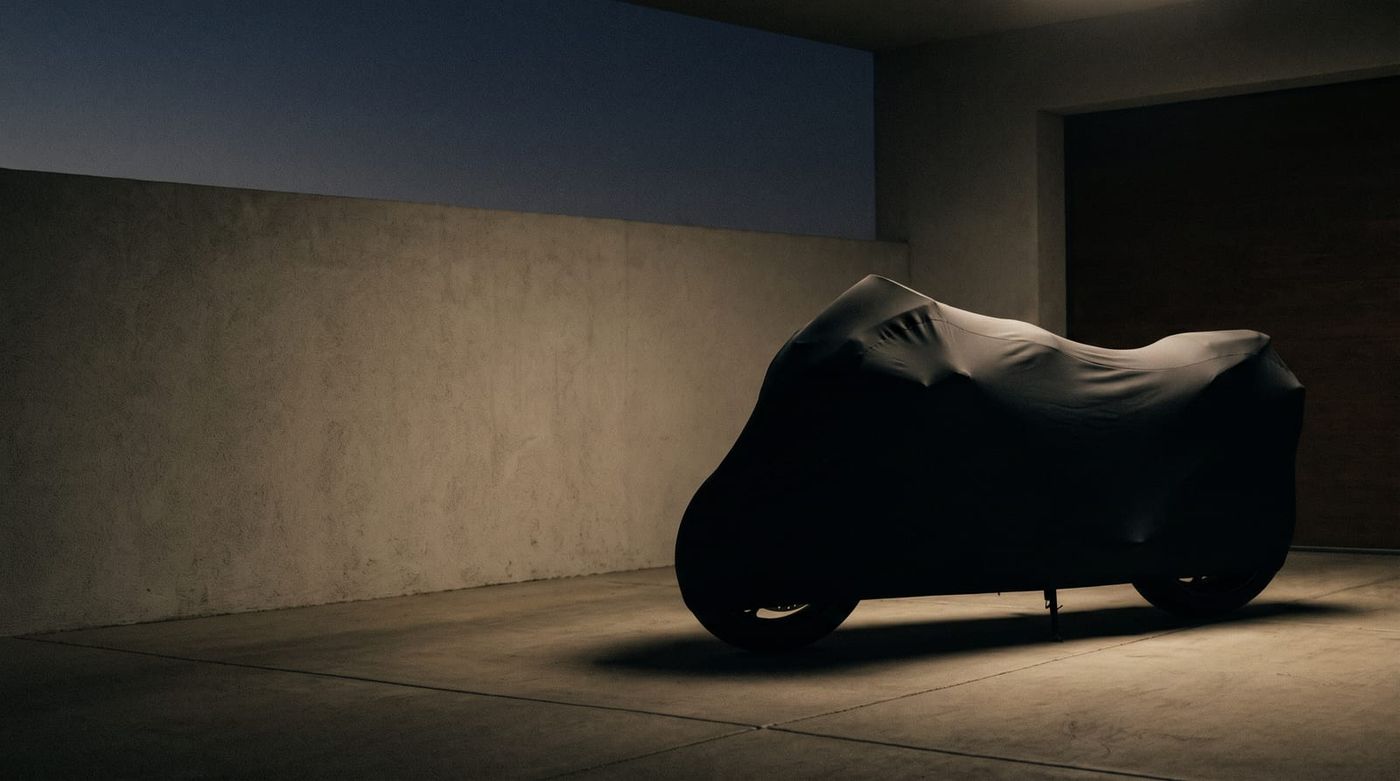
Here's the short answer: a motorcycle cover is the cheap, non-negotiable baseline every rider needs, no matter where the bike sleeps at night. A dedicated garage is the stronger long-term protection, worth it if you store year-round or own a bike you'd hate to see scratched. But motorcycle cover vs motorcycle garage isn't really an either/or fight. Most garaged bikes still need a cover against dust, moisture, and the temperature swings that happen indoors too.
So the real question isn't "cover or garage." It's cover alone, cover plus garage, or garage alone (which, honestly, leaves gaps you don't want). This comparison is for riders who already own a bike and are trying to figure out how to store it better, not people shopping for their first one.
Motorcycle Cover vs. Motorcycle Garage: Side-by-Side Comparison
Laid out plainly, the tradeoffs look like this:
| Factor | Motorcycle Cover | Motorcycle Garage |
|---|---|---|
| Upfront cost | One-time, low cost, no construction needed | Land, materials, labor, permits if building new (or none if using existing space) |
| Ongoing cost | Occasional replacement, cleaning supplies | Property tax impact, climate control costs, structural upkeep |
| Rain and snow protection | Direct barrier, must be waterproof-rated and fitted right | Full barrier, but condensation and humidity cause rust without ventilation |
| UV and fading protection | Blocks sun directly, matters even indoors near windows | Blocks sun fully if windows and skylights aren't an issue |
| Theft deterrence | Hides the bike, slows a thief, no physical lock | Locked structure, real physical barrier, the best deterrent |
| Scratches, dust, pests | Direct barrier against all three | Dust still settles indoors unless the bike's also covered |
| Portability | Goes anywhere, home, trackday, storage unit, road trip | Fixed to one location |
| Space required | None beyond the bike's footprint | A dedicated structure or bay |
| Setup time | Minutes, no permits | None if it exists already, months if building |
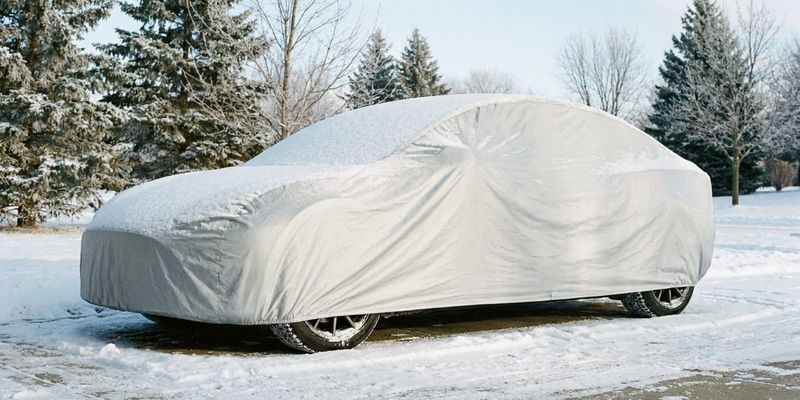
A few of these deserve more than a row in a table. Rain and snow protection, for instance, gets treated as a solved problem once a bike's indoors, but that's not quite true. Garages without good airflow trap humidity, and humidity on bare metal is rust waiting to happen. A waterproof car cover rated for the job handles outdoor exposure, but it also helps indoors by keeping that trapped moisture off the actual paint and chrome.
What a Motorcycle Cover Actually Does Well
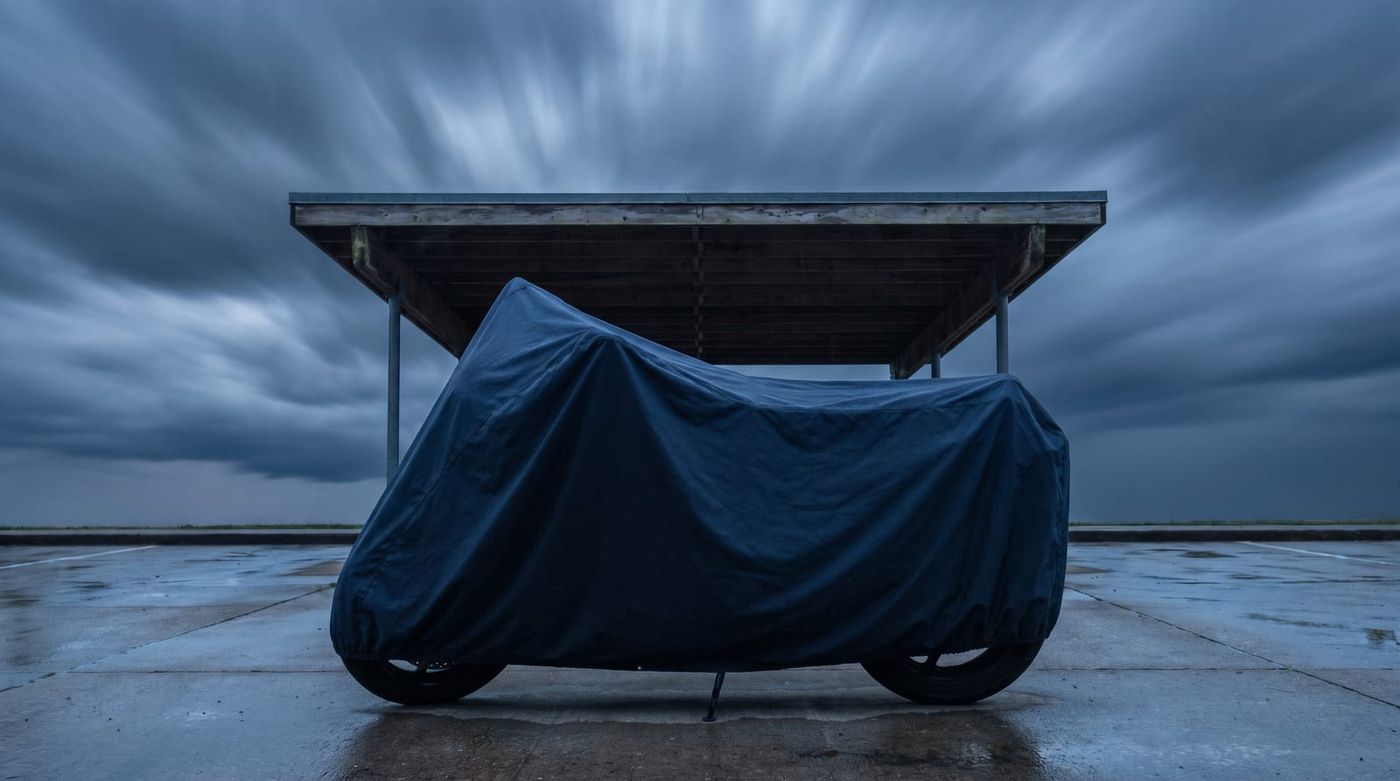
A cover's job is simple: stand between your bike and everything that wants to degrade it. Rain, UV rays, dust, tree sap, bird droppings, the occasional errant branch scrape. Whether the bike's sitting outside your apartment or tucked into a garage bay, a cover is doing constant, quiet work.
Fit matters more than most people think going in. A loose universal cover flaps around in wind, and that flapping rubs against paint over time, which is the opposite of what you bought it for. A properly sized cover stays snug against the bike instead of billowing like a tent. If you've never thought about this before, it's worth reading through a guide to using a car cover outdoors before you assume any cover will do.
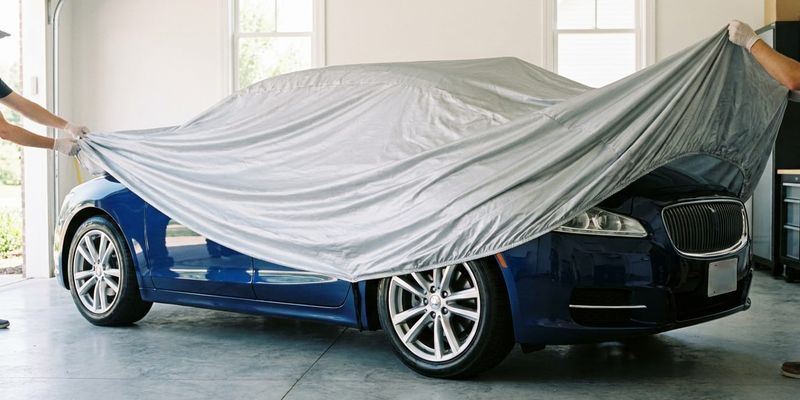
And garage-stored doesn't mean maintenance-free. Garages collect dust just like anywhere else, and unheated ones swing in temperature right along with the outdoors. A cover inside a garage catches what the walls don't. For the specifics on that setup, there's a solid guide to using car covers inside worth a look.
Here's the limitation, though, and it's a real one: a cover won't stop a thief who's determined, and it won't stop a tree limb coming down in a storm. It's a barrier, not a vault. And a cheap, non-breathable cover can actually make things worse, trapping moisture underneath and giving mildew a place to grow.
What a Motorcycle Garage Actually Does Well
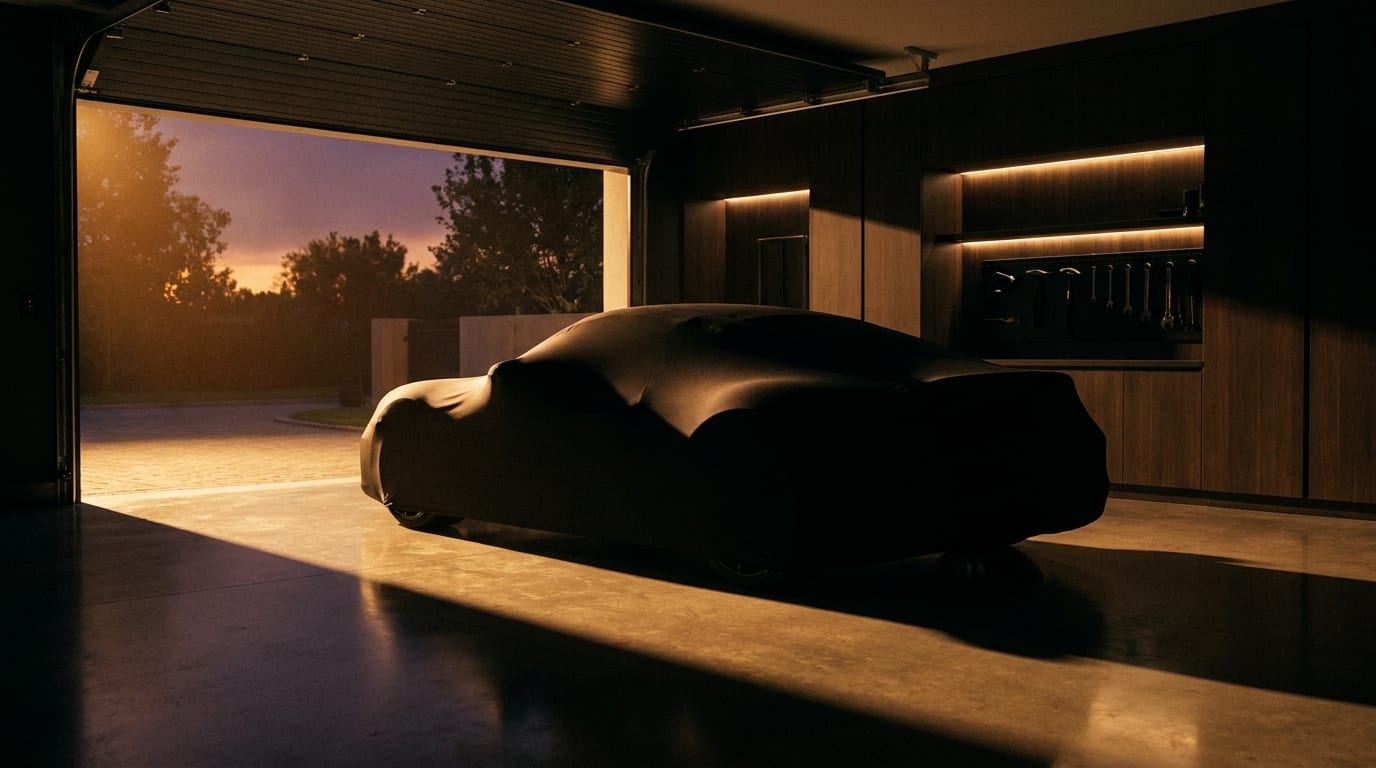
A garage does what a cover physically can't: lock the bike away behind a real barrier. Theft, hail, falling debris, direct weather exposure, all of it stopped before it reaches the bike at all. That's the trade a cover can't make.
Long-term storage is where a garage really earns its keep. Extreme temperature swings are harder on a motorcycle than people realize, especially on battery life and fluids over a long winter layup. A garage buffers those swings in a way a cover alone just can't, since a cover tracks outdoor temperature almost exactly, it just blocks sun and rain.
But most riders don't have a dedicated motorcycle garage. They've got a shared garage with a car in it, maybe some lawn equipment, boxes nobody's unpacked since the move. That space still exposes a bike to dust, oil drips, and the occasional bump from someone squeezing past with a ladder, unless the bike itself is also covered.
And a garage doesn't travel. It's a fixed investment that does nothing for you at a trackday, parked at a friend's house, or three states into a road trip. That's the gap a cover fills no matter where you are.
Cost Over Time: Where Each Option Actually Lands
Zoom out to total cost, and the two options aren't playing the same game. A cover is a small, recurring expense. Depending on exposure and quality, you're replacing it every few seasons. A garage is a large cost up front, whether that's construction, buying a property with one, or renting storage space, and it may carry ongoing costs too, property tax, heating if it's climate controlled, upkeep on the structure itself.
If you already have garage space, attached garage, a shed, a rented storage unit, the incremental cost of adding a cover is small. That makes a cover the highest-ROI step most riders can take, since the big expense (the structure) is already sunk. Check the lifetime warranty on car covers before buying, too. A warranty-backed cover means your "recurring small expense" doesn't quietly turn into a repeat-purchase problem every single season.
Which Setup Fits Your Situation
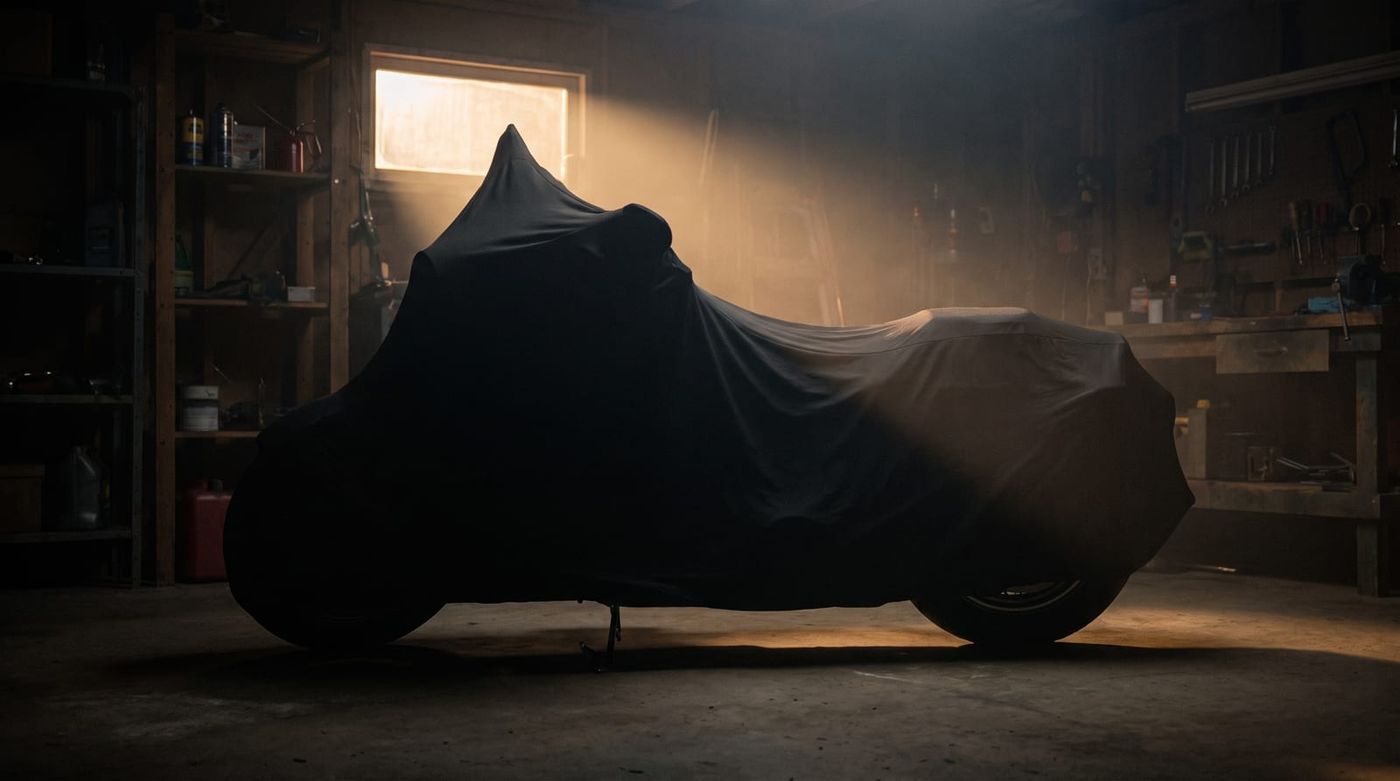
Not every rider needs the same setup. It depends on where the bike actually lives.
Street-parked or apartment-dwelling riders with no garage access: a cover is your only realistic option here. Prioritize waterproofing and look for one with a cable lock loop built in, since you're not getting the locked-structure benefit a garage provides.
Riders with an existing garage or carport: use both. The garage handles theft and weather as a shell, the cover handles dust and condensation inside it. This is the setup most people should land on if the space exists already.
Seasonal storage, winter layup, extended trips: a garage or storage unit paired with a cover is the safer combination for fluids, tires, and finish over a long stretch of inactivity. Neither one alone covers everything a bike needs during months of sitting still.
High-value or collector bikes: don't lean on a cover alone outdoors if theft is a genuine concern where you live. A secured structure plus a cover is the standard approach, and for good reason, since the cover doesn't provide any physical security on its own. If you're storing a Harley-Davidson, the investment in both usually isn't a hard sell.
Bottom Line and Next Step
Get a properly fitted cover regardless of where your bike lives. That's step one, full stop. Add a garage or other secured storage on top of it when theft risk in your area or long seasonal layups make the extra investment worth it. That's the real answer to motorcycle cover vs motorcycle garage: it's rarely a choice between the two, it's a question of how much protection your situation actually calls for.
If you're ready to move on this, skip the generic one-size-fits-all cover and look for one sized to your specific bike. A snug fit is the difference between a cover that protects your paint and one that scratches it. Check the fit and waterproofing rating against how much time your bike actually spends outdoors, even if that's just a few hours a week, and go from there.