Is It OK to Store a Car Cover Folded Instead of Rolled? Here's the Straight Answer
Published

Is It OK to Store a Car Cover Folded Instead of Rolled?
Short answer: no, not ideally, but it won't wreck your cover overnight either. If you're asking "is it ok to store a car cover folded instead of rolled," the honest answer is that rolling is the method manufacturers and cover makers actually recommend, while folding is more of an acceptable workaround when you're short on space or time. The real tradeoff comes down to one thing: folding creates sharp, repeated crease lines that rolling simply avoids, and those creases are where waterproof coatings and laminate layers start to break down first. That matters a lot more on a multi-layer or waterproof cover than it does on a thin, single-layer dust cover.
The rest of this article walks through why those creases matter, what actually happens to the fabric over time, and how to minimize the damage if folding is the only realistic option for you.
Why Rolling Is the Preferred Storage Method
Rolling spreads stress evenly across the whole piece of fabric instead of concentrating it along a handful of fold lines. Think about bending a piece of cardboard in a smooth curve versus creasing it sharply in one spot. The curve holds up fine. The crease weakens.
That's basically what happens with cover material. Sharp creases, repeated storage after storage, can break down the waterproof coating or laminate layer sitting right at the fold, leading to cracking or a noticeable drop in water resistance exactly where you folded it. And here's the part people don't expect: rolled covers don't actually take up more room than folded ones in most cases. A loosely rolled cover compresses down to roughly the same footprint as a folded one, so there's rarely a real storage-space reason to choose folding over rolling. It's mostly habit.
Custom-fit covers make this worse. If your cover has built-in padding, elastic hems, or an antenna patch, folding it the same way every time concentrates wear in those reinforced spots, which can cause uneven bunching or stretched-out elastic over time. A universal cover shrugs this off a little better, but a custom-fit cover built for indoor or outdoor use is doing more precise work, and that precision is exactly what gets thrown off by repeated hard folds.
What Actually Happens When You Fold a Cover Long-Term
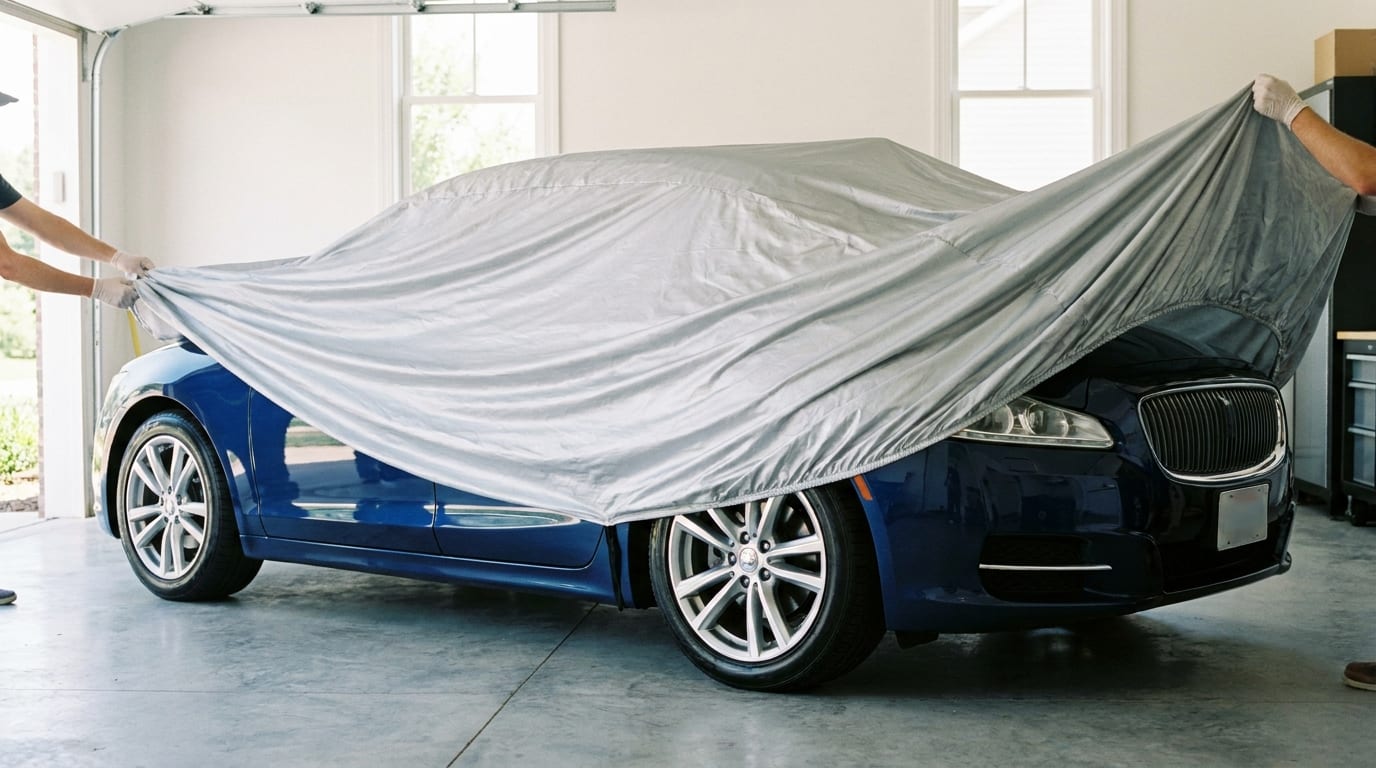
With heavier fabrics, think multi-layer or fleece-lined covers, the crease lines can become permanent. You'll see them even after the cover is spread back out over the car, like a shirt that's been in a drawer too long.
Moisture is the other issue. Folded fabric traps dampness inside the creases longer than rolled fabric does, simply because there's less airflow getting to that tightly packed seam. If the cover goes into storage even slightly damp, that's a setup for mildew and musty odor, and it shows up fastest right at the fold.
Then there's the wear pattern. Most people fold along the same lines every single time, often because the cover came pre-folded that way from the factory. Doing that for months or years thins the material at those exact spots faster than everywhere else. It's not that one fold ruins a cover. It's that the same fold, over and over, slowly works the fabric down until that line is noticeably weaker than the rest of the cover.
None of this is instant. You can fold a cover wrong for a weekend trip and nothing bad happens. This is a cumulative risk, the kind that shows up two or three storage seasons in, not the first time.
How to Roll a Car Cover Correctly for Storage
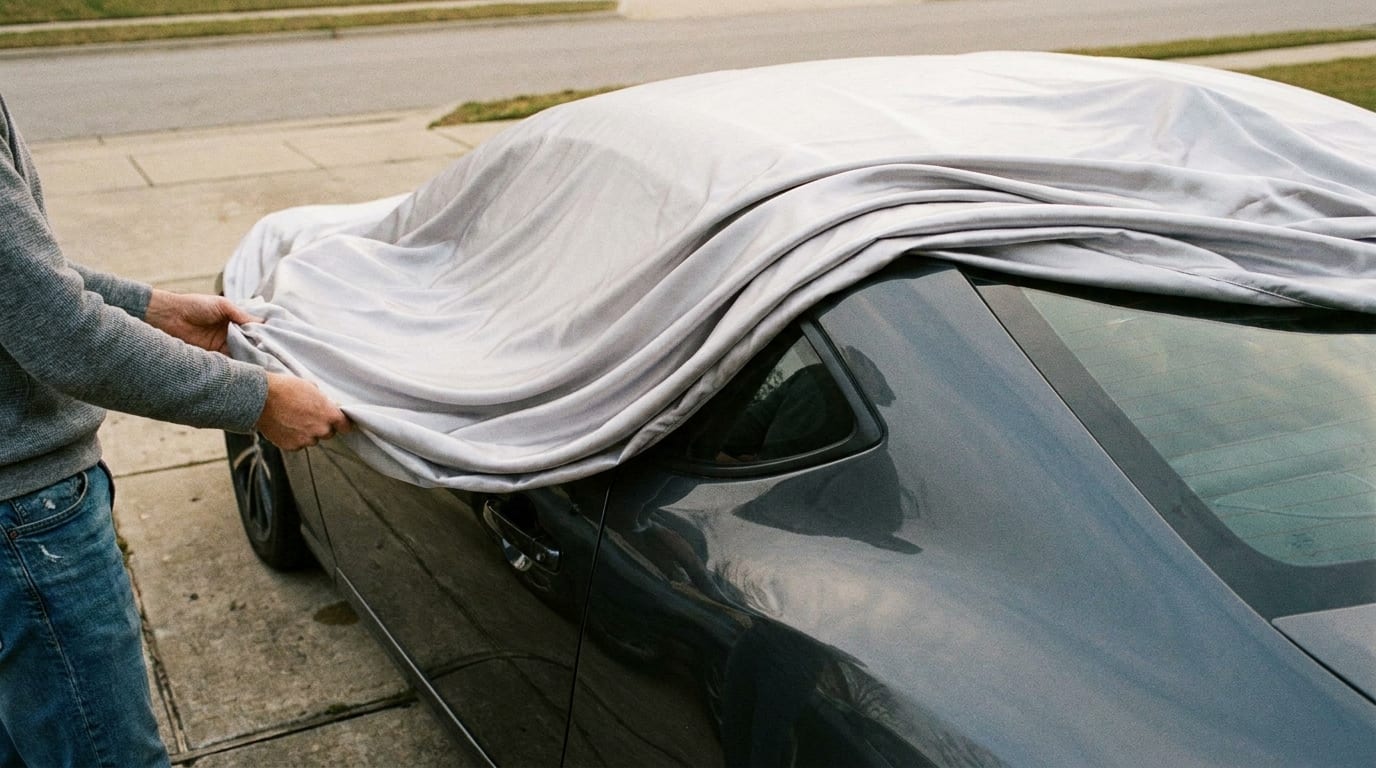
Start by laying the cover flat and letting it air out completely. Don't skip this. Brush off any loose leaves, dirt, or debris while it's spread out, since anything trapped inside a tight roll can grind against the fabric over time.
Roll from one end rather than folding it in half first. That keeps the roll's diameter manageable and avoids the doubled-up crease you'd get from folding before rolling, which honestly defeats half the point.
Keep the roll loose. A tight roll, cinched down hard, puts almost the same kind of stress on the fabric as a fold does, just distributed over a slightly wider area. Loose and relaxed is what you're after.
Once it's rolled, store it in its original storage bag, or a breathable container if the bag's long gone. Skip sealed plastic bags. They trap humidity inside, and a damp cover sitting in plastic for weeks is asking for mildew. For more on keeping a cover in good shape between uses, the cover care and cleaning guide covers washing and drying steps that pair well with proper storage habits, and the step-by-step cleaning guide goes deeper on technique if your cover's picked up stains or buildup.
If You Have to Fold It, Do This Instead
Sometimes rolling just isn't practical, maybe you're tight on trunk space or storing multiple covers in a small bin. If that's you, a few adjustments make folding noticeably less damaging.
Vary the fold pattern each time. Don't fold along the same lines you used last time. This alone does more to protect the cover than almost anything else on this list, since it spreads out stress instead of hammering the same crease month after month.
Fold loosely into a few large sections rather than squeezing it into small, tight squares. Big, soft folds are far gentler on the coating than sharp, compact ones.
Make sure the cover's fully dry before you fold it. Folding in any dampness traps moisture right where you don't want it, and that's the fastest route to mildew smell showing up next time you pull the cover out.
Before you put it back on the car, give it a shake and re-fluff it. That small step helps the fabric relax and release some of the set-in crease lines before they get baked in by the next fold cycle.
Storage Conditions Matter as Much as Folding vs. Rolling

Here's something that gets overlooked: where you store the cover matters more than whether you rolled or folded it. A dry, ventilated space does more for a cover's lifespan than perfect rolling technique ever will.
Avoid direct sun, a hot trunk, or a damp corner of the basement or garage. Heat and humidity swings compound whatever crease damage is already there, softening coatings in the heat and letting moisture settle in during the cool, damp stretches. A cover rolled perfectly but stored in a hot, airless trunk all summer isn't necessarily better off than one folded loosely in a cool, dry closet.
If your cover's been out in the rain or snow, dry it fully before folding or rolling it for storage. This matters regardless of which method you use. A soaking wet cover rolled up tight is a mildew problem waiting to happen, no different from one folded wet. If you're using your cover outdoors regularly, the guide to using a car cover outdoors has more on managing moisture, wind, and UV exposure that all factor into how your cover holds up long-term. And if you keep your vehicle garaged most of the time, the indoor car cover guide is worth a look too, since indoor covers have different material needs and don't deal with the same moisture exposure.
Bottom Line: Roll When You Can, Fold Carefully When You Can't
So, is it ok to store a car cover folded instead of rolled? It won't ruin your cover the first time, or the tenth. But rolling is the better long-term habit, and folding, done carelessly, adds up to real wear over time in the form of cracked coatings, weak spots, and that musty smell nobody wants to deal with before a drive.
If you want the cover to last as long as it's built to, pair good rolling or folding habits with the cleaning and storage tips in CarCovers' car care resources. And if you're dealing with a cover that's already showing a defect, not just wear from folding, it's worth knowing that products under the lifetime warranty on car covers are covered for manufacturing issues. Physical wear from years of the same crease line, though, is just wear. No warranty covers that, which is exactly why how you store the thing is worth getting right.
Curious about getting more life out of your setup in general? Poke around the rest of the blog for more car care guides, or subscribe if you'd rather have tips like this land in your inbox instead of hunting for them later.