
The Best Car Cover for a Convertible in a City with Lots of Street Parking
Published

The Quick Answer
What's the best car cover for a convertible in a city with lots of street parking? A custom-fit, waterproof outdoor cover with built-in cable-lock grommets and gust strap points. That combination handles weather exposure and theft deterrence at the same time, and it's cut tight enough to survive buses and delivery trucks rumbling past all day.
Universal covers cost less, sure. But they flap loose in city wind and usually skip the security hardware entirely, which matters a lot more when your car sleeps at the curb than when it's tucked in a driveway. And if you've got a soft top, don't even look at covers marketed for occasional or indoor use. You need something rated for daily on/off installation, because that's exactly what street parking demands.
Why Street Parking Changes What a Convertible Cover Needs to Do

Soft tops break down faster than hardtops when they're left exposed. UV rays dry out the fabric, bird droppings etch into it, tree sap turns into a scraping job. A garage gives a hardtop convertible some buffer from all that. Street parking gives you none.
Then there's the theft angle. Catalytic converter theft is still common in a lot of cities, and a convertible's soft top is an easy target for anyone curious enough to slice it open and peek inside. A cover with no lockable point does basically nothing here. It's visual cover, not real deterrence. If you're going to rely on a cover for any security benefit at all, it needs a grommet or loop that works with a cable lock, something you can actually run through a wheel or the frame.
Traffic adds its own wear pattern. A bus or box truck passing close to the curb kicks up grit, exhaust residue, and a gust of wind that a cover sitting in a quiet yard never has to deal with. Seams and straps take the brunt of that, repeatedly, every single day.
And if you drive your convertible often, which a lot of street-parked owners do because that's just urban life, you're putting the cover on and taking it off constantly. That's a different durability question than "will this survive a winter in storage." Fabric needs to hold up to folding, refolding, and quick installs in bad weather without ripping at the seams.
Comparison: Cover Options for Street-Parked Convertibles
Here's how the realistic options stack up against each other for this specific situation. Indoor-only covers aren't on this list on purpose. They're not built for outdoor exposure, so they fail the basic job street parking requires before you even get to security or fit.
| Cover Type | Waterproofing | Fit Precision | Theft Deterrence | Daily-Use Durability | Typical Price Range |
|---|---|---|---|---|---|
| Universal Outdoor Cover | Moderate | Loose, prone to flapping | Minimal to none | Fair | Low |
| Custom-Fit Outdoor Cover | Good to excellent | Tight, matches body lines | Limited without add-ons | Good | Mid |
| Custom-Fit Outdoor Cover + Security Kit | Good to excellent | Tight, matches body lines | Strong (cable lock, gust straps) | Good to excellent | Mid to high |
For street parking specifically, the custom-fit plus security kit tier is the one to buy. It's the only option here that actually addresses both problems you're dealing with: weather and curbside risk. Custom-fit car covers are worth the extra cost because of how much tighter they sit, and pairing one with waterproof car covers protection plus a cable lock setup covers the two things a loose universal cover just can't.
Universal covers aren't useless. If you're only parking on the street occasionally, say a weekend trip or a short-term situation, they're an acceptable stopgap. Just don't expect one to hold up as your everyday curbside solution.
Must-Have Features for a Street-Parked Convertible Cover
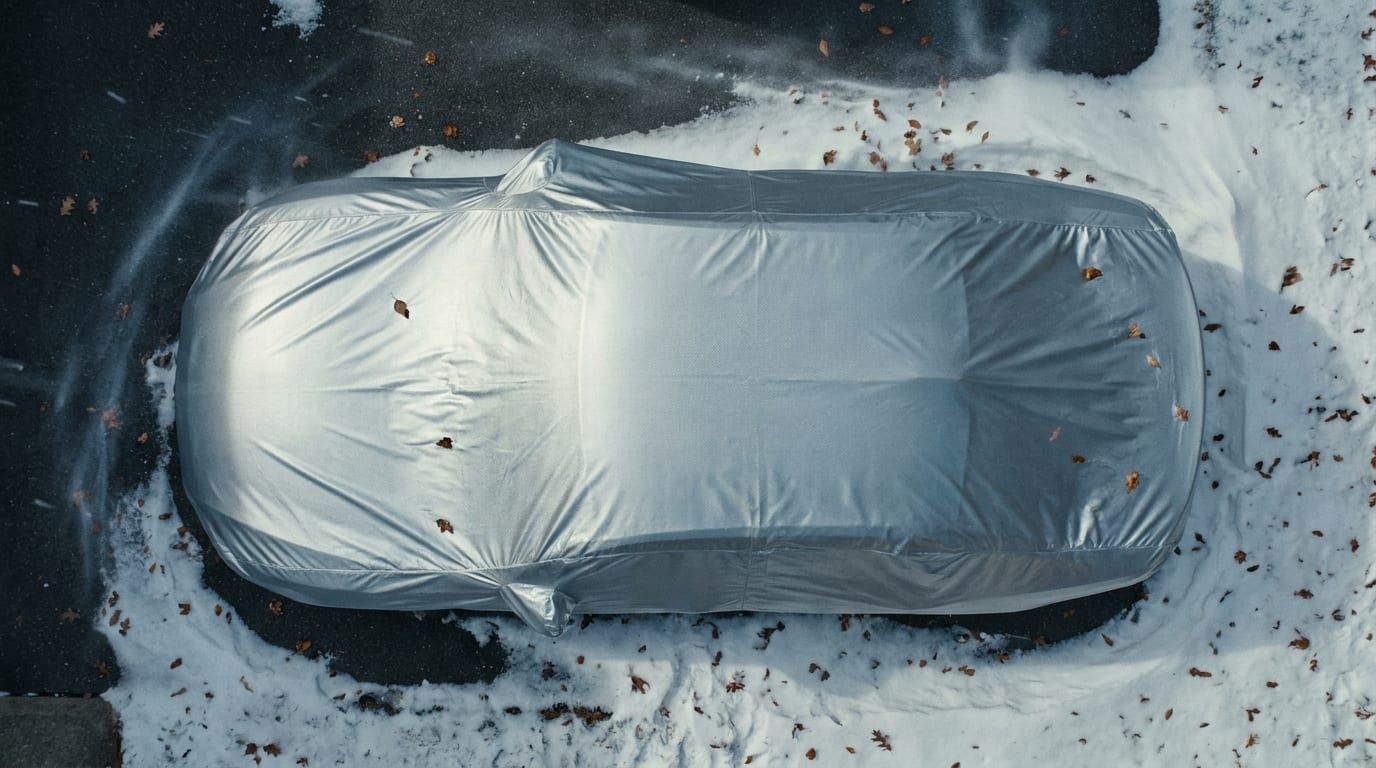
A few features separate a cover that actually works on the street from one that just looks the part in a product photo.
Grommets or loops built for a cable lock top the list. Without them, you've got no way to physically secure the cover to the car, and a cover that's not locked down can be lifted off in seconds by anyone motivated enough to try. Pair that hardware with a decent lock and you've added a real obstacle, not just a visual one.
Gust strap attachment points matter almost as much. When a semi or city bus rolls past a few feet from your bumper, the wind wash it throws off is strong enough to lift a loose cover right off the hood. Straps anchored under the car keep the whole thing in place.
Inside the cover, where the fabric actually touches the convertible top, you want something soft and non-abrasive. Vinyl and cloth tops scuff over time if the inner lining is rough, and you're taking this cover on and off daily, so that friction adds up fast.
Last one: breathable waterproof fabric, not a plastic tarp. A tarp traps moisture against the surface it's covering, which is the last thing you want on a soft top that's already fighting daily exposure. Breathable fabric keeps rain out while still letting trapped moisture escape, so you're not creating a mildew problem of your own making.
Material and Fit Considerations

Fit precision matters more for a convertible than it does for a sedan or a pickup. Here's why: any slack in the cover is a place for wind to get underneath, and once it's under there, it's pushing against a soft top that doesn't have a lot of structural rigidity to resist it. A loose cover on a sedan just flaps. A loose cover on a convertible can actually work its way into the seams of the top itself.
Heavier outdoor fabrics tend to hold up better against grit and repeated handling, but they're bulkier to fold and store, which matters if you're doing this every day. Lighter breathable fabrics are easier to manage daily but ask more of the stitching and seams over time. Neither is wrong, it's a question of which tradeoff fits your routine. Comparing cover materials side by side is worth doing before you commit to one.
Getting the size right the first time saves you a return and reinstall cycle you don't have time for if you're relying on this cover every single night. Run your vehicle's year, make, and model through a sizing guide before you buy rather than guessing off a generic size chart.
Installation and Daily-Use Habits for City Parking
The routine is simple once it's a habit: cover the car at night, run the cable lock through a wheel or the frame, then give the gust straps a quick tension check before you walk away. That last step takes ten seconds and it's the one people skip, right up until a windy night peels the cover halfway off.
If you're driving daily, don't just ball the cover up and toss it in the trunk during the day. Fold it the same way each time, along the same creases. Random balling up wears out fabric faster than the weather does, honestly. A consistent fold routine adds real life to the cover.
Clean it more often than you'd think. City grime is a different beast than suburban dust. Exhaust soot, road salt in winter, pollen in spring, it all settles into the fabric faster on a street-parked cover than one that's garage-kept. A regular cleaning routine keeps the waterproof coating doing its job instead of getting buried under grime.
Bottom Line and Next Step
For a convertible parked on the street, your answer is a custom-fit, waterproof outdoor cover with cable-lock grommets and gust strap points. Not a universal one, not an indoor one.
If you're ready to narrow it down to your specific car, run it through a cover fit finder to confirm the exact size and features for your year, make, and model before you buy. And if the higher-tier option gives you pause on price, know that most of these come backed by a lifetime warranty, so you're not gambling on a cover that falls apart after one city winter.






