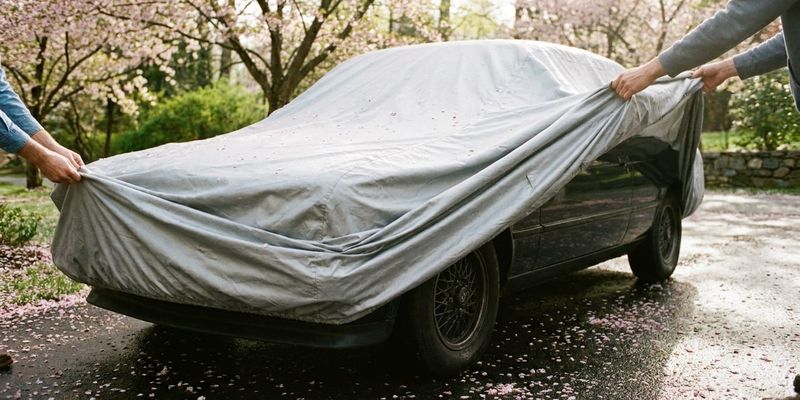
The Quick Answer: Best Car Cover for Arizona SUVs
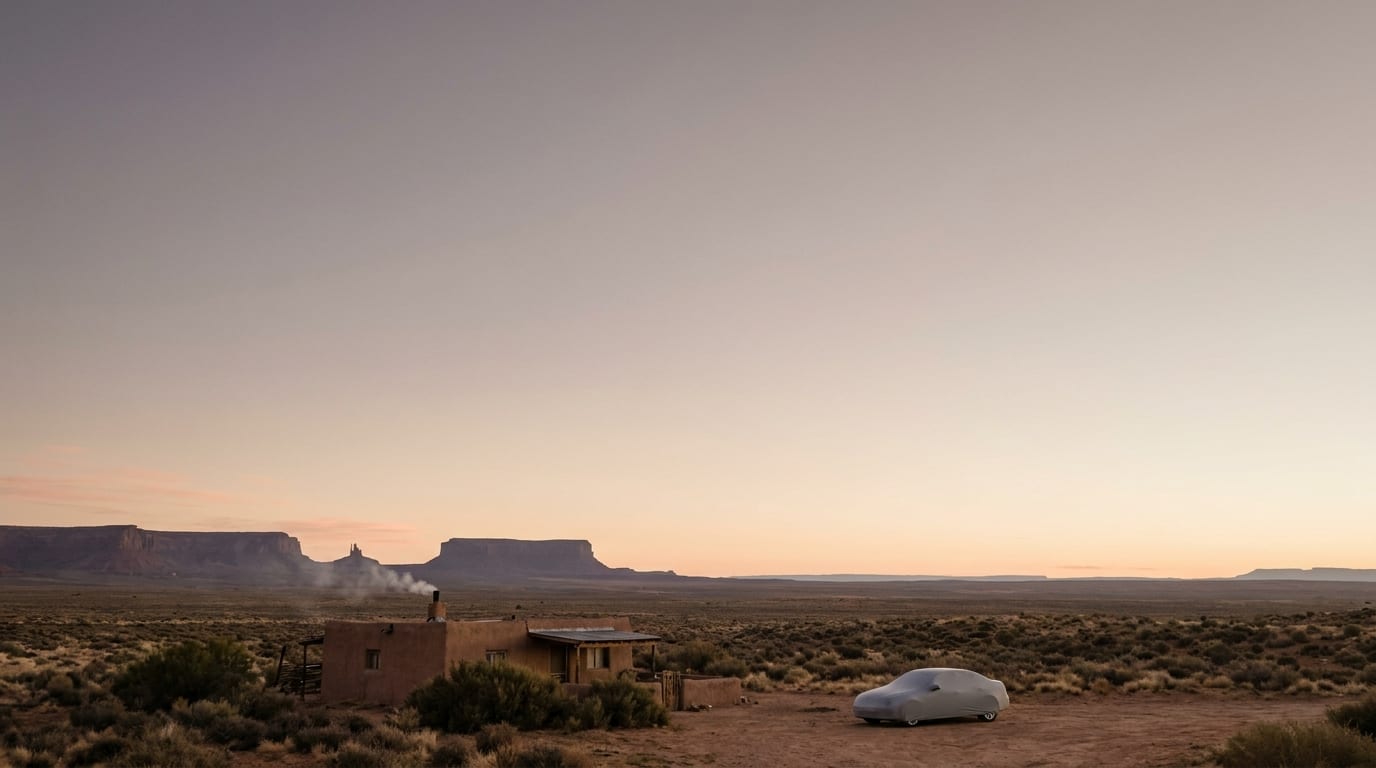
Yes, and the answer is specific: for an SUV parked outdoors in Arizona, you want a custom-fit outdoor cover with a UV-stabilized multi-layer outer shell, a breathable inner lining, and a lighter or reflective color. That combination is what actually holds up against Phoenix or Tucson sun day after day. Anything less, and you're either under-protecting the paint or trapping heat against it, which is arguably worse than leaving the SUV uncovered.
Here's why the combination matters so much in this specific climate. Arizona's UV load is relentless, and it fades paint, chalks clear coat, and cracks vinyl and rubber trim faster than almost anywhere else in the country. But the flip side is just as real: a cheap, non-breathable cover left on an SUV all day in 110-degree heat traps moisture and heat underneath it, which can bake the paint and invite mold in a way no cover at all wouldn't do.
So if you're asking "can you recommend a good car cover for a SUV parked in a hot, sunny climate like Arizona," the short version is: custom-fit, outdoor-rated, breathable, and light-colored. Here's how the main cover types stack up:
| Cover Type | UV/Heat Protection | Breathability | Fit Accuracy | Best For |
|---|---|---|---|---|
| Universal outdoor cover | Moderate | Varies by material | Loose, gaps at edges | Budget buyers, short-term use |
| Custom-fit outdoor cover | High (UV-stabilized shell) | High (multi-layer woven fabric) | Contoured to the exact vehicle | Daily outdoor parking in extreme sun |
| Indoor/dust cover | Low, not UV-rated | Low | Often good | Garage storage only, NOT Arizona sun |
That last row matters more than it looks. An indoor cover might fit nicely, but it's not built to take direct UV exposure, so using one outdoors in Arizona will shorten its life fast and leave your paint exposed sooner than you'd think. The rest of this guide walks through why custom-fit, breathable, and UV-rated wins out, and how to pick the right one for your specific SUV.
Why Arizona's Sun and Heat Are Especially Hard on SUVs
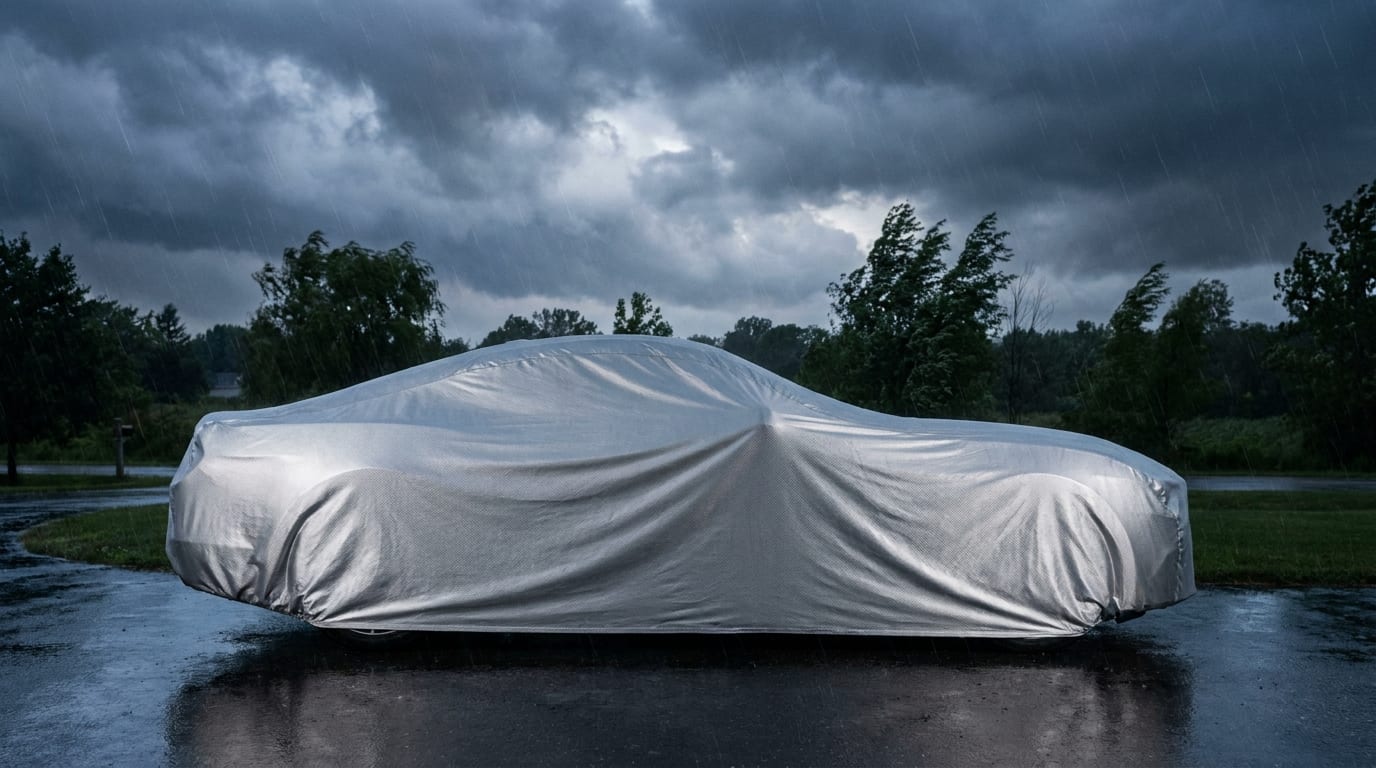
Desert sun isn't just stronger, it's more consistent. Months of near-daily direct exposure in Phoenix or Tucson parking lots add up, and that cumulative UV dose is what actually does the damage, not any single hot afternoon. Paint oxidizes, clear coat gets brittle and starts micro-cracking, and plastic trim turns chalky and gray well before it would in a milder climate.
It's not just the air temperature working against your SUV, either. Asphalt and concrete soak up heat and radiate it straight back up, so the undercarriage and tires take more thermal stress than the forecast temperature suggests. A 105-degree day can mean pavement-level heat well north of that right where your tires sit.
Then there's monsoon season. Arizona's summer dust storms, the haboobs, kick up enough grit and wind to sandblast unprotected paint and drive fine particles into seals and trim. It's a second, distinct stressor on top of the UV problem, and it's one a lot of out-of-state cover reviews don't account for at all.
A cover won't fully solve cabin heat either, let's be honest about that. But blocking direct sun on the glass and body does reduce how hot the dashboard and seats get, and it slows the cracking and fading that comes from UV hitting the interior through the windshield day after day. For more on that side of things, our guide on keeping a car cool in summer covers a few extra steps worth pairing with a cover.
The 4 Features That Matter Most for Hot-Climate Covers
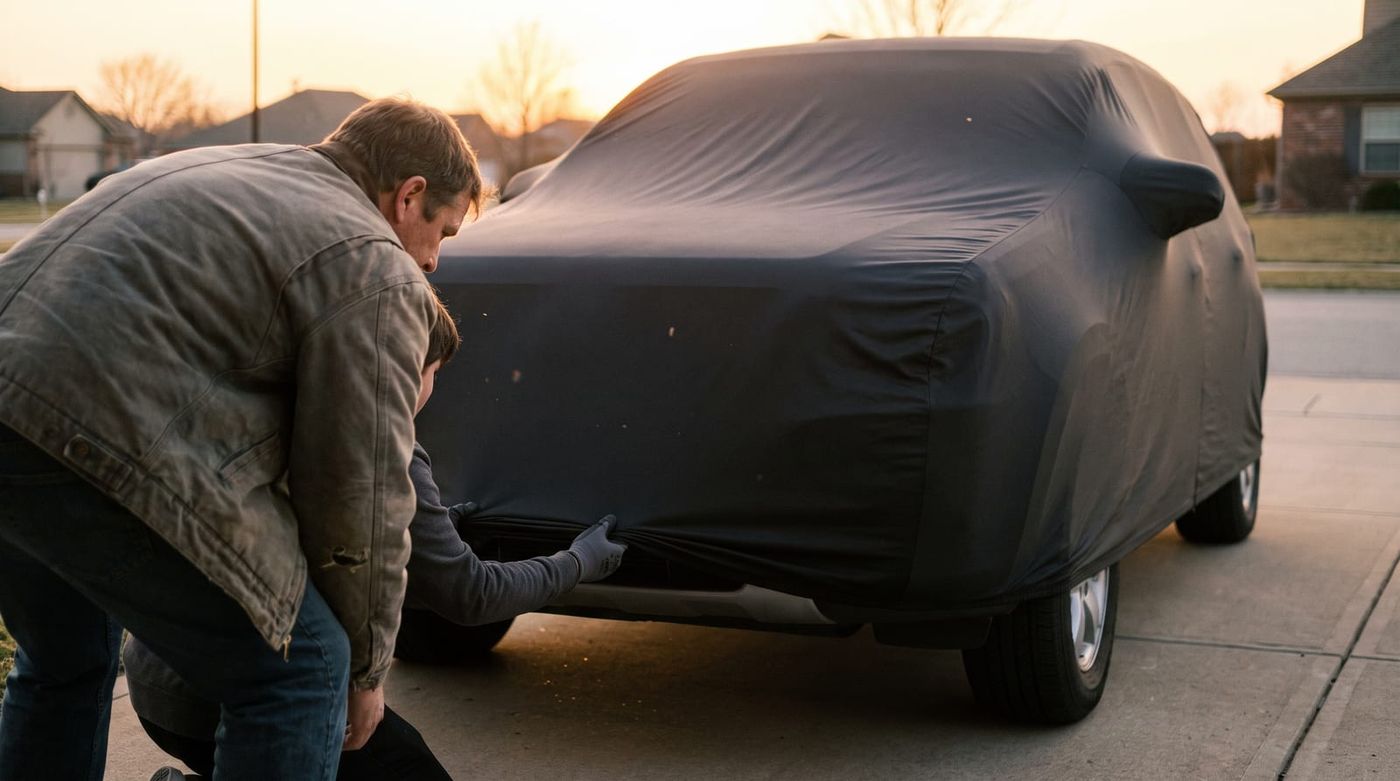
Not all "outdoor" covers are built for this kind of sun. Four features separate the ones that hold up in Arizona from the ones that quietly fail by August.
UV-stabilized outer fabric. This needs to be rated for sustained outdoor exposure, not the light-duty dust protection you'd find on a bargain cover. There's a real difference between a fabric treated to resist UV breakdown and one that just happens to block some light for a season.
Breathability. A good multi-layer woven fabric blocks UV rays while still letting moisture and heat escape from underneath. Skip this, and you're trapping humidity against the paint, which is exactly the setup for mold and clouded clear coat. This is the one feature people most often get wrong, honestly, because a cover that feels "thick and protective" in the store is sometimes the worst option for a hot climate.
Color and reflectivity. Lighter-colored covers reflect more solar radiation and simply run cooler to the touch in direct Arizona sun than dark ones. If you've ever touched a black car cover at 2pm in July, you already know why this matters.
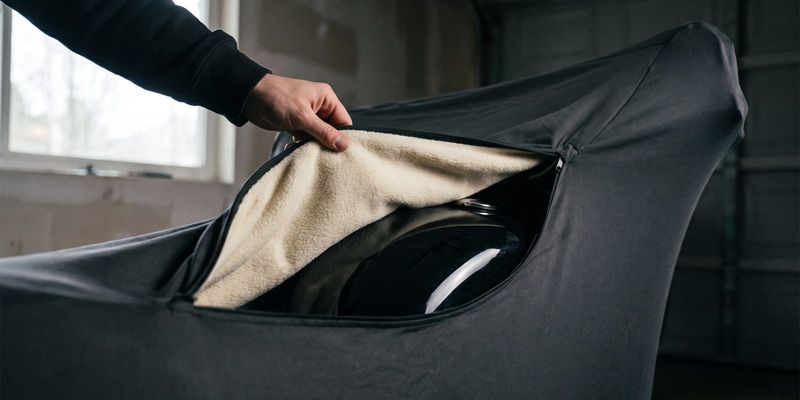
Soft inner lining. When wind kicks dust and grit up underneath a cover, which happens constantly during monsoon season, a soft lining keeps that grit from grinding into the paint every time the cover shifts.
For a deeper look at how different fabrics perform, our breakdown of which material car cover is best goes through the trade-offs in more detail.
Custom-Fit vs. Universal: Why Accurate Sizing Matters More in Extreme Heat
A loose, universal cover doesn't just look sloppy, it actively lets in more dust, wind-driven grit, and UV at every gap and loose edge. In a mild climate that's a minor annoyance. In Arizona, with constant sun and seasonal wind, those gaps are where the damage starts.
Fit matters even more on SUVs than on sedans, because SUVs vary so much in height and roofline. A Toyota 4Runner, a Jeep Grand Cherokee, and a Ford Explorer are all "SUVs," but they're three very different shapes, and a generic one-size-fits-most cover is going to sit loose on at least two of them. Taller, boxier SUVs especially need a contoured fit, or you end up with billowing fabric that flaps against the paint in every gust.
The fix is picking a cover sized to your exact vehicle rather than a rough category. Start with the sizing guide for choosing the right car cover, then run your year, make, and model through the coverfinder tool to land on the right fit. If you drive one of the three SUVs mentioned above, you can also go straight to the brand pages for Toyota SUV covers, Jeep SUV covers, or Ford SUV covers.
A snug, accurate fit does one more thing worth mentioning: it cuts down the "sail effect," where loose fabric catches wind and the whole cover tries to take off. During a real monsoon gust, that's not a hypothetical. A custom-fit cover simply has less loose material for the wind to grab.
Installing and Securing Your Cover Against Desert Wind
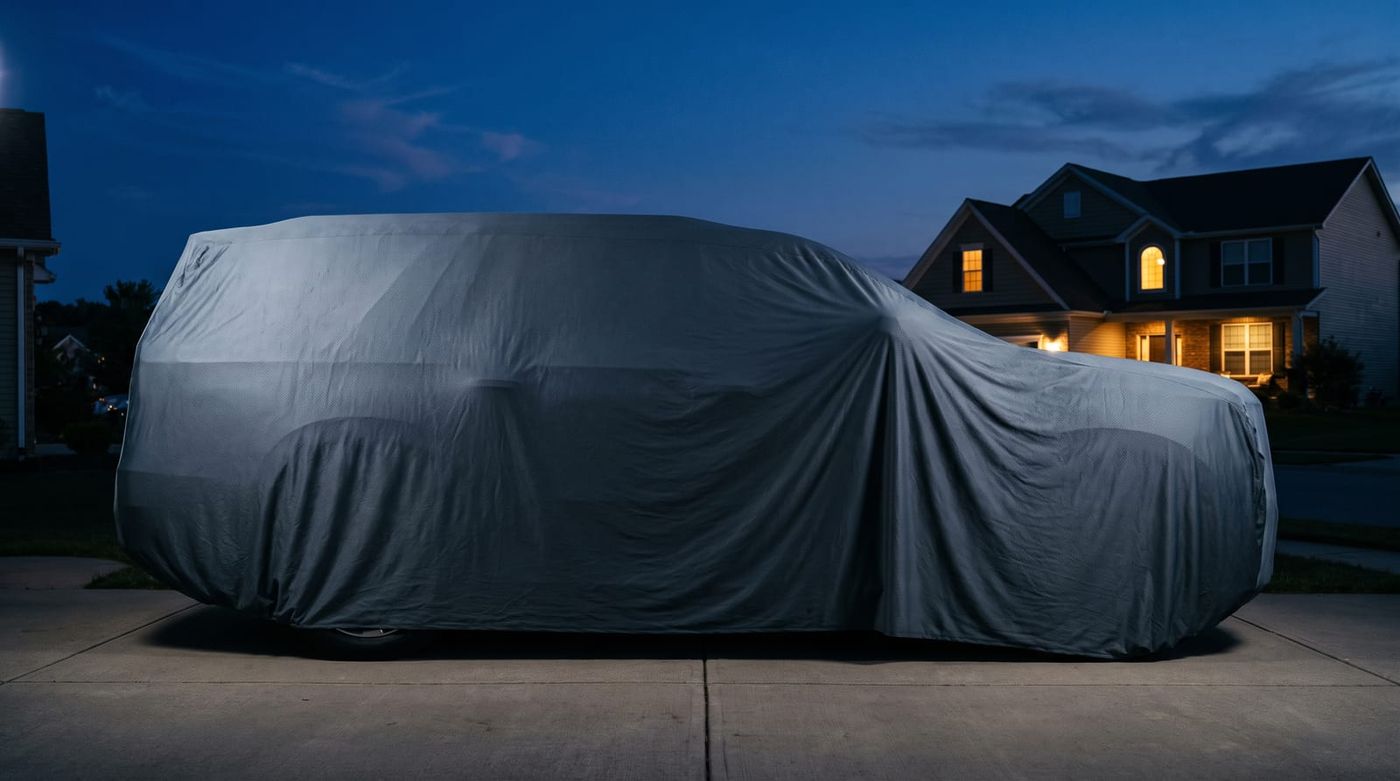
Straps and tie-downs matter more here than in most climates, full stop. Arizona's monsoon season brings wind gusts strong enough to lift a loose-fitting cover clean off a parked SUV, and dust storms make it worse by adding grit that works its way under any edge that isn't cinched down.
If your cover doesn't come with a built-in strap system, a gust strap or wind strap add-on is worth the extra few minutes of installation. These run underneath the vehicle and cinch the cover down at specific points, which keeps it from ballooning in a gust the way a cover held only by elastic hems will.
If the SUV sits outside in a driveway or long-term storage, a cable lock installation is also worth considering. It won't stop every determined thief, but it does deter the easy grab-and-go.
As a quick routine: secure the cover front-to-back first, check the tension after the first windy day (you'll usually find a strap or two has loosened), and re-tighten as needed. Takes five minutes, saves you from finding your cover three yards away in the morning.
Caring for Your Cover in Desert Conditions
Fine desert dust and pollen build up faster out here than in wetter climates, there's really no way around it. A cover that might go a month between washes somewhere humid needs more frequent rinsing in Arizona just to stay functional.
Don't fold it up and put it away while it's still dusty. That trapped grit grinds against both the fabric and your paint the next time you put the cover on, basically turning your own cover into light sandpaper. Give it a shake and a rinse before storage, every time.
When you do wash it, stick to the recommended cleaning steps for a car cover rather than reaching for whatever's under the sink. Harsh detergents can strip the UV-resistant coating that's doing most of the protective work, which defeats the purpose of buying a UV-rated cover in the first place.
UV exposure is also what eventually wears a cover out, no matter how well you care for it. Before buying, it's worth checking what warranty coverage applies, since that's your safety net once the sun has had its say.
Quick Answers: Common Questions About Arizona SUV Covers
Does cover color really affect heat? Yes. Lighter and reflective covers measurably run cooler in direct sun than dark ones, and that lower surface temperature means less stress on both the cover fabric and the paint sitting underneath it.
Can a cheap tarp work instead? No. Tarps aren't UV-stabilized and they don't breathe, so they trap heat and moisture right against the paint. You'd actually be accelerating damage, not preventing it.
How often should an Arizona SUV cover be replaced? A UV-rated outdoor cover typically holds up for several seasons of daily desert sun before the protective coating degrades enough to need replacing. Exact timing depends on how much direct exposure it gets and how well it's cared for.
Next Step: Find the Right Cover for Your SUV
So, back to the original question: can you recommend a good car cover for a SUV parked in a hot, sunny climate like Arizona? Yes, and it's a custom-fit, UV-rated, breathable, lighter-colored outdoor cover, paired with tie-downs for wind. That's the combination that actually earns its keep through a full Arizona summer.
If you want to see what fits your specific SUV, browse the current lineup and run your vehicle through the coverfinder before you buy. It's worth comparing a couple of top-rated options side by side rather than grabbing the cheapest universal cover off the shelf, since the fit and fabric are exactly where the cheap ones fall short.
A good cover is a one-time purchase that pays for itself in paint you don't have to repaint and trim you don't have to replace. Worth getting right the first time.