What a Car Cover with Reinforced Corners Actually Protects Against
Published
Wind doesn't hit a parked car evenly. It grabs the loose fabric at the bumpers, tugs at the corners, and lets go, over and over, for as long as the cover's on. That's where a cheap cover gives up first. The body panels usually hold up fine. The corners fray, the stitching pulls loose, and within a season you're looking at a cover that flaps instead of fits. A car cover with reinforced corners is built specifically to handle that stress, and understanding what the feature actually does (and who needs it) will save you from either overpaying for it or skipping it when you shouldn't.
Why the Corners Are the First Place a Cheap Cover Fails
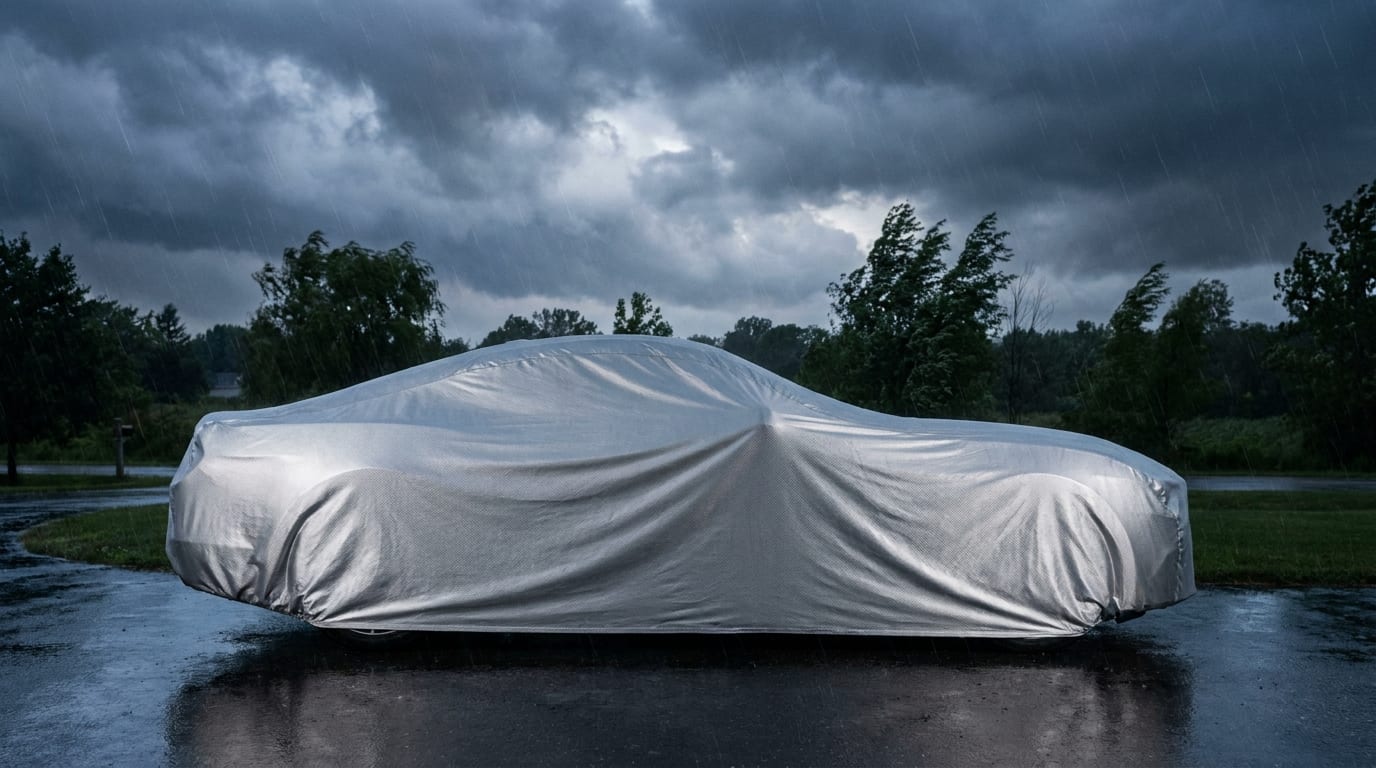
Think about how a cover drapes over a bumper. There's extra material there, bunched or folded to wrap around the curve, and that extra material is exactly what wind catches. A gust doesn't just push on the cover, it lifts the slack at the corners and snaps it back down. Do that a few hundred times over a few months and you've got real fatigue in the fabric.
There's a second problem layered on top: friction. Every time that slack fabric gets pushed, it rubs against the bumper edge or wheel arch underneath it. Not once. Daily, sometimes hourly, in a stiff wind. That's abrasion wearing on the exact same few inches of fabric for weeks on end. A single-layer panel just isn't built to take that kind of repeated contact.
So manufacturers started adding extra reinforcement specifically at the corners. Not because the whole cover needs it, but because that's where the physics of wind and friction actually concentrate. The rest of this article is about what that reinforcement looks like, what it's made of, and whether it matters for your situation.
What 'Reinforced Corners' Actually Means on a Cover
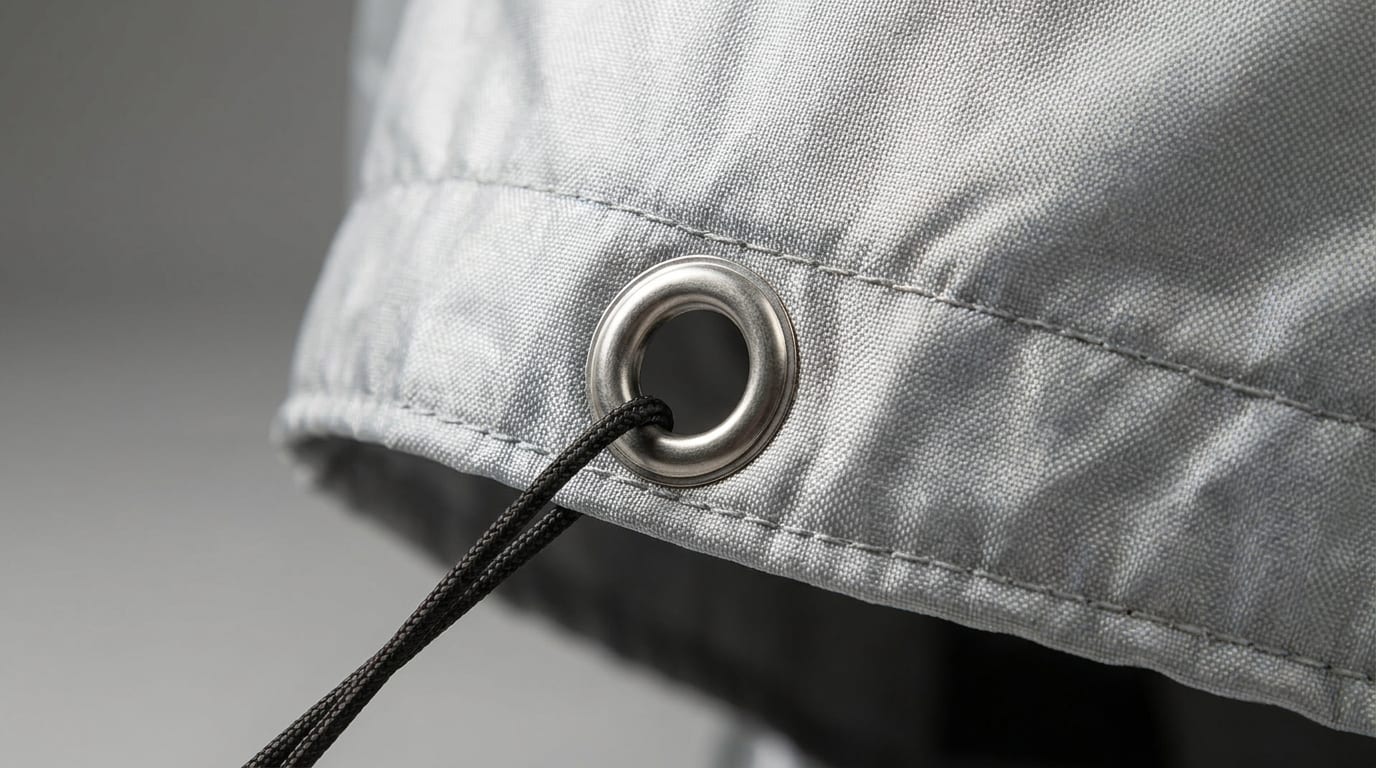
Strip away the marketing language and reinforced corners come down to two construction choices. First, heavier or double-layered fabric panels sewn in at the bumper and corner zones, distinct from the lighter single-layer material used across the hood, roof, and doors. You're not paying for a thicker cover everywhere. You're paying for extra material exactly where the wear happens.
Second, the stitching itself changes. Instead of a single straight seam, reinforced corners typically use box-stitching or bar-tacking, patterns that spread tension across multiple stitch lines instead of concentrating it on one. A straight seam under repeated stress will eventually rip along its full length. A box-stitched or bar-tacked seam resists that because the load gets distributed instead of focused on one weak line.
Worth being clear on: this isn't a separate product tier. You won't find a cover labeled "reinforced corner cover" as its own category. It's a construction detail that shows up as a line item in the spec sheet for outdoor and all-weather covers, usually mentioned alongside fabric weight and layer count. If you're comparing two outdoor covers and one mentions reinforced corners and the other doesn't say anything about it, that's your signal to look closer.
How Reinforced Corners Work With Grommets and Straps

Reinforced fabric solves the wear problem. It doesn't solve the other half of the equation, which is keeping the cover in place to begin with. That's why most covers with reinforced corners also build in grommets at those same points, small reinforced eyelets that let you run a cable lock or a gust strap through.
The two features work together. Heavier fabric at the corners resists the abrasion. Grommets and straps stop the cover from riding up and flapping loose in the first place, which means less abrasion happening at all. A cover that just survives wind damage is doing half the job. One that's cinched down tight isn't getting whipped around as much to begin with.
If you've already got a cover without this setup and you're dealing with wind in an open lot or exposed driveway, you don't necessarily need to replace the whole thing. The gust strap installation guide walks through adding that level of tie-down security to a cover you already own, which closes a lot of the gap even without factory-reinforced corners.
Who Actually Needs This Feature
Honestly, if your car lives in a garage, this is one spec you can mostly ignore. A cover stored indoors isn't getting hit by sustained wind, so the corners aren't under repeated stress. The reinforcement is solving a problem that garage storage doesn't really create.
Outdoor storage is a different story. Open lots, exposed driveways, anywhere with regular wind, the cover is taking that stress daily, not occasionally. The outdoor car covers guide covers the broader list of what outdoor exposure does to a cover, and corner wear is a big piece of that picture.
Body style matters too. Trucks and SUVs have larger bumper overhangs and more exposed fabric at the corners than a sedan does, so there's simply more material flapping and more surface area getting abraded. If you're shopping for a truck cover or an SUV cover, reinforced corners earn their keep faster than they would on a compact car with tighter bumper lines.
And then there's how long the cover stays on. If you're pulling it on and off every day, the cumulative wear is minimal; there's just not enough exposure time for fatigue to build. But if you're leaving a cover on for weeks between uses, which is common with a second vehicle or a seasonal car, that's exactly the scenario reinforced corners were built for. Time under wind stress is the variable that matters, not just whether wind exists.
Spotting It When You're Comparing Covers
Here's the shortcut: don't trust "heavy-duty" or "premium" as a stand-in for corner reinforcement. Those words get used loosely. What you want is a product description that specifically calls out reinforced, double-layer, or heavy-gauge fabric at the corner or bumper area. If the listing only talks about overall fabric weight and never mentions the corners specifically, assume it's a standard single-layer build throughout.
Also worth separating in your head: waterproofing, UV resistance, and corner reinforcement are three different specs. A cover can have one without the others. You can find a fully waterproof cover with no extra corner reinforcement, and you can find reinforced corners on a cover that isn't rated for heavy rain at all. If both matter to you, check both lines in the spec sheet rather than assuming one implies the other. The waterproof car covers guide breaks down what that separate spec actually covers.
One more check before any of this matters: confirm the base fabric is actually rated for outdoor use. Reinforced corners on an indoor-only fabric don't do much, because the fabric itself isn't built to handle sun, rain, or sustained wind in the first place. Reinforcement is an upgrade on top of a solid foundation, not a substitute for one.
Shop Covers With Reinforced Corners
If you're storing outdoors and wind is a regular factor, start with the outdoor car covers guide to narrow down options by weather exposure before you start comparing individual specs like corner construction.
Truck and SUV owners should go straight to their truck cover or SUV cover category pages, since the larger bumper overhangs on those body styles make corner wear a bigger factor than it is on a sedan. If your vehicle doesn't fit a universal size well, a custom-fit cover also cuts down on excess slack fabric at the corners to begin with, since there's less loose material for wind to catch.
And once you've got a cover on, a quick look at how to clean a car cover will help the reinforced fabric actually last as long as it's built to.
If you want more buying guides like this one before you commit to a cover, our articles section has the rest of the series. And if you're weighing options for a while before deciding, a properly fitted, reinforced cover from CarCovers is backed by a lifetime warranty, so you're not stuck guessing whether the reinforcement will actually hold up.