
What Car Cover Works Best for Someone Who Moves Their Car In and Out of the Garage Daily?
Published
The Short Answer
For daily in-and-out garage use, the best car cover is a lightweight, breathable, custom-fit (or semi-custom) cover made from a soft multi-layer fabric, with no mandatory grommet straps or support poles to fuss with. It goes on and comes off in under a minute. That's the whole job description.
Heavy-duty, fully waterproof outdoor covers built for weeks of exposure are the wrong tool here. They're bulkier, harder to fold and unfold every day, and the repeated handling tends to wear out the straps and buckles long before it wears out the fabric. So if you're asking what car cover works best for someone who moves their car in and out of the garage daily, the honest answer is: optimize for speed and durability-under-handling, not maximum weatherproofing. Your car spends most of its life under a roof anyway. Stop buying protection for conditions it rarely sees.
Why Daily In-and-Out Use Changes What "Best" Means
A cover used daily gets folded, stuffed into a trunk or storage bag, and refitted hundreds of times a year. Do the math: twice a day, five days a week, and you're past 500 install cycles annually. That kind of use doesn't wear out fabric from UV or rain exposure, because it's barely seeing either. It wears out grommets. It frays elastic hems. It snaps buckles. The failure point shifts from "the material degraded" to "the hardware gave out from being handled like luggage."
Compare that to a car parked outside for weeks at a stretch. That owner's top priority is waterproofing and UV resistance, full stop, because the cover is doing long-duration battle with weather. The daily mover has a completely different problem: survive being yanked on and off, folded wrong, tossed in a trunk, repeat tomorrow.
Here's where install time becomes a real spec, not an afterthought. A cover that takes 5 to 10 minutes to fit, complete with cable locks, wind straps, and a support pole, is fine for someone covering their car once a month. It's a genuine chore for someone doing it twice a day. At that point, minutes added up over a year turn into hours wasted on buckles.
Weight matters too. A heavy multi-layer outdoor cover is tiring to wrestle on and off daily, especially one-handed while you're also holding car keys and a coffee. A lighter indoor/outdoor hybrid fabric folds smaller, weighs less, and doesn't turn cover duty into a workout.
Key Features to Look For in a Daily-Use Cover
Start with fit. A custom-fit car cover is cut to your vehicle's actual dimensions, so it drapes into place fast and doesn't need constant readjusting the way a generic universal cover does. Universal covers are the worst offenders for daily use: too much slack fabric means more time spent tucking and tugging every single time.
Go lighter on fabric weight. Since the car isn't parked outside for extended stretches, trapping moisture isn't the threat it would be for a long-term outdoor cover, so a breathable, lighter weave does the job without the bulk.
Look for a simple on/off design. An elastic hem or a single front-to-back strap beats a full cable-lock-and-grommet setup every time, for this use case. Those security-grade systems exist for cars left outside and unattended for days. You don't need that complexity for a car that's inside your own garage most of the time.
Check the stress points before you buy. Seams, hems, and mirror pockets should be double-stitched, because those are exactly the spots that fail first when a cover gets folded and unfolded on repeat. A cover can have great fabric and still rip at the seam within a season if the stitching's an afterthought.
And get one with a built-in storage bag. Sounds minor, but it's the difference between a cover that stays clean and ready on a shelf versus one that ends up as a wrinkled ball of fabric in the trunk, picking up dirt and grit that then gets wiped straight onto your paint next time you use it.
Indoor-Style vs. Outdoor-Style Covers for This Use Case
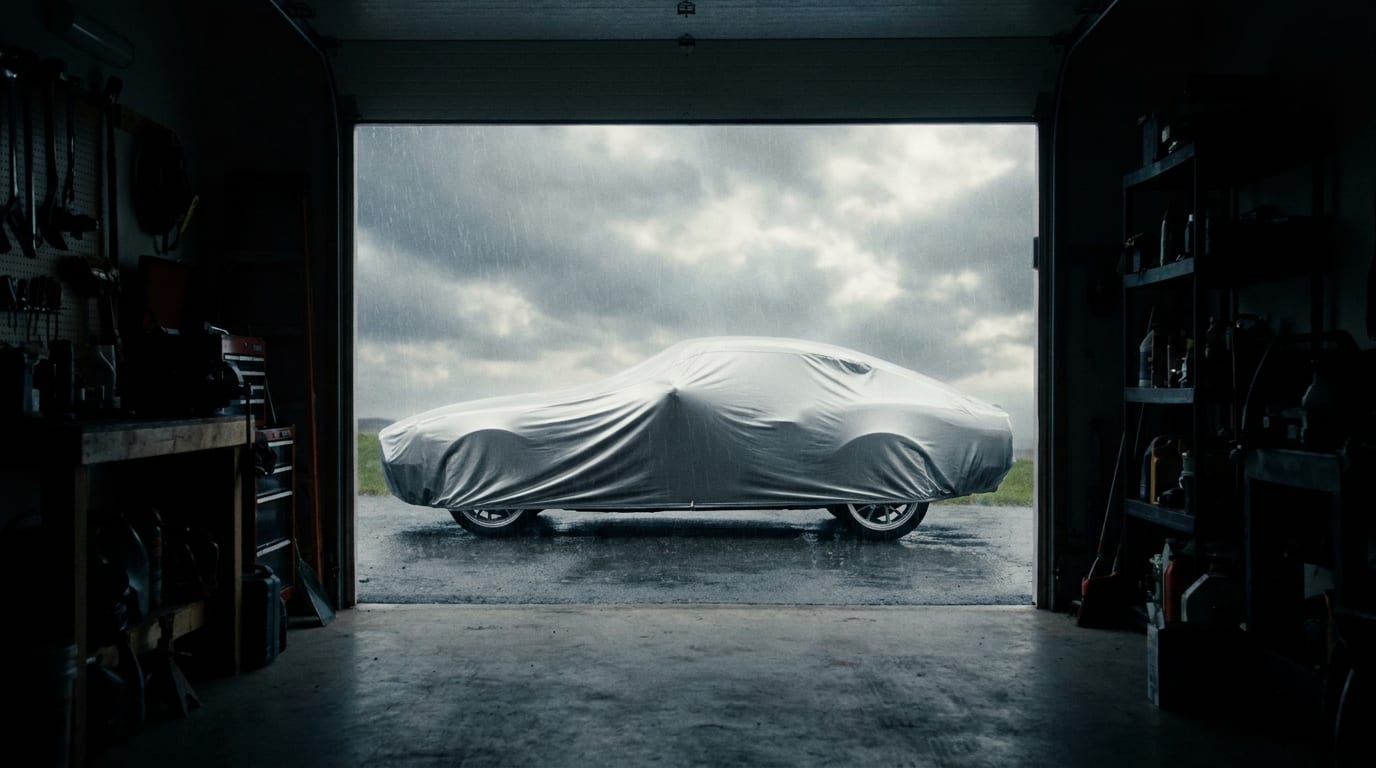
Most daily in-and-out drivers are better served by an indoor car cover or a lightly rated outdoor cover, not a heavy-duty all-weather one. Your exposure windows are short: the driveway, a quick errand, maybe street parking for an hour. A cover built to survive a month outdoors is overkill for that.
There's an exception worth naming. If your car sits outside uncovered for part of the day, rain or direct sun, before it goes back in the garage, a water-resistant (not fully waterproof) cover is the better middle ground. A pure indoor satin cover isn't built for that, and you'll know fast if you're asking it to do a job it wasn't designed for.
Indoor covers also prioritize a soft, scratch-free lining, which matters more here than people assume. You're draping and removing this cover constantly, right up against the paint. A rougher-lined outdoor cover, designed to shrug off weather, isn't always built with that same priority on interior softness.
If you're not sure which camp you fall into, the split is really about your actual routine, not your preference. Check both the indoor cover guide and the outdoor cover guide and be honest about how much time your car spends exposed before it lands under a roof.
Getting the Fit Right So Installation Stays Fast
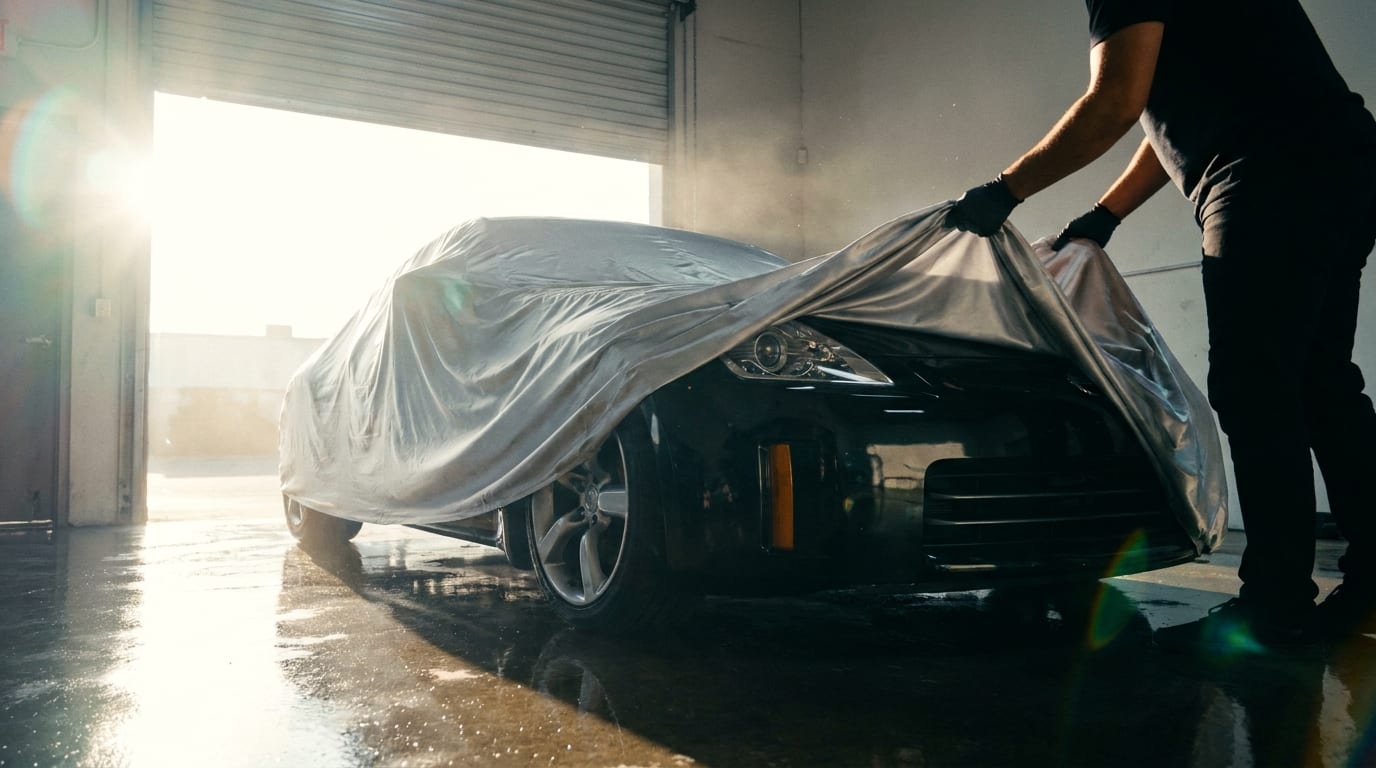
An ill-fitting cover is the number one reason daily installation turns into a chore. Excess fabric bunches at the hood, catches on side mirrors, drags on the garage floor. None of that's a big deal once. Twice a day, every day, it adds up to real annoyance and real wear.
Measure by exact make, model, year, and ideally trim, not by a general size category like "mid-size sedan" or "full-size SUV." Fit differences that look small on paper (a few inches here, a different mirror shape there) compound fast when you're doing this install routine twice daily. The sizing guide exists specifically to help you match cover dimensions to your actual vehicle before you buy, which saves you from guessing and returning.
A snugger fit also cuts down on flapping and wind lift during that short walk from garage to driveway. Doesn't sound like much until you've chased a loose cover corner across a windy parking spot at 7am.
Keeping a Daily-Use Cover in Good Shape
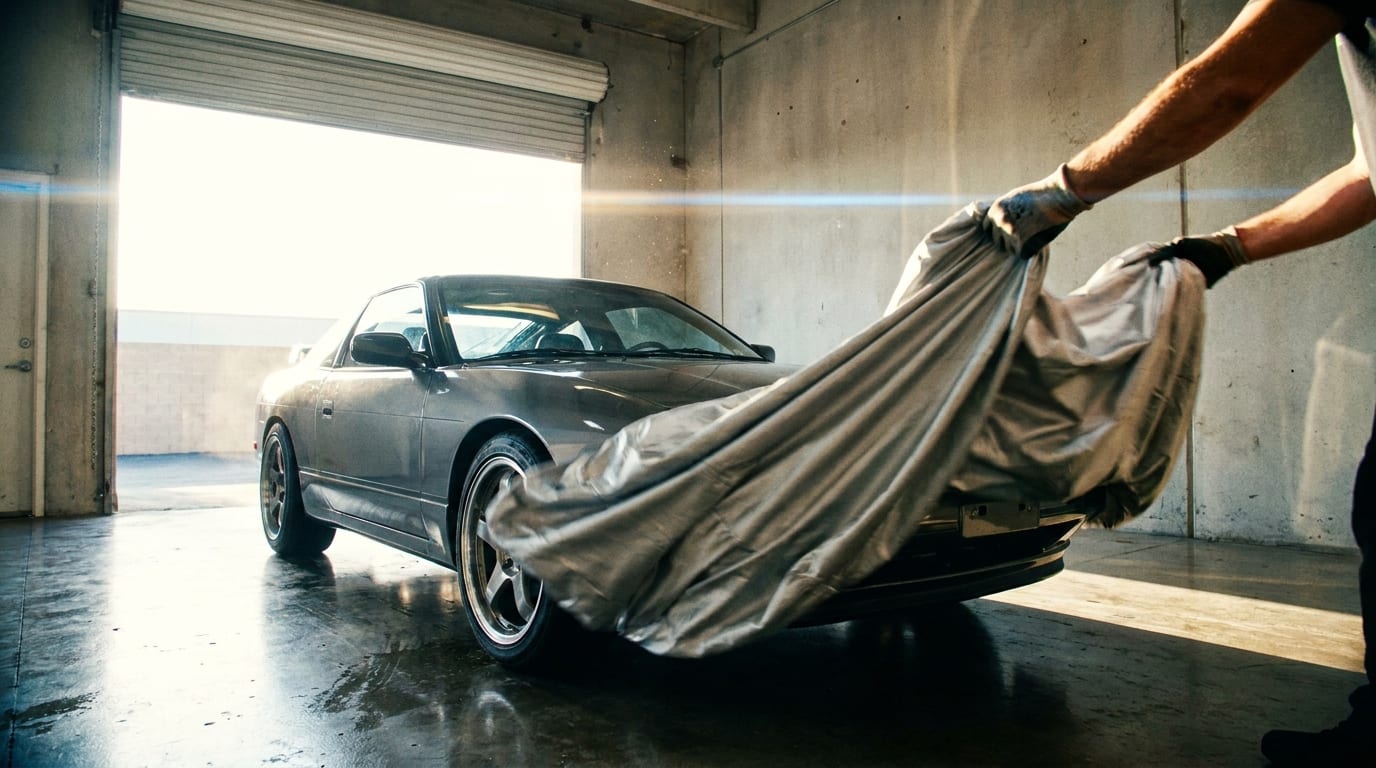
Give the cover a quick shake-out before folding. Takes five seconds and keeps dirt and moisture from getting trapped between layers, which matters more for a daily cover than a long-term one, since you're folding it so much more often.
Wash it on whatever schedule fits the fabric. Skipping this lets grit work into the weave, which abrades the material faster under frequent handling, exactly the kind of wear a daily-use cover can't afford. The cover care guide has fabric-specific wash guidance worth following rather than guessing at.
Small habit that actually extends cover life: don't fold it the same way every time. Rotating your fold lines means you're not creasing (and eventually weakening) the exact same seams day after day.
Last thing: check the warranty on seams and stitching specifically, not just the fabric. For daily-handled covers, that's where failure shows up first, so a cover warranty that actually covers stitching is worth more to you than one that only talks about weatherproofing. For a step-by-step on getting the cover on smoothly in the first place, the installation guide is worth a look too.
Bottom Line
So, what car cover works best for someone who moves their car in and out of the garage daily? A lightweight, custom-fit cover with a simple on/off design and reinforced seams, not a heavy-duty all-weather cover built for a completely different job. Match the cover to your actual routine, not to a worst-case weather scenario your car rarely faces.
If you want help narrowing it down, browse the car cover selection or run your vehicle through the cover finder tool to land on something built for exactly this kind of daily, quick-handling use.






