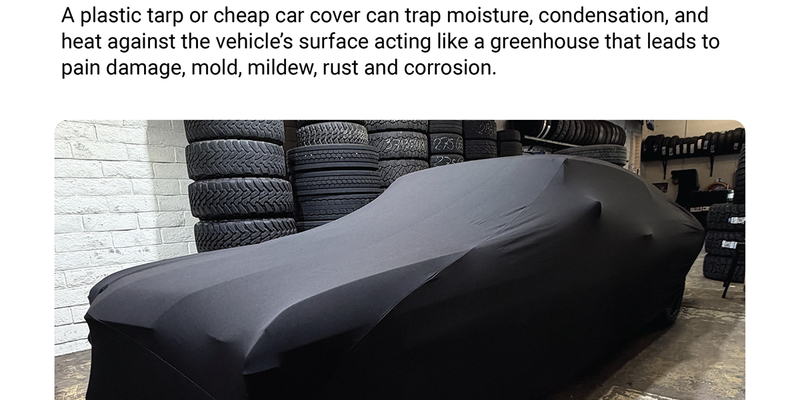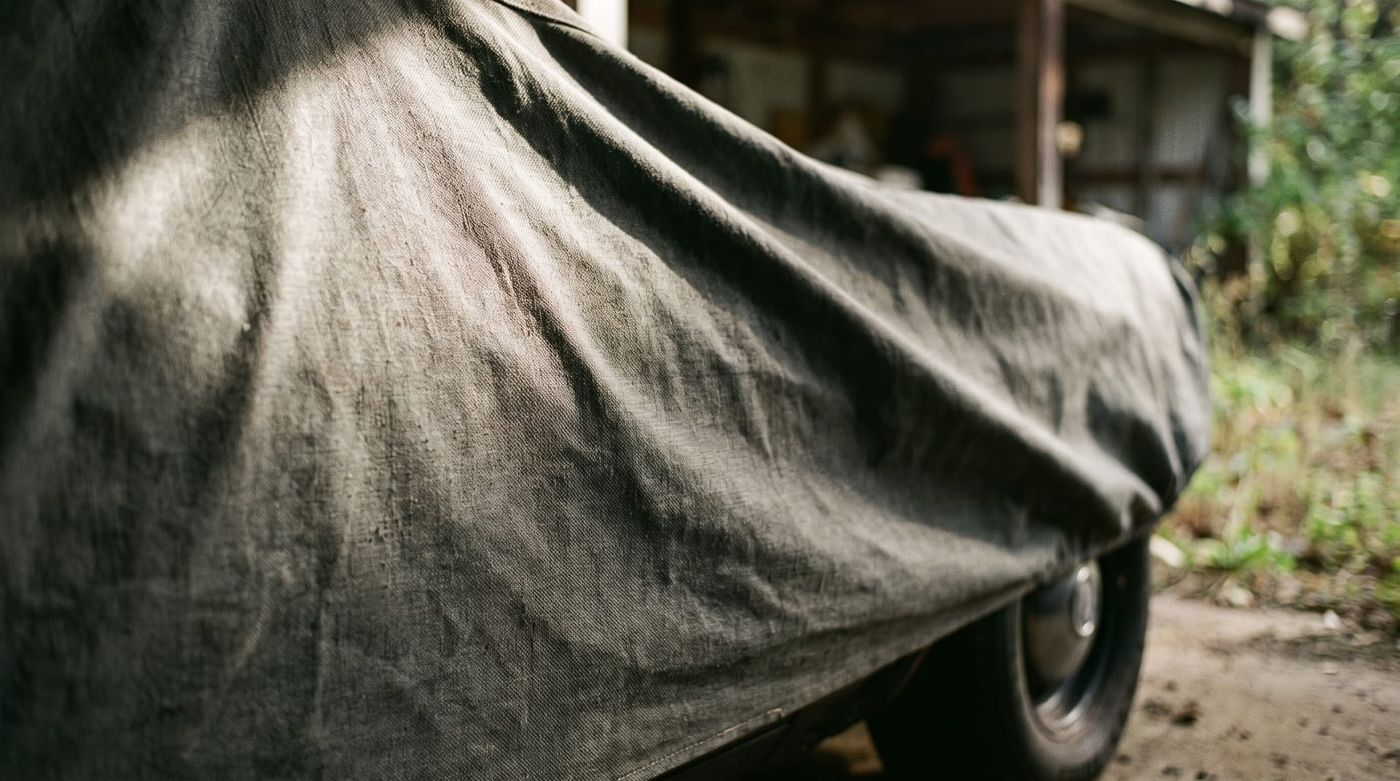
Leave a car parked outside and the sun starts working on it immediately, not just during the two weeks of August when everyone complains about the heat. UV rays break down clear coat and fade pigment even on cars that only sit out a few hours a day. That's the problem a car cover with UV-treated fabric is actually built to solve, and it's worth understanding how that works before you buy one based on a vague "weatherproof" label.
Why UV Exposure Is a Bigger Threat Than Most Owners Realize
People tend to associate sun damage with Arizona driveways and Texas parking lots. Fair enough, but UV breakdown doesn't need triple-digit heat to happen. It needs time. Ultraviolet radiation attacks the polymers in clear coat, breaking down the molecular bonds that keep paint glossy and flexible. A car parked outside for three or four hours a day, every day, accumulates the same kind of damage as one parked in a harsher climate, just on a longer timeline.
That's the part most owners miss: UV damage is cumulative, and it's invisible for a long stretch before it isn't. You don't see fading happen. You see a car that looked fine six months ago and now has a chalky haze on the hood, or a roof that's noticeably duller than the doors. By the time cracking shows up in the clear coat, the damage underneath has been building for a long time.
It's not just exterior paint either. Pop the door on a car that's sat uncovered for a season and the dash plastic, seat material, and steering wheel have all taken a UV beating too. Sun gets through glass and does real work on interior components, which is one reason sun exposure matters even for cars parked outside for what feels like a short stretch.
All of this points back to one thing: the cover's fabric is the first physical barrier between the sun and your paint. Not every fabric handles that job the same way, and that's where the term "UV-treated" actually starts to matter.
What 'UV-Treated Fabric' Actually Means

In plain terms, UV-treated fabric is woven or coated material that's been infused with UV inhibitors or stabilizers, compounds that absorb or reflect ultraviolet radiation before it reaches the surface underneath. Think of it as sunscreen built into the material itself rather than something sprayed on top.
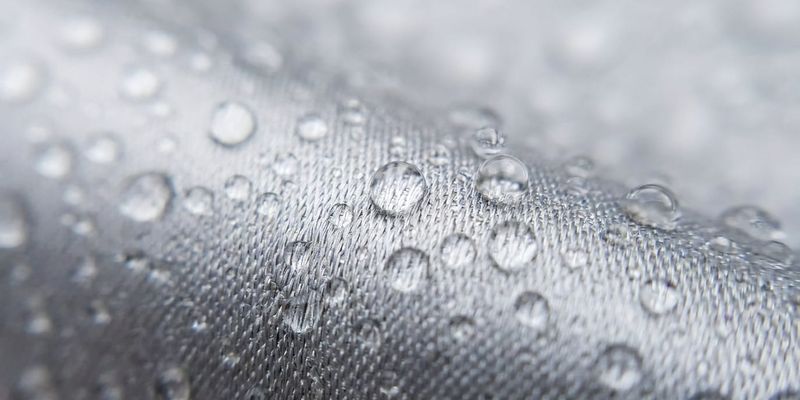
Here's a distinction that trips people up: water resistance and UV resistance are not the same property, and a fabric can have one without the other. A cover can shed rain just fine and still offer almost nothing against sun exposure, because keeping water out and blocking ultraviolet wavelengths are two different jobs handled by two different parts of the fabric's construction. If you're comparing covers, check both specs separately. Don't assume one implies the other.
Real UV treatment typically happens at the fiber or coating level during manufacturing, not as a surface-level spray that wears off after a few washes. That matters because a treatment that's baked into the material holds up over seasons of exposure, where a topical spray degrades fast and leaves you with a cover that looks protected but isn't anymore.
The other piece people overlook: good UV protection is paired with breathability. A cover that blocks sun but traps moisture underneath just trades one kind of damage for another. Moisture that can't escape sits against the paint and causes its own problems, so the better fabrics are engineered to let water vapor out while still blocking UV rays coming in. One property without the other is a half-measure.
How to Tell If a Cover's UV Protection Is Actually Good

Marketing copy loves the phrase "all-weather." It means almost nothing on its own. Look past it and check a few concrete things instead.
First, does the manufacturer actually specify a UV treatment process or rating, rather than just claiming sun protection in general terms? Second, look at the fabric itself. A slightly matte, non-glossy finish is usually a better sign than a shiny, vinyl-like surface, since those glossy fabrics often skip real UV treatment in favor of a look that photographs well. Third, check whether the warranty covers fading. A company confident in its UV treatment will usually stand behind it; one that doesn't mention fading in its warranty language is telling you something too, so it's worth reading the lifetime warranty details before you buy.
There's also a meaningful difference between indoor and outdoor cover lines. Indoor car covers are built for dust and light scuffs in a garage, not sun exposure, so they generally carry little to no real UV treatment. That's fine for their purpose. It's not fine if you're using one outside and expecting it to do a job it was never built for.
And within a brand's own lineup, the tiers usually aren't just about thickness. A basic cover and a premium cover from the same company often differ specifically in UV resistance and waterproofing strength, which is the detail that actually matters more than the overall fabric weight.
UV Treatment vs. the Other Weatherproofing Factors That Matter Together
UV resistance doesn't work alone. It's one piece of a cover's weatherproofing alongside waterproofing, breathability, and wind retention, and a cover that's strong in one area but weak in another still leaves your car exposed somewhere.
Here's a scenario that plays out more than you'd think: a fully waterproof cover that isn't breathable. Rain stays out, sure. But moisture already present from humidity or morning dew gets trapped underneath with nowhere to go. That trapped moisture sits against UV-faded fabric, and now you've got two forms of wear working on the material from opposite directions at once, inside and out. The cover degrades faster than either factor would cause on its own.
This is why picking a cover isn't really about finding the single "best" fabric property and buying whatever scores highest on that one spec. It's about matching the fabric's full set of properties, UV resistance, water resistance, breathability, wind retention, to how and where the vehicle actually sits. For a full breakdown of what that balance looks like in practice, the guide to using a car cover outdoors covers how these factors interact in real conditions, and the article on waterproof fabrics goes deeper into that specific property if you want the full picture.
Matching UV-Treated Covers to How You Park
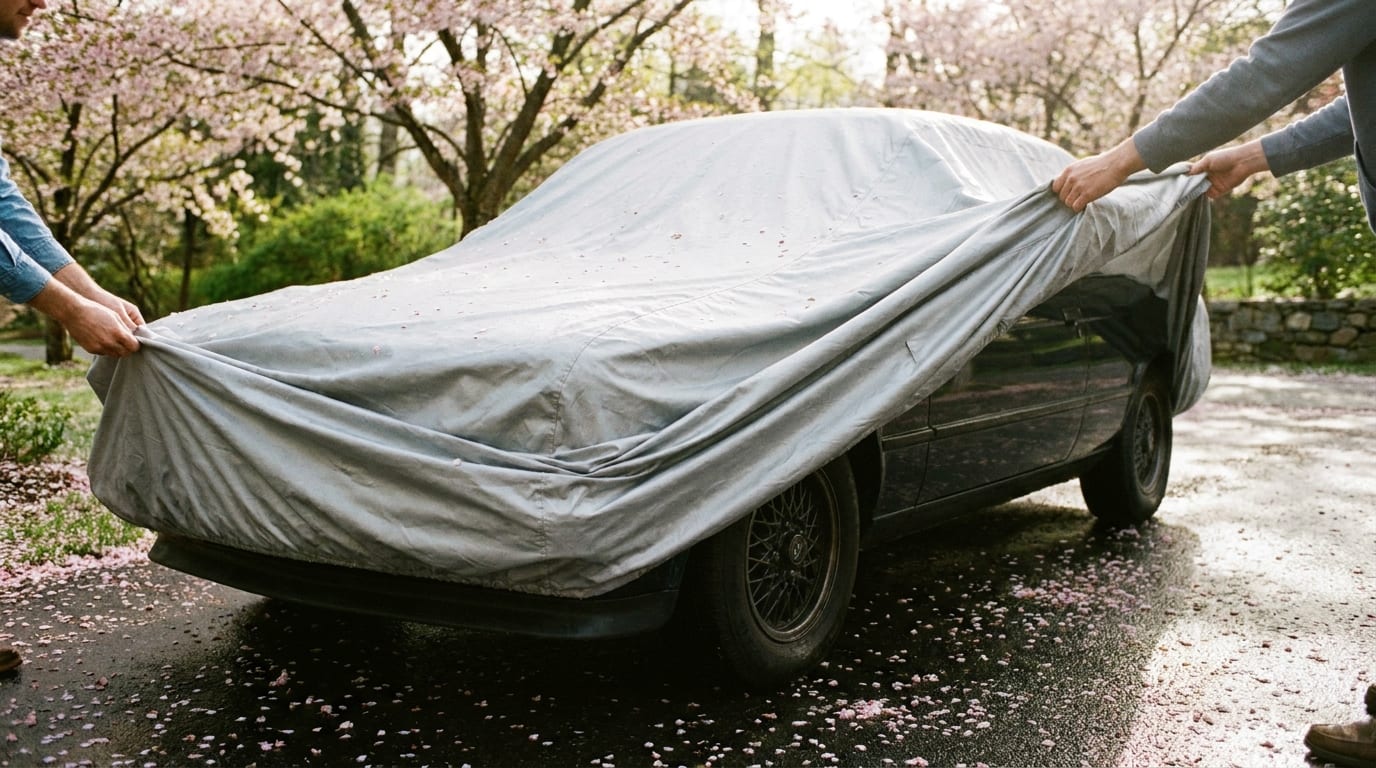
Not every car needs the same level of UV protection, and overbuying doesn't help you if the fabric is heavier and less breathable than your situation calls for.
If your car sits outside daily in full sun, driveway, street parking, no garage at all, go with a heavier-duty outdoor car cover built specifically for consistent exposure. This is the situation where cutting corners on UV treatment shows up fastest, usually within a season.
If you're splitting time between driveway and garage, a mid-weight UV-treated fabric strikes a better balance. You get real protection without the bulk and reduced breathability of a cover engineered for worst-case sun exposure every single day.
If the car only sits out occasionally, seasonal storage, the odd road trip, a lighter UV-treated fabric is usually enough, since the exposure itself is intermittent rather than constant.
One more variable worth factoring in: your car's color and your local climate. Darker paint absorbs more heat and shows UV fading faster than lighter colors, and owners in high-UV regions get more return out of a stronger UV-rated fabric than someone in a cloudier climate running the same cover.
Shop Car Covers with UV-Treated Fabric
If you're shopping with this in mind, start with the outdoor car cover guide to compare UV and weatherproofing options by vehicle type, or browse car covers by make and model to find the right fit first. Fit matters here too. A cover that doesn't sit properly leaves gaps where sun and water both get in, so it's worth checking the sizing guide alongside the fabric specs.
A correctly fitted car cover with UV-treated fabric is a one-time purchase set against an ongoing cost: paint correction, clear coat restoration, interior repair, all of which run higher than the price of a decent cover. If you want the fuller case for why a cover earns its keep in the first place, why buy a car cover lays it out in more detail.
Worth a look before you buy: the vehicle-specific brand pages, which help you match both the fit and the fabric weight to your actual parking conditions. And if you want more of this kind of practical buying advice as new guides go up, keep an eye on the car care section for what's next.