
What's the Best Car Cover for a Convertible in a Snowy Climate Like Minnesota?
Published
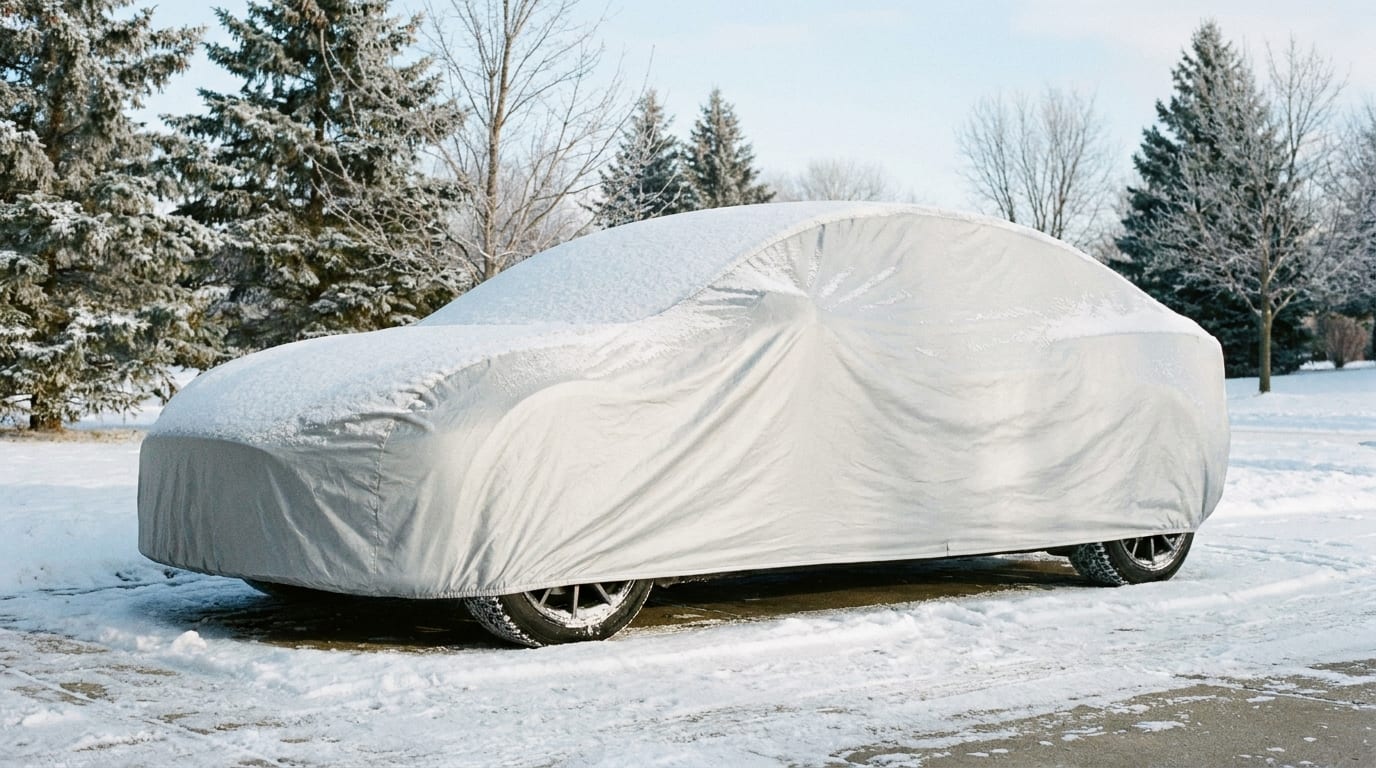
The Best Car Cover for a Convertible in Minnesota's Snow
What's the best car cover for a convertible in a snowy climate like Minnesota? It's a custom-fit, multi-layer waterproof outdoor cover with a fleece-lined interior, reinforced seams, and a cable-lock or grommet system built to handle heavy snow load and wind gusts off the plains. Anything less, and you're asking a thin layer of fabric to do a job it wasn't built for.
This answer isn't generic. Minnesota's winters combine sub-zero cold, heavy wet snowfall, and constant freeze-thaw swings, a mix that's harder on a cover than, say, a rainy but mild coastal climate. A cover that works fine in Oregon can crack and leak in Duluth. Below is a quick comparison table showing how budget, mid-tier, and premium covers stack up on the features that actually matter here, so you can see where the trade-offs are before you buy.
Why Minnesota Convertibles Need More Than a Standard Cover
A convertible's soft top is the weak point. Snow sitting directly on fabric seams for days at a time works moisture into stitching in a way a hardtop roof just doesn't experience. Ice forms in those seams, expands, and over a winter or two you're looking at cracked or delaminated fabric.
There's also the structural issue. Convertible tops don't have the rigidity of a steel roof, so a few inches of wet, heavy snow sitting on top can actually stress the frame and bows underneath. Minnesota snow isn't always the light, powdery kind either. Late-season storms often bring wet, dense snow that piles up fast.
Then there's the freeze-thaw cycle. Minnesota can swing from 20 degrees to 40 and back in the same week, melting snow just enough for water to seep into any gap in a cover's seams before it refreezes. If the cover isn't fully waterproof, not just water-resistant, that moisture finds its way to the convertible top underneath.
And don't forget the lower body. Road salt and slush splashback during winter driving coats the rocker panels and wheel wells, so a cover that only protects the top and ignores full-body coverage is leaving the car exposed where it matters just as much.
Key Features to Look for in a Winter-Ready Convertible Cover

Start with the fabric. You want multi-layer waterproof material that's still breathable, meaning it blocks snowmelt from the outside while letting interior condensation escape instead of trapping it against the paint or the convertible top. Learn more about how waterproof fabrics are actually constructed before you assume "water-resistant" and "waterproof" mean the same thing, because they don't.
Next, check the hem and anchor points. A reinforced or elasticized hem keeps the cover snug around the body, but in Minnesota wind you also want a cable-lock loop or grommets built in, not an afterthought. Wind off open stretches of highway or a farm field will find any loose edge.
Look at the lining, too. A soft fleece or felt lining at the points where the cover touches the convertible top prevents rubbing and small scratches over months of contact, especially when wind causes any movement at all.
Last, pay attention to cold-crack resistance. Some fabrics stiffen in sub-zero temps and become brittle, cracking at fold lines or grommet holes the first time you pull the cover on or off. A cover rated for cold flexibility stays pliable instead of fighting you in January. If you're unsure which material car cover is best for sustained cold, that's worth a read before buying.
Comparison: Cover Tiers for Snowy-Climate Convertible Protection
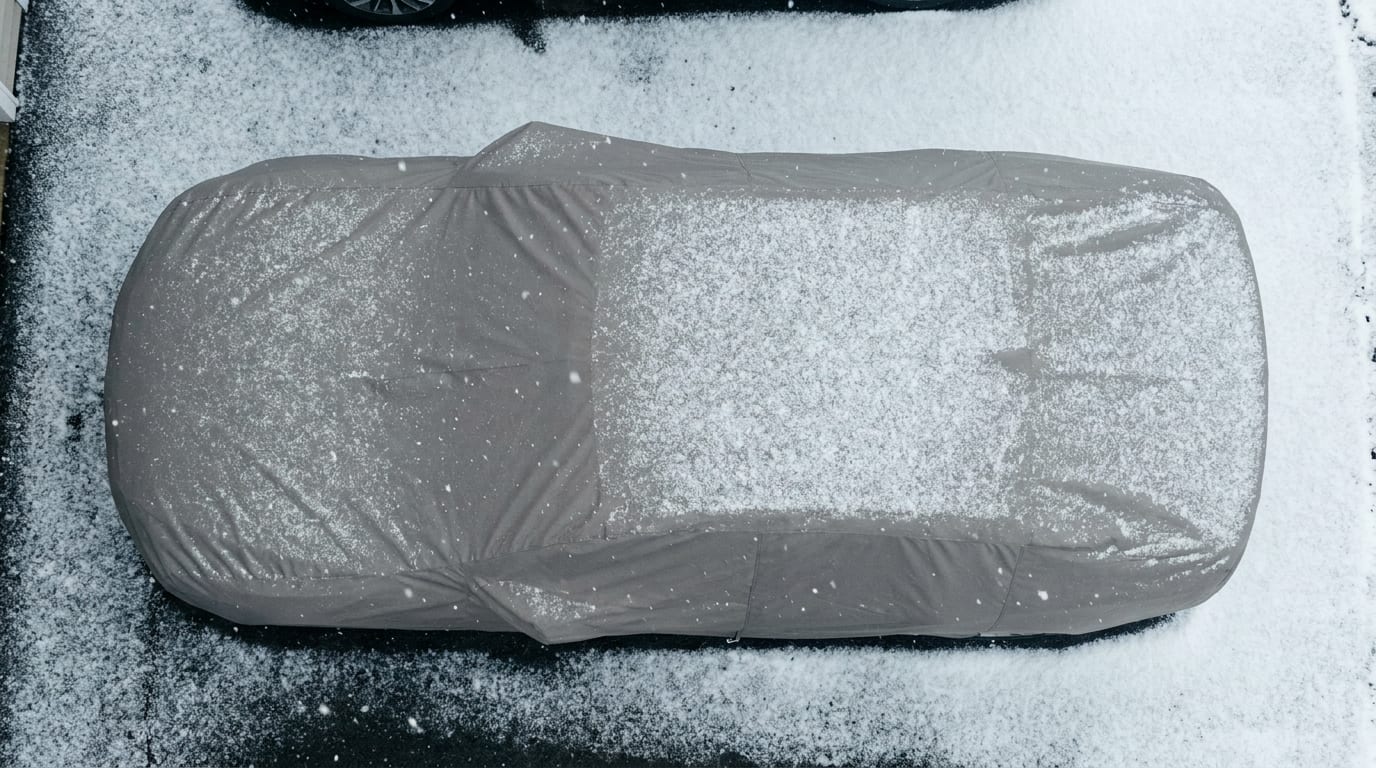
Here's how the typical tiers break down on the features that matter most for a Minnesota winter:
| Feature | Budget Tier | Mid Tier | Premium/Platinum Tier |
|---|---|---|---|
| Waterproofing | Water-resistant only | Waterproof, single-layer | Fully waterproof, multi-layer |
| Interior lining | None | Soft-touch lining in places | Full fleece or felt lining |
| Wind/snow security | Standard hem | Hem plus some tie-downs | Cable-lock points, grommets for gust straps |
| Typical price range | Lower cost, shorter lifespan | Moderate cost, better durability | Higher upfront cost, built for season-long exposure |
| Best use case | Occasional outdoor parking, light snow | Regular outdoor parking, moderate winters | Full-season Minnesota outdoor storage |
If your convertible sits outside all winter in Minneapolis, St. Cloud, or anywhere north of the metro, the budget tier just isn't built for that workload. It's fine for a garage-kept car that only sees the occasional dusting. For a car parked outside from November through March, the premium tier earns its price.
Custom-Fit vs. Universal Covers for Convertibles
Convertibles have a profile that most universal covers simply don't account for: a raised top line, a shorter trunk or deck, and often a lower overall silhouette than a sedan or coupe. A universal cover stretched over that shape leaves gaps, usually right around the top mechanism or rear deck, exactly where snow and wind get in.
A custom-fit car cover is cut to your vehicle's actual dimensions, which cuts down on flapping in wind. That matters more than people think. A cover that flaps all winter wears through at the stress points faster than one that sits snug, and every flap is a chance for water to seep under an edge.
Before you buy anything, confirm the fit by exact year, make, and model. A cover built for the wrong trim year can miss mirrors, antennas, or the folding top mechanism by an inch or two, which sounds small until you're dealing with a gap that funnels snow straight onto the fabric top. If you own a Mazda MX-5, for instance, check the Mazda cover page for options built to that specific body. Not sure what size you actually need? Start with sizing your car cover before you commit to a purchase.
Installing and Securing Your Cover Against Minnesota Wind and Snow
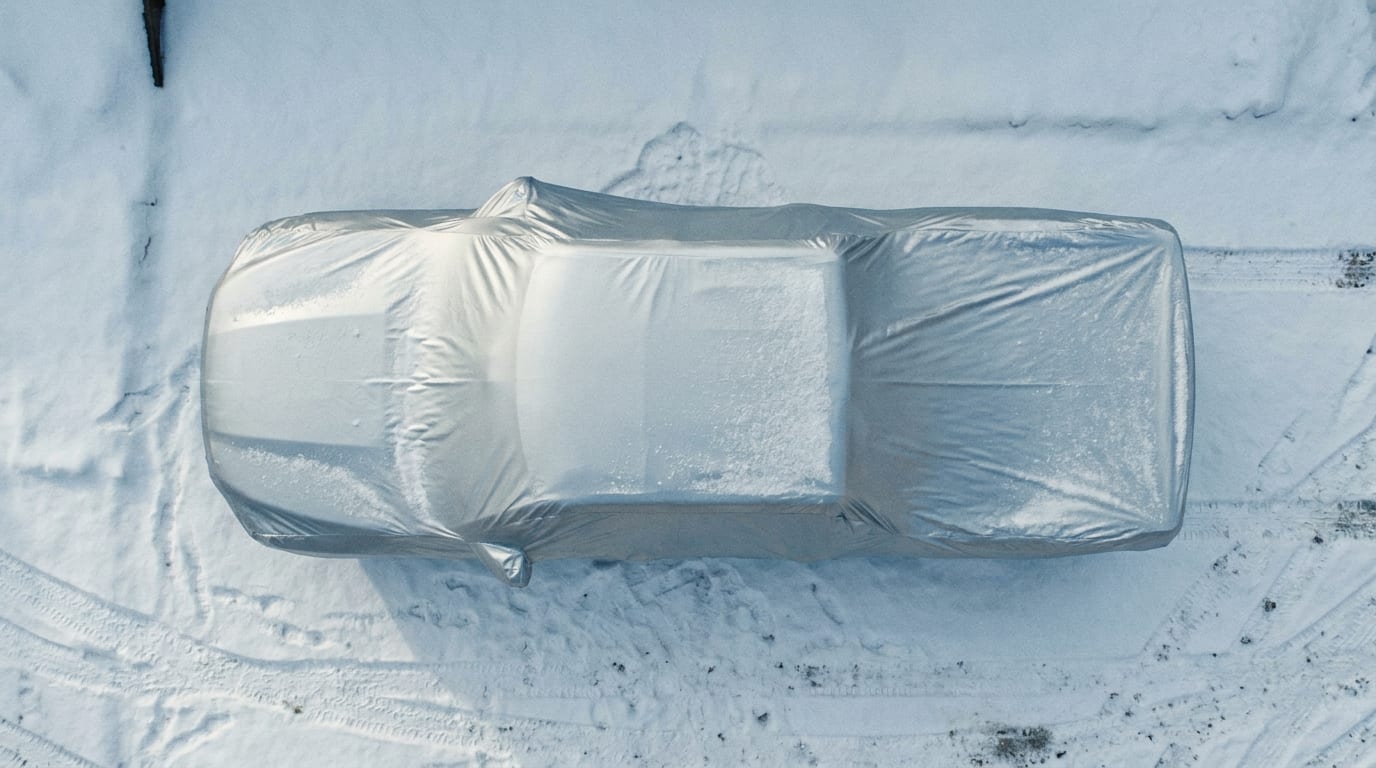
Fit alone isn't enough once the wind picks up. Run a cable lock through the wheel wells or an undercarriage anchor point. This does double duty: it deters theft and keeps the cover from lifting off in a gust, which happens more often than people expect on an exposed driveway or open lot. Here's a guide to installing a cable lock if you've never set one up.
For extra security during Minnesota's bigger winter storms, add gust straps underneath the car. They cinch the cover down against the body so sudden wind doesn't get underneath and start peeling it back. Check out installing gust straps for the specifics on where to anchor them.
And don't let snow pile up. Brush it off every day or two instead of letting it accumulate over a storm cycle. A few inches might not seem like much, but wet snow is heavy, and that weight sits on both the cover and the convertible top frame underneath it. Letting it sit for a week straight is how you end up stressing the top bows. For general outdoor use beyond just winter, the guide to using a car cover outdoors covers wind, UV, and moisture considerations year-round.
Caring for Your Cover Through a Long Winter
Road salt is corrosive to more than just your car's undercarriage, it breaks down cover fabric over time too. Rinse the cover off between snow events when you can, especially after a storm followed by heavy salting on the roads nearby.
Before you refold or store the cover, make sure it's fully dry. A damp cover folded up and left in a trunk or garage corner is exactly how mold and mildew set in, and once that smell gets into the fabric it's hard to get out. For the full process, the car cover cleaning guide walks through drying and storage step by step.
Check your seams, grommets, and lock points every few weeks through the season. Freeze-thaw cycles put real stress on stitching and hardware, and catching a small tear in December beats discovering a torn seam in March after months of exposure.
Find the Right Winter Cover for Your Convertible
So, what's the best car cover for a convertible in a snowy climate like Minnesota? Custom-fit, fully waterproof, cable-lock ready, with a fleece lining to protect the top. That combination is what actually holds up through a full season of sub-zero nights, heavy snow, and road salt, not just a few mild storms.
If you want to make sure you're getting the right fit for your exact vehicle, use the cover finder tool to match your year, make, and model instead of guessing off a size chart. And if you're investing in a winter-grade cover, it's worth checking that it's backed by a real warranty, something like the lifetime warranty on car covers gives you some peace of mind that the cover is built to actually last through what Minnesota throws at it.
Feel free to browse our car covers selection or stick around the blog for more seasonal care guides as the weather turns.






