What's the Difference Between Car Covers Sold at Auto Parts Stores vs. Online?
Published

The Quick Answer
Auto parts store car covers are almost always universal or semi-custom fit, sized by a length range like "fits cars 170 to 186 inches" instead of your exact year, make, and model. They come in a small handful of in-stock materials, limited by whatever fits on the shelf that week. Online retailers typically sell custom-fit car covers built to your vehicle's exact specs, with more material tiers to choose from, including waterproof and hail-rated options most brick-and-mortar stores don't carry.
So what's the difference between the car covers sold at auto parts stores and ones sold online, really? It comes down to three things: fit precision, material and tier selection, and how the purchase itself works. One is a generic product grabbed off a shelf. The other is matched to your vehicle before it ships.
Fit: Universal and Semi-Custom vs. Custom-Fit
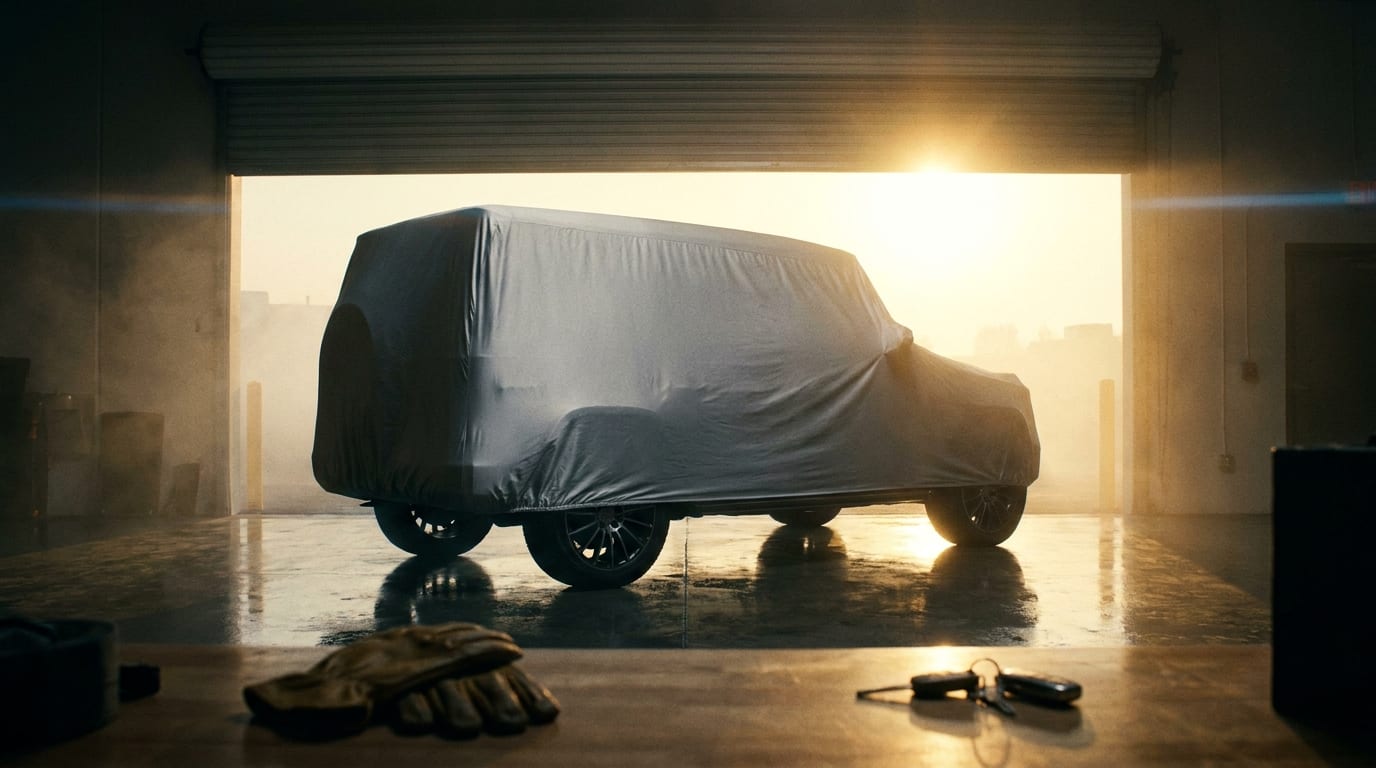
Universal fit means one cover size is designed to stretch over a wide range of vehicles that fall within a length bracket. That sounds convenient until you actually put one on. You get extra fabric pooling near the bumpers, loose pockets that never quite find the mirrors, and a cover that flaps around in any real wind because there's slack everywhere it shouldn't be.
Semi-custom fit is a step up. It's sized closer to a vehicle class, sedans, SUVs, trucks, rather than one giant catch-all range. Better, but still not matched to your specific model. A semi-custom cover made for "mid-size SUVs" doesn't know about your roof rack, your spoiler, or exactly where your antenna sits.
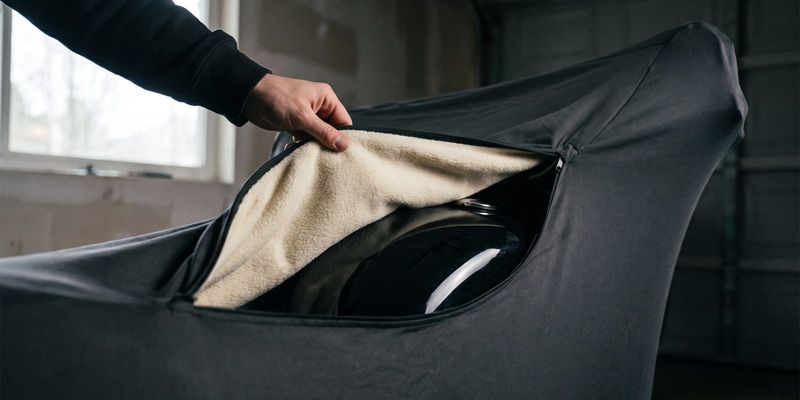
Custom-fit is the real divide. It's patterned to a specific year, make, model, and body style, so mirror pockets, antenna cutouts, and panel lines actually line up the way they're supposed to. This level of precision is basically only available by selecting your vehicle profile online, not by picking a box off a peg at a parts store. Auto parts retailers stick to universal and semi-custom almost exclusively, and that's not a quality failing on their part. Custom-fit would require stocking thousands of SKUs per vehicle variant, and no physical shelf has that kind of room. If you want to see how much the fit actually varies by vehicle, checking the right size for your vehicle before buying anything is worth the five minutes.
Material and Weatherproofing Options

Walk into most auto parts stores and you'll find one, maybe two materials on the shelf. They're built to handle "most" conditions reasonably well, which in practice means they're a compromise for every condition rather than a good fit for any one of them.
Online retailers tend to break materials into real tiers. There's indoor-only fabric meant for dust and scratch protection in a garage, there's outdoor all-weather material for a cover that lives outside full time, there's waterproof construction for rain-heavy regions, and there's heavier-duty, hail-rated fabric for places where storms actually damage paint. That tiering matters more than people expect. A cover built for Arizona sun exposure and a cover built for a hailstorm-prone region are not the same product, even if they look similar folded up in a bag.
This is really a matching problem, not a product quality problem. A buyer with a covered carport doesn't need the same fabric as someone parking fully exposed in a driveway, and settling for one-size-fits-most material means paying for protection you don't need in some areas while being underprotected in others. If you're unsure which material actually fits your situation, comparing which car cover material works best for your climate is a quick way to figure it out before you buy.
Selection, Stock, and Availability
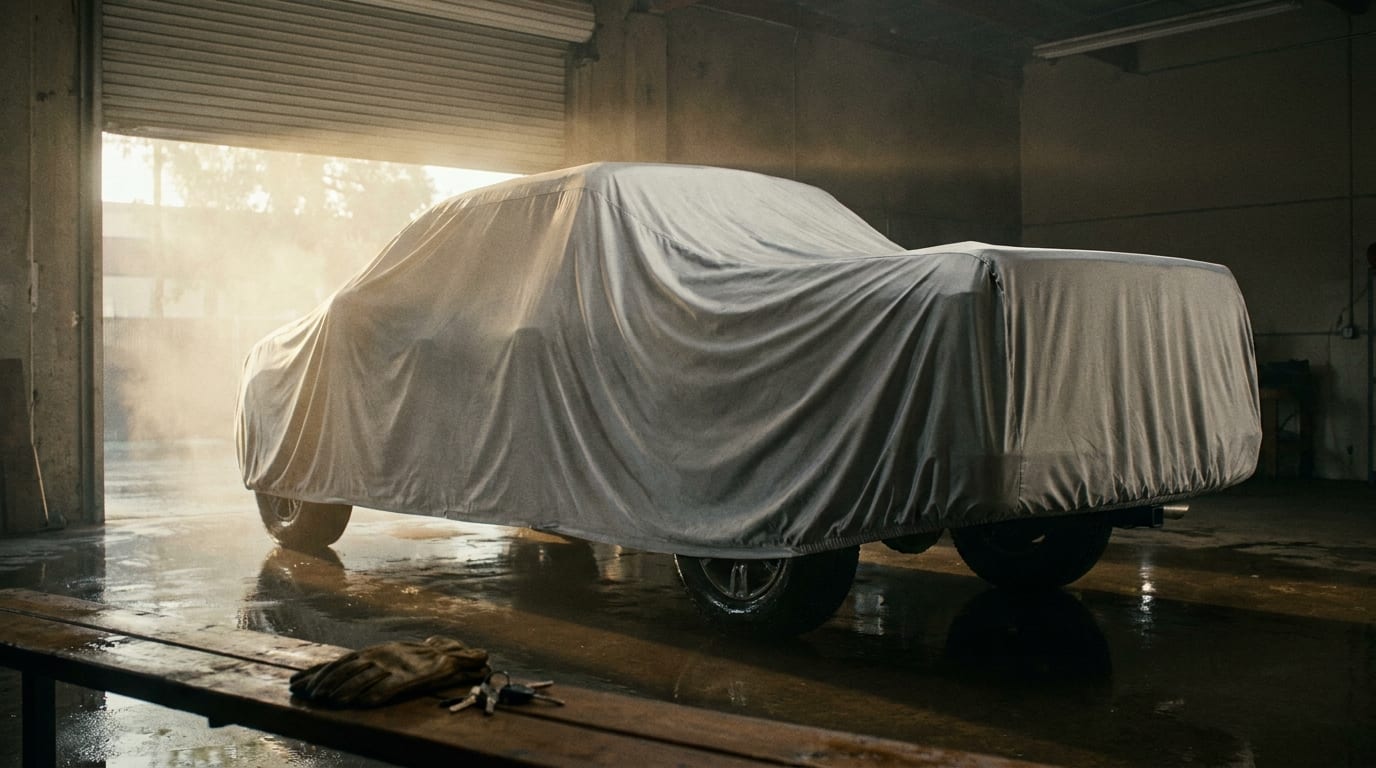
Physical stores are boxed in by their own shelves. Literally. A store can usually carry a handful of sizes and one or two brands before running out of room, which means less common vehicles get left out entirely. Older models, imports, trucks with camper shells attached, anything outside the mainstream curve tends to not be covered well, if at all.
Online catalogs don't have that constraint. Inventory isn't limited by floor space, so a much wider range of makes and models gets covered, including older, rarer, and less mainstream vehicles that would never justify shelf space at a retail chain. Shopping this way also changes how you buy. Instead of reading a size chart printed on a package and hoping your car falls in the right bracket, you select your vehicle profile and get matched to the correct size and fit automatically. It's a different buying model, not just a bigger selection. Browsing the full range of car cover options online makes that difference pretty obvious fast.
Warranty, Returns, and Support
Auto parts store covers usually carry whatever standard warranty terms are printed on the package by the manufacturer, and returns go through the store's general return policy, the same one that applies to wiper blades and floor mats. Nothing specific to car covers.
Online specialty retailers, where covers are the actual product line rather than one item among thousands, tend to provide more detailed documentation. That includes sizing help, material care instructions, and installation guidance specific to covers, plus clearer warranty terms. Worth checking a lifetime warranty on a car cover if it's offered, and understanding exactly what it protects against: seam failure, fading, material defects, that kind of thing, rather than assuming "warranty" means the same coverage everywhere. Reading the fine print on warranty terms and the return policy before buying, from either channel, saves a headache later.
Price Considerations
Universal-fit covers at auto parts stores are cheaper upfront, and that's not an accident. They're mass-manufactured in bulk, generic sizes, which keeps the cost down. Custom-fit covers bought online cost more to start.
But that higher price buys something: less wasted material, and less wear from a loose fit flapping around in wind over months of outdoor storage. A universal cover that's baggy at the corners wears faster in exactly the spots where wind catches it. So the honest trade-off is this: lower cost and the ability to walk out with it today, versus a higher price and a cover that actually fits the car it's protecting. Neither answer is wrong. It depends on how long the vehicle sits under that cover and what it's sitting through.
How to Decide Which Is Right for You
If your vehicle is a common size and shape, and the cover is just for occasional, short-term use, a universal or semi-custom cover from a parts store is probably fine. Nobody needs a precision-patterned cover for a weekend at the lake.
If the car is going to live outdoors long-term, parked in a driveway taking on sun, rain, or hail, or if it's a less common model to begin with, a custom-fit cover selected online by your actual vehicle profile is the more protective choice. It's not close, honestly. The fit is the whole point.
Match the material tier to your actual climate, not your budget alone. A cheap cover in a hail-prone area is a false savings. Comparing car cover options side by side before deciding is a reasonable last step if you're still on the fence.
Find the Right Fit for Your Vehicle
Here's the short version: in-store covers trade precision for convenience, online custom-fit covers trade convenience for precision. Neither is universally "better," but they're not interchangeable either.
If you've been guessing your size off a chart on the back of a box, it's worth five minutes to look up your exact vehicle instead and see what fit and material options actually exist for it. No pressure to buy anything today, just worth knowing what's out there before your current cover gives out. And if you want more buying guides like this one, our articles section keeps adding them.