Acrylic vs Polyester Car Cover: Which Material Actually Protects Better?
Published

The Quick Verdict: Acrylic vs Polyester Car Cover
Acrylic wins on UV resistance and breathability, especially if you park outside in a sunny climate year after year. Polyester wins on cost and on widely available waterproofing, especially in multi-layer outdoor builds. If you're choosing an acrylic vs polyester car cover based on fabric name alone, you're asking the wrong question.
The weave, the coating, and the number of layers matter just as much as the base fiber. A cheap acrylic blend with no coating won't outperform a well-built laminated polyester cover, and a thin single-layer polyester cover won't hold up to the UV resistance of a solution-dyed acrylic. This isn't fabric chemistry trivia. If you're actually comparing specific cover tiers before you buy, here's what each material does well, where it falls short, and which one matches your storage situation.
What Acrylic Car Covers Are Made Of
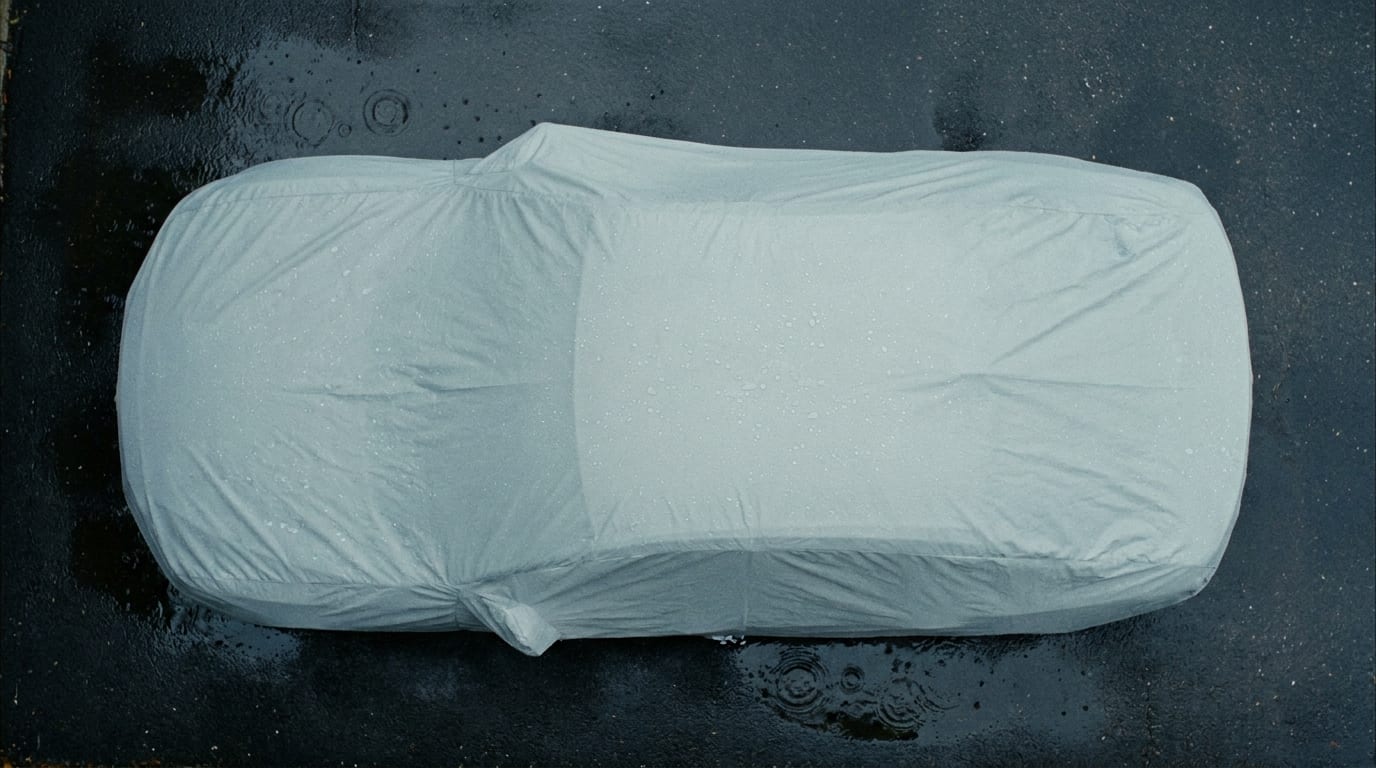
Acrylic fiber is synthetic, and in outdoor-grade covers it's usually solution-dyed. That means the color gets mixed into the fiber while it's still liquid, before it's spun into thread, rather than sprayed or dipped onto the surface afterward. The practical result: the color is baked into the fiber itself, so years of sun exposure don't bleach it out the way surface dyes fade.
That's the main reason acrylic shows up in premium and marine-grade outdoor fabrics. Beyond fade resistance, acrylic breathes well and resists mildew, which matters if a cover sits on a car through humid summers without being pulled off every day.
The tradeoff: acrylic-based covers cost more, and the fiber itself isn't waterproof. It needs a backing or coating to actually shed rain. Buy an acrylic cover expecting the fabric alone to handle a downpour, and you'll be disappointed. The fiber's job is holding its color and letting air through, not blocking water on its own.
What Polyester Car Covers Are Made Of
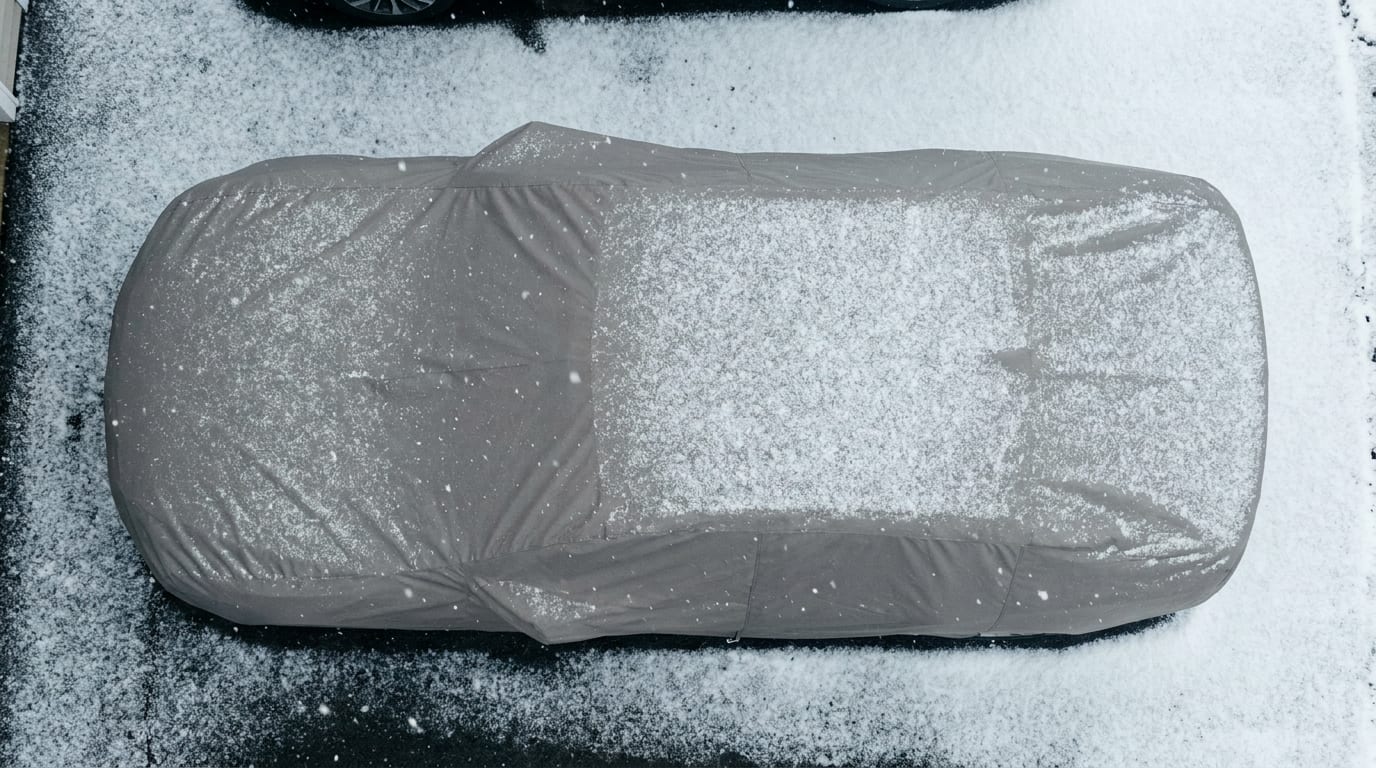
Polyester is the more common synthetic fiber in car covers, and it covers a huge range, from thin indoor dust covers up to heavy multi-layer outdoor shells. Manufacturers often layer or laminate it with film backings to add water resistance, which is how a polyester cover goes from "keeps dust off" to "handles a rainstorm."
It's strong. Tear resistance is one of polyester's real advantages, and it's cheap to produce at scale, so you'll find a wider spread of price points than you will with acrylic. That range is actually the point: a thin polyester layer makes sense for a car in a garage, and a heavy multi-layer polyester shell makes sense for one parked outside all winter.
The catch is UV exposure. Standard polyester dye can fade faster under prolonged direct sun unless the outer layer has been UV-treated or coated specifically for it. Check for that treatment before you assume any polyester cover will hold its color as long as an acrylic one.
Acrylic vs Polyester Car Cover: Side-by-Side Comparison
Here's how the two stack up across the factors that actually affect a cover's lifespan and your car's protection.
| Factor | Acrylic | Polyester |
|---|---|---|
| Water resistance | Water-resistant with added coating, not inherently waterproof | Ranges from water-resistant to fully waterproof depending on layering |
| UV/fade resistance | High, solution-dyed color holds up over years | Moderate, unless the outer layer is UV-treated |
| Breathability | Generally higher, reduces trapped moisture and condensation | Varies by layer count, dense multi-layer builds trap more moisture |
| Weight/bulk | Lighter for equivalent protection | Heavier in multi-layer outdoor versions |
| Typical cost | Higher price point | Wider price range, more budget options |
| Best climate fit | Hot, sunny, high-UV regions | Mixed climates needing real waterproofing, rain or snow |
| Best use case | Long-term outdoor storage in sun | Everyday outdoor use, indoor dust protection, budget buyers |
The breathability line is the one people underestimate. A cover that traps moisture against the paint does more damage over a season than a few extra UV rays ever would, so if your car sits uncovered for months at a time, it deserves real weight in this decision.
Which Material Fits Your Climate and Storage Situation
If you're in a hot, sun-heavy region, Arizona, Nevada, inland California, the fade resistance of acrylic or an acrylic-blend outdoor cover is worth the extra cost. A polyester cover without UV treatment can visibly chalk and fade within a couple of summers in that kind of exposure.
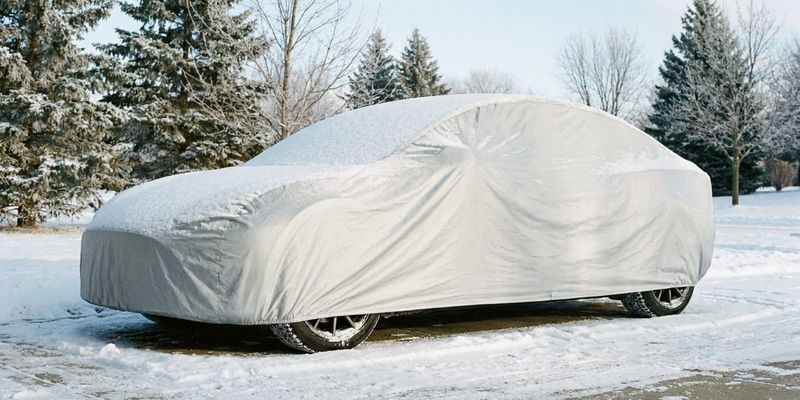
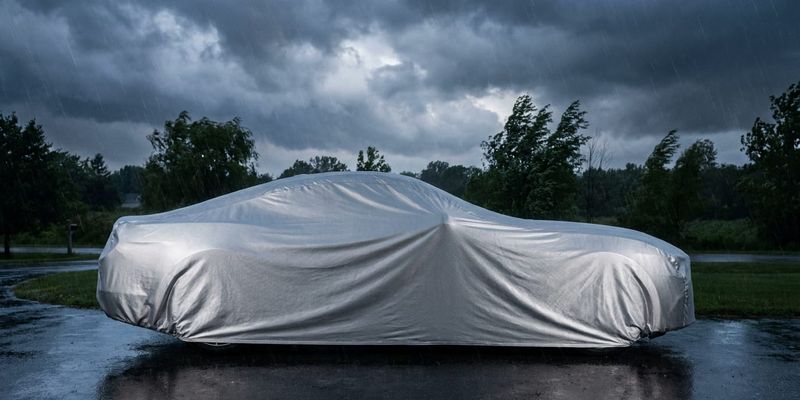
If you're somewhere wet or snowy, waterproofing matters more than fade resistance, and that points toward a coated or laminated polyester build. Worth reading through the waterproof car covers guide before buying, since "water-resistant" and "waterproof" get used loosely by sellers and the difference matters when snow sits on a cover for days.
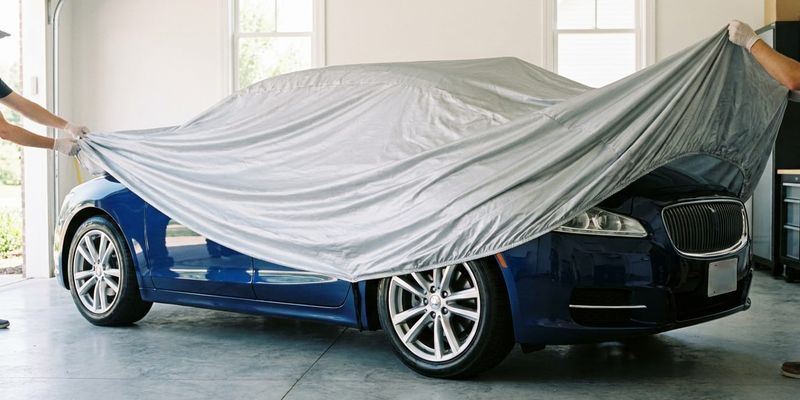
Garage or carport storage changes the calculus entirely. Indoors, you're protecting against dust and scratches, not rain or sun, so breathability and a soft inner layer matter more than waterproofing specs. The indoor car covers guide covers what to look for there, and either fabric works fine as long as it's built for indoor use.
One more thing: if you're in a hail-prone area, neither acrylic nor polyester alone will stop a dent. Material choice is about moisture and UV, not impact. For that, you want a padded or multi-layer cover built specifically for hail, which is its own category, covered in the hail car covers guide.
Care Differences Between Acrylic and Polyester Covers
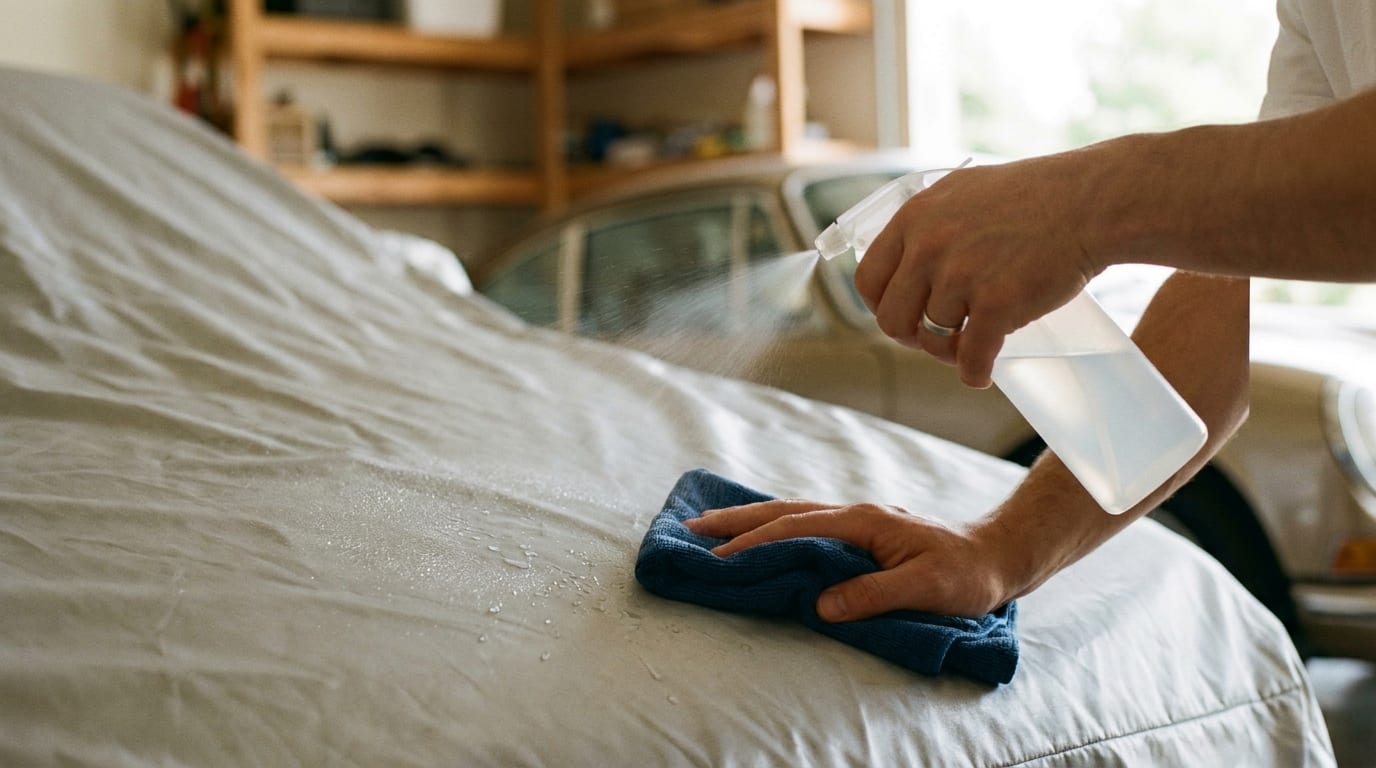
Acrylic covers are generally machine washable in cold water. The fiber handles washing fine, it's heat that's the enemy here, since high heat can damage the fibers themselves (not just fade the color, which is more a polyester problem).
Polyester is more of a mixed bag. Check for coated or laminated layers before you toss it in the machine. Some of those coatings don't hold up to a full wash cycle and need spot-cleaning instead, so a blanket "machine wash cold" rule doesn't apply across every polyester cover the way it does with acrylic.
Either way, the step-by-step car cover cleaning guide walks through the process for both fabric types, and it's worth reading before your first wash rather than after you've already damaged a coating.
Worth saying plainly: a cover's lifespan depends as much on correct fit and installation as it does on fabric choice. A great acrylic cover that's too loose will flap, rub, and wear through at the seams faster than a properly fitted polyester one. Fabric is half the equation, fit is the other half.
How to Choose and Next Steps
Boil it down and the decision logic is simple. Sunny climate plus long-term outdoor storage points to acrylic. Wet or mixed climate plus a tighter budget points to polyester. Indoor storage with occasional use means either material works, since you're optimizing for breathability and dust protection, not weatherproofing.
One thing that matters more than the acrylic vs polyester car cover debate itself: fit. A custom-fit cover in either material will outperform a universal-fit cover in the "wrong" fabric, because a loose universal cover lets water pool, wind get underneath, and fabric rub against paint regardless of what it's made of.
The fastest way to sort through this for your specific vehicle is the cover finder tool, which matches you to the right material and fit instead of guessing from fabric specs alone.
And if two options still look evenly matched on paper, check the warranty coverage before you decide. A longer warranty is a decent tie-breaker when the fabric specs themselves don't give you a clear winner.
If you're still weighing options, it's worth browsing a few more car care guides before you commit, since fit, climate, and storage habits all shape which cover actually lasts.