Articles Seasonal & Weather Car Care Tips
Best Car Cover for Atlanta, GA Pollen and Humidity: A Local Buying Guide
Published

Atlanta's weather is rough on a car's finish in a way a lot of drivers don't fully clock until the damage is done. It's not just the sun. It's pine pollen thick enough to coat a windshield overnight, paired with humidity that barely lets up from April through September. A generic cover bought off a shelf at the big box store usually isn't built for that combination. This guide walks through what actually matters when you're shopping for the best car cover for Atlanta, GA pollen and humidity, whether your car sits in a driveway, an apartment lot, or under a carport that only blocks half the sky.
Why Atlanta Drivers Need a Climate-Specific Car Cover
Most car covers on the market are designed for "outdoor use" in a generic sense. They'll shed light rain and block some sun. But Atlanta doesn't have generic weather. It has a specific, predictable one-two punch: heavy pollen season followed by months of thick humidity, with thunderstorms thrown in for good measure.
A cover that works fine in Phoenix or Denver can fail here, and fail fast. The fix isn't buying the thickest or most expensive cover you can find. It's matching the cover's actual construction, fabric, and fit to what Georgia throws at it. That matters whether your car lives in an open driveway, a shared apartment lot, or a carport that leaves the front and back exposed. None of those setups protect a vehicle from pollen dust or ambient moisture. Only the cover does.
Atlanta's Climate Challenges: Pollen Season and Year-Round Humidity
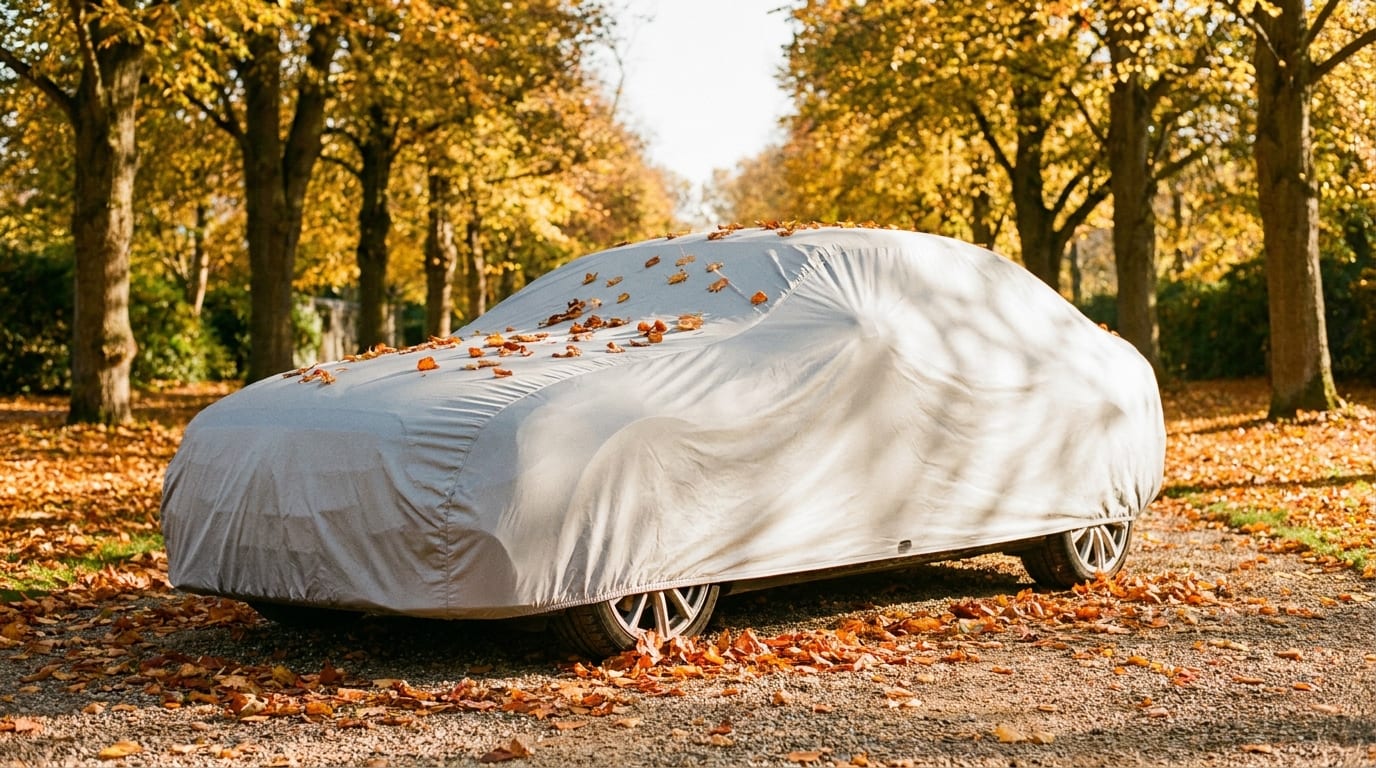
Anyone who's lived here through March and April knows the drill. Pine and oak pollen blanket everything in a yellow-green film, and local pollen counts regularly climb into "extreme" territory on area pollen indexes during peak weeks. Cars left outside overnight can wake up dusted thick enough to write your name in it.
That's only half the problem. Atlanta's average relative humidity sits in the 60 to 70 percent range for a big chunk of the year, and summer mornings especially feel like walking through soup. Add Georgia's habit of hot, humid afternoons breaking into sudden thunderstorms, and you've got a climate that never really lets a car's exterior fully dry out.
Put those two things together and you get the real issue: pollen settles on a hood that's already damp from overnight humidity, and it sticks. Then the moisture lingers in air that's too humid to dry it off quickly. That combination is exactly what a car cover built for this region needs to handle, and it's why the best car cover for Atlanta, GA pollen and humidity looks different from one marketed for a drier climate.
What Pollen and Humidity Actually Do to Your Car's Finish
Pollen looks soft. It isn't. Under a microscope it's gritty and irregular, and that texture is what causes the damage. Wipe it off a dry cover, or worse, straight off the paint, and you're grinding tiny abrasive particles across the clear coat. That's how fine swirl marks and micro-scratches show up on cars that never touched a brush or a car wash rag.
Humidity does its own quiet damage. A non-breathable cover traps moisture vapor against the paint instead of letting it escape, and that trapped moisture is exactly the setup oxidation and water spotting need to take hold. Leave a cover on through a humid stretch without airflow, and mold or mildew can start growing on the cover itself, something that's much more common in the Southeast than in drier parts of the country.
Then there's the sap and dew factor. Pollen rarely sits alone. Mixed with morning dew and whatever tree sap is dripping that week, it forms a stickier, harder residue that doesn't wipe away easily once it's had a day or two to set. By the time most people notice it, it's not dust anymore, it's a bonded layer.
Key Features to Look for in a Pollen- and Humidity-Resistant Car Cover
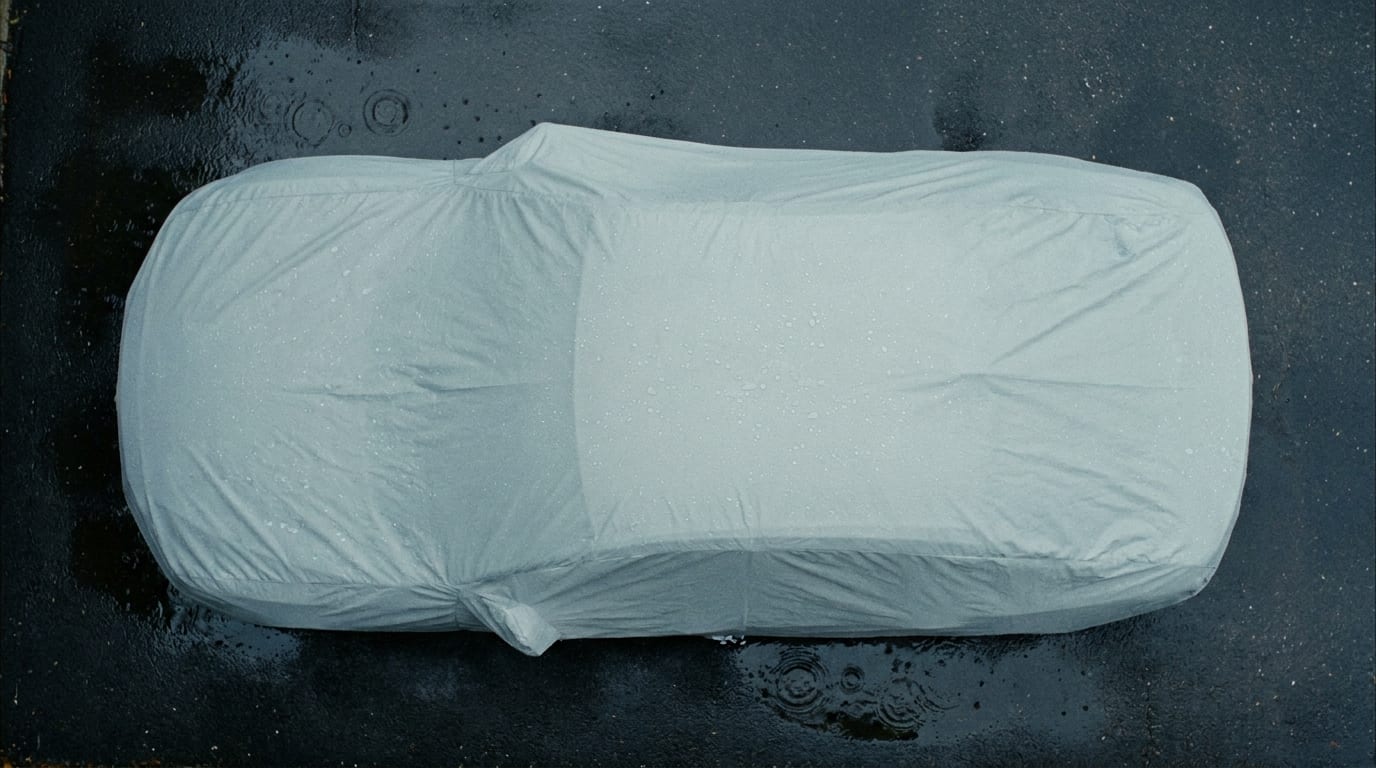
A handful of features separate a cover that handles this climate from one that just sits there absorbing problems:
- Breathable, multi-layer fabric. It needs to let moisture vapor escape instead of sealing it against the paint, which is the single biggest difference between a cover that works here and one that doesn't.
- Soft microfiber or fleece inner lining. This keeps pollen grit from grinding into the clear coat every time wind shifts the cover against the hood or roof.
- UV-resistant treatment. Georgia summer sun is intense, and a cover that degrades under UV exposure stops doing its job halfway through the season.
- Secure elastic hem and strap or grommet system. Summer storms roll in fast and hard here, and a cover that isn't cinched down will end up on the ground, or on your neighbor's lawn, the first time wind gusts hit 30 mph.
Looking at outdoor car covers built around these specs is a better use of time than comparing price tags alone.
Material Matters: Breathable vs. Fully Waterproof Fabrics for Georgia Weather
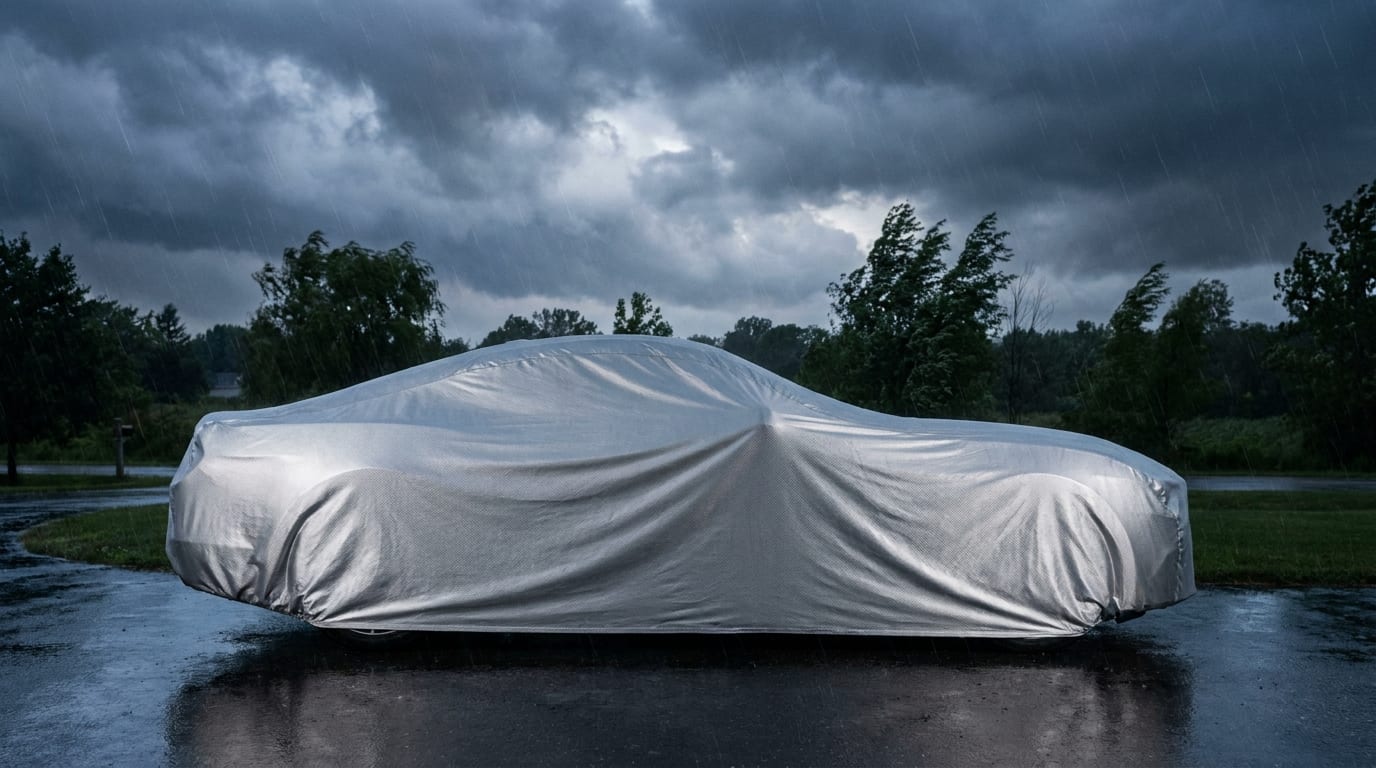
This is where a lot of buyers get it backwards. Fully waterproof vinyl-style covers sound like the obvious choice for a rainy climate, and they do block rain well. But that same sealed construction traps humidity underneath, which means on a muggy Atlanta morning you can end up with more moisture sitting against your paint than if you'd left the car uncovered.
Breathable, water-resistant fabrics designed for outdoor use are usually the better call here. They shed rain well enough for typical storms while still letting trapped vapor work its way out. That's a meaningfully different job than a cover designed for, say, the dry heat of the Southwest, where humidity buildup just isn't a design concern.
Layered fabric construction is how manufacturers split the difference: an outer layer that handles rain and UV, inner layers that manage airflow. If you want to understand how these fabric builds actually differ, it's worth reading up on waterproof fabrics before you buy, since "waterproof" and "water-resistant" get used loosely and don't mean the same thing. For most Atlanta driveways, a cover rated for waterproof car covers performance that's still breathable beats a fully sealed vinyl shell.
Getting the Right Fit and Keeping Your Cover Clean in Atlanta's Climate
Fit matters more here than people expect. A loose, generic universal cover leaves gaps at the mirrors, bumpers, and wheel wells, and those gaps are exactly where pollen dust and humid air sneak in underneath. Once pollen gets trapped between the cover and the paint, you've recreated the exact problem the cover was supposed to prevent.
A custom-fit car cover solves most of that by hugging the body lines closely enough that there's nowhere for pollen or moisture to collect. If you're not sure what category your vehicle falls into, checking a sizing guide for your vehicle before buying saves you from guessing and getting a cover that bags out around the mirrors or rides up at the bumper.
Once you've got the right cover, the maintenance side is simple but easy to skip. During peak pollen season, rinse the cover off regularly instead of letting pollen cake on and bond to the fabric. Let it fully air-dry before folding it up for storage. Skipping that step is exactly how covers develop that musty mildew smell, pollen residue sitting in humid air is a near-perfect setup for it. A quick rundown on how to clean a car cover covers the specifics, and it's worth bookmarking if you're keeping a cover on through April and May. For more on balancing rain, wind, and sun exposure outdoors generally, this guide to using a car cover outdoors is a solid reference too.
Choosing Your Atlanta-Ready Car Cover
Before you buy anything, confirm three things: breathable multi-layer fabric, a snug or custom fit, and a reasonable balance of UV resistance with water resistance that doesn't trap humidity underneath. Skip any of those and you're likely replacing the cover within a year, not because it wore out, but because it was never matched to this climate in the first place.
If you're still comparing options, it's worth browsing car covers built for outdoor, humid-climate use, or running your vehicle through the cover finder to see what fits. And since a cover that's actually built for this kind of weather should hold up over time, it's worth checking whether a lifetime warranty backs it, buying once beats replacing a cover that gives out under Georgia humidity by August.
If this kind of regional, practical gear advice is useful, it's worth keeping an eye on future guides covering other climates and vehicle types.