Articles Seasonal & Weather Car Care Tips
Best Car Cover for Chicago, IL Harsh Winters and Snow: A Local Buying Guide
Published
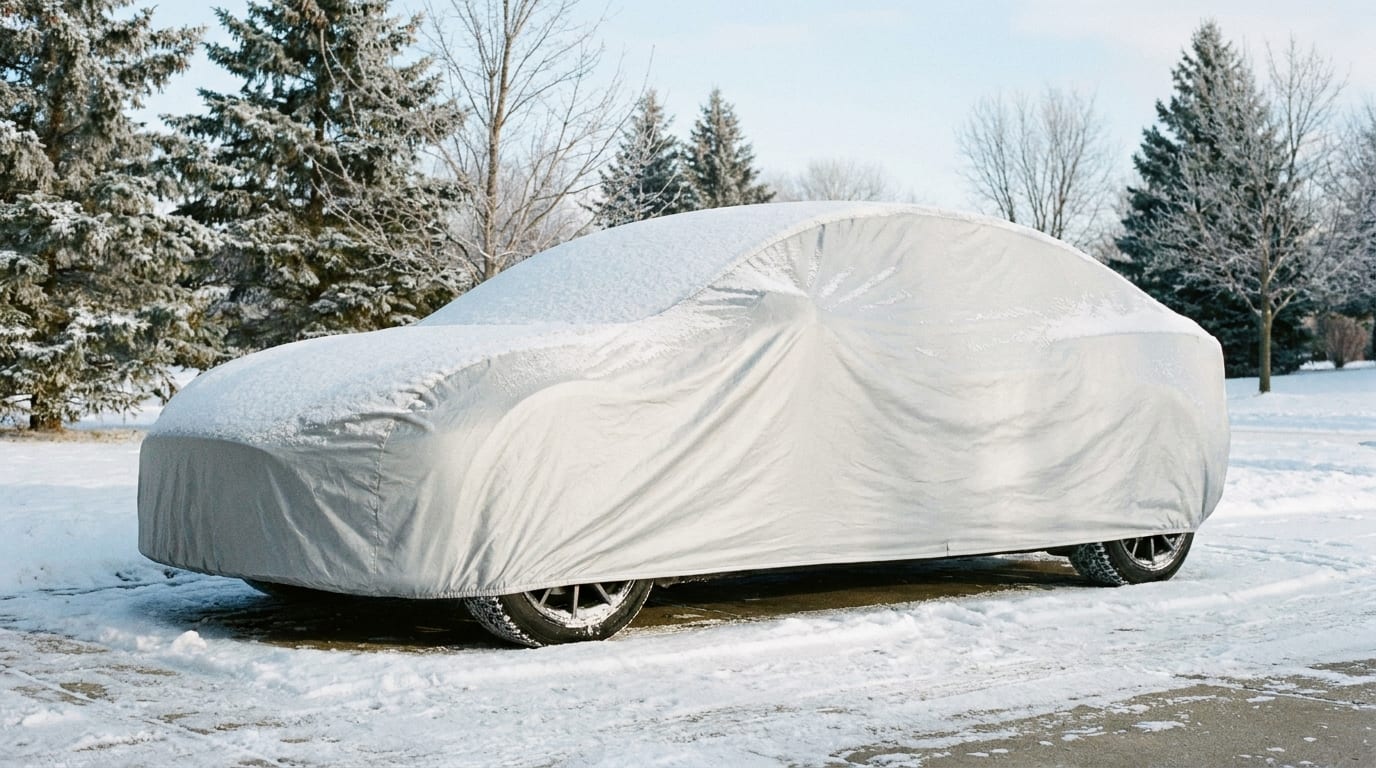
Chicago doesn't do mild winters. One week you're dealing with six inches of lake-effect snow dumped in under three hours, the next you're scraping ice off a windshield at 5 degrees with wind chill making it feel like minus 15. If you're searching for the best car cover for Chicago, IL harsh winters and snow, you've probably already lost a cheap cover to a gust off the lake, or watched road salt eat into your clear coat over a single season. This guide walks through what actually matters here, feature by feature, so you're not buying twice.
Why Chicago Winters Are Brutal on an Unprotected Car
Lake Michigan does Chicago no favors in January. Lake-effect snow bands can dump heavy, wet snow in a matter of hours, and that's on top of the long sub-freezing stretches that settle in for weeks. This isn't a once-a-month flurry situation. It's sustained, and it's compounding.
The damage stacks. Road crews lay down salt and calcium chloride constantly, and that spray clings to paint and trim, working its way into any gap it can find. Freeze-thaw cycles, common when temps swing above freezing during the day and drop hard at night, stress cheap cover seams until they crack. Add in wind gusts coming straight off the lake with nothing to slow them down, and a loose-fitting cover becomes a kite.
A generic, one-size-fits-all cover bought off a shelf without thinking about any of this usually doesn't make it to March. It tears at the hem, it ices over and rips when you try to pull it off, or it just blows away in a windstorm. This guide is built around Chicago's specific conditions, not a national checklist that happens to mention cold weather.
Chicago's Winter Weather Patterns a Cover Needs to Survive
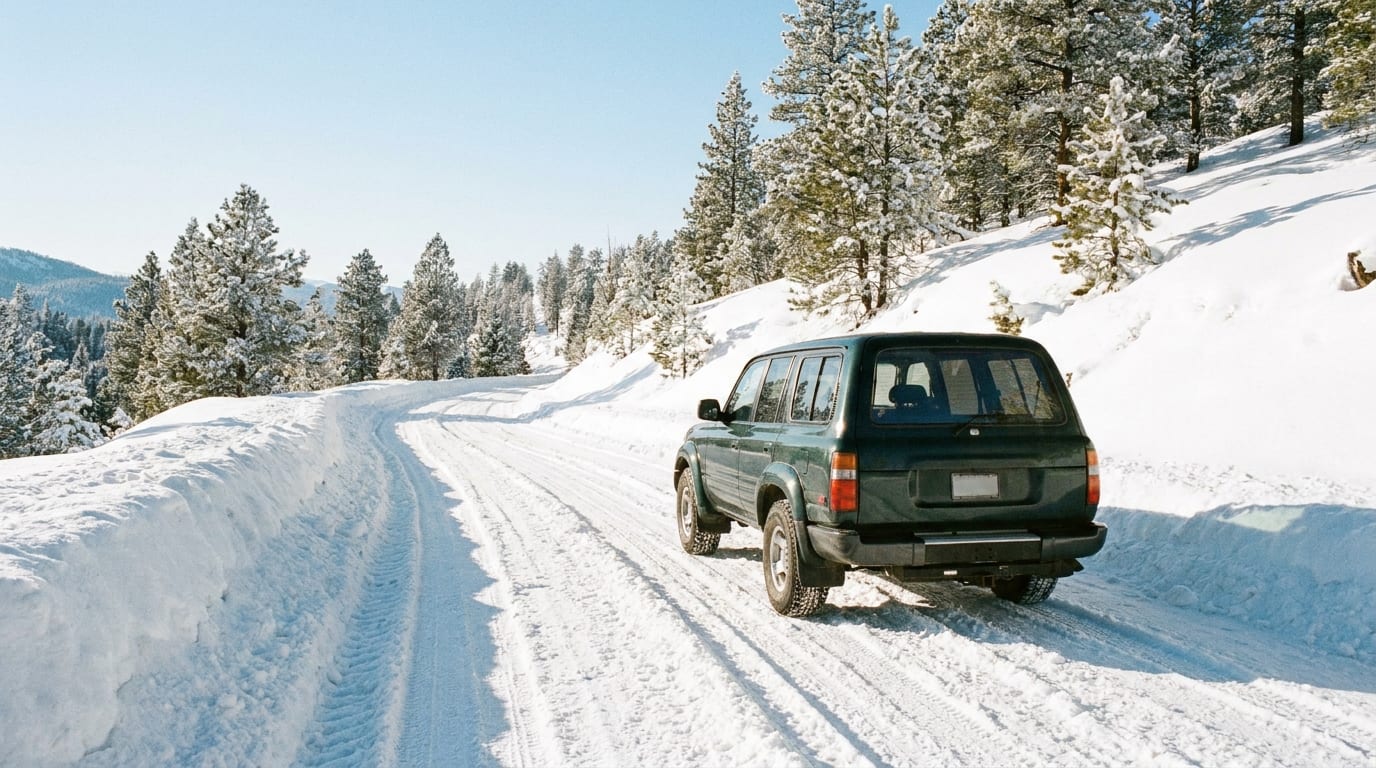
Four things define a Chicago winter, and your cover needs an answer for each one.
Lake-effect snow bands hit hardest along the lakefront and the north and northwest suburbs, where accumulation can be fast and heavy compared to inland areas just a few miles away. If you're in one of those zones, you need a cover that sheds snow weight rather than absorbing it.
Wind chill and sustained gusts are a bigger deal here than in most Midwest cities, simply because there's so little to block the wind coming off open water and flat prairie. A snug fit and real tie-down points matter more in Chicago than they would in a sheltered suburb further south.
Freeze-thaw cycling is sneaky. It's not the cold itself that wrecks weak materials, it's the repeated thawing and refreezing that builds ice on the surface of a cover and makes brittle fabric crack at the folds.
And then there's the salt. Street-parked cars obviously catch brine spray from passing traffic, but even vehicles parked near a garage entrance or in a shared lot get hit with residue kicked up by plows and other cars. A cover needs to block that corrosive film from ever touching the paint.
Must-Have Features in a Chicago Winter Car Cover
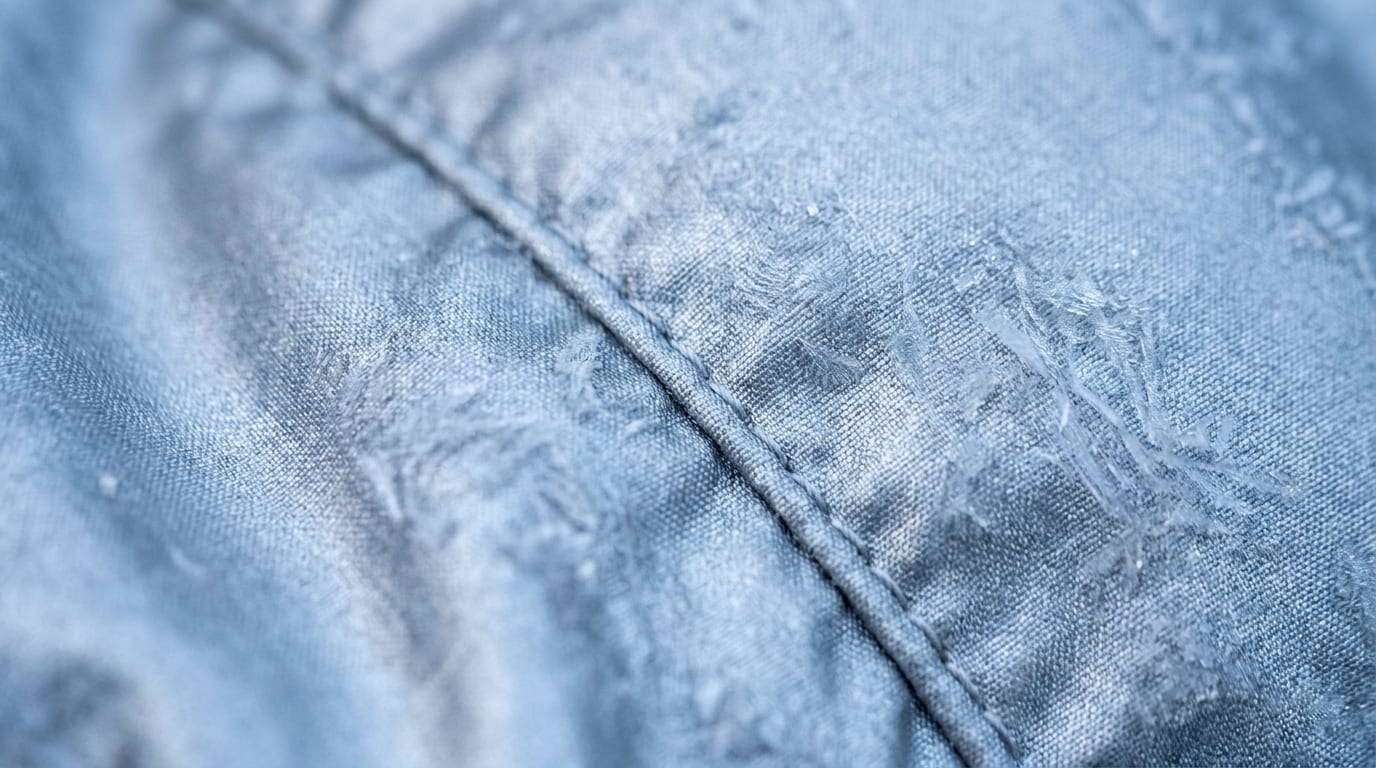
Start with the outer shell. It needs to be waterproof and multi-layered, built to shed wet snow and ice rather than soaking it in and freezing solid overnight. A cover that absorbs moisture is worse than no cover at all, because now you've got a sheet of ice bonded to your car.
Underneath that shell, you want a soft inner lining. Ice crystals and frozen grit get trapped against the paint during install and removal, and a rough lining will scratch the clear coat every time you take the cover off. This is the detail people skip and regret.
Hems matter more than they get credit for. Reinforced, elasticized edges with built-in grommets for cable locks or straps are what keep a cover on your car during a real lake gust instead of three blocks down the street. If you've ever chased a cover across a parking lot, you know exactly why this is non-negotiable in Chicago.
Finally, look for breathability under the waterproof layer. Without it, condensation gets trapped between the cover and your paint and refreezes overnight, which defeats the entire purpose. The good covers manage water on both sides, keeping the outside dry and letting trapped moisture escape from underneath. If you want the deeper material science behind how multi-layer fabrics pull this off, it's worth a read on waterproof fabric construction before you buy. For a quicker gut check on which products actually meet this standard, the waterproof car cover category is a reasonable place to start comparing.
Outdoor Street Parking vs. Garage Storage in Chicago
A lot of Chicago is street parking and uncovered lots, especially in the city proper. If that's you, don't cheap out. You need a heavier-duty, fully outdoor-rated car cover with complete waterproofing and real wind-securing hardware. This is the scenario the rest of this guide is mostly written for, because it's the harshest one.
If your car lives in a garage or under a carport, your needs are lighter. You're mostly dealing with dust, minor condensation, and maybe some drips if you're pulling in with a wet car. A simpler indoor car cover will do the job and save you money, since you don't need the heavy waterproofing or the wind hardware.
Be honest with yourself here before you shop. Which one are you? It changes everything about which cover makes sense, and buying the wrong category either wastes money or leaves your car exposed.
Matching the Cover to Your Vehicle Type
Sedans and compact cars, the kind you see all over city neighborhoods, need a cover that fits snug and low. Fit matters here specifically because of snowdrifts and the aftermath of curb-side plowing, which can bury a low car's lower body and wheel wells in packed, frozen slush.
SUVs are everywhere in Chicago winter driving for good reason, but their taller profile means you need extra material allowance and secure anchoring points so wind doesn't get up under the sides. If that's your vehicle, start with the SUV cover lineup rather than assuming a sedan cover sized up will do the job.
Trucks used for winter work, especially anything doing plowing duty, take a beating from constant exposure, road debris, and salt spray kicked up by their own tires. That's a case for something heavier than a standard cover, like the Platinum Shield truck cover, built for vehicles that don't get a break from the weather all season. For general truck options, the truck cover category covers the rest of the lineup.
Don't guess on sizing. Run your plate or VIN through a size and fit lookup before you buy, or use the cover finder tool to match your exact make and model. A cover that's even a size off won't seal properly at the hems, and that's where wind and water get in.
Installing and Securing Your Cover for Lake Michigan Wind
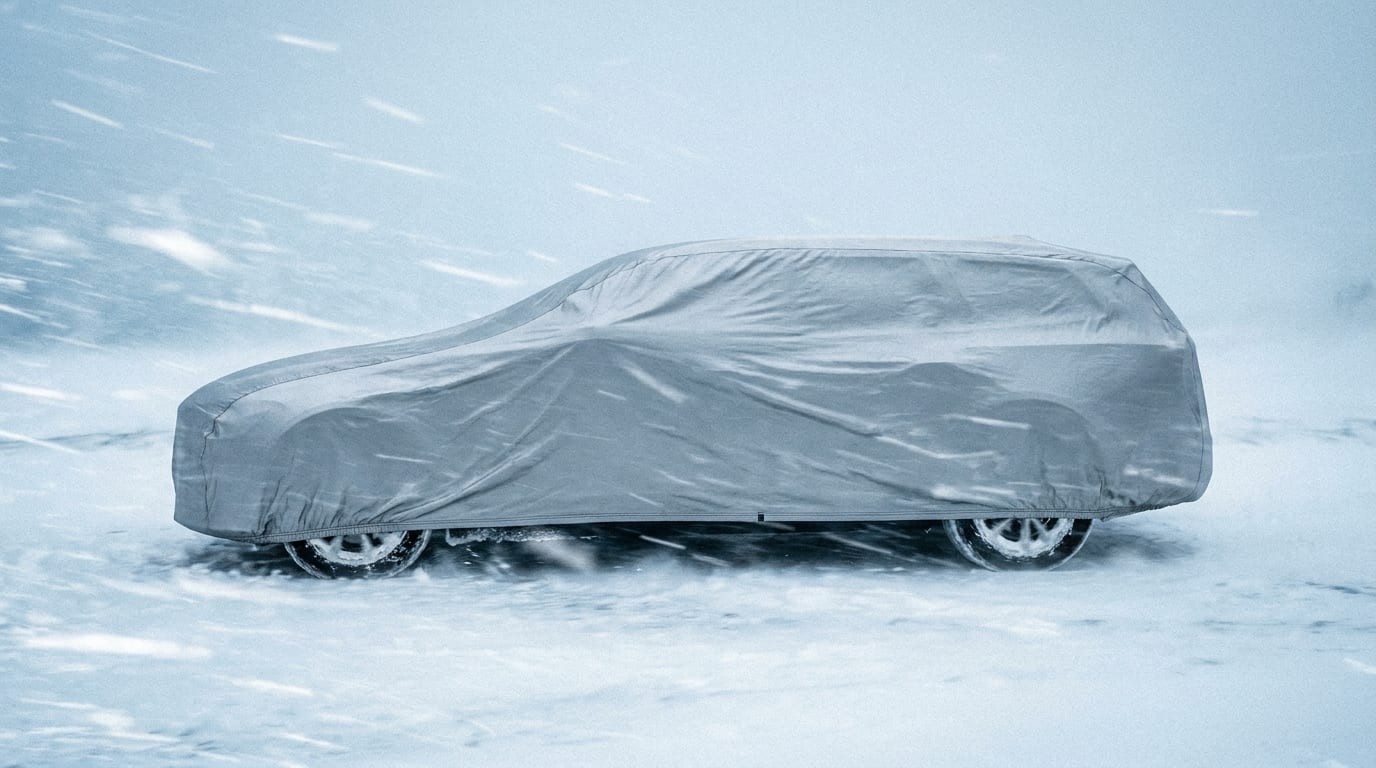
Installation order matters more than people think. Start at the front, work your way back, and secure any underbody straps before you clip on cable locks. Doing it backward usually means you're fighting wind the whole time, and in Chicago, you will be fighting wind.
Gust straps aren't optional here. In a calmer climate you might get away with a basic elastic hem, but Chicago's open exposure to the lake and flat terrain beyond it means sustained gusts are routine, not rare. A proper gust strap or wind strap setup is the difference between a cover that's still on your car Monday morning and one that's wrapped around a stop sign.
Once it's on, don't ignore it. Brush off heavy snow accumulation every day or two instead of letting weight sit and stress the seams. And before you pull the cover off, check the hem for ice buildup first. Yanking a frozen hem is a fast way to tear fabric that was otherwise fine.
Winter Cover Care and Maintenance in Chicago Conditions
Salt doesn't wait for spring to do damage, and neither should you. Rinse the exterior of your cover periodically through the winter to knock off road salt and brine residue before it builds up and starts degrading the fabric.
Dry it completely before you fold or store it. A damp cover folded up for even a few days can start growing mildew once temperatures climb, and that's a smell you don't get rid of easily.
After any major storm, take two minutes to check straps, grommets, and seams for wear. Small tears are cheap to deal with early and expensive to ignore. For the full process, there's a step-by-step cover cleaning walkthrough worth bookmarking before the first big snow hits.
Find the Right Winter Cover for Your Chicago Vehicle
The decision really comes down to three things: where your car sits (street or garage), what kind of vehicle you're protecting, and whether the cover actually has the waterproofing, lining, and wind hardware this climate demands. Skip any one of those and you're gambling with your paint.
Spend the time now matching your exact vehicle to the right cover instead of guessing from a size chart. It's a lot cheaper than dealing with salt corrosion, cracked trim, or a scratched hood come March. If you found this useful, stick around the blog for more seasonal car care guides built around real weather, not generic advice.