Articles Seasonal & Weather Car Care Tips
Best Car Cover for Los Angeles, CA Sun and Smog: A Local Buying Guide
Published

Los Angeles doesn't just test a car cover, it interrogates it. Between the UV load, the smog film, and the Santa Ana wind events, most "all-weather" covers fold under pressure within a season or two. If you're trying to find the best car cover for Los Angeles, CA sun and smog, the short answer is: look past the marketing and match the fabric to what's actually hitting your paint every single day. This guide walks through what that means in practice, neighborhood by neighborhood.
Why Los Angeles Is One of the Toughest Climates for Car Paint
LA gets around 280 sunny days a year. That sounds like a brag on a postcard, but for a parked car, it's a slow beatdown. UV exposure fades paint, cracks dashboards, and dries out rubber trim faster than it does in cloudier cities. Give it a few summers of direct sun and you'll see it in the clear coat.
Then there's smog. Airborne particulates settle on painted surfaces, and when they mix with morning dew or that heavy marine layer rolling in off the coast, you get a mildly acidic residue sitting on your hood overnight. Over months, that residue etches into clear coat. It's not dramatic, it's cumulative, which is exactly why people miss it until the damage is done.
Add in LA's parking reality: street parking and limited garage access mean most vehicles are exposed to both factors daily, not just on road trips or during seasonal storage. That's the whole case for this article. You don't need a generic all-weather cover. You need one built specifically for the sun-plus-smog combination that defines driving and parking here.
LA's Microclimates: Why One Cover Doesn't Fit the Whole County
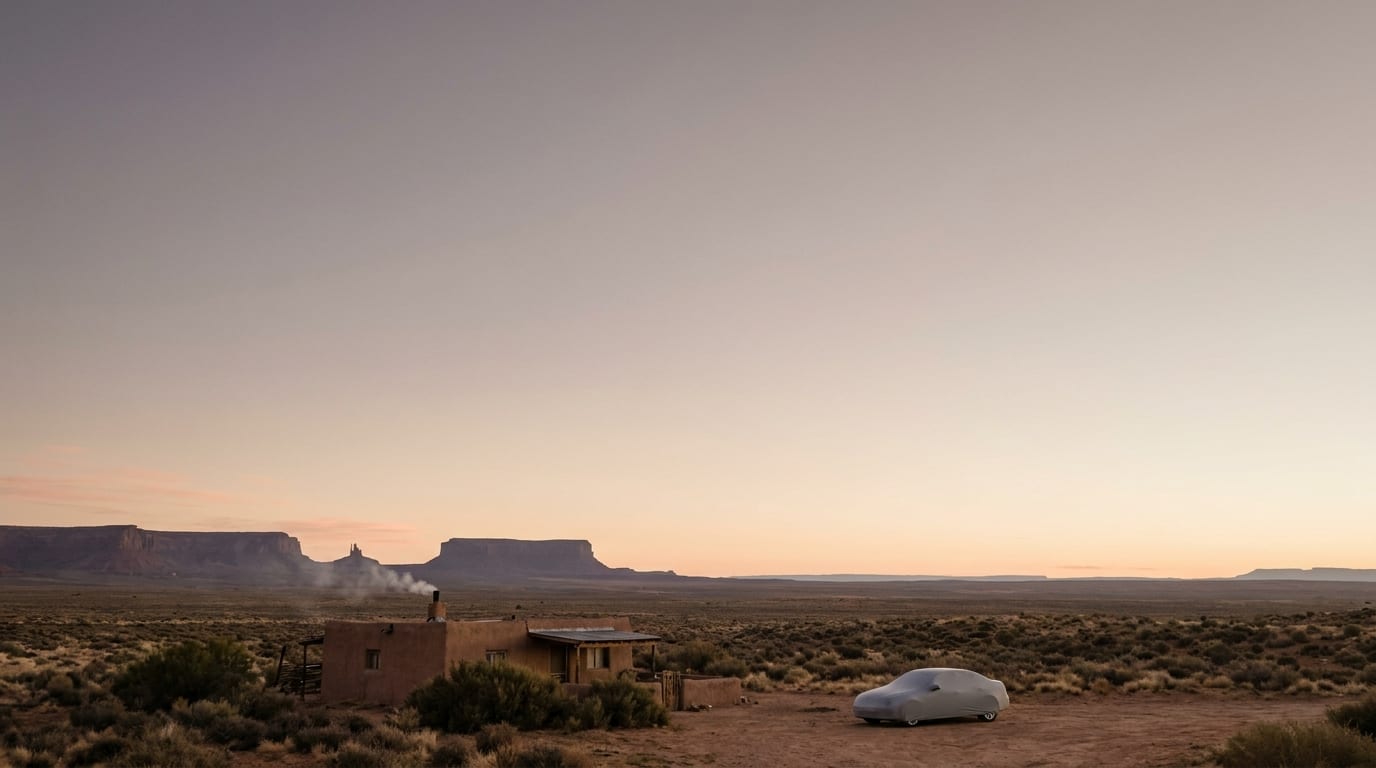
LA County isn't one climate, it's five or six stitched together. Coastal spots like Santa Monica, Venice, and Long Beach deal with salt air and marine layer humidity that can get trapped under a non-breathable cover and turn into mildew or water spotting by the time you pull the cover off.
Inland valleys, think San Fernando and San Gabriel, see hotter extremes and longer stretches of direct UV with much less humidity in the air. Different problem, same cover failing for different reasons.
Push further out toward Santa Clarita or the edges of the Antelope Valley and you're adding Santa Ana dust into the mix, on top of already intense sun. Downtown and the denser urban neighborhoods have the heaviest smog and particulate concentration, simply because that's where the traffic density is worst.
None of this means you need five different covers. It means the right pick shifts slightly depending on where your car actually lives. A cover that's great in Venice might trap moisture it was never designed to handle in Burbank.
Must-Have Features for a Sun-and-Smog Car Cover

Four things actually matter here, and most cheap covers skip at least one of them.
First, a UV-resistant, multi-layer outer fabric. This is the layer doing the real work of blocking sun before it reaches your paint and the dashboard surfaces visible through the windshield. Thin, single-layer fabric just doesn't hold up to 280 sunny days a year.
Second, breathable construction. Without it, moisture from marine layer mornings or regular temperature swings gets trapped underneath and causes the exact mildew and water-spotting problem a cover is supposed to prevent. If you're weighing this against fully sealed options, our outdoor car cover guide breaks down the tradeoff in more depth.
Third, a soft, non-abrasive inner lining. Smog residue and dust particles sitting on the paint will scratch the clear coat if the cover shifts around in wind with a rough lining. This one gets overlooked constantly.
Fourth, water-resistant treatment, though not necessarily full waterproofing. LA rain is infrequent, but morning condensation and the occasional downpour still happen. If you want to understand the difference between water-resistant and genuinely waterproof fabric before you buy, it's worth reading the waterproof car cover guide.
Don't Overlook Wind and Security Features
Santa Ana winds aren't a minor weather footnote here, they hit 50+ mph and they happen multiple times a year. A cover without a secure strap or grommet system will shift, flap, and sand itself (and your paint) down during one of these events. It's not a matter of if, it's which windstorm catches your cover loose.
Check for a built-in gust strap or grommet compatibility before you buy, and if you already own a cover without one, our gust strap installation guide walks through adding that protection.
Street parking in dense LA neighborhoods also raises theft risk, which people forget to factor into cover shopping. A cable lock compatible cover is a practical, low-effort add-on. See the cable lock installation guide if you're adding one to an existing setup.
Here's the opinion part: a snug, well-fitted cover beats a loose universal one on wind performance alone, every time. Less flapping fabric means less abrasion, and less abrasion means your clear coat lasts longer.
Custom-Fit vs. Universal: Which Makes Sense for LA Drivers
Custom-fit covers hug the body of the vehicle closely, which matters more here than people assume. That tight fit closes off the gap where smog particulates and wind both like to get underneath. Universal covers cost less upfront, but they shift more in wind and tend to leave more exposed surface area around the undercarriage line, right where grime builds up fastest.
If you're not sure which category your vehicle falls into, the custom-fit car covers guide and the cover sizing guide are the two places to start.
Worth noting: owners of luxury and classic cars parked outdoors in LA lean custom-fit more often than not, and it's not vanity. Paint correction on a classic isn't cheap, and a loose universal cover grinding smog dust into the clear coat for a year is a fast way to need it.
Keeping Your Cover Effective Against LA's Elements
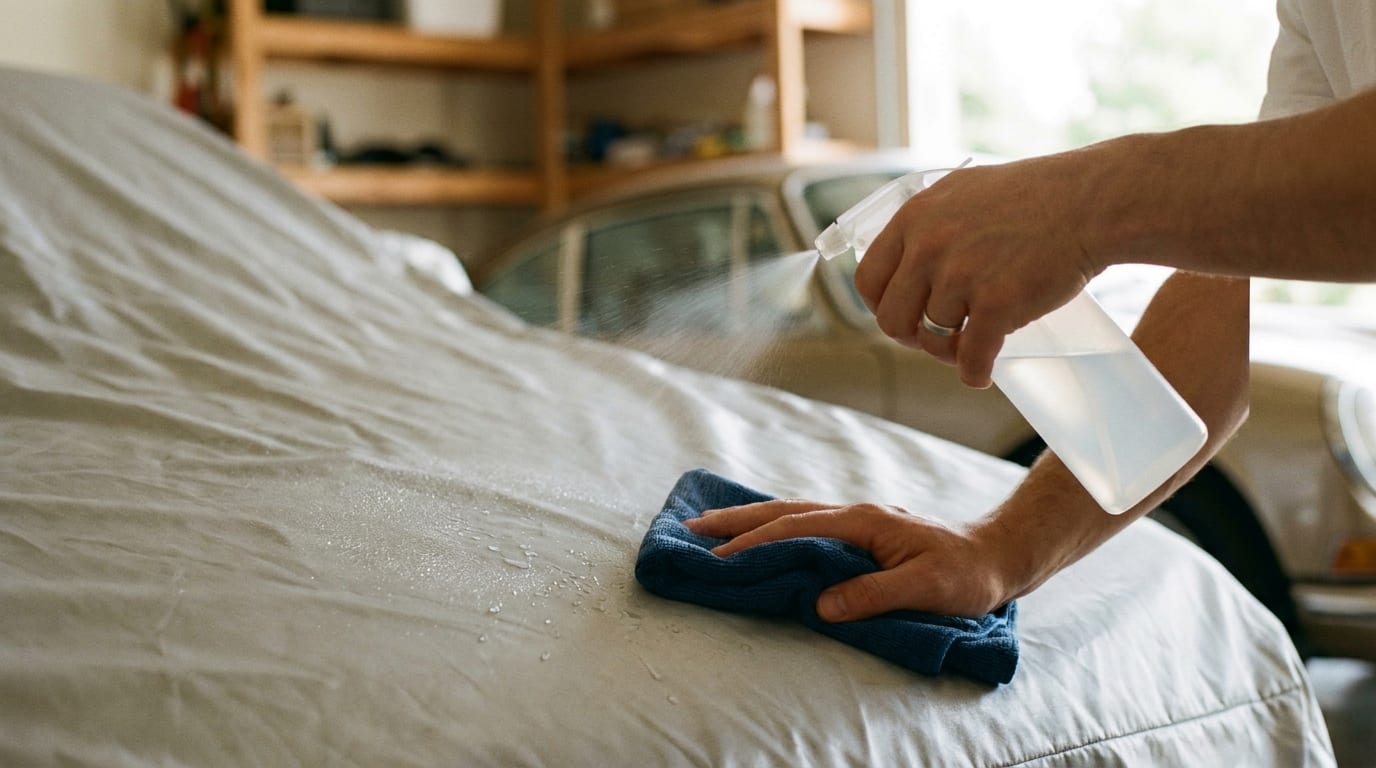
A cover doesn't stay effective on autopilot. Smog film builds up on the outer fabric over time, the same way it builds up on your hood, and if you leave it there, that film transfers straight to your paint the next time you pull the cover off. Rinse it every few weeks. It's a five-minute job that saves you a much longer one.
For the actual process, the cover cleaning guide covers how to wash it without stripping the UV coating, which matters since scrubbing it like a bedsheet will shorten its lifespan fast.
After any Santa Ana wind event, check your straps and grommets for wear before the next one rolls through. They're cheap to replace and expensive to ignore. For the fuller picture on managing UV, wind, and water exposure together, the outdoor cover usage guide is worth bookmarking.
Finding the Right Cover for Your Vehicle
If you want to skip the guesswork, the coverfinder tool matches your exact make and model to options built for outdoor, high-UV use. It's faster than scrolling through generic size charts.
For a shortcut on quality, the top-rated car covers page lists options with strong reviews relevant to exactly this kind of sun and smog exposure. And if you're still comparing fabric tiers before committing, browsing the car covers category page side by side is a reasonable place to spend ten minutes.
Three things matter more than anything else if you're parking outdoors in LA: a UV-resistant shell, breathable fabric, and a fit that's snug enough not to flap in a Santa Ana gust. Get those three right and the rest is detail.
If you found this useful, stick around the blog for more region-specific car care guides, we add new ones as we dig into other climates across the country.