Articles Seasonal & Weather Car Care Tips
Best Car Cover for Oklahoma and Kansas Storms: A Hail and Wind Protection Guide
Published
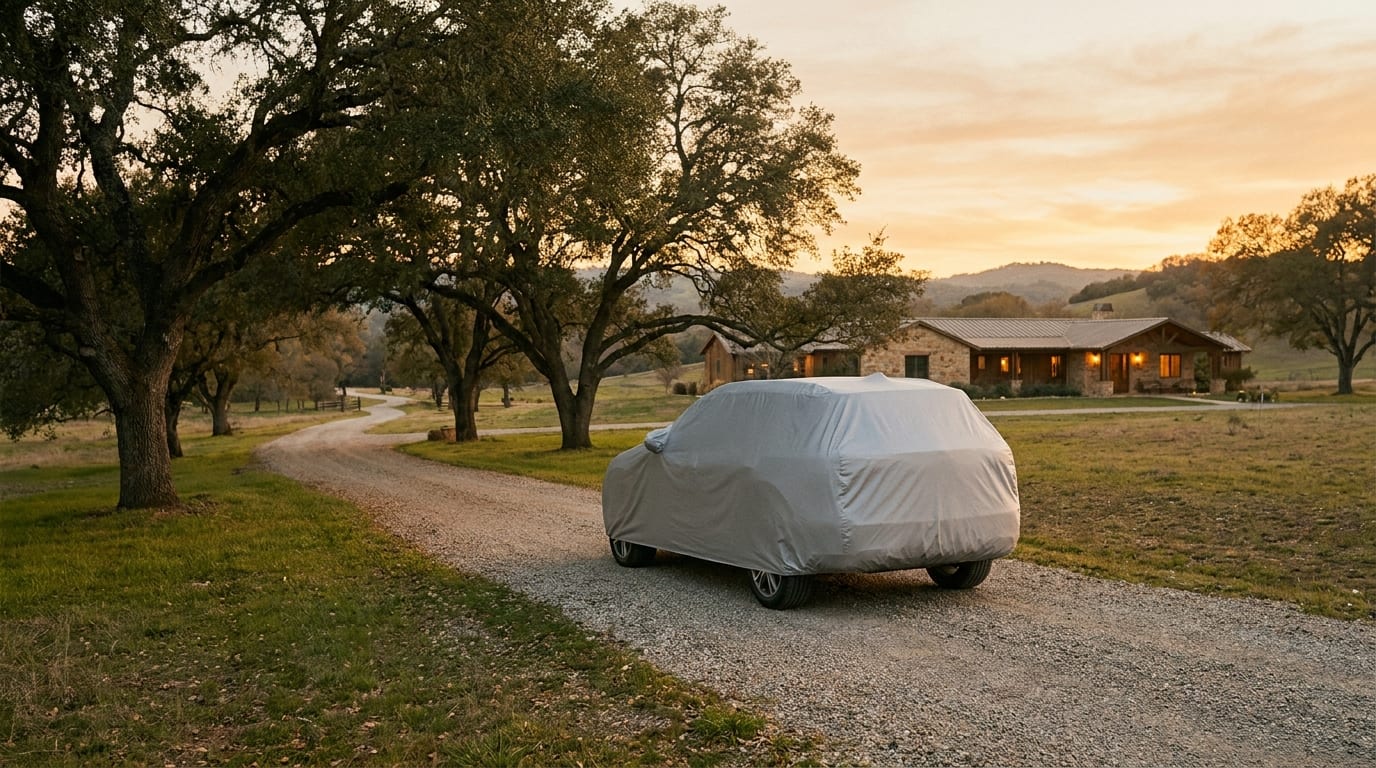
Spring in Oklahoma and Kansas means one thing for your car: you're one storm cell away from a hail-dented hood or a cover ripped clean off the roof. If you're shopping for the best car cover for Oklahoma and Kansas storms, you've probably already noticed most product descriptions oversell what a cover can actually do. This guide skips that. It's about what construction and setup actually hold up when a supercell rolls through, and what still won't survive a direct hit from a golf-ball-size stone.
Why Oklahoma and Kansas Weather Is Rough on Parked Cars
You already know the region sits inside Tornado Alley, but tornadoes aren't really the everyday threat to your paint job. The bigger, more frequent problem is the severe thunderstorm cells that spin up across the Plains all spring, dropping hail and straight-line wind well before (and often without) a tornado ever touching down. These storms move fast, build fast, and cover a lot of ground.
Hail season here typically runs April through June, and Kansas and Oklahoma show up year after year near the top of national hail-claim rankings. It's not rare. It's practically scheduled.
Here's the part that matters for cover shopping: most hail and wind damage doesn't happen while you're driving. It happens while your car sits in a driveway, a parking lot, or outside your office, doing nothing, while a cell passes overhead. That's exactly where a cover earns its keep, or doesn't.
So set the expectation now. A cover reduces exposure and cushions impact. It does not make your car storm-proof, and nobody selling you one honestly should claim otherwise.
What Actually Damages a Parked Car: Hail vs. Wind
Hail is the obvious one. Stones during a Plains supercell can range from pea-size, which mostly just pings off paint, up to golf-ball or softball-size during the worst cells, which will dent sheet metal through almost anything. Hood, roof, and trunk take the brunt because they're facing straight up.
Wind brings a different kind of trouble. Straight-line gusts turn branches, trash cans, and loose shingles into projectiles, and they'll also rip at your cover itself if it isn't anchored down. A flapping cover doesn't just fail to protect your car, it can scuff paint on its own.
Then there's the combined scenario that catches people off guard: wind-driven hail hitting at an angle instead of straight down. That means your side panels and windows are suddenly in play too, not just the top surfaces most covers are built to protect.
Worth saying plainly: no consumer car cover eliminates dent risk from large hail. Nothing on the market stops a baseball-size stone from denting a hood. The real goal, and the only honest one, is cutting down how often and how badly the small-to-medium stuff dings your paint.
What to Look For in a Car Cover for Hail-Prone Areas
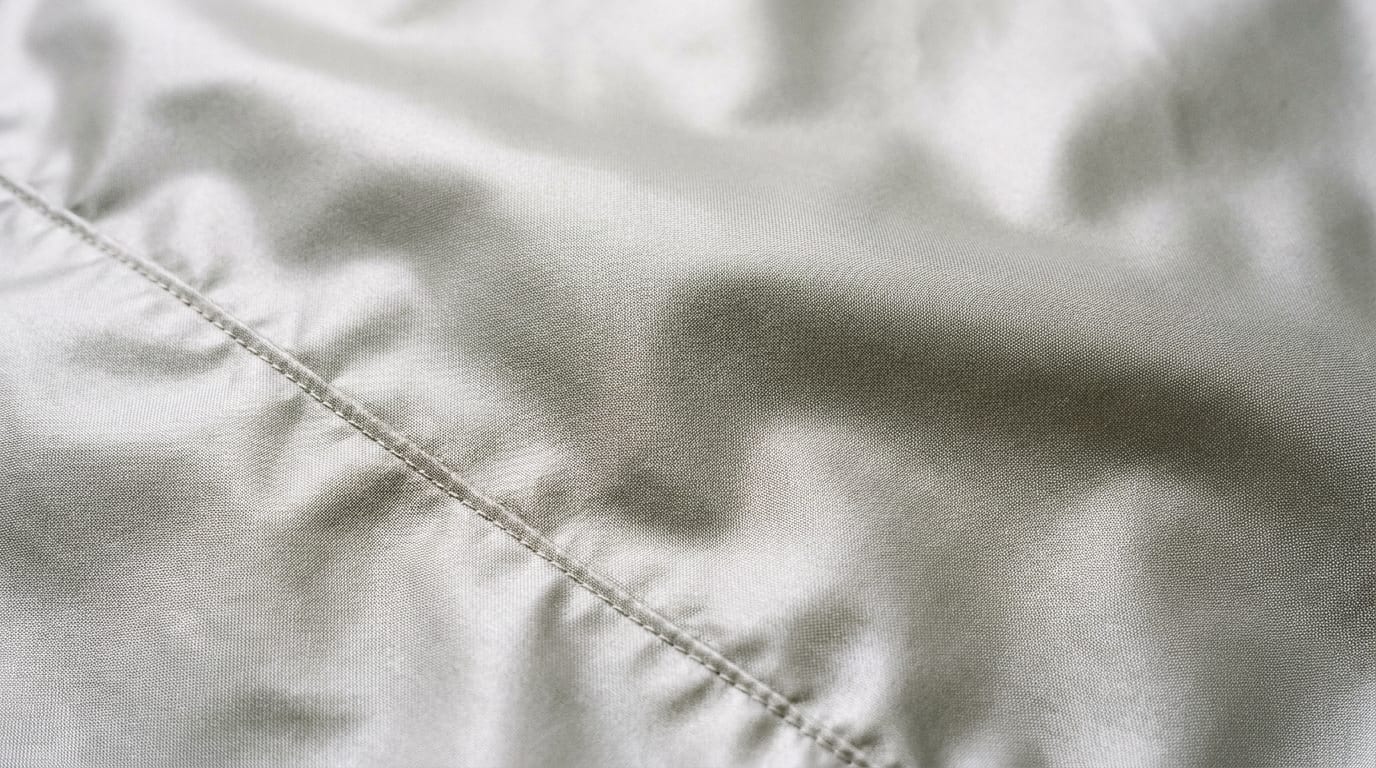
Construction is everything here. Look for padded or multi-layer builds concentrated over the hood, roof, and trunk, since that's where direct hail impact lands hardest.
There's a real tradeoff in material weight. Heavier, layered covers absorb more energy from an impact, which is what you want. But pile on too much density without breathability and you trap moisture underneath, which trades hail dents for mildew and water spots. A good hail cover balances both.
Fit matters more than people assume. A loose, universal-fit cover shifts and billows under wind and impact, which means it loses contact with the panel it's supposed to cushion right when you need it most. A snug, custom-fit cover stays put and transfers impact more predictably. If you're serious about this, start with hail car covers built specifically with that layered, impact-focused construction instead of a general-purpose outdoor cover that happens to be marketed for storms.
Wind Protection: Keeping the Cover On During a Kansas Gust Front
Straight-line winds ahead of a storm front on the Plains regularly push past 50 to 60 mph. That's plenty to lift a cover that isn't properly secured, and once it's flapping, you've lost whatever hail protection it was giving you.
Look for a cover with a real securing system built in: grommets for tie-downs, gust straps that run under the vehicle, cable-and-lock setups for added security, and elastic hems at the wheel wells that hug the body instead of billowing out.
Timing matters as much as the hardware. Secure the front and back straps before the wind picks up, not after a tornado watch gets issued. By the time sirens are going, you've got five minutes and a parking lot full of debris, not the right conditions for careful installation.
If you've already got a cover that's blown loose in a past storm, it doesn't necessarily mean you need a new one. You can often retrofit gust straps and wind straps onto an existing cover, and it's worth doing before the next system rolls through rather than after. For more on the failure points that let a cover get away from you in the first place, see 5 ways to keep a car cover from blowing away.
Matching the Cover to Where You Actually Park
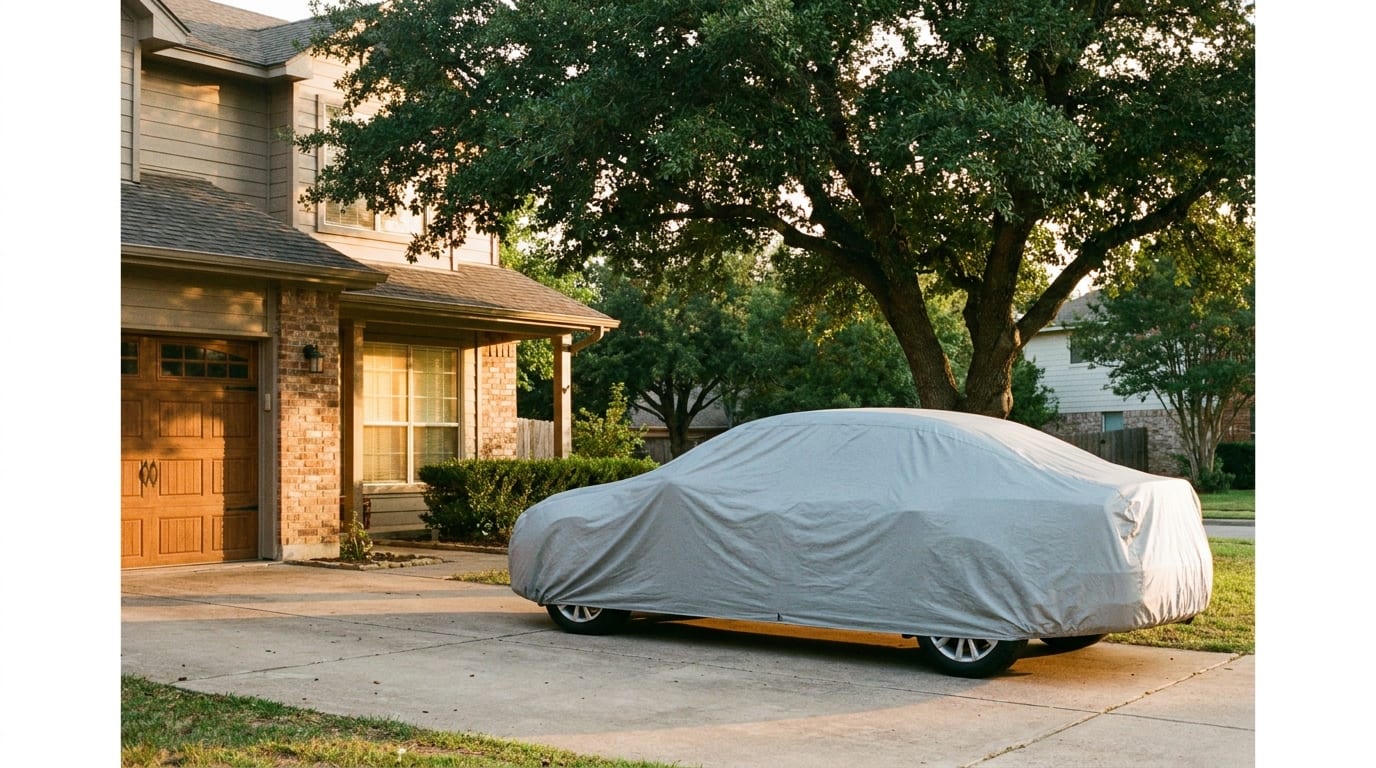
Where your car actually sits changes what you should buy.
Open driveway or street parking is the most exposed situation in Oklahoma or Kansas, so prioritize a heavier-duty outdoor car cover with UV and water resistance layered in alongside the hail protection. You're not just fighting hail, you're fighting sun and rain the rest of the year too.
Carport or partial shelter changes the math. Direct hail exposure drops, so a lighter outdoor cover can be enough, but wind-blown rain still gets under most carports sideways, so don't drop water resistance just because you've got a roof overhead. A waterproof car cover still earns its place here.
Garage storage during the off-season is a different product category entirely. An indoor car cover is built for dust and scratches, not weather, so don't buy one expecting storm protection if your car ever sits outside.
Whatever you land on, check fit before you buy. Use a sizing guide first. An ill-fitting cover undermines both hail and wind performance, no matter how good the material is.
Common Car Cover Mistakes During Plains Storm Season
A few mistakes show up constantly, and they're mostly avoidable.
The biggest one: buying a thin, dust-only cover and expecting it to handle hail. It was never built for that, and it won't suddenly perform like one during a storm.
Second: leaving straps loose, or skipping them entirely because "it's just going to rain." Rain is rarely just rain out here. It's usually rain ahead of a wind gust that's already lifted plenty of unsecured covers off cars before.
Third: not checking the cover after a storm. Tears, pooling water, loosened anchor points, all of it needs a quick look before the next system comes through, which in storm season might be a day or two later, not a week.
Fourth, and maybe the most common: waiting until a tornado watch is issued to throw the cover on. By then you're rushing, the wind's already picking up, and you're fumbling with straps in bad light. Covering the car should be routine practice through spring storm months, not a last-minute scramble.
Keeping Your Cover Ready Through Storm Season
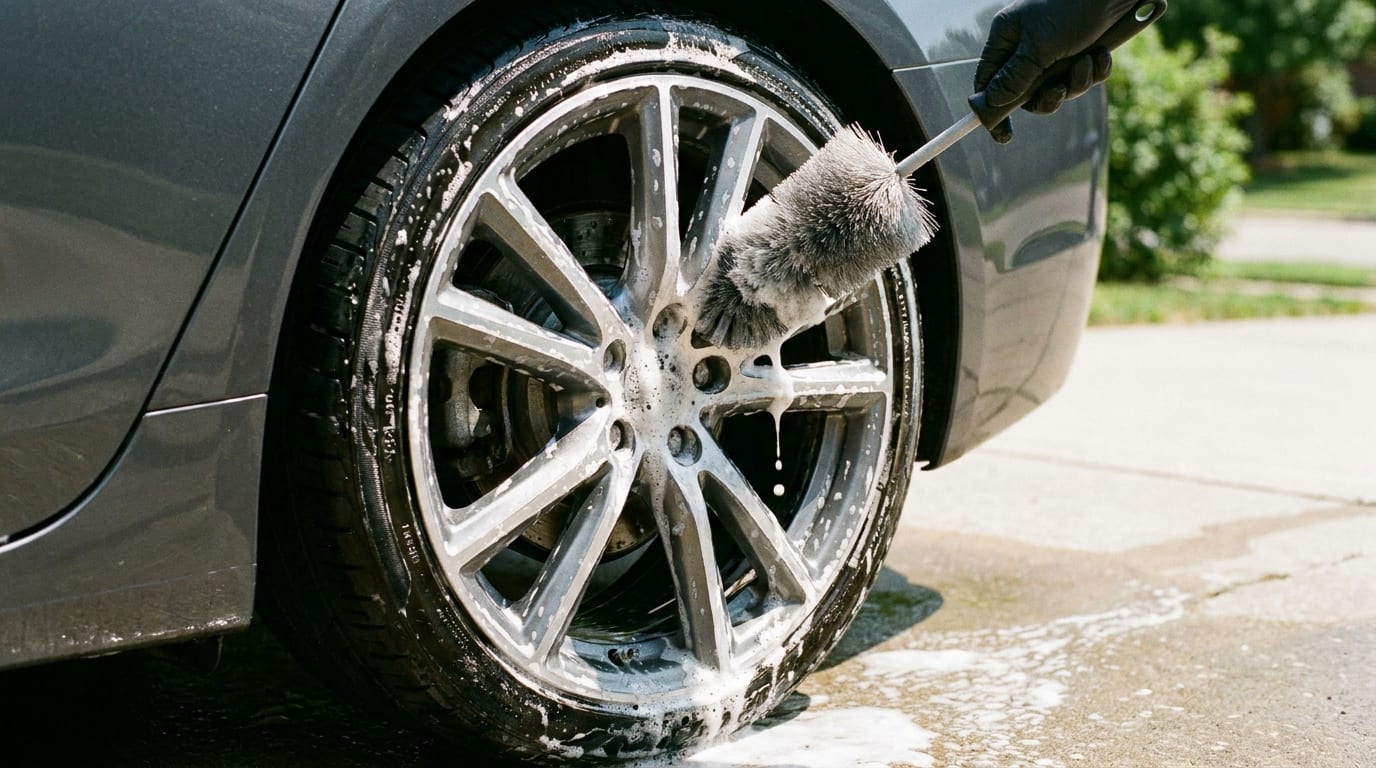
A cover that's falling apart from neglect won't protect anything, no matter how good it was new.
After a storm, shake off hail debris and let the cover dry fully before folding it up. Folding it away wet is how you end up with mildew smell and weakened fabric by the next storm.
Check straps, grommets, and seams regularly once storm season gets going, especially after repeated high-wind events. Stitching and hardware wear faster under repeated stress than most people expect.
If you've switched vehicles, or added a roof rack or other accessories, recheck the fit. A cover that fit your old sedan won't sit right on a new SUV, and gaps around new roof hardware are exactly where water and wind get in. For keeping the material itself in shape and holding onto its water resistance across a full season, this cover cleaning guide is worth a look before the next round of storms hits.
Choosing Your Cover: Next Steps
Boil it down and it's a two-part checklist: hail-rated, layered construction over the hood, roof, and trunk, plus a wind-securing system you'll actually use every time, not just when a watch is issued.
Be honest with yourself about what that buys you. A good cover meaningfully cuts the risk and cost of minor hail dings and wind damage. It is not a guarantee against a direct hit from a severe hailstorm or tornadic winds, and nothing sold as a car cover should claim to be.
If you want to see what's held up in past storms, it's worth a look at how bad hail damage can actually get in the worst hailstorms in U.S. history. Otherwise, browse your options, check your fit, and get your cover on the car before the next watch is issued rather than after.