


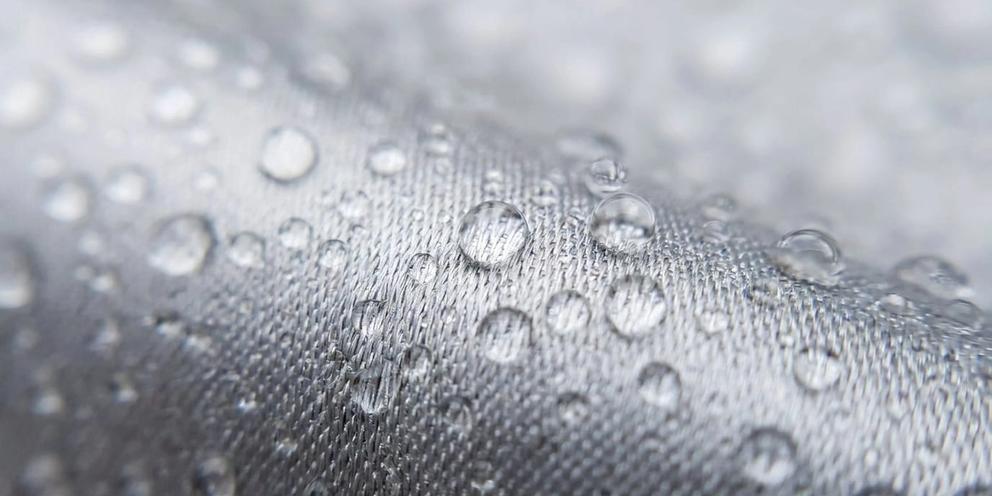
Best Car Cover for Pollen Season: How to Protect Your Paint This Spring
Pollen season sneaks up fast. One week your car's clean, the next it's got a yellow-green film that laughs at your wiper blades. If you're searching for the right car cover for pollen season, you're already ahead of most people who just wait for a rainstorm to "handle it." Rain doesn't handle it. It often makes things worse. Here's what's actually happening to your paint this spring, and how a good cover stops it before it starts.
Why Pollen Season Is Rough on Your Car's Finish
Pine and oak pollen aren't just annoying dust. They're mildly acidic, and they're sticky by design (that's how they spread). Left sitting on your clear coat under direct sun, that acidity has time to work into the finish. Give it a few days of heat and you're not looking at a quick wipe-down anymore, you're looking at etching.
It gets worse when pollen mixes with morning dew or a light drizzle. That combo turns fine yellow dust into a paste that clings to every panel line and crevice. Dry pollen you can mostly blow off. Pollen paste has to be worked off, and working anything off paint means friction, and friction means swirl marks if you're not careful. For more on how these small chemical interactions add up over time, our car paint care guide covers the basics of what's actually damaging your finish versus what just looks bad.
And it's not only the paint. Pollen works into windshield wiper joints, door seals, and side mirror hinges, where it dries into a gritty film that makes seals stick and wipers judder across the glass. Parking under a tree feels like shade and protection. In pollen season it's the opposite: you're parking directly under the source, and the branches overhead just concentrate the drop zone right onto your hood and roof.
What a Car Cover Actually Prevents During Pollen Season
A cover doesn't stop pollen from falling. It just gives it somewhere else to land. Instead of settling directly on clear coat, pollen sits on breathable fabric, and fabric doesn't care about acidity the way your paint does.
Here's the practical upside: pulling a cover off and shaking it out in the driveway takes maybe thirty seconds. Washing dried pollen paste off a hood, especially once it's baked in the sun for a few days, takes a hose, soap, multiple microfiber towels, and patience you probably don't have on a Tuesday morning. A car cover for pollen season basically moves the cleanup from "detailing job" to "shake and go."
There's a UV angle too. Sunlight is what bakes pollen residue into a stain in the first place. Block the UV, and even if some pollen gets past the edges, it's not cooking onto your paint in the meantime. Fewer bake cycles means fewer deep cleans, and fewer deep cleans means less time your paint spends getting scrubbed at all. If you're still unconvinced a cover is worth the extra step every morning, why buy a car cover breaks down the broader case beyond just pollen.
What to Look For in a Cover for Pollen Season
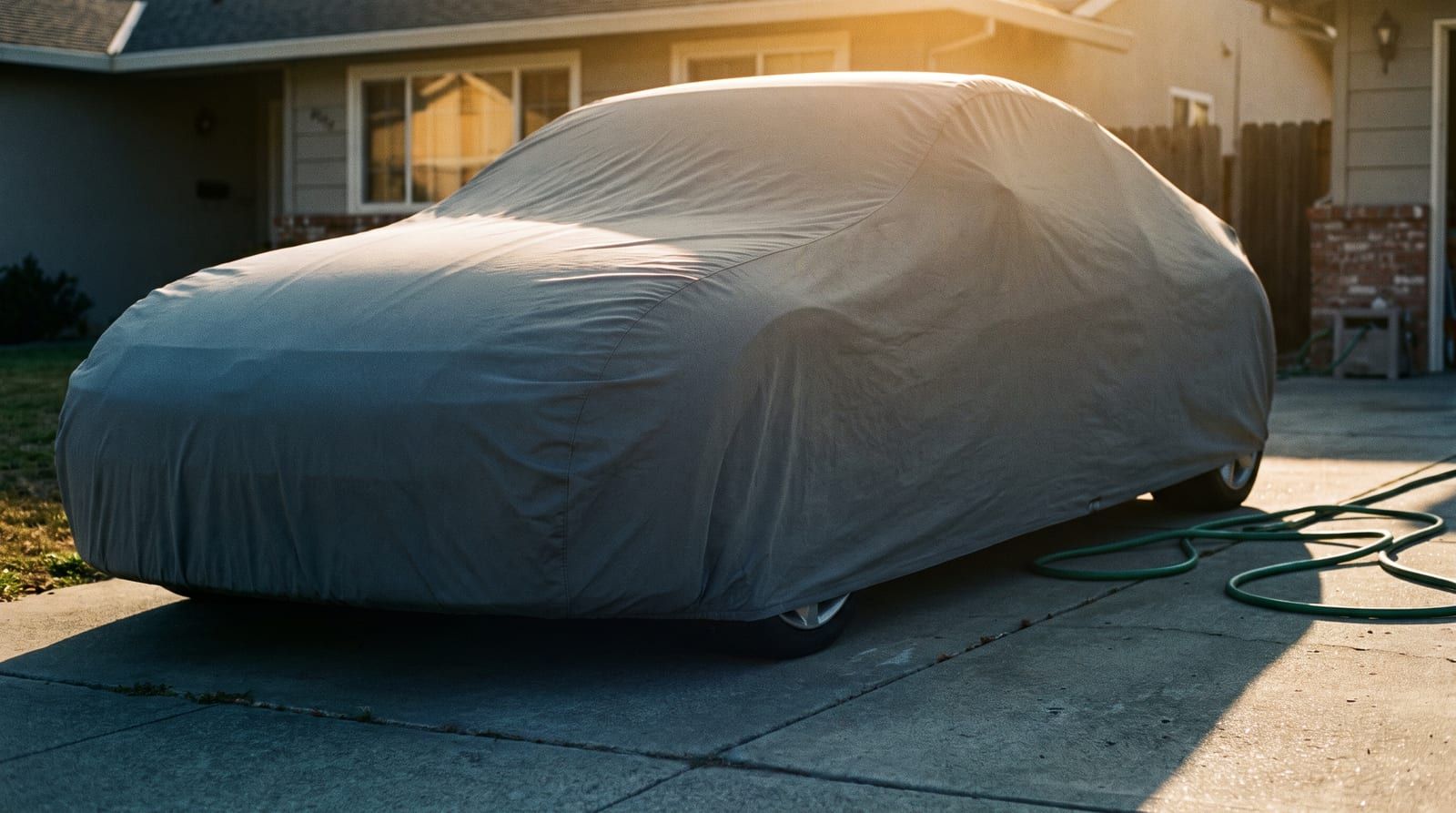
Not every cover is built for this job. A few things actually matter here.
Skip fully waterproof fabric. It feels like the safer choice, but waterproof material traps moisture and pollen underneath it, and now you've got a warm, damp environment sitting right on your paint, which is worse than no cover at all. You want breathable and water-resistant, not sealed shut. Our waterproof car covers guide explains the tradeoff between water resistance and full waterproofing in more detail, and it's worth understanding before you buy.
Fit matters just as much as fabric. A loose, universal cover flaps in spring wind and leaves gaps at the wheel wells and mirrors, and pollen finds every one of those gaps. A custom-fit car cover hugs the body lines close enough that there's nowhere for wind-blown pollen to sneak in.
Color matters more than people think. Days are longer now, sun's higher, and a dark cover soaks up heat for more hours than it did in February. Lighter or reflective covers stay cooler, which also means less risk of heat transferring through to a paint job that's already dealing with pollen residue underneath.
And if you're the type pulling the cover on and off daily during peak bloom, weight and folding matter. A cover that's a wrestling match to refold is a cover that eventually stops making it back on the car. For a rundown of what fabrics balance breathability, weight, and durability, what's the best car cover material is worth a read before you commit to one.
Outdoor vs. Indoor Covers: Which Fits Your Pollen Situation
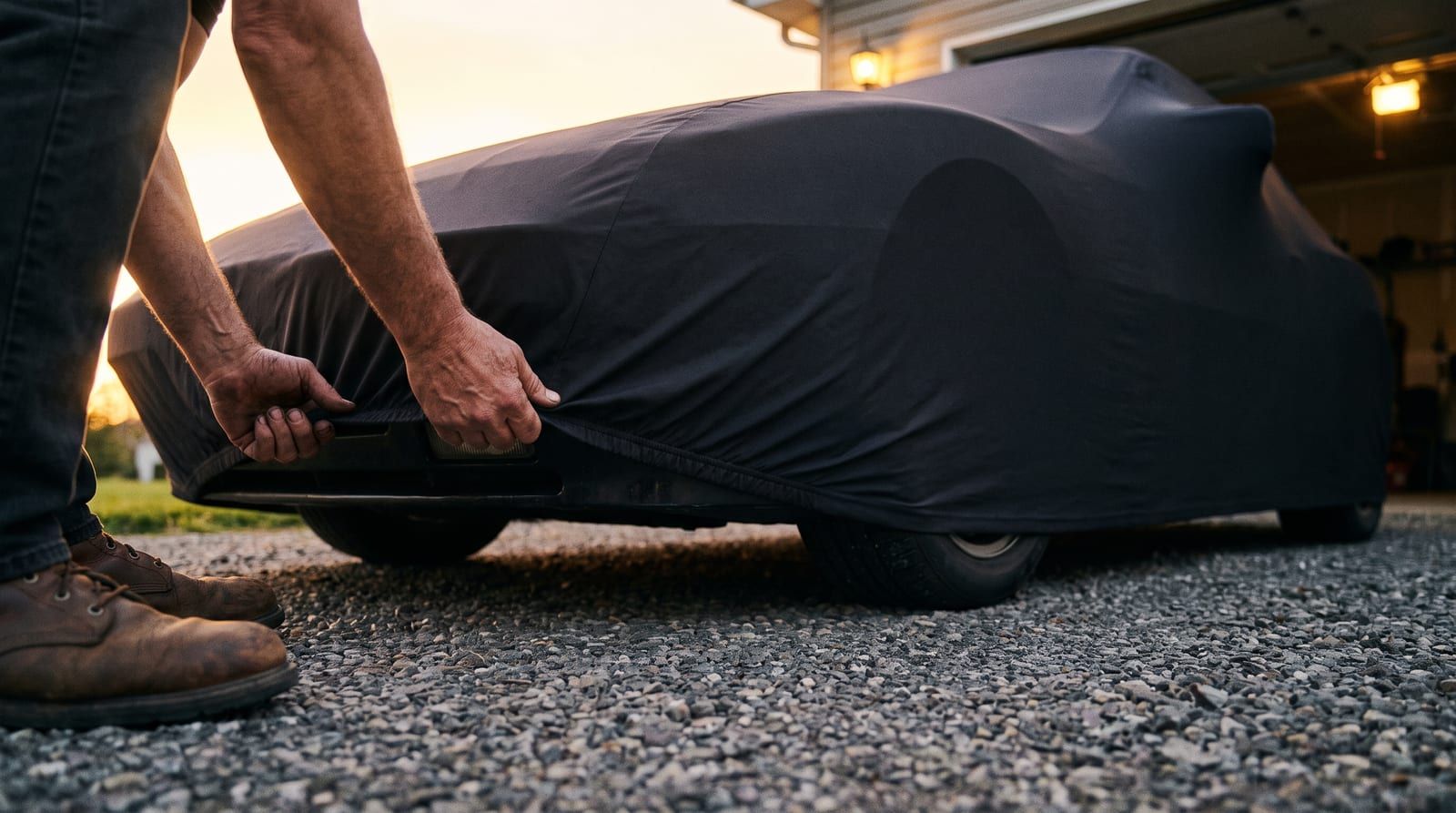
If your car sits in the driveway or under a tree every day during bloom season, you need an outdoor car cover. Full stop. Outdoor covers are built with the UV resistance and water resistance that daily sun and spring showers demand, and pollen season is exactly the scenario they're designed for.
Garaged cars aren't fully off the hook, though. Pollen drifts in through cracked windows, open garage doors, even HVAC vents, and it settles as a fine dust on anything sitting still. An indoor car cover handles that lighter dust load without the UV and weatherproofing bulk you don't need inside.
The real question is just how often the car's actually parked outside during these months. Daily driver sitting in the sun all day near a tree line? Outdoor cover, no question. Weekend car that lives in the garage and only comes out occasionally? Indoor is probably enough, unless you're leaving the garage door open more than you think.
Washing and Covering Routine for Pollen Season
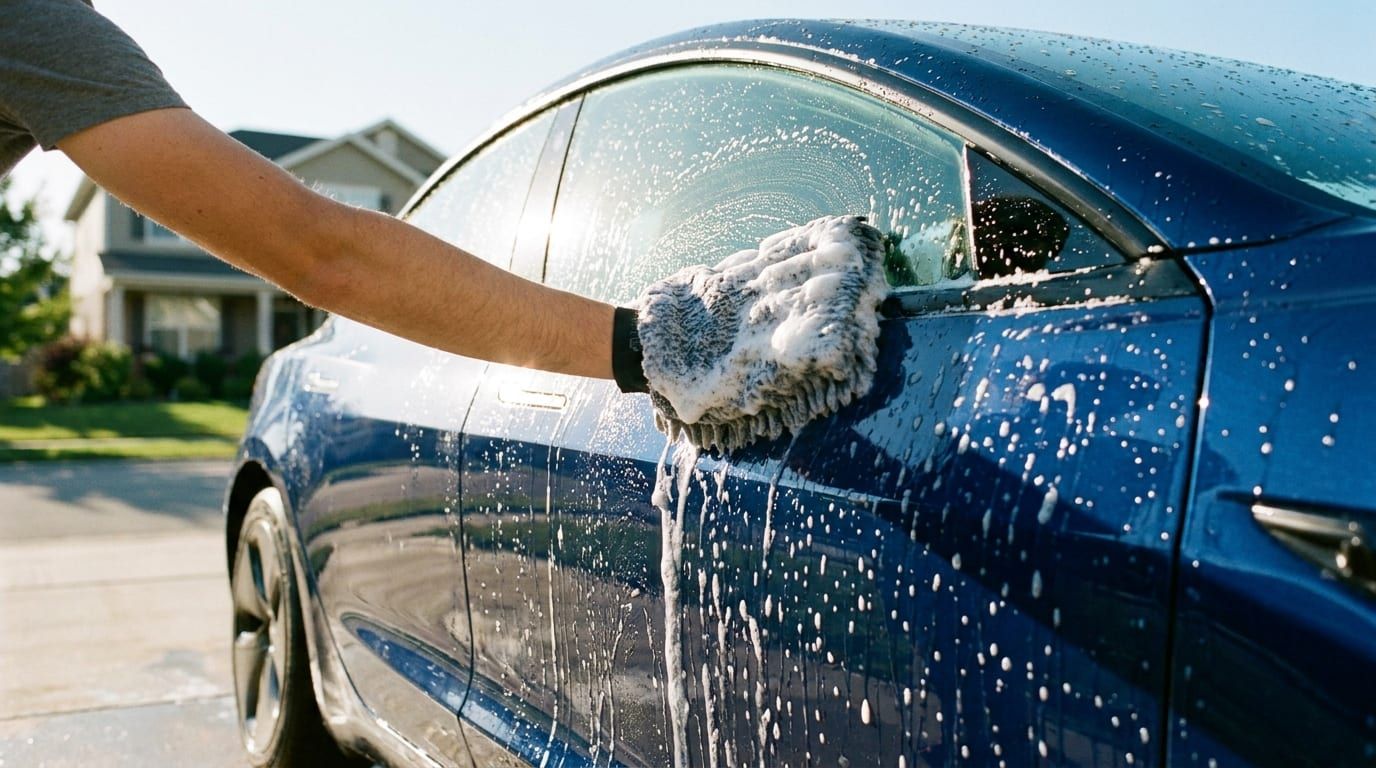
Don't cover a dirty car and call it done. Rinse first, always. Wiping dry pollen off with a towel just grinds grit into the clear coat, which is exactly the scratching you're trying to avoid. A hose rinse loosens it without the friction.
Before pollen season really ramps up, put down a light coat of wax or sealant. It's a small step now that saves you a headache later. Waxed paint is smoother, so pollen paste and residue rinse off instead of clinging to microscopic pits in the clear coat.
The cover itself needs attention too. Shake it out and spot-clean it regularly, because a cover caked in old pollen is just going to redeposit that pollen onto your car the next time you put it on. Our guide to using a car cover outdoors has more on managing wind, UV, and moisture together instead of one at a time, and how to clean a car cover walks through the actual process without damaging the fabric.
One more thing: let the cover dry fully before you fold it away. Spring rain plus a damp cover stored in a bag is a mold problem waiting to happen. And if you're new to getting a cover on and off quickly each morning, installing your car cover has a few tricks that speed the process up considerably.
Pollen Season by Region: What to Expect
Not all pollen seasons look the same. The Southeast and mid-Atlantic tend to get hit hardest early-to-mid spring, when pine and oak trees dump their yellow dust in waves you can practically see drifting across a parking lot.
The Pacific Northwest and parts of the Midwest get a second round later in the season, this time from grasses instead of trees. So if you thought you were clear once the trees calmed down, don't put the cover away yet.
Season length varies a lot by climate too. Warmer regions can see pollen linger a month or more longer than colder ones, which means your cover routine needs to stretch out accordingly. Checking a local pollen forecast before you plan a wash-and-cover day isn't overkill, it's just timing the work around the actual peak count instead of guessing. For general seasonal upkeep beyond pollen specifically, car care has a broader rundown worth bookmarking.
Keep Your Paint Pollen-Free All Season
The short version: a breathable, snug-fitting car cover for pollen season is the easiest way to dodge etching, staining, and the repeated deep cleans that come with skipping one. Pair it with a quick rinse routine, not either one alone, and you'll spend way less time scrubbing dried paste off your hood this spring.
If you haven't found the right fit for your vehicle yet, that's the next logical step. Browse a few options, see what fits your parking situation, and check back here for more seasonal car care tips as the year goes on.
Updated