Best Cover for a Class A Motorhome: Fit, Venting, and UV Protection Explained
Published
Why Class A Motorhomes Need a Purpose-Built Cover
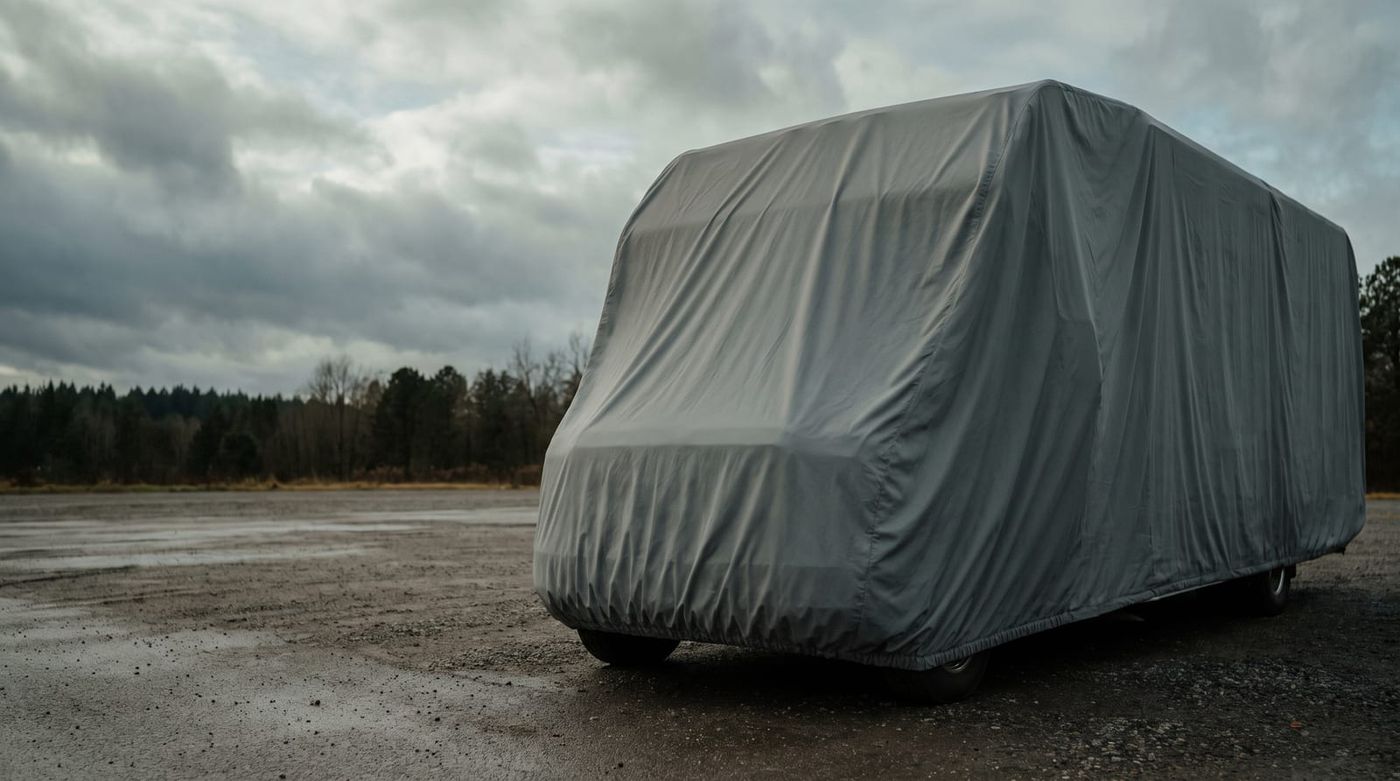
Class A motorhomes are the big ones. Bus-style flat front, 29 to 45 feet long, roofline that sits well above a standard RV. That size is exactly why a generic tarp or a cover built for a smaller rig won't seal right at the cab or around the rear cap. There's just too much surface to account for, and too many odd shapes along the way.
The exposure is different too. A flat roof that long bakes in direct sun for hours at a stretch. A windshield the size of a storefront window, sitting there taking UV straight on. And all that flat panel area turns the whole coach into something closer to a sail when the wind picks up, even parked in a driveway.
So finding the best cover for a Class A motorhome really comes down to three things: does it fit the actual shape of the coach, does it let moisture escape instead of trapping it, and is the fabric rated to handle sun exposure this extreme. Get one of those wrong and you can end up with a cover that's technically "on" the RV but still letting in damage.
Getting the Fit Right for a Class A Chassis
Length and height matter more here than on almost any other vehicle category. Before you buy anything, measure bumper to bumper and get the roofline height, including whatever's mounted up there: AC units, antennas, satellite domes, the rear ladder. All of that has to be accounted for in the cover's profile, not just the box shape of the coach itself.
This is also why a cover built for a Class B or Class C doesn't translate. Those classes have a sloped hood or a cutaway cab profile. Class A doesn't. It's boxier, taller, and the front is usually flat, sometimes with a diesel pusher's lower stance versus a gas chassis sitting higher. Different proportions entirely, and a cover cut for the wrong one will either fall short at the ends or bunch up where it shouldn't.
Look for mirror pockets so the cover drapes around the side mirrors instead of catching wind there. Elastic hems or buckle straps at the front and rear matter too, since a loose hem is the first thing that starts flapping once the wind gets moving around a parked rig. This is where checking what size car cover fits your vehicle before buying saves you a return. For Class A specifically, start with covers built for that RV class rather than a universal RV cover sized by guesswork.
Venting: Preventing Trapped Moisture Under a Class A Cover
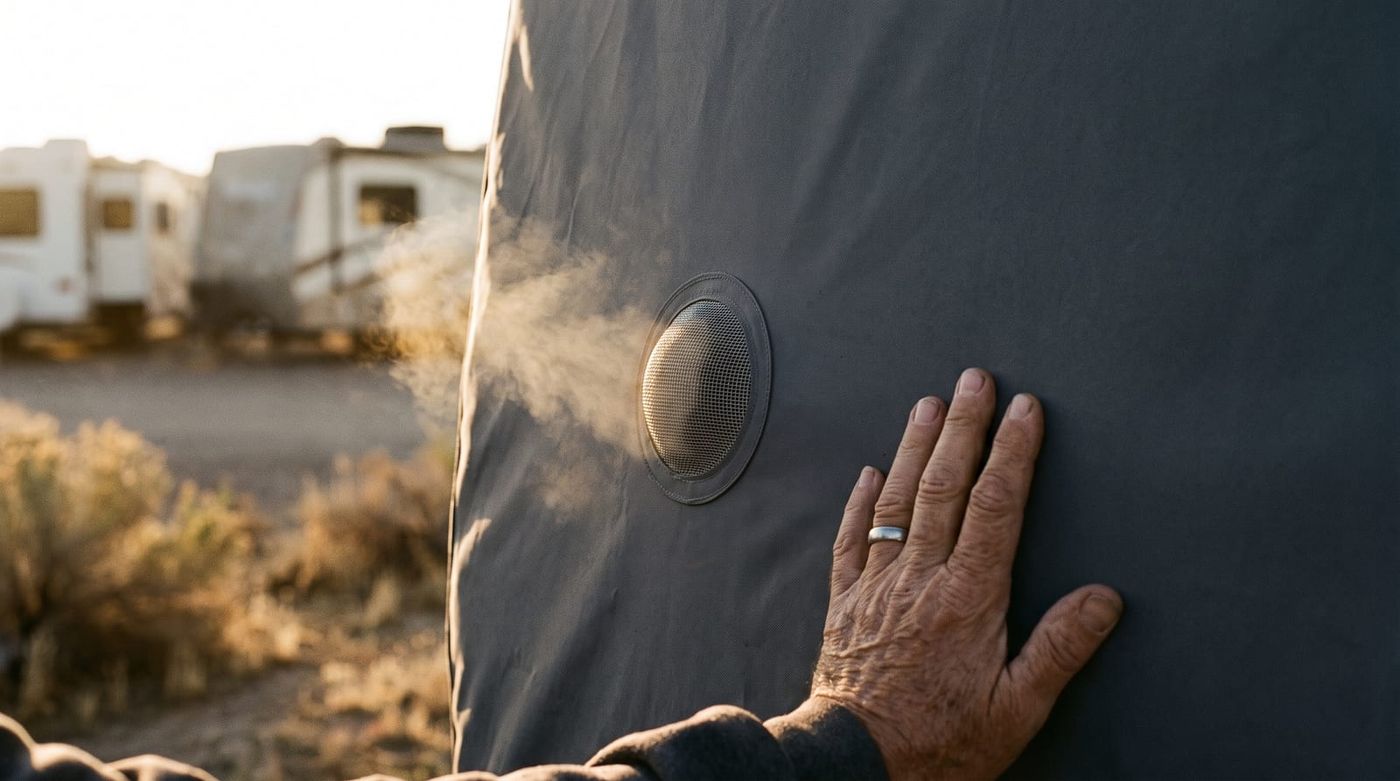
Here's the part people get wrong most often: they buy the most "sealed" cover they can find, thinking total coverage means total protection. It doesn't. A fully sealed, non-breathable cover traps condensation right against the fiberglass or aluminum siding, and against the roof seals too. Over a season in storage, that trapped moisture is how you end up with mold, mildew, and seals that degrade faster than they should.
A properly built RV cover has venting designed into it. That usually means mesh zones or vented panels placed over roof AC units and along the roofline, letting warm, moist air escape without opening a path for rain to get in. It's a balance, not a tradeoff.
Those roof-mounted AC units and vents also need actual clearance, not a cover stretched drum-tight over them. A cover pulled taut across an AC unit will rub against it in the wind, and that rubbing wears through fabric a lot faster than UV exposure alone would. For installation specifics on fitting a cover around roof fixtures, it's worth checking the product details before you commit, since not every cover handles roof accessories the same way.
One more thing worth checking before you buy: look at the breathability rating, not just the waterproof number. A cover can be excellent at keeping rain out and still trap humidity in. You want both specs working together, not just one of them maxed out.
UV Protection Needs Specific to Class A's Size and Shape
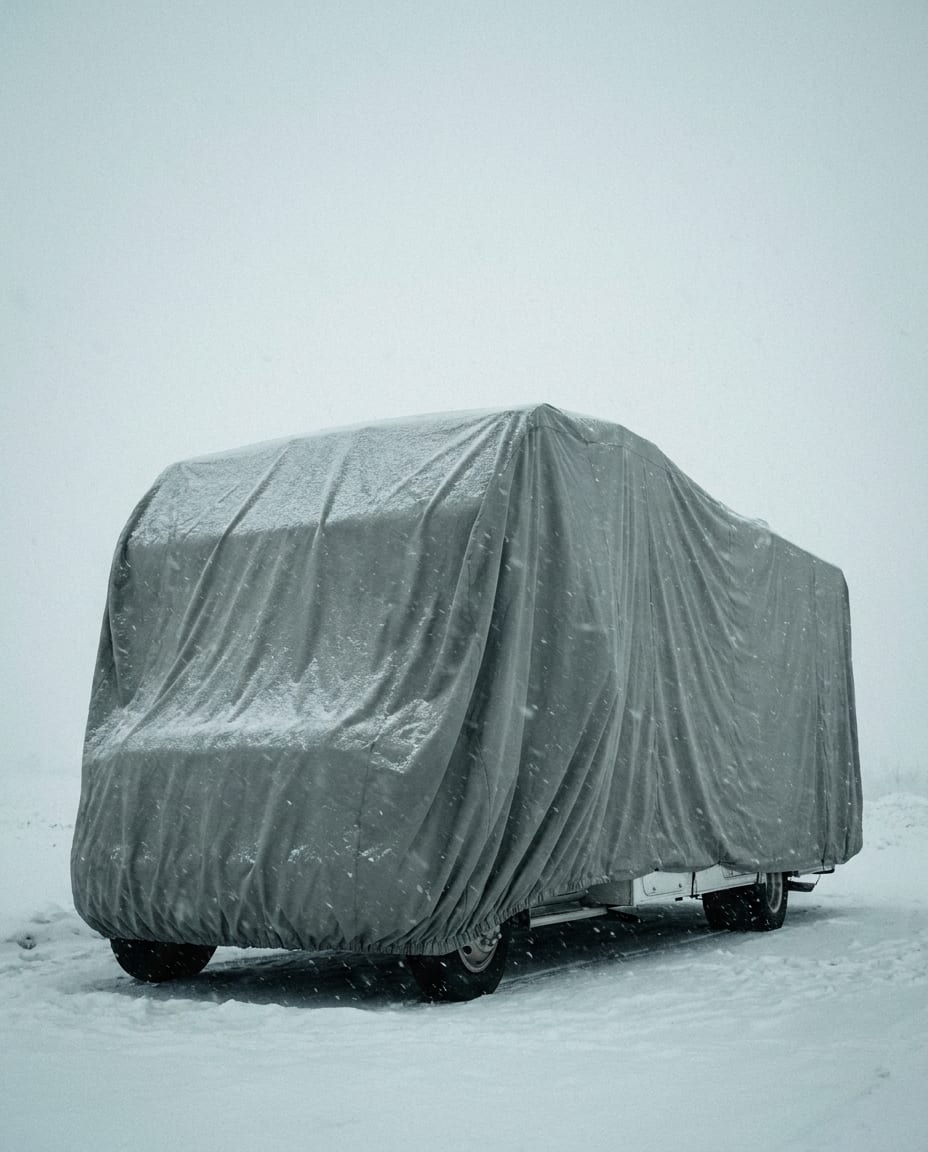
Think about how much roof and windshield a Class A actually exposes to the sun compared to a car. It's not close. That flat roof catches sun almost all day in an open lot, and the windshield, being so much larger than a car's, takes a longer and more direct hit. Over time that's accelerated fading, cracking in aged seals and trim, and clear-coat oxidation on the body panels.
UV-grade fabric isn't the same as a basic dust cover. It should be multi-layer, either woven or laminated, with a UV-resistant treatment actually rated for long-term outdoor exposure. Light-duty fabric meant for keeping pollen off a car in a garage just isn't built for a coach parked outside in July.
Windshield and dash damage is a specific, expensive problem for this RV class. Replacing or repairing a Class A windshield isn't cheap, and a dashboard baked and cracked from years of UV exposure is tough to fully fix. That's a strong argument for prioritizing UV rating over shaving a few dollars off the purchase. For a broader rundown of what outdoor exposure actually does to a cover and the vehicle under it, this guide to using a car cover outdoors covers the fundamentals that apply here too, just at a bigger scale.
If you're storing in the desert Southwest, or anywhere the coach sits outside for months at a stretch rather than in a covered bay, that's where a heavier UV-rated cover earns its price. A lighter indoor-style cover just isn't built for that kind of sun load.
Wind, Water, and Everyday Durability Considerations
Surface area is the whole story with wind. A car cover flapping in a gust is annoying. A Class A cover flapping is a different problem, because there's so much more of it to catch air. Reinforced grommets and a gust strap or cable and buckle system at the front and rear aren't optional extras here, they're what keeps the cover attached instead of becoming a loose sail. If a cover doesn't come with a strap system built in, it's worth adding one separately, and installing gust straps is a quick fix that pays off the first time a storm rolls through.
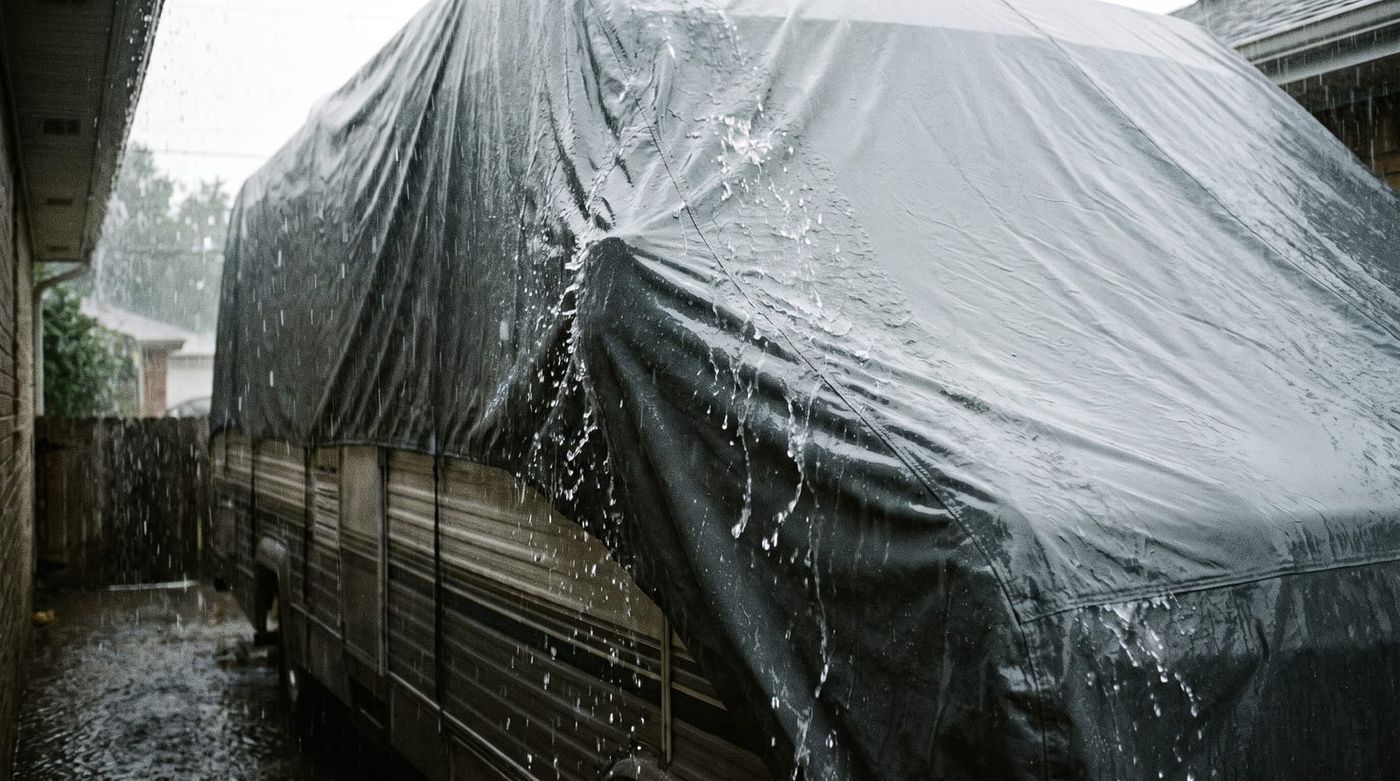
Waterproof and water-resistant aren't the same thing, and the difference matters more for Class A owners than most. If the coach sits fully outdoors in a rain-heavy region, you want a genuinely waterproof cover, not something that's just treated to shed light moisture. If it's under a carport or some kind of covered storage, you can get away with less.
Worth saying plainly: putting a cover this size on, or taking it off, is a two-person job most of the time. It's heavy, it's long, and wrestling it alone across a 40-foot roofline is a good way to waste an hour. Some covers are built in front-to-back panel sections specifically so one person can manage it solo, which is worth checking if you're usually doing this without help.
Matching Cover Type to Storage Situation and Warranty
Not everyone needs the heaviest cover on the shelf. If the coach lives under a carport, or it's only in storage for short stretches between trips, a lighter-duty cover is genuinely enough. Save the money.
Full outdoor, year-round storage is a different situation. That's where the heavier UV-rated, fully waterproof cover justifies its cost, because it's doing real work every single day it's on there, not just sitting as insurance.
Before buying, actually read the warranty terms. A Class A cover is a bigger purchase than a car cover, and you should know up front what's covered if a seam fails or the fabric starts breaking down early. Checking warranty coverage on car covers before you buy is a five-minute step that matters more here than on a smaller purchase.
The bigger picture: a cover that fits right, vents properly, and blocks UV isn't just about keeping the coach clean. It's protecting resale value, by heading off the fading, oxidation, and moisture damage that show up after a few seasons of neglect and make a motorhome look (and appraise) older than it is.
Finding and Caring for Your Class A Cover
If you're not sure which size or fit matches your specific model, a cover finder tool is the fastest way to narrow it down instead of guessing off a length range alone.
Once you've got the right cover, care is simple but easy to skip. Clean it periodically so dirt, pollen, and tree sap don't sit on the fabric and slowly wear down the UV coating. There's a straightforward process for cleaning a car cover that applies just as well to RV covers, just scaled up. Fold and store the cover properly between uses too. Stuffing it into a bag damp or balled up is how good covers develop mildew spots before their time.
If you're shopping for the best cover for a Class A motorhome, it's worth browsing options built specifically for this RV class rather than settling for a one-size-fits-most cover that technically drapes over it. And if you want more guides like this one as you get the rest of your setup dialed in, it's worth sticking around and exploring what else is here.