Best Cover for a Cruiser Motorcycle: Fit, Straps, and Lock Picks
Published
Cruisers are the long, low-slung bikes that make universal covers look like they were designed for something else entirely, because they usually were. A Harley Softail or Indian Chief has a different footprint than a sport bike or a standard, and that difference matters more than most riders expect once they're standing in a parking lot trying to stretch a cover over a windshield it wasn't built for. Finding the best cover for a cruiser motorcycle comes down to three things: getting the fit right for that long wheelbase, strapping it down so it doesn't flap around in the wind, and locking it so it stays put. Get those three right and the rest is easy.
Why Cruiser Motorcycles Need a Cover Built for Their Shape
Cruisers aren't shaped like other bikes. Longer wheelbase, lower seat height, a wider stance than a standard, and often a pile of add-ons bolted on top: windshields, leather saddlebags, sissy bars, highway pegs. Sport bikes tuck everything in tight. Cruisers spread out.
That spread is exactly what trips up a generic cover. A one-size-fits-all cover made for an average-length bike will often come up short at the front fork or bunch up awkwardly at the rear fender on a long cruiser. Gaps there aren't cosmetic problems. They're where rain gets in, where dust settles on your paint, and where a stiff morning frost decides to collect.
This is the question worth answering before you buy anything: does the cover actually match your bike's shape, not just its general category. The rest of this piece walks through how to judge fit, how to strap a cover down so it survives wind, and how to lock it so it survives a parking lot full of strangers.
Measuring Your Cruiser for the Right Cover Size
Skip the guesswork and grab a tape measure. Three numbers matter: overall length from the tip of the front tire to the back of the rear tire, width at the widest point (that's usually the mirrors or saddlebags, not the seat), and height at the tallest point, which on most cruisers is either the windshield or a sissy bar.
Write those down before you shop. A lot of riders eyeball it and end up a size short.
Cruiser-specific or large-size covers tend to fit noticeably better than generic one-size options, especially once a touring windshield enters the picture. A windshield adds real height that a standard cover pattern doesn't account for, and it's usually the first thing to poke through or strain the fabric on a cover that's too small.
If you've added saddlebags, highway pegs, or a passenger backrest, size up. Those accessories eat into the margin a snug-fitting cover needs, and a cover that was sized for the stock bike will fight you every time you try to get it on. If you're not sure which size category your cruiser lands in, the motorcycle cover sizing guide walks through it in more detail than a guess ever will.
Material and Weather Protection for Cruisers Stored Outdoors vs. Indoors
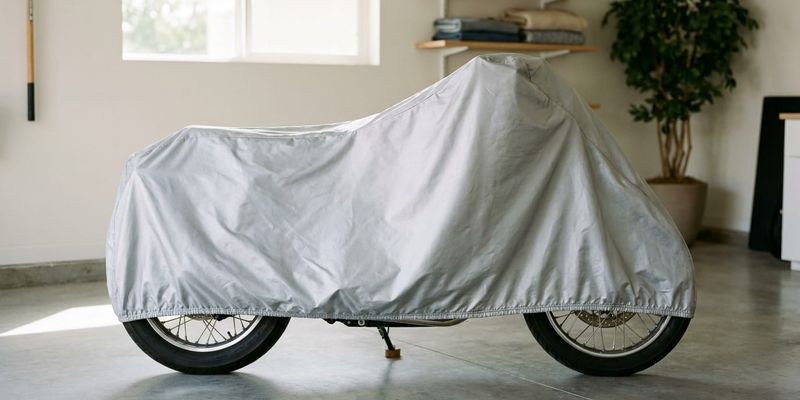
Where your cruiser sleeps changes what cover you need. A bike tucked into a garage mostly needs protection from dust and the odd scratch, so a lightweight, breathable indoor cover does the job without overkill. A bike parked outside year-round needs something tougher: waterproof, UV-resistant, built to take sun and rain without breaking down after a season.
Chrome is where cruisers get fussy. Tanks, fenders, exhaust pipes, all that polished metal scratches easier than people think, and a cover with a rough interior will leave marks over time just from wind movement rubbing fabric against chrome. A soft-lined interior solves that quietly, which is probably why it's one of the most overlooked specs on a cover label.
Breathability matters just as much as water resistance, maybe more for a bike that stays covered for days between rides. A fully sealed, non-vented cover traps moisture underneath it, and that trapped moisture does more damage over time than a little rain ever would. Look for vented panels or a breathable weave, not just a "waterproof" claim on the box.
Strap and Tie-Down Recommendations for a Secure Fit
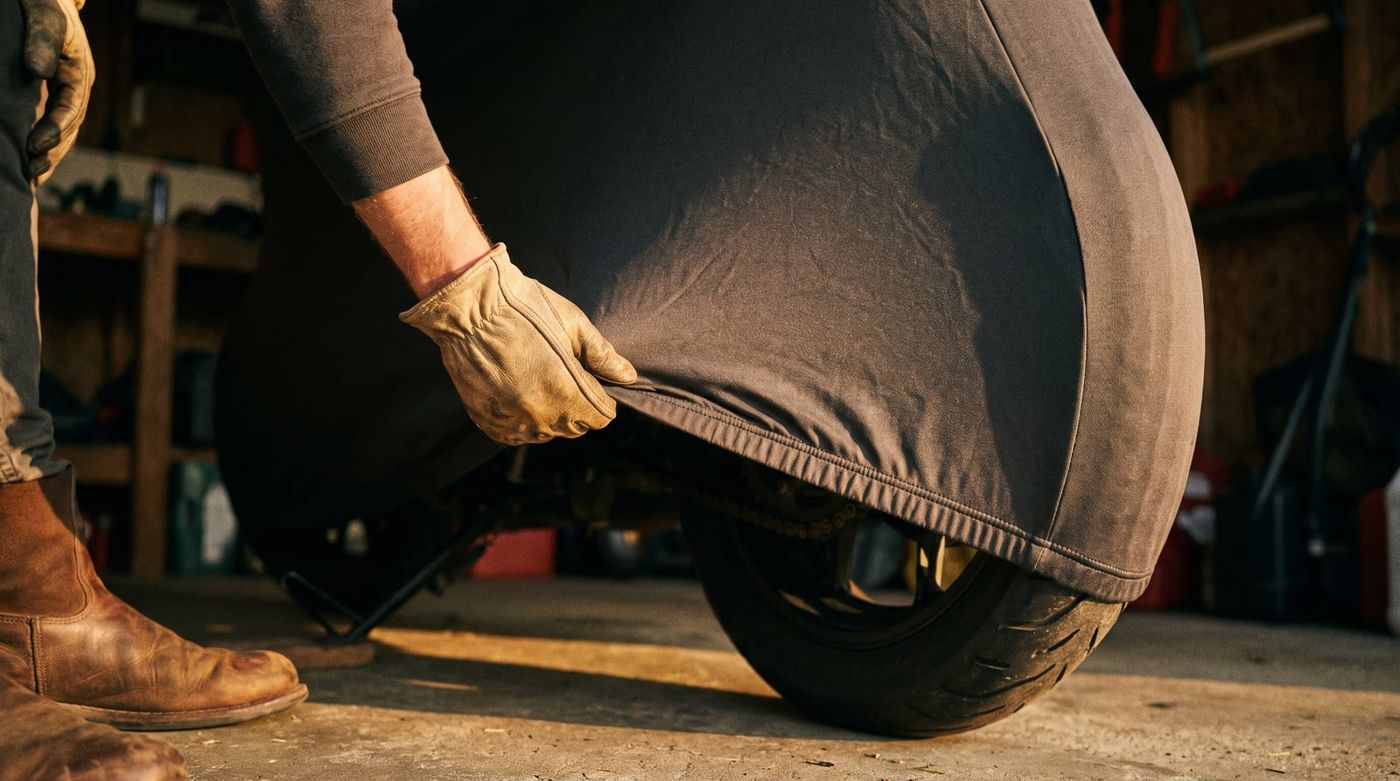
Long and low is a bad combination in wind. Cruisers catch gusts along that extended profile the same way a sail does, and a cover without a way to cinch down underneath the bike will billow, flap, and eventually work itself loose. An under-body strap or a cinch strap near the frame solves this directly, by anchoring the middle of the cover instead of leaving the whole thing to the elastic hem.
Speaking of which: don't rely on elastic alone. It's fine for a small bike, but cruiser covers are bigger, which means more surface area for wind to grab. Pair the elastic hem with a belly strap and you've got a setup that actually holds in open-air parking, not just in a still garage.
If you're storing outdoors in a gusty spot, grommets or wind-strap attachment points are worth checking for before you buy. They're a small detail that makes a real difference the first time a storm rolls through overnight. For the actual setup, the gust strap installation guide covers it step by step.
Lock Options to Prevent Theft or Wind Lift
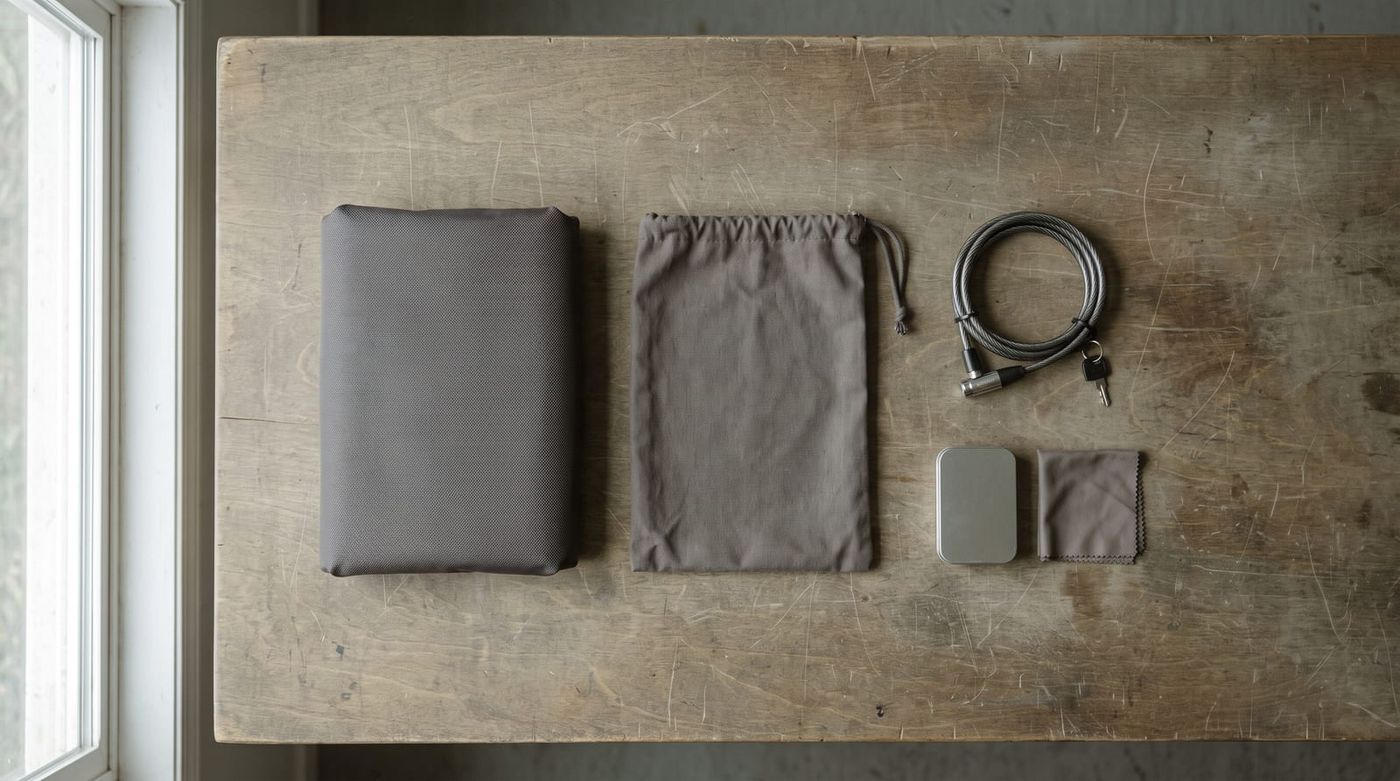
A cable lock routed through the cover's grommets and around the frame or a wheel does two jobs at once. It discourages anyone thinking about walking off with your bike, and it keeps a determined gust of wind from lifting the cover and dragging it into the street.
Cruisers need a longer cable than most bikes because of that stretched-out wheelbase. Measure from the front wheel to whatever you're anchoring to, a post, a railing, a secured ring in the garage, and buy a cable long enough to make that reach without being pulled tight. A cable that's too short just won't close around both points, and you'll end up skipping the lock entirely out of frustration.
There's a practical angle here too: in an apartment lot or a shared garage, locking the cover itself keeps curious hands off your bike even if nobody's trying to steal it outright. For wiring it up properly, the cable lock installation guide has the setup instructions.
Fit Check by Cruiser Brand
Not all cruisers need the same size tier. Harley-Davidson and Indian lineups, especially the touring and bagger models, usually need the longer and wider size category because of saddlebags and tall windshields eating into clearance. Try to squeeze one of those bikes into a mid-size cover and you'll see the strain at the mirrors and the windshield almost immediately.
Mid-size cruisers without heavy touring gear generally do fine with a standard-fit cover. No major gaps, no fighting the fabric to get it over the bars.
Either way, it's worth checking the brand-specific pages before buying, since model lineups shift year to year and sizing follows. The Harley-Davidson cover page and Indian cover page are good starting points if either is your bike.
Installation Tips for a Snug, Wind-Resistant Fit
Drape front to back, not the other way around. Starting at the handlebars and working toward the rear fender keeps the cover aligned with the bike's actual shape instead of bunching in the middle.
Secure the belly strap first. Everything else adjusts around that anchor point. Once that's snug, work the elastic hem around the front and rear wheels, pulling it taut rather than leaving slack that'll flap later.
Before you walk away, double-check clearance around the windshield and saddlebags. Those are the two spots most likely to strain or gap on a cruiser, and catching it now saves you from a torn seam later. For a full walkthrough that applies to any motorcycle cover, not just cruisers, the installation guide covers the whole process.
Related Reading and Next Steps
The short version: measure your cruiser including any add-ons, don't settle for elastic alone on a bike this size, and lock the cover down if it's parked anywhere other than your own garage. Do those three things and you've got the best cover for a cruiser motorcycle for your specific setup, not just a cover that technically fits the category.
If you're still deciding what your cruiser can handle before you start shopping for gear, it's worth a look at how much a Harley-Davidson weighs, how far a motorcycle can go on a tank of gas, or what counts as high mileage for a motorcycle before you commit to a long-term storage routine.
When you're ready to shop, browse motorcycle covers by size and brand to find the right fit for your cruiser, and feel free to poke around the rest of our articles while you're at it.