Best Cover for a Teardrop Trailer: Fit, Venting, and UV Protection Explained
Published
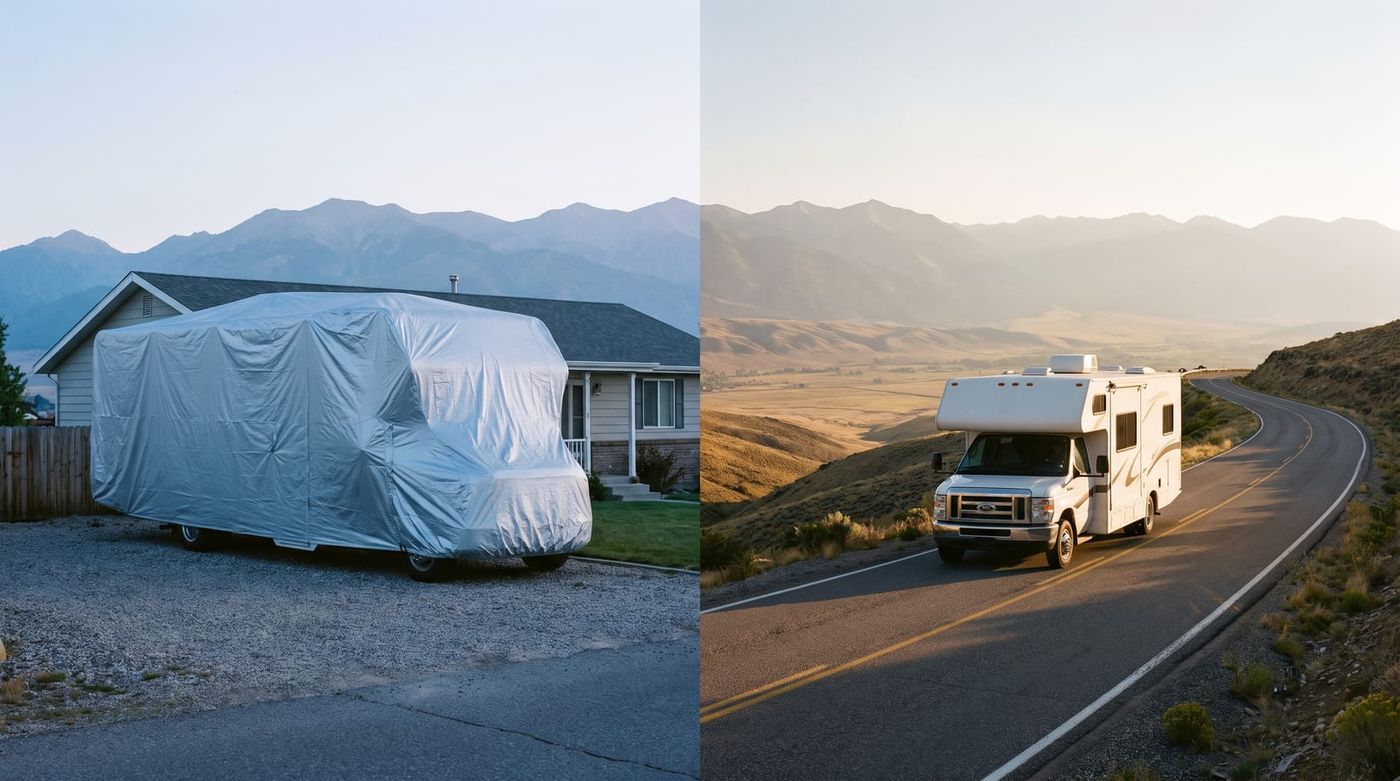
Why Teardrop Trailers Need a Cover Built for Their Shape
A teardrop trailer isn't a small RV. It's its own animal. Most sit between 4 and 6 feet tall and run 8 to 13 feet long, with a rounded rear hull and a flat, boxy nose that tapers into a curve nothing else on the road really matches. Throw a generic tarp-style RV cover over one and you'll see the problem fast: acres of loose fabric flapping where the trailer's body drops away, and none of it actually touching down where it should.
That mismatch causes real damage, not just an ugly parking job. Billowing fabric slaps against the shell in wind and wears through the gelcoat or paint over a season. Flat material draped over the flat nose pools rainwater instead of shedding it. And the curved rear, where a universal cover has to bunch and fold just to make the shape work, becomes a constant abrasion point. Finding the best cover for a teardrop trailer really comes down to three things: does it fit the actual shape, does it let the inside breathe, and does it hold up to sun and weather over years of storage. The rest of this guide walks through each one.
Getting the Fit Right: Sizing a Teardrop Cover Correctly
Start with a tape measure, not a guess. You need overall length (bumper to coupler, not just the cabin), width at the widest point, and height, including anything that changes the trailer's silhouette: a rooftop cargo box, a roof-mounted A/C unit, a galley hatch that swings up at the back. Any of those will tear a cover that was sized for a bare shell.
This is also where a universal "fits most small trailers" cover tends to fall apart. Teardrops vary more than that label suggests, between older fiberglass builds, modern aluminum-shell models, and anything with an add-on hatch or box. A semi-custom or model-specific cover, built around the teardrop's actual dimensions, fits closer at the seams and doesn't leave slack for wind to grab. If you're not sure which size category your trailer falls into, running through a guide to sizing a cover correctly before you buy saves you a return shipment later.
Look closely at how the cover cinches, too. Elastic hems are fine for even edges, but a teardrop's narrow tail and wider front axle area need more than stretch alone. Adjustable straps at the hem give you real control there, letting you tighten down around the tail without leaving gaps up front. And don't overlook front-to-back drop. A cover that stops at the cabin and leaves the tongue jack and coupler exposed defeats half the purpose, since that hardware rusts and seizes just as easily as the shell fades. Browsing options sized specifically for this body style, like the teardrop trailer cover lineup, makes it easier to compare drop length side by side instead of estimating from a product photo.
Why Venting Matters More on a Teardrop Than a Full-Size RV
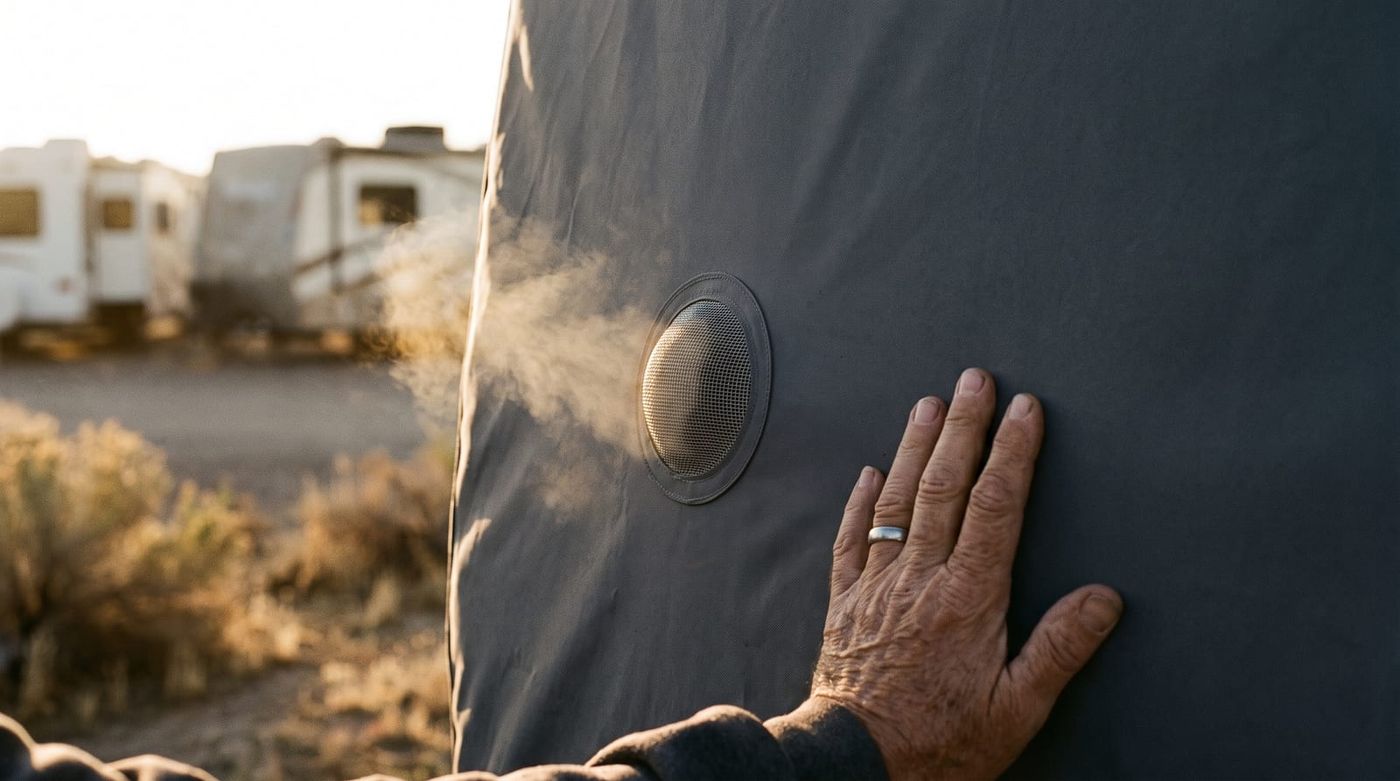
Here's the thing people miss: a teardrop's small interior is actually a liability when it comes to moisture. A full-size RV has gaps, slide-outs, and more air volume, so condensation has somewhere to go. A teardrop, especially one with a snug-fitting cover sealing it in, traps humid air against the shell with almost nowhere for it to escape. Moisture builds up faster, and it has less room to dissipate.
So look for a cover with actual venting built in, not just a cover that happens to be breathable fabric everywhere. That means vent panels or mesh-lined zones placed at high points, away from spots where rain naturally pools. A vent positioned low on a sloped section just invites water in.
Mold and mildew risk goes up fast if you store a teardrop with bedding, cushions, or foam mattresses left inside. Trapped moisture plus organic material plus no airflow is exactly the recipe mildew needs, and it won't announce itself until you open the hatch to a musty smell and dark spots on the fabric. If you're in a humid climate, crack your roof vent before covering up, even with a vented cover on, or use a moisture-wicking layer underneath. It's a small habit that heads off a much bigger cleanup.
UV and Material Needs for Long-Term Teardrop Storage
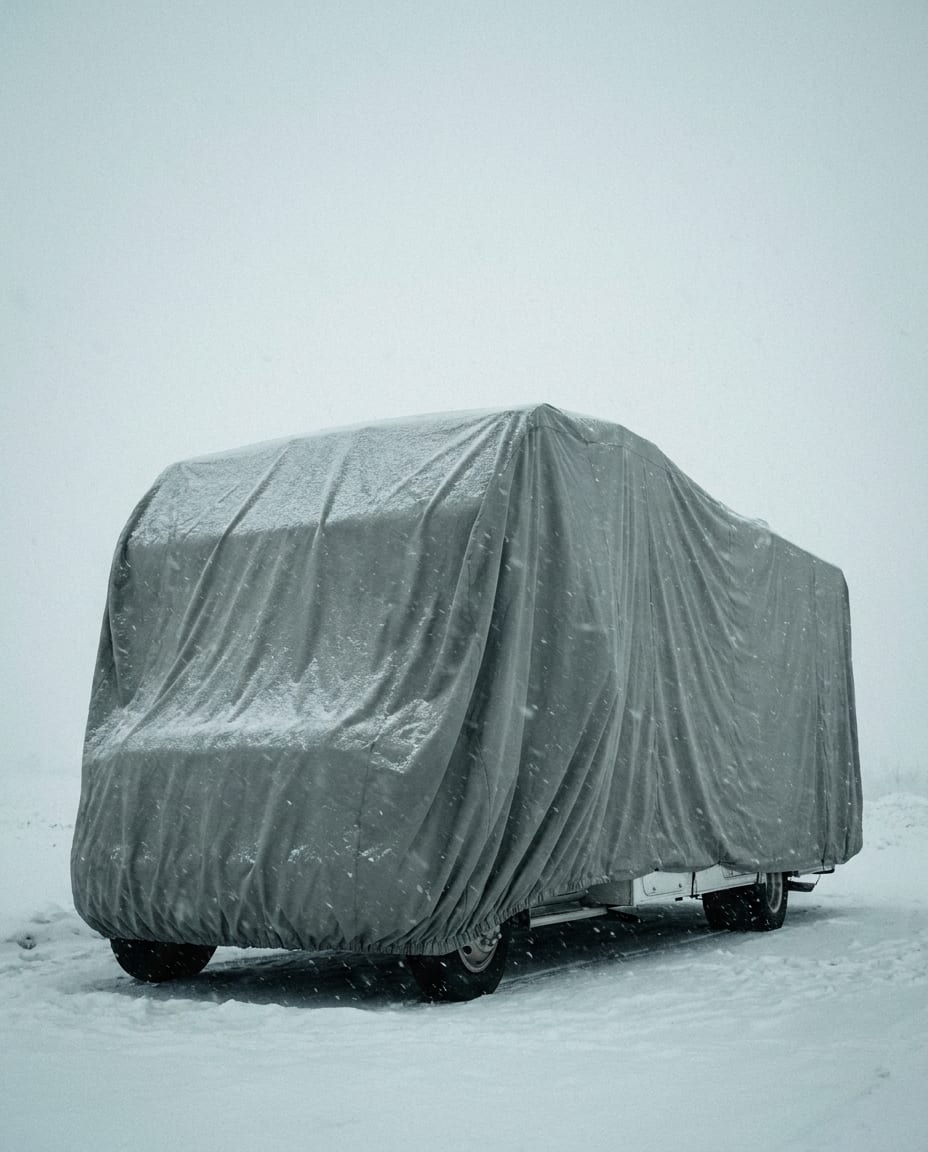
Not every teardrop needs the same armor. If you're parking in a garage overnight or storing for a few weeks in a mild climate, a lightweight single-layer fabric does the job and won't feel like overkill. But full-sun, outdoor, year-round storage is a different situation, and that calls for a multi-layer, UV-treated fabric built to actually hold up.
Fiberglass teardrop shells are particularly vulnerable here. Left uncovered or under a cheap cover, that gelcoat fades, chalks, and eventually develops surface cracking from years of UV breakdown. A treated cover is cheap insurance against a cosmetic repair that isn't cheap at all. Our outdoor cover guide covers how UV exposure compounds over time if you're trying to decide how much protection your storage situation actually warrants.
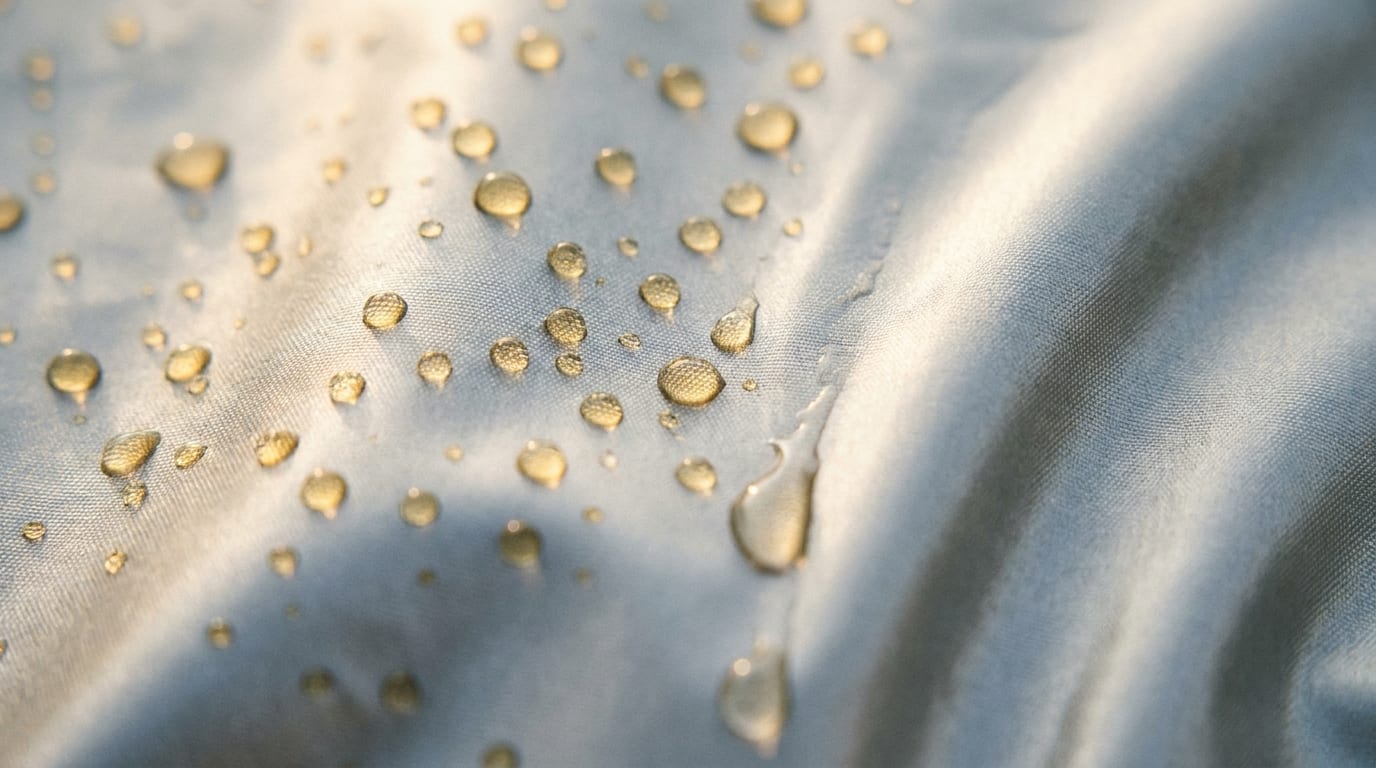
Pay attention to the waterproof rating, too, and don't assume "water-resistant" means the same thing. Water-resistant fabric sheds light moisture but wets through in sustained rain. A fully waterproof cover matters if your trailer sits outside without garage or carport cover, full stop. If you want the deeper technical rundown on what separates one waterproof fabric from another, this breakdown of waterproof fabric types is worth the ten minutes.
One more thing worth factoring in: color. A dark cover soaks up heat and can push interior temps higher on a hot afternoon, which matters in a cabin this small. Light-colored or reflective fabric options keep things noticeably cooler inside, which your cushions and any onboard electronics will thank you for.
Securing the Cover: Straps, Grommets, and Wind Resistance
Teardrops are light. That's the whole appeal for towing, but it also means the trailer (and its cover) catches wind more easily than a heavier travel trailer or fifth wheel would. A cover that's merely draped on, with no real anchor points, is going to end up in your neighbor's yard the first time a storm rolls through.
Check for grommets positioned for cable locks, along with tie-down straps that route under the frame and buckle points at the front and rear. Those details are what keep the cover locked to the trailer instead of just resting on top of it. If you're setting one up for the first time, a quick look at proper RV cover installation steps will save you from a sloppy fit that works loose after a week.
If you're storing in an open lot, a coastal area, or anywhere wind is a regular visitor, add gust straps. They're a small add-on that makes an outsized difference, and installing wind straps for a car or RV cover takes maybe fifteen minutes. Skip them and you're relying on the base straps alone to fight gusts they weren't really built to handle solo.
Teardrop Cover Buying Checklist
Before you buy, run through this quickly:
- Confirm dimensions, including any rooftop box, A/C unit, or hatch that adds to the trailer's height or length
- Check for vented panels placed away from water-pooling areas
- Match the UV and waterproof rating to your actual climate and storage conditions, not the mildest-case scenario
- Confirm strap, grommet, and buckle points are included for real wind security
- Check the warranty terms before you commit
On that last point: a cover that's going to live outside year-round is worth checking against the lifetime warranty on car covers terms, since that tells you a lot about how confident the manufacturer actually is in the fabric.
Not every teardrop needs heavy-duty armor, either. If yours lives in a garage or carport most of the time, a lighter, breathable indoor cover is enough, and it's easier to handle besides. Save the rugged, multi-layer outdoor covers for trailers that actually face the elements.
Whatever you land on, how you treat the cover matters almost as much as which one you buy. Folding it properly and cleaning it on a regular schedule keeps the fabric from breaking down early, which stretches the life of even a budget cover well past what you'd expect.
Find the Right Cover for Your Teardrop Trailer
Fit, venting, and UV protection aren't optional extras here, they're the three things that decide whether a cover actually protects your trailer or just sits on top of it looking the part. Get all three right and the best cover for a teardrop trailer will outlast several storage seasons without drama.
If you haven't measured your trailer yet, including any rooftop box or hatch, do that first. Shopping by exact fit beats guessing on a universal cover every time, and it's the difference between a cover that works for years and one you're replacing next spring. Browse CarCovers' teardrop trailer cover selection or dig through the articles section for more storage and maintenance guides while you're at it.