Best Cover for a Travel Trailer: Fit, Venting, and UV Protection Guide
Published
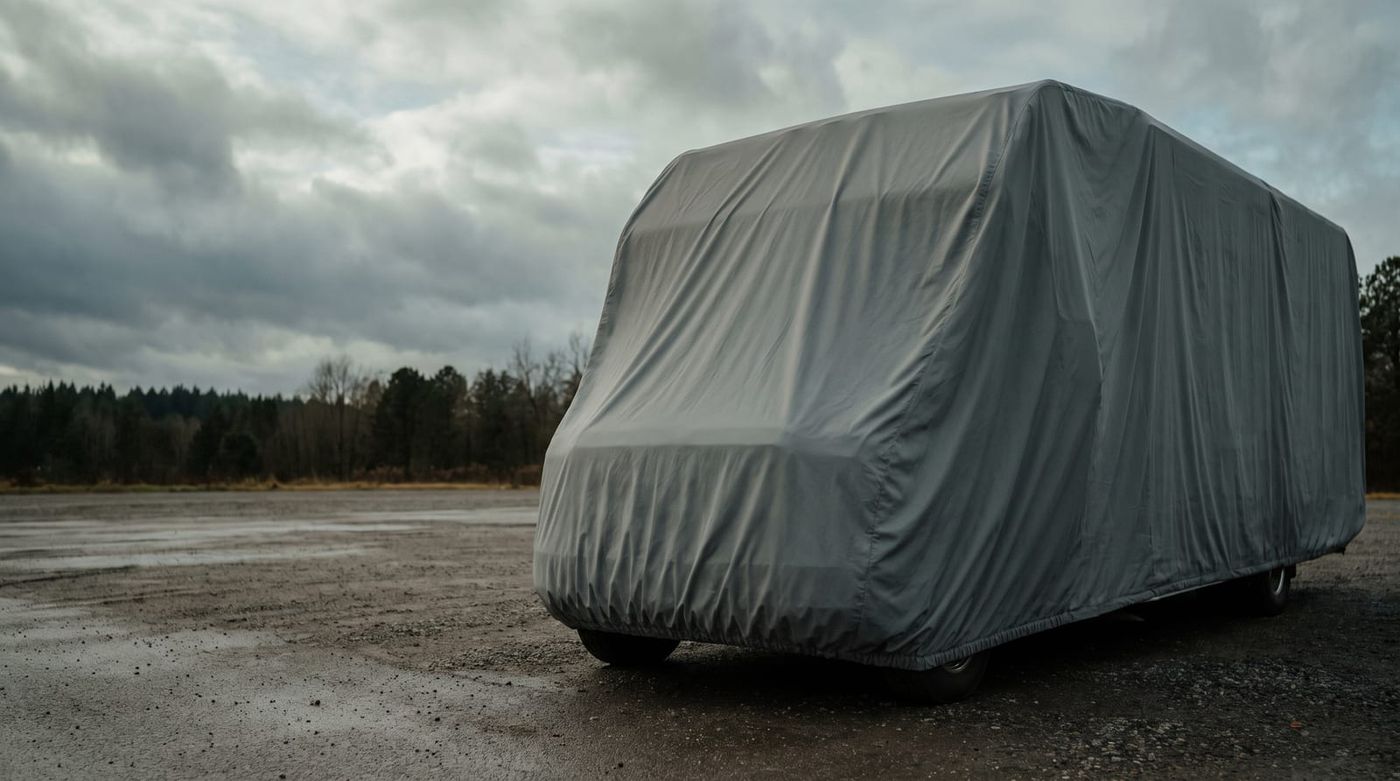
What Makes a Travel Trailer Cover Different
A travel trailer isn't a motorhome, and it definitely isn't a car. It's lower to the ground than a Class A, it has a long flat roof instead of a cab-over or windshield, and the tongue and hitch area sits exposed at the front with nothing to tuck it under. A cover built for a fifth wheel or a Class C motorhome won't account for that geometry, which is why generic "RV cover" sizing often leaves gaps right where water and sun do the most damage.
This guide focuses on three things: fit, venting, and UV or weather resistance. Skip any one of them and you shorten the trailer's life. A cover that fits loosely flaps in the wind and chafes the paint. One that traps moisture breeds mold on the roof membrane. One with no UV rating chalks and cracks within a season of sun exposure. Get the best cover for a travel trailer and you're protecting the roof membrane, the decals and graphics, and the tires through every stretch of storage between trips, not just keeping dust off.
If you're cross-shopping trailer types, it's worth knowing the fit specs differ enough that fifth wheel trailer covers and truck camper covers are built on separate patterns. A travel trailer cover needs its own measurements, not a borrowed one.
Getting the Fit Right for Your Travel Trailer
Start with three numbers: length from bumper to hitch, overall height, and width. Most manufacturers sell travel trailer covers in length bands rather than exact-inch sizing, because a half-inch here or there doesn't change how the cover performs. Here's roughly how those bands break down:
| Trailer Length | Typical Cover Band |
|---|---|
| Up to 20 ft | Small/compact travel trailer |
| 20 to 25 ft | Mid-size travel trailer |
| 25 to 30 ft | Large travel trailer |
| 30 ft and up | Extra-large travel trailer |
Measuring wrong by even one band matters more here than it would on a car. Slide-outs, roof-mounted AC units, ladders, awnings, and roof vents all push against a cover that's cut too tight, which is why a lot of real travel trailer covers include contoured panels or zippered cutouts around those bump-outs instead of expecting the fabric to just stretch over them.
Oversized is its own problem, not a safe fallback. Too much slack means the cover flaps in wind, which wears pinholes into the fabric over time, and loose panels pool rainwater instead of shedding it. Undersized is worse: seams tear at the corners, and whatever's left exposed, usually trim or the front cap, takes the full UV hit anyway. Good covers handle this with elastic hems at the front and rear and a strap or buckle system underneath to cinch things down, so you're not relying on the fabric alone to hold its shape in wind.
Some retailers size covers by VIN or exact trailer model, others go off universal length ranges. If your trailer has an unusual roofline, oversized AC units, or multiple slide-outs, a semi-custom fit is worth the extra cost. For anyone unsure which band they actually fall into, this guide to sizing a cover correctly walks through the measuring process in more detail.
Why Venting Matters for Travel Trailers
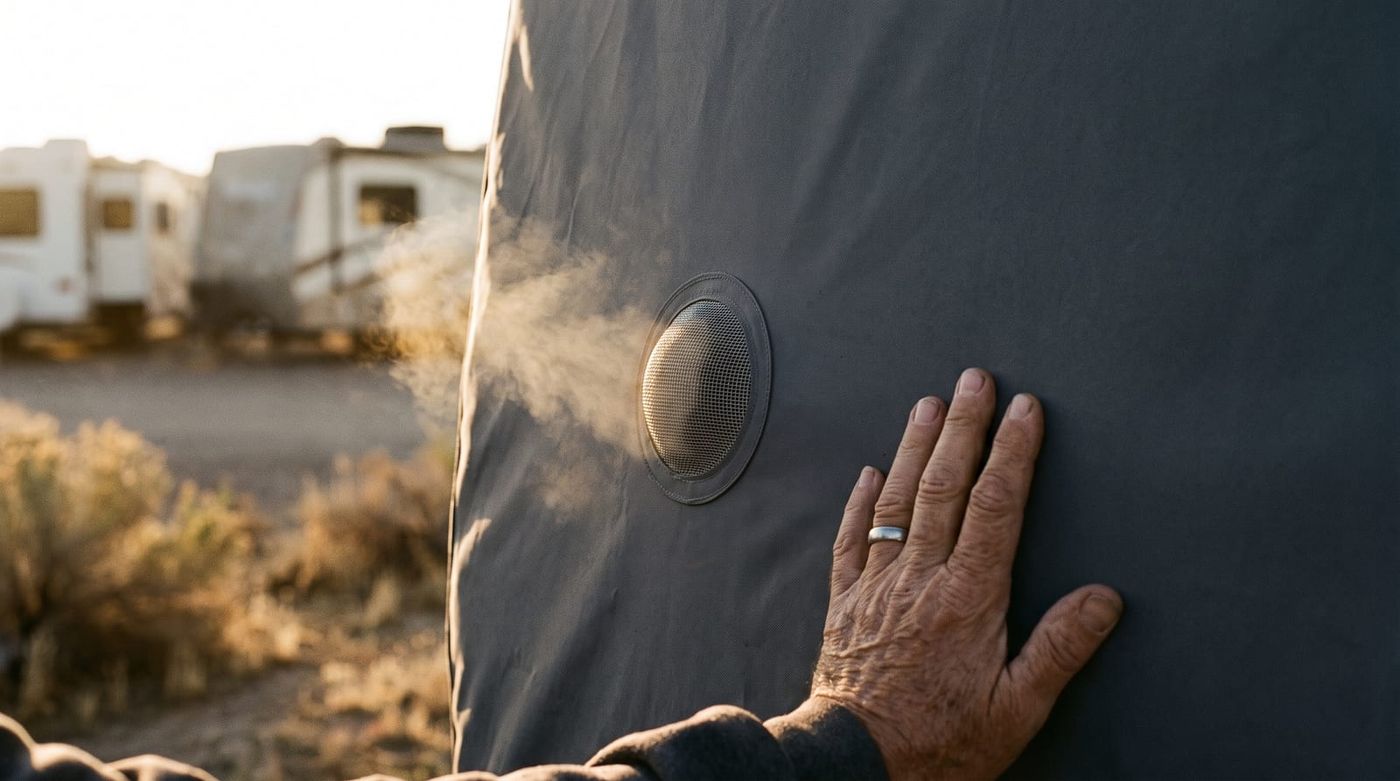
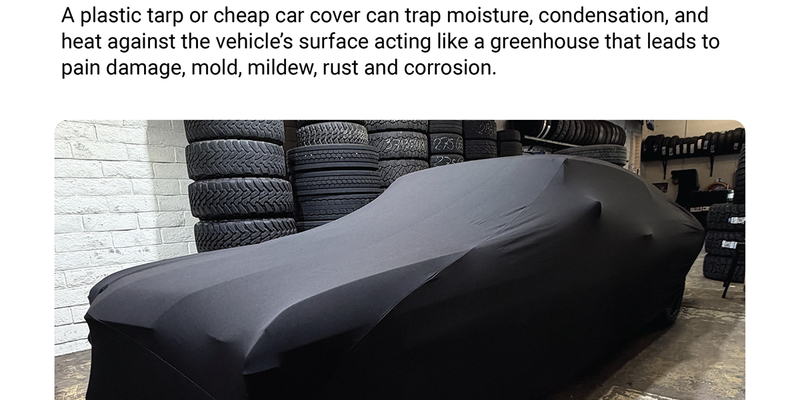
Here's the part people underestimate. A car sits outside for a weekend, maybe a week. A travel trailer can sit covered for months between camping seasons, sealed up with no airflow moving through the interior. Moisture gets trapped underneath a non-breathable cover, and it doesn't just sit there. It condenses, soaks into the roof sealant, and sets up mold and mildew before anyone opens the door again.
This is the real dividing line between a cheap tarp and an actual RV cover. A basic poly tarp blocks rain fine, but it also blocks any moisture from escaping, so humidity builds up underneath it day after day. A breathable, multi-layer fabric does the opposite: it sheds rain on the outside while still letting trapped interior moisture work its way out. That difference alone decides whether your roof membrane is still supple in three years or starting to crack.
Vent placement matters too, more than it would on a car cover. Look for panels positioned at the roof and sides where airflow naturally wants to move, not just a single breather hole as an afterthought. On a flat-roofed travel trailer, the roof is where humidity collects first, so that's where ventilation needs to actually do something.
One practical habit: if you're storing in a humid climate, crack the roof vents themselves periodically even with a good cover on. Breathable fabric helps a lot, but it's not a substitute for letting the trailer's own interior air exchange once in a while during long-term storage.
UV and Weather Protection Needs

Sun does slow, cumulative damage that's easy to ignore until it's expensive. Decals fade and peel. Rubber roof membranes dry out and lose their flexibility, which is exactly when they start to crack at the seams. Fiberglass siding chalks, that dull, powdery look you've probably seen on an older trailer in a storage lot. None of that happens overnight, but it happens faster without coverage.
A UV-treated, multi-layer woven fabric is built to absorb that exposure and block it from reaching the surface underneath, season after season. A single-layer polyester cover does a decent job for a few months, then starts breaking down itself, usually around the same time it's needed most. If you're buying the best cover for a travel trailer and plan to keep it for several years, the fabric layering matters more than almost any other spec on the page. For a broader look at how outdoor exposure wears down cover materials over time, this guide to using a cover outdoors covers the mechanics in more depth.
Travel trailers also take weather stress a car never sees. There's no windshield angling rain away from the front cap, so that panel takes direct hits. Flat roof sections pool water instead of channeling it off like a sloped car roof would. Tree sap and bird droppings sit on that flat surface and bake into the gelcoat if nothing's covering it.
Climate should drive the material choice. Desert and high-UV regions call for heavier-duty, higher-denier fabric built to take direct sun for months. Humid, rain-heavy regions are better served by a lighter, more breathable material that prioritizes airflow over maximum thickness. One cover doesn't fit every climate equally well, and that's fine, it's a reason to match the spec to where the trailer actually lives.
Material & Construction: What to Look For
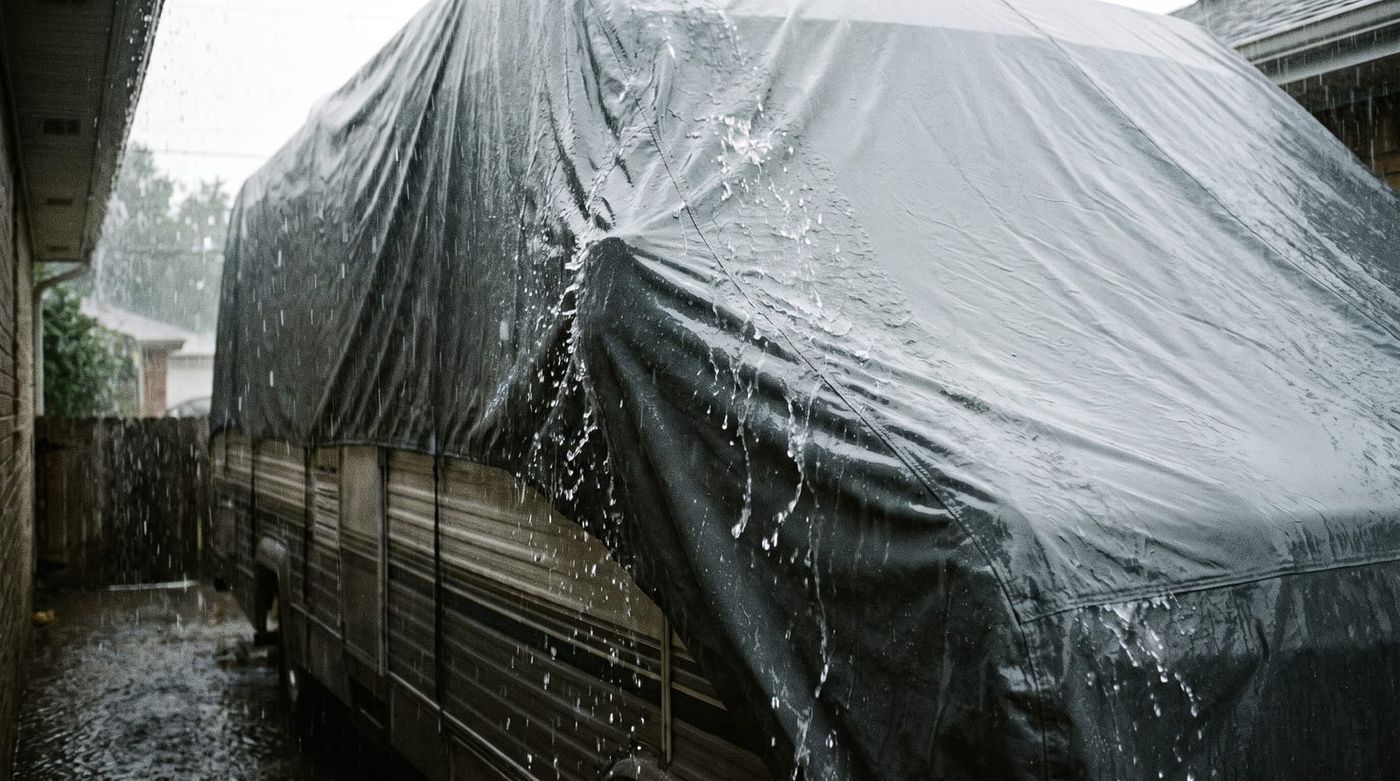
Not all cover fabric is interchangeable despite what the listings sometimes imply. Solution-dyed polyester holds color and resists fading better than printed fabric. Laminated multi-layer fabrics add waterproofing without sacrificing breathability, which is the combination you actually want. Reinforced underbelly panels protect the lower sections near the wheel wells and frame where road grit and ground moisture do the most wear.
Seam construction is where cheaper covers usually fail first. Look for reinforced stitching and extra material at high-wear points: the hitch, the wheel wells, the roof edges. Those are the spots that take the most friction from wind movement and the most direct stress from straps.
Zippered access panels are a small feature that saves a lot of hassle. Good covers include them at the door, utility bay, and propane tank access, so you're not pulling the whole cover off just to grab something from the storage bay. It's a minor detail until you're the one standing outside in the cold doing it the hard way.
One distinction worth knowing: waterproof and water-resistant aren't the same claim. Water-resistant fabric sheds light rain for a while and eventually wets through. Waterproof-rated fabric is built to keep moisture out for extended outdoor exposure, which is the standard you want for a trailer stored outside year-round. This waterproof car cover guide and this breakdown of waterproof fabric construction both go into what separates a true waterproof rating from marketing language.
Installation and Care Tips for Travel Trailer Covers
Installation goes smoother in a consistent order. Start at the front cap, drape the cover back toward the rear, then secure any underbelly straps to the frame before tightening elastic hems last. Doing the hems first just means you're fighting the cover's own tension while you try to adjust everything else underneath.
If the trailer sits in an open, high-wind lot, add a wind strap system over the top, not just the built-in hem elastic. Covered carport storage can usually get by with lighter strapping. For a full walkthrough of the process, this RV cover installation guide covers it step by step.
The cover itself needs care too. Clean it between seasons before folding it away, because storing a damp or dirty cover grows mildew that transfers right back onto the trailer the next time you use it. This cover cleaning guide covers the basics without requiring anything beyond a hose and mild soap.
Even with a cover installed, check it periodically for trapped leaves, pooled water on flat roof sections, or debris that's built up in a low spot. A cover reduces exposure, it doesn't eliminate the need to look.
Choosing the Right Cover: A Quick Checklist
Before you order, run through this: accurate length, height, and width measurements, a breathable multi-layer material, a UV rating that actually matches your climate, reinforced panels at the hitch and wheel wells, zippered access where you need it, and a strap or tie-down system built in rather than added as an afterthought.
Warranty and return policy matter more here than with most purchases, because you're often buying sight-unseen for a trailer the retailer has never actually measured. A solid lifetime warranty on car covers is a reasonable proxy for how much confidence a manufacturer has in their own stitching and fabric.
Budget tiers exist for a reason. A lighter-duty cover is fine for occasional storage in a mild climate. Year-round outdoor exposure, especially in high-UV or coastal regions, justifies spending more on a heavy-duty, multi-layer cover. If you're not sure which length band or fit applies to your rig, running it through a cover finder tool before buying beats guessing from a chart.
Protect Your Investment Year-Round
The right cover costs less than the damage it prevents. UV fading, cracked roof sealant, mold from trapped moisture, all of that runs well past the price of a quality cover once you're paying someone to fix it. Fit, venting, and UV resistance aren't separate features competing for your budget, they're the three things that actually determine whether a cover earns its keep over several storage seasons.
If you're shopping for your own rig, skip the universal-fit bin and look for something sized specifically to a travel trailer's length and roofline. And if you want more on keeping your rig road-ready between trips, stick around and browse a few more guides while you're here.