Can You Recommend a Good Car Cover for an Electric Car Parked in a Snowy Climate Like Minnesota?
Published
Our Direct Recommendation for EV Owners in Minnesota
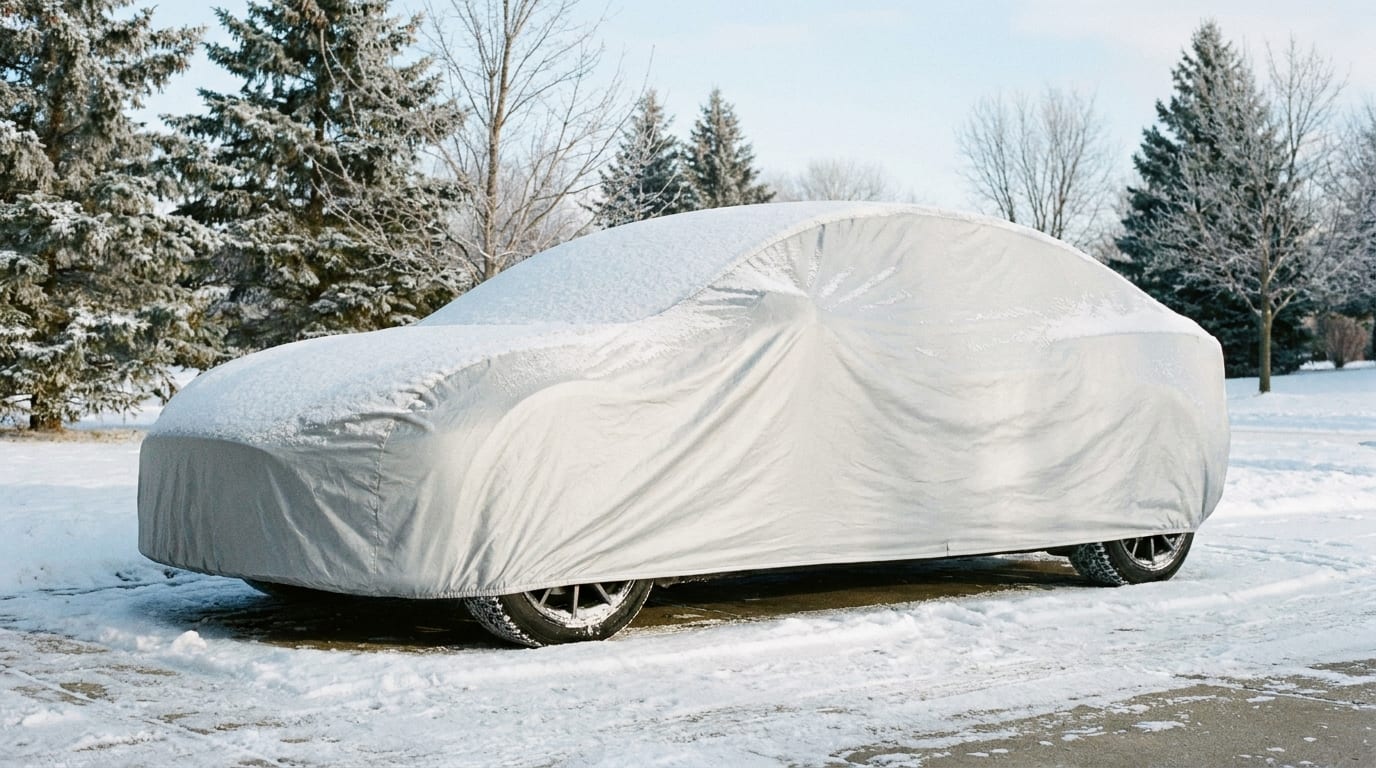
Can you recommend a good car cover for an electric car parked in a snowy climate like Minnesota? Yes: get a heavy-duty outdoor cover rated for waterproofing and snow load, with a grommet or zippered flap positioned over the charging port. EVs don't have a warm engine block radiating heat under the hood, so snow and ice just sit there longer than they would on a gas car, and your cover needs to handle that on its own.
This is the real difference from shopping for a gas-car cover. A gas vehicle gets a small assist from residual engine warmth, which softens light snow and frost overnight even with a thin cover on. An EV gets none of that. So the fabric itself has to do all the work: shedding moisture, resisting freeze-stiffening, and holding its shape through repeated freeze-thaw cycles without cracking.
Here's how the three common cover tiers stack up for this specific job:
| Feature | Basic/Economy Outdoor | Deluxe All-Weather | Platinum Heavy-Duty Winter |
|---|---|---|---|
| Waterproofing | Water-resistant, not fully sealed | Waterproof in most conditions | Fully waterproof, built for standing snow |
| Cold-weather flexibility | Stiffens and can crack below freezing | Holds up through moderate cold | Stays pliable in sustained sub-zero temps |
| Snow load handling | Not rated for accumulation | Handles light to moderate snow | Rated for heavy, wet accumulation |
| Charging-port accessibility | Rarely included | Sometimes included | Reinforced grommet or flap standard |
If you're parking on the street or in an open driveway through an actual Minnesota winter, the Platinum/heavy-duty tier is the one that earns its keep. A Deluxe all-weather cover is fine if your EV spends most of its time in a carport or semi-sheltered spot and only sees open-sky exposure occasionally. The Basic tier, honestly, isn't built for this climate at all and will likely let you down by January.
Why EVs Need Different Cover Considerations Than Gas Cars in Snow
Pop the hood on a gas car after a cold night and there's usually some lingering warmth from the engine block. That warmth does quiet work: it softens frost, loosens light snow, keeps ice from bonding as hard to the hood and windshield area. EVs don't have that. The motor and battery pack are sealed and insulated, generating very little ambient heat that reaches the body panels. Whatever lands on an EV stays put until you, or the sun, deal with it.
Charging port placement adds another wrinkle. Some EVs put it up front near the grille, others on the side like a traditional fuel door, others toward the rear. A generic cover with no thought given to this means you're either yanking the whole thing off every time you plug in, or leaving the vehicle exposed while you fumble with it in the cold. A cover designed with port access in mind, via a grommet or a flap, solves that without compromising the rest of the coverage.
Then there's the body itself. A lot of EVs lean on aerodynamic details, flush door handles, lower front fascias, to squeeze out efficiency. Those are also the parts most at risk if someone takes an ice scraper to a stiff, frozen cover, or if the fabric itself has gone rigid and starts grinding against trim in the wind. Lower ground clearance on many EV models means road slush and ice buildup sit closer to body panels too.
And Minnesota doesn't go easy on any of this. Freeze-thaw cycles work ice into every seam and gap. Heavy, wet snow is a different animal than the dry powder you get further north, it's heavier, it compacts, and it holds moisture longer. Add road salt spray kicked up from plowed streets, and you've got three separate threats stacking up on a car that's just sitting there with no engine heat to fight back.
What to Look for in a Snow-Ready Cover Material
"Water-resistant" and "waterproof" get used almost interchangeably in cover listings, and they shouldn't be. Water-resistant fabric can handle a light rain shower. It is not built for hours of standing snow pressing down on it, melting slightly in the afternoon sun, then refreezing overnight. For that, you need genuinely waterproof fabric, not a close-enough substitute.
Cold-crack resistance matters just as much and gets talked about a lot less. Plenty of "all-season" covers are really built with mild-climate assumptions baked in. Drop the temperature to single digits or below for a stretch, and fabric that seemed fine in October starts stiffening up, then cracking at the fold lines. Look for materials specifically rated for sustained cold, not just a general all-weather label.
Salt resistance is the other piece Minnesota owners can't skip. If you're parked anywhere near a plowed road, salt spray is going to land on that cover all winter long, not just during a storm. It's an abrasive, corrosive problem that sticks around for months, so a fabric that only accounts for UV fading and summer rain is only doing half the job. For a deeper breakdown of how different fabrics actually perform against water, cold, and road grime, the guide on which material car cover is best is worth reading before you buy, and this piece on waterproof fabrics goes further into what "waterproof" should actually mean on a spec sheet.
Fit, Access, and Accessories That Matter for EV Owners
Universal covers are a compromise by design. They're cut to vaguely fit a size range, not a specific body. For a gas sedan that's usually fine. For an EV with a distinct charging door, an aerodynamic lower fascia, or a unique roofline, a universal cover tends to leave gaps where wind can get under the fabric and snow can work its way in. A custom-fit car cover built to your exact make and model closes those gaps and keeps the fit tight enough that wind doesn't turn it into a sail.
Charging access is where a lot of covers quietly fail EV owners. You want a grommet or a zippered flap positioned right where your port actually sits, so you can plug in without peeling the whole cover off in ten-degree weather. That small design choice is the difference between a two-minute charging routine and a frustrating one.
If you're parking in a driveway or on the street, which describes a lot of suburban Minnesota setups, a cable lock threaded through the cover is a smart add. It won't stop a determined thief, but it does deter the casual kind who might otherwise grab a loose cover off an unattended car.
Wind is the other underrated threat in winter storms. A cover that shifts in a gust can expose the charge port or mirrors right when ice is forming. Gust straps cinch things down at the mirrors and undercarriage, and if you want extra insurance against pooling or sagging snow load on top, a support pole keeps the fabric from collecting weight in the middle.
Comparison: Outdoor Cover Tiers for Minnesota Winters
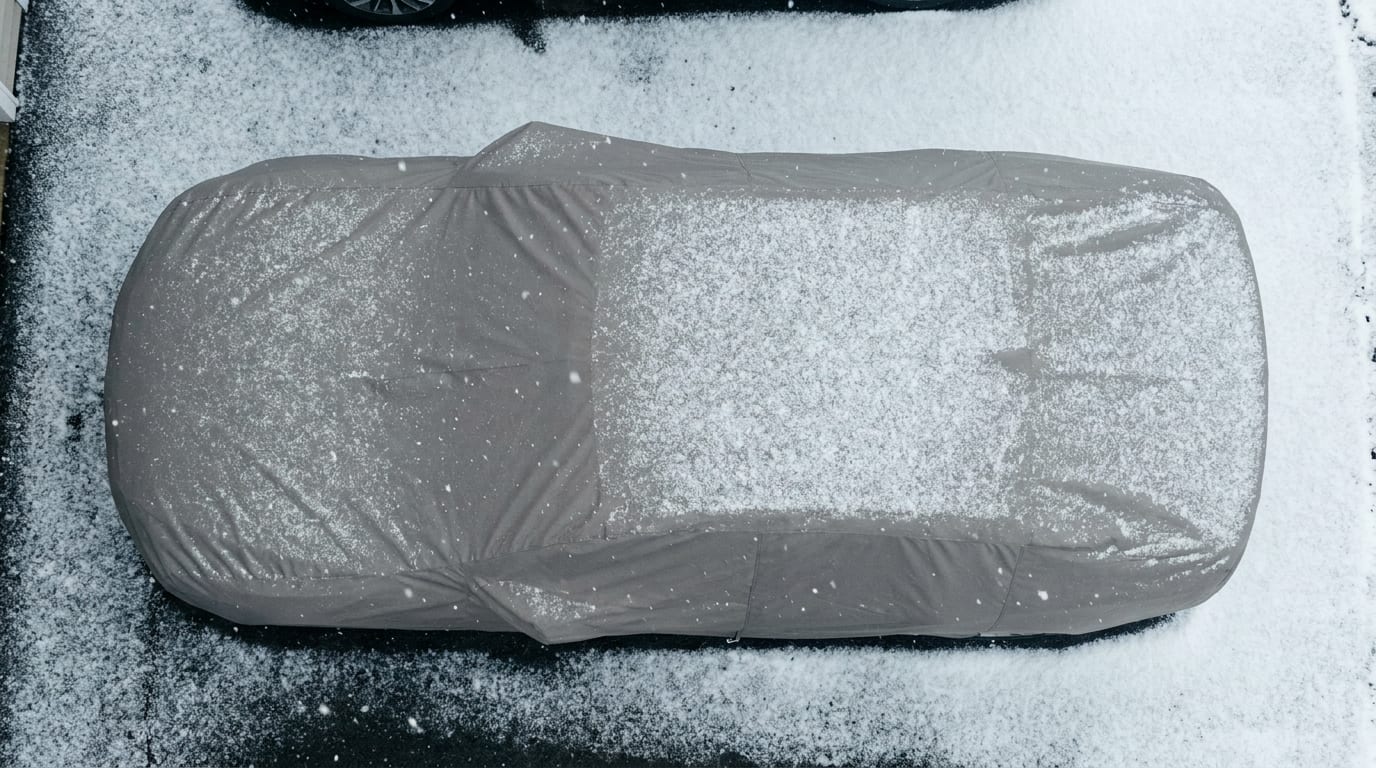
The table above covers waterproofing, cold flexibility, snow load, and charging access. Here's what it doesn't show, and these details matter just as much for Minnesota owners deciding where to spend.
| Factor | Basic/Economy | Deluxe All-Weather | Platinum Heavy-Duty |
|---|---|---|---|
| Best-fit scenario | Infrequent light exposure | Semi-sheltered carport or garage-adjacent | Daily street or open driveway parking |
| Warranty coverage | Limited, shorter term | Moderate coverage | Backed by stronger, longer-term coverage |
| Installation time/complexity | Quick, lightweight fabric | Slightly bulkier, still manageable | Heavier fabric, takes longer to fit and secure |
That installation tradeoff is worth sitting with for a second. Heavier winter-rated fabric is genuinely more work to wrestle on and off, it's less packable, it takes a bit more patience in the cold. But that's the fabric doing its job: thinner, easier-to-handle material is exactly what fails to hold up against wet snow load over a full season. If you're parking outside every day through a Minnesota winter, the extra two minutes of install time is a fair trade for not finding ice welded to your charge port door.
Common Mistakes That Damage Covers (and Cars) in Snow
Don't cover a car that's already wet or snow-covered. It feels efficient, get the cover on before the next flurry hits, but you're just sealing moisture against the paint, and once temperatures drop that moisture refreezes right against the body. Clear the car first, then cover it.
Never take an ice scraper to a covered vehicle. It's tempting when there's a layer of ice sitting on top of the cover itself, but the scraper will tear the fabric faster than it clears the ice. Brush snow off by hand, with a soft broom, before it has a chance to harden into a crust.
And don't just leave the cover on for weeks without checking underneath. A torn seam or a section that's come loose can trap moisture against the body, and that's worse than driving around uncovered. A quick check every week or two, especially after a big storm, catches problems before they turn into paint damage. Once the season winds down, the cover care and cleaning guide walks through how to get salt residue and grime off the fabric so it's ready to go again next winter instead of degrading in storage.
Final Recommendation and Next Steps
A custom-fit, waterproof, cold-rated outdoor cover with charging-port access is the right call for an EV parked outside through a Minnesota winter. That's the whole answer in one line, and it's the one worth repeating if you only remember one thing from this.
If you're not sure which cover actually fits your Tesla, Rivian, Lucid, or any other EV, the cover finder tool will match your specific make and model to the right product instead of leaving you guessing between sizes. And since heavier winter use means more wear and tear over a season, it's worth knowing CarCovers backs its covers with a warranty, which counts for more in a climate like this than it would somewhere mild.
Take a look around, browse the outdoor cover options, and find the one built for your specific vehicle and your specific winter. If you found this useful, stick around the blog for more seasonal care guides, there's more where this came from.