



Car Cover for Toyota Camry: Fit Guide, Sizing Table & Which Cover to Buy
A Camry is one of the most common cars on American roads, which means there's no shortage of "universal fit" covers claiming to work on it. Most of them don't, not really. If you've searched for a car cover for Toyota Camry and landed on a one-size-fits-most option, you've probably already noticed the fit problem before you even open the box: too much slack at the bumpers, a hood line that never quite settles, mirror pockets that don't line up. This guide walks through why that happens, how to identify your exact Camry generation, and which cover actually belongs on your car.
Why a Generic Cover Doesn't Work on a Camry
The Camry has been through eight generations, from the XV10 of the early '90s through the current XV70/XV80 redesign, and each one has a different body length, mirror placement, and roofline height. A cover cut to fit "mid-size sedans" in general is guessing at all three. That guess usually means excess fabric bunched at the front bumper or a gap at the rear that leaves your trunk exposed to rain.
Loose-fitting universal covers create a second problem that's easy to miss until it's too late: wind. A cover that isn't cinched to your Camry's actual body lines flaps every time the wind picks up, and that flapping drags loose fabric across your clear coat over and over. Owners call it marring, and it's one of the most common reasons people abandon a cheap universal cover and go looking for something that actually fits.
It helps to know the difference between the three types you'll see sold online. Universal covers are built to one generic size and stretched over dozens of unrelated models. Semi-custom covers narrow things down by vehicle class (sedan, SUV, truck) but still aren't cut to a specific model's dimensions. Custom-fit covers are patterned to a specific make, model, and generation, matching the Camry's actual body lines edge to edge, mirror pockets included. Only the last one solves the fit problem completely, which is why custom-fit car covers are the starting point for the rest of this guide. From here, the goal is simple: help you pin down exactly which Camry you own, and point you to the cover built for it.
Toyota Camry Fit & Size Table by Generation
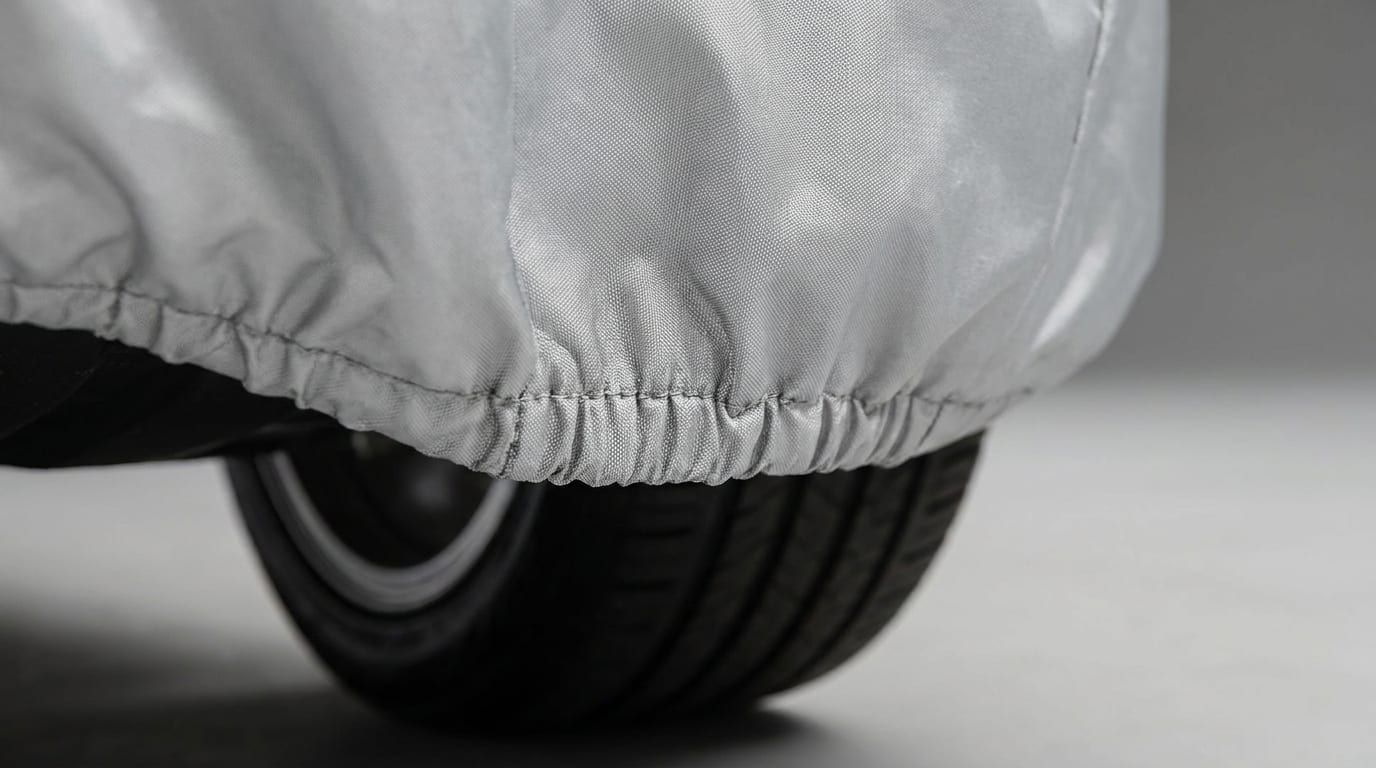
Camry generations vary more than most owners realize. Here's how they break down, along with the cover size profile each one needs.
XV10 (1992 to 1996)
- Approx. length: 187.8 inches
- Body style notes: Sedan and coupe (Camry coupe was sold this generation)
- Recommended cover size: Compact-to-midsize sedan profile, coupe variant available separately
XV20 (1997 to 2001)
- Approx. length: 188.5 inches
- Body style notes: Sedan only after coupe was discontinued
- Recommended cover size: Midsize sedan profile
XV30 (2002 to 2006)
- Approx. length: 189.2 inches
- Body style notes: Sedan only, rounder rear fascia than prior gen
- Recommended cover size: Midsize sedan profile
XV40 (2007 to 2011)
- Approx. length: 189.2 inches
- Body style notes: Sedan only, wider stance than XV30
- Recommended cover size: Midsize sedan profile
XV50 (2012 to 2017)
- Approx. length: 189.2 to 190.9 inches (2015 facelift lengthened the nose slightly)
- Body style notes: Sedan only, SE/XSE trims add a rear spoiler
- Recommended cover size: Midsize sedan profile, spoiler-compatible option for SE/XSE
XV70 (2018 to 2023)
- Approx. length: 192.1 inches
- Body style notes: Lower, wider redesign, distinct roofline from pre-2018 Camrys
- Recommended cover size: Modern midsize sedan profile (do not use a pre-2018 cover on this generation)
XV80 (2024 and newer)
- Approx. length: 193.1 inches
- Body style notes: Hybrid-only lineup, continues the lower/wider XV70 stance
- Recommended cover size: Modern midsize sedan profile, hybrid trim notes on antenna/charge port cutouts where applicable
The 2018+ redesign is worth flagging on its own. It's genuinely a different fit profile than anything before it, lower to the ground and wider through the hips, so a cover built for a 2015 Camry will not sit right on a 2019 one, even though both are "sedans." If you drive a Camry Hybrid, SE, or XSE with the factory rear spoiler, make sure whatever you buy is the spoiler-compatible version, since a standard cover will tent or tear around that trim piece.
Not sure which generation you have? Check the door jamb sticker on the driver's side, or pull your VIN and decode the model year. Once you know your row, match it to the model-year selector on the custom-fit product page before you check out. It's the single step most returns trace back to skipping, so it's worth the extra thirty seconds. If you're curious how the Camry got to where it is today, Toyota's own model history is worth a read too, as covered in our Toyota history piece.
Indoor vs. Outdoor Cover: Which One Fits a Camry Owner's Situation
Not every Camry lives the same life, and the right cover depends entirely on where yours sleeps at night.
If your Camry is garage-kept, you're mostly fighting dust, light scratches, and the occasional cat that thinks your hood is a bed. An indoor car cover with a soft, breathable inner layer is enough. It doesn't need to fight weather, just friction.
If your Camry lives in a driveway or gets parked on the street, that's a different job entirely. Now you're dealing with rain, UV exposure, tree sap, and bird droppings, sometimes all in the same week. That's where waterproof breathable fabric earns its keep: it sheds water at the surface while still letting trapped moisture escape from underneath, so you're not sealing condensation against your paint. An outdoor car cover built with this kind of construction is the right call for most daily-driven Camrys, and a fully waterproof car cover is worth the upgrade if you're in a rainy climate.
Hail is its own category. If you're in a region that gets hit regularly, a standard outdoor cover isn't going to do much for dents. Heavier padded hail-rated covers add a cushioning layer specifically for that, and it's a reasonable investment if you can't guarantee covered parking during storm season.
Quick self-check: Where does the car sleep most nights? Does it see rain or sun for extended stretches? Does your area get hail? Three questions, and you've basically picked your category.
Comparing Camry Cover Tiers: Features and What You Actually Need
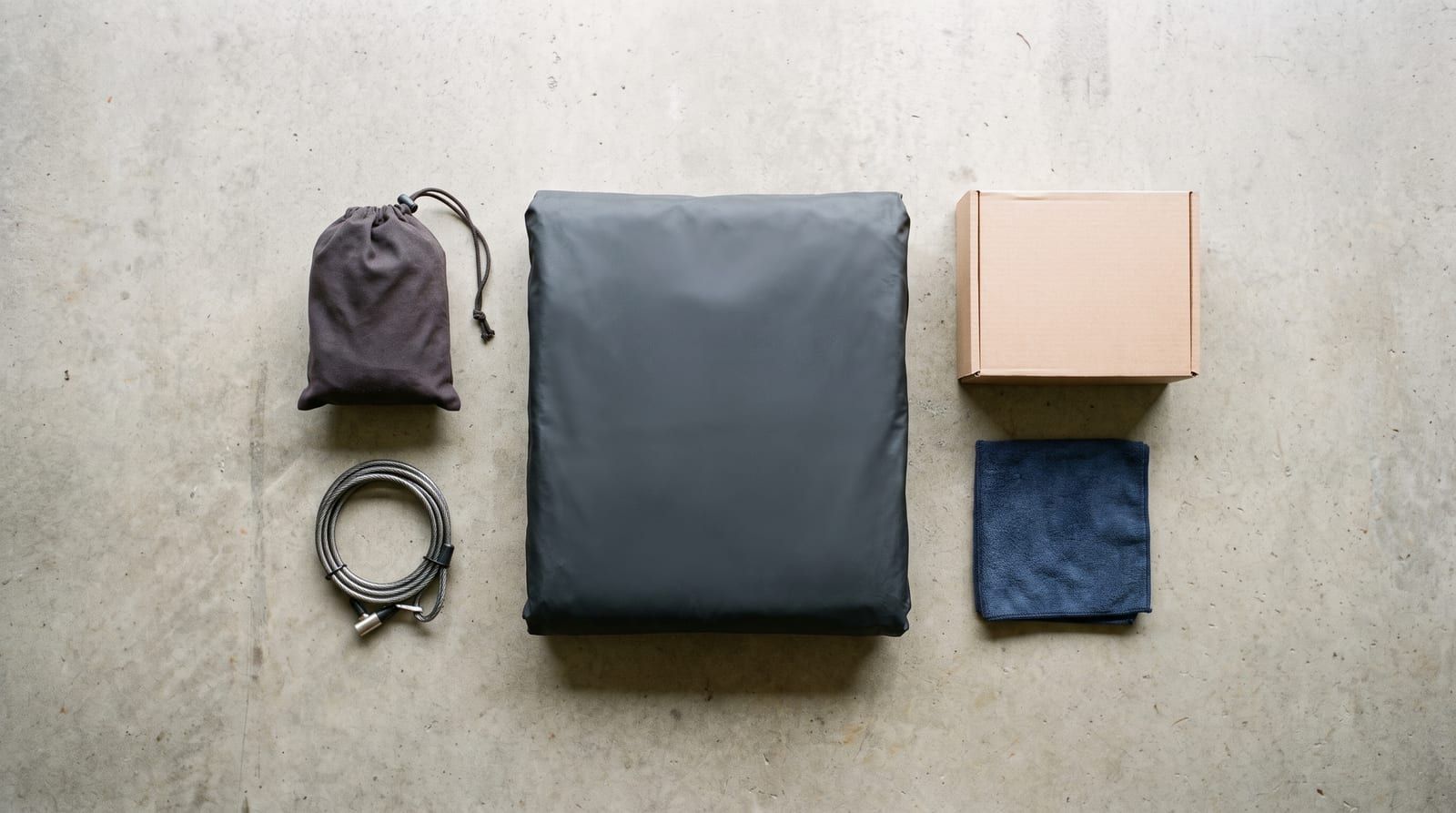
Once you've settled on indoor, outdoor, or waterproof, the next decision is which tier within that category. They differ in a few concrete ways.
Material weight and layers
- Entry-level: Single-layer fabric, lightweight, fine for short-term or occasional use
- Mid-tier: Woven multi-layer fabric, better durability for regular use
- Premium: Multi-layer with a soft fleece lining against the paint, built for daily exposure
Included hardware
- Entry-level: Elastic hem only, no additional securing
- Mid-tier: Elastic hem plus grommets for a cable or lock
- Premium: Reinforced tie-down straps in addition to grommets, for cars that see real wind
UV and weather rating
- Entry-level: Basic UV resistance, not rated for constant outdoor exposure
- Premium and mid-tier: Fully waterproof-rated construction including sealed seams and hem, built for cars parked outside year-round
Price band and who it's for
- Entry-level: Best for a Camry that's mostly garaged and just needs occasional protection
- Mid-tier: Best for a daily-driven Camry parked outside regularly
- Premium: Best for a daily driver in a harsh climate, or a collector Camry an owner wants to baby
Here's the honest take: most Camry owners should skip the entry-level tier entirely. The Camry is a workhorse, not a garage queen, most of them rack up daily miles and spend real time outside. That means the mid-to-premium tier is the practical default, not a luxury. Paying a bit more upfront for sealed seams and reinforced straps costs less over time than replacing a cheap cover (or your clear coat) after one bad season.
Installing and Caring for Your Camry's Cover
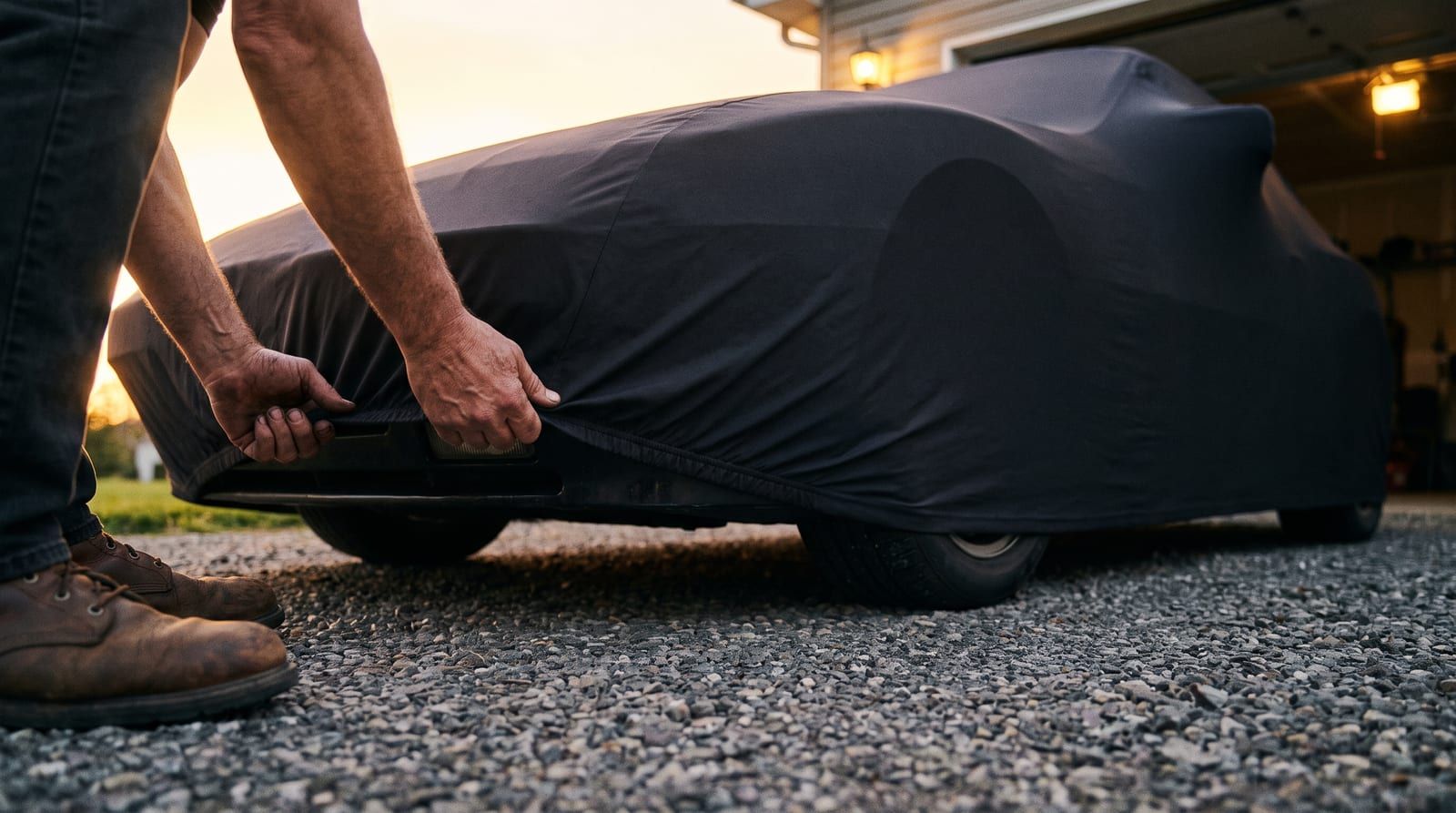
Fitting a sedan-shaped cover is straightforward once you know the order. Start at the front bumper and work backward, laying the cover over the hood, roof, and trunk before tucking the elastic hem underneath the rocker panels on both sides. Don't skip the mirror pockets. Camry mirrors sit further forward on the doors than they do on an SUV or truck, so the cover's mirror pockets are shaped and positioned specifically for that placement. Forcing the fabric over the mirror without using the pocket is the most common way people stretch or tear a cover in the first week.
Once the hem is tucked, cinch any included straps under the body, and clip a cable lock through the grommets if your cover has them. For the full walkthrough with photos, our installation guide covers it step by step, and there's a broader library of installation guides for accessories like straps and support poles too.
For upkeep: shake off leaves and loose debris before folding the cover away, and wash it according to the fabric type rather than tossing it in with regular laundry. Our cover care guide breaks down wash cycles by material. Check strap tension every few weeks, more often if you're in a windy area. And if the cover never sits flush at the bumper no matter how you adjust it, that's usually not a defect. It's a sign you've got the wrong generation's size, and it's worth double-checking against the size table above before assuming anything's broken.
Warranty, Returns, and Buying With Confidence
A cover that's stitched or grommeted poorly won't hold up to daily use, which is why the lifetime warranty matters here. It covers defects in materials and workmanship, so if a seam fails or a grommet pulls loose under normal use, that's on the manufacturer, not on you.
If you order the wrong Camry generation or size (easy to do if you're not sure which body year you have), the return policy gives you a window to exchange it for the correct one. Between the two, this isn't a purchase you need to agonize over. Get your generation right using the table above, pick the right indoor/outdoor tier for how you park, and the warranty and return terms cover the rest if something's off.
Get the Right Cover for Your Camry
The path here isn't complicated. Find your generation in the size table, decide indoor or outdoor based on where the car actually parks, and pick a tier that matches how much the car gets driven. For most Camry owners, that lands on a mid-to-premium outdoor or waterproof cover, because most Camrys are daily drivers, not weekend cars under a sheet in the garage.
Once you know your generation and parking situation, head to the custom-fit Toyota Camry product page, select your model year from the dropdown, and you're done. If you're shopping for a second vehicle in the household, CarCovers stocks fitted covers for other Toyota models too, so it's worth checking before you check out. And if you want more guides like this one as you take care of your car, stick around and explore the rest of our car care articles.
Updated