


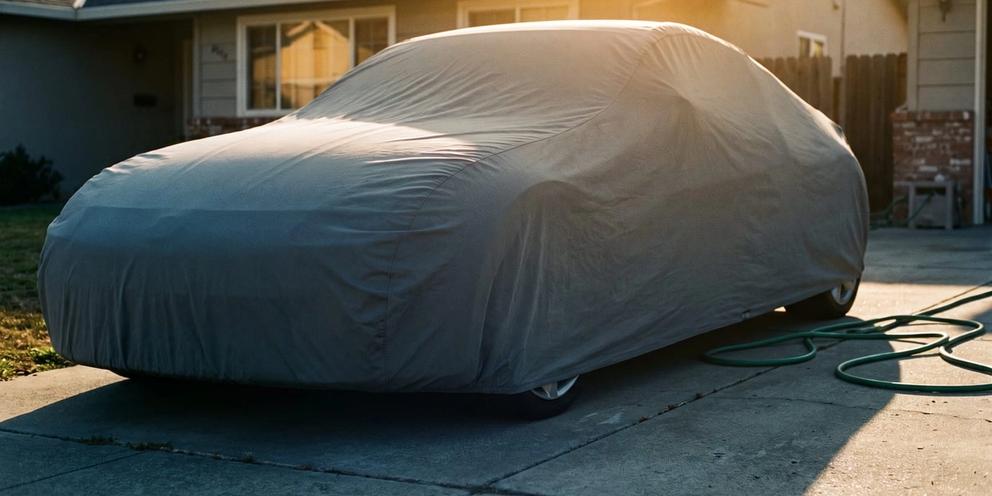
Car Cover vs Carport: Which One Actually Protects Your Vehicle Better?
The Quick Verdict: Car Cover or Carport?
Short answer: if you don't have a dedicated parking spot, or you're watching your budget, a car cover wins. If you own your driveway and want zero-effort daily protection for one or more vehicles, a carport wins, especially somewhere hail or falling branches are a real threat. That's the whole car cover vs carport debate in two sentences.
Here's the twist most people miss, though: these aren't competing products. A cover under a carport is the strongest setup you can build, because the structure handles the big stuff (sun, snow load, direct rain) while the cover handles what leaks in around the open sides. If you want the full breakdown of costs, protection levels, and where each option falls short, the comparison below covers it dimension by dimension. For a broader look at fit-specific options, car covers come in a lot more variety than most shoppers expect.
Car Cover vs Carport: Side-by-Side Comparison
Upfront Cost
- Car cover: $50 to $300 depending on material, brand, and how closely it's fitted to your vehicle
- Carport: $1,500 to $4,500 installed, more for custom or attached builds
Installation Time
- Car cover: 2 to 5 minutes to put on or take off, no tools required
- Carport: Multi-day build, whether you're doing it yourself or hiring it out
Portability
- Car cover: Goes wherever the car goes. Works at home, on a road trip, in long-term storage
- Carport: Fixed to one property. Move houses and it stays behind
Weather Protection Scope
- Car cover: Sits directly on the vehicle, blocking dust, UV, tree sap, bird droppings, and light rain at the surface
- Carport: Blocks sun and overhead rain, but open sides let wind-driven rain and blowing debris reach the vehicle anyway
Hail and Falling Debris
- Car cover: Little to no protection unless it's a padded, hail-specific cover
- Carport: A solid roof genuinely stops branches, hail, and other falling impact damage before it reaches the paint
Space and Permitting
- Car cover: Zero property changes needed
- Carport: Requires a permanent footprint, and often HOA or local permit approval before you can build
Security
- Car cover: A cover with a built-in cable and lock hides the vehicle from view and adds a physical deterrent
- Carport: Doesn't hide or lock anything. The car's fully visible and accessible
Multi-Vehicle Use
- Car cover: One cover, one vehicle. Custom fit means it won't stretch to a second car
- Carport: A single structure can shelter one to three vehicles under one roof
Maintenance
- Car cover: Needs periodic washing and typically gets replaced every few years
- Carport: Needs occasional structural upkeep, rust checks, and panel repair after storms
If overhead impact protection matters most for hail-prone areas, it's worth reading up on hail car covers specifically, since standard covers won't cut it there.
When a Car Cover Is the Better Choice
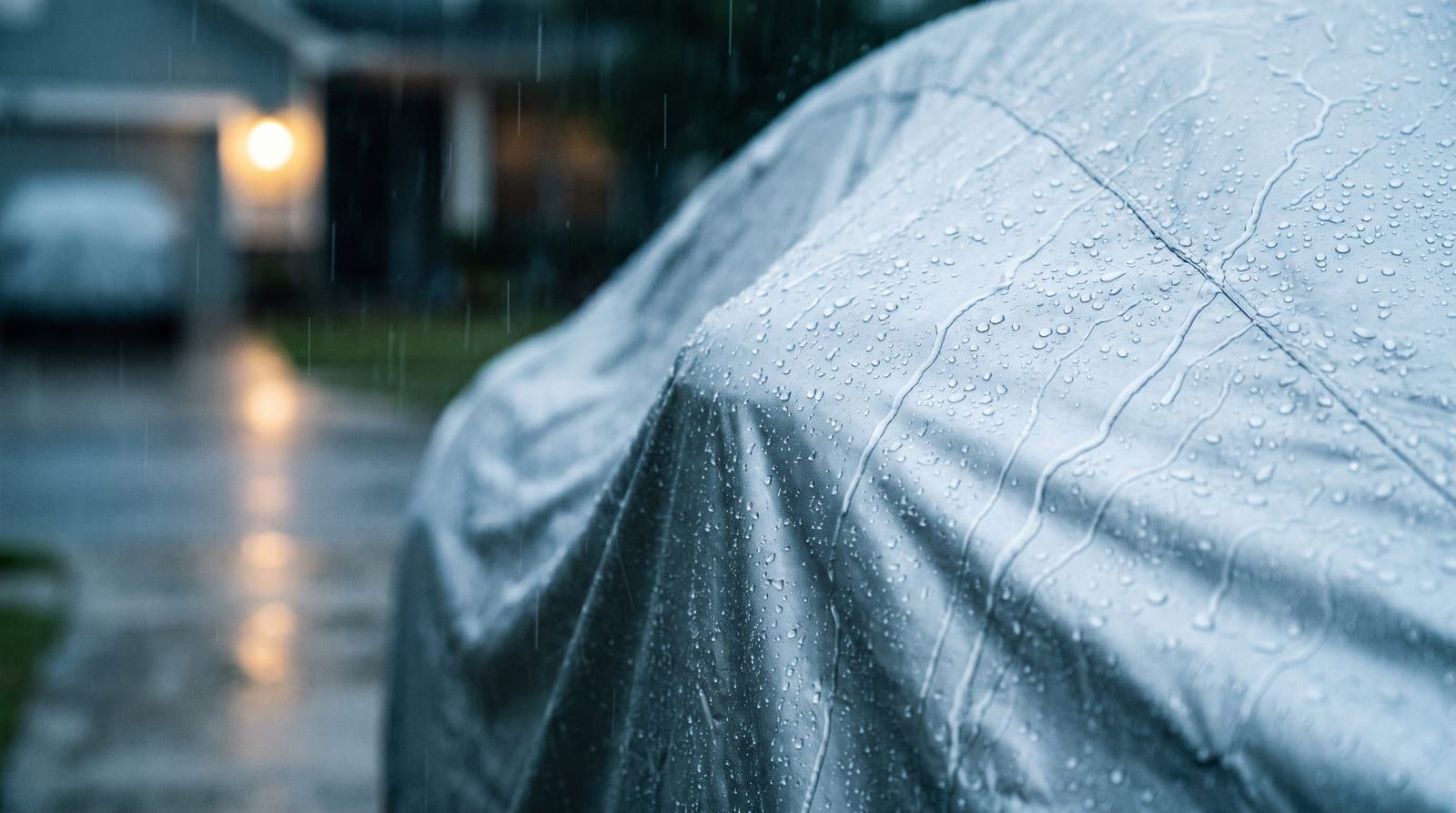
If you're renting, living in an apartment, or parking on the street, a carport isn't even on the table. You can't build a permanent structure on property you don't own. A cover is the only real option, and honestly, it's a good one.
It also earns its keep for everyday exposure. Sun fade, tree sap, bird droppings, dust, light rain: a good cover handles all of it without you thinking twice. Same goes for travel. Heading to a second home, a campsite, or leaving your car at long-term airport parking for two weeks? A cover packs into a bag and goes with you. A carport obviously can't.
Fit matters more than people assume here. A universal cover is loose and flappy, which means wind gets underneath it and it does a mediocre job sealing out dust and moisture. A semi-custom cover fits closer to your vehicle's body lines. A custom-fit car cover is built to your exact make and model, so it hugs the vehicle with almost no gap for wind or debris to sneak through. If you're not sure which category you need, check what size car cover fits your vehicle before you buy, because a poor fit undermines everything else about the cover.
One more thing worth saying plainly: an outdoor-rated cover with a UV-resistant, waterproof outer layer closes most of the protection gap with a carport for daily exposure. You're not getting hail protection, but for sun, rain, and grime, a properly matched outdoor car cover does the job a carport does, just without the structure.
When a Carport Is the Better Choice
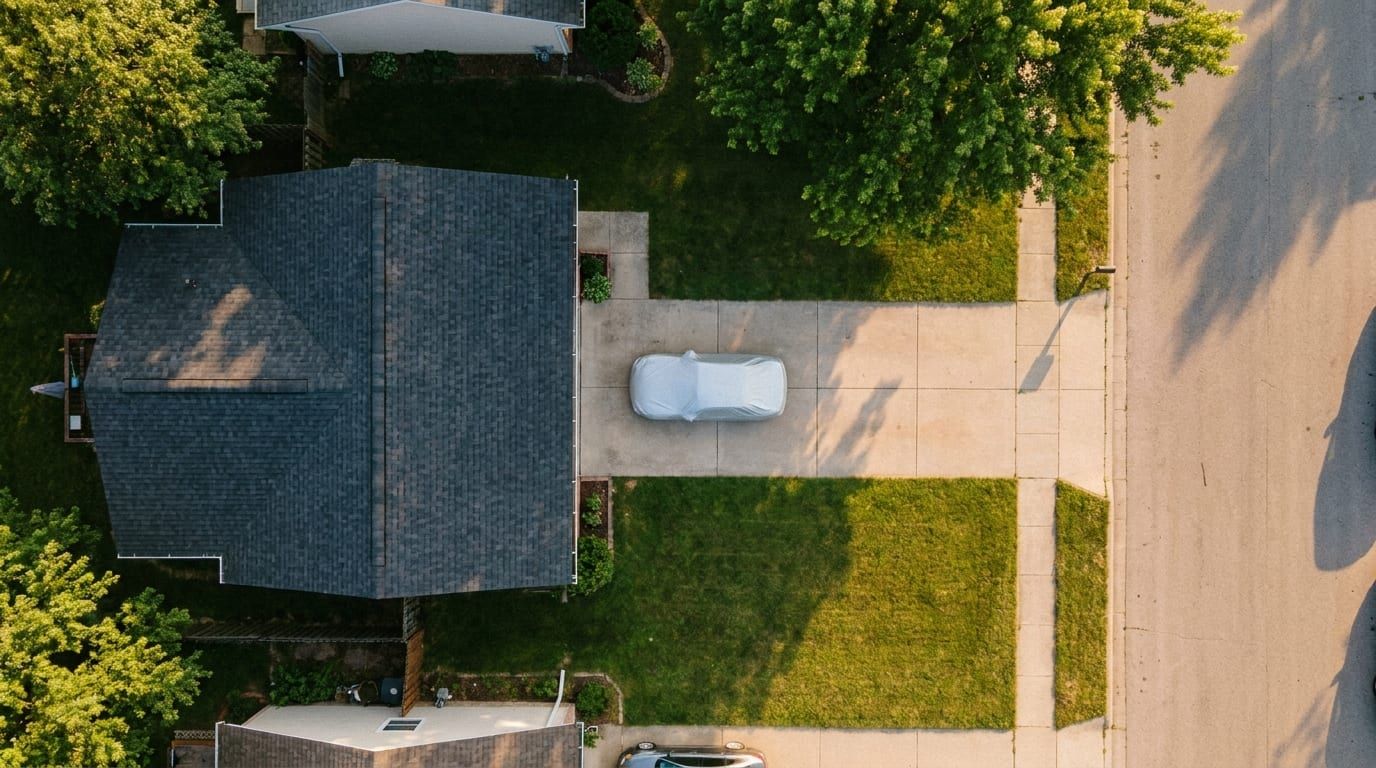
If you own your parking spot and want protection that requires zero daily effort, a carport is hard to beat. Park, walk away, done. No pulling a cover on or off in the rain, no forgetting it in the trunk.
It's also the only option here that scales. Got two cars, an RV, and a boat? One carport roof can shelter all of it, where you'd need a separate cover for each vehicle. And in regions that see frequent hail, heavy snow load, or big trees dropping branches, a solid roof over the vehicle is doing something a fabric cover simply can't: stopping a physical impact before it reaches the paint or the windshield.
The tradeoff is real, though. Open sides mean wind-driven rain, dust, and pollen still get to the vehicle. A carport keeps water off the roof and hood in a straight downpour, but angle that same rain sideways in a gust and it's landing on your car anyway. That's the gap a cover underneath closes, which is exactly why so many carport owners end up buying one regardless.
Cost Breakdown: Real Numbers Over Time
Covers break down into rough tiers. A basic universal cover runs $50 to $90. Semi-custom, which fits closer to your vehicle's actual shape, lands around $100 to $180. Custom-fit covers with fleece lining or hail padding push $200 to $400 or more, depending on material. If you're deciding what to actually buy, it helps to understand what makes one car cover material better than another before comparing prices, since a cheap universal cover in premium-sounding fabric is still a cheap universal cover.
Carports follow a similar tiered structure but at a completely different scale. A basic metal frame kit you assemble yourself runs $1,500 to $2,500. A permanent steel carport with professional installation is more like $3,000 to $6,000. Go custom or attach it to your house, and you're looking at $5,000 to $10,000 or beyond.
Lifespan changes the math. A quality cover used daily typically lasts 3 to 5 years before the fabric wears out. A metal carport, kept up, lasts 15 to 20 years or more. Do the rough per-year math and a cover is dramatically cheaper in the short term, no contest. Over a full decade of ownership, though, a carport starts amortizing down to a more reasonable annual cost, which is why it makes more sense for someone settled into a permanent home than for someone covering a car for a season or two. Either way, it's worth browsing top-rated car covers to see what quality actually costs before assuming the cheapest option is the better deal.
Can You Use Both Together?
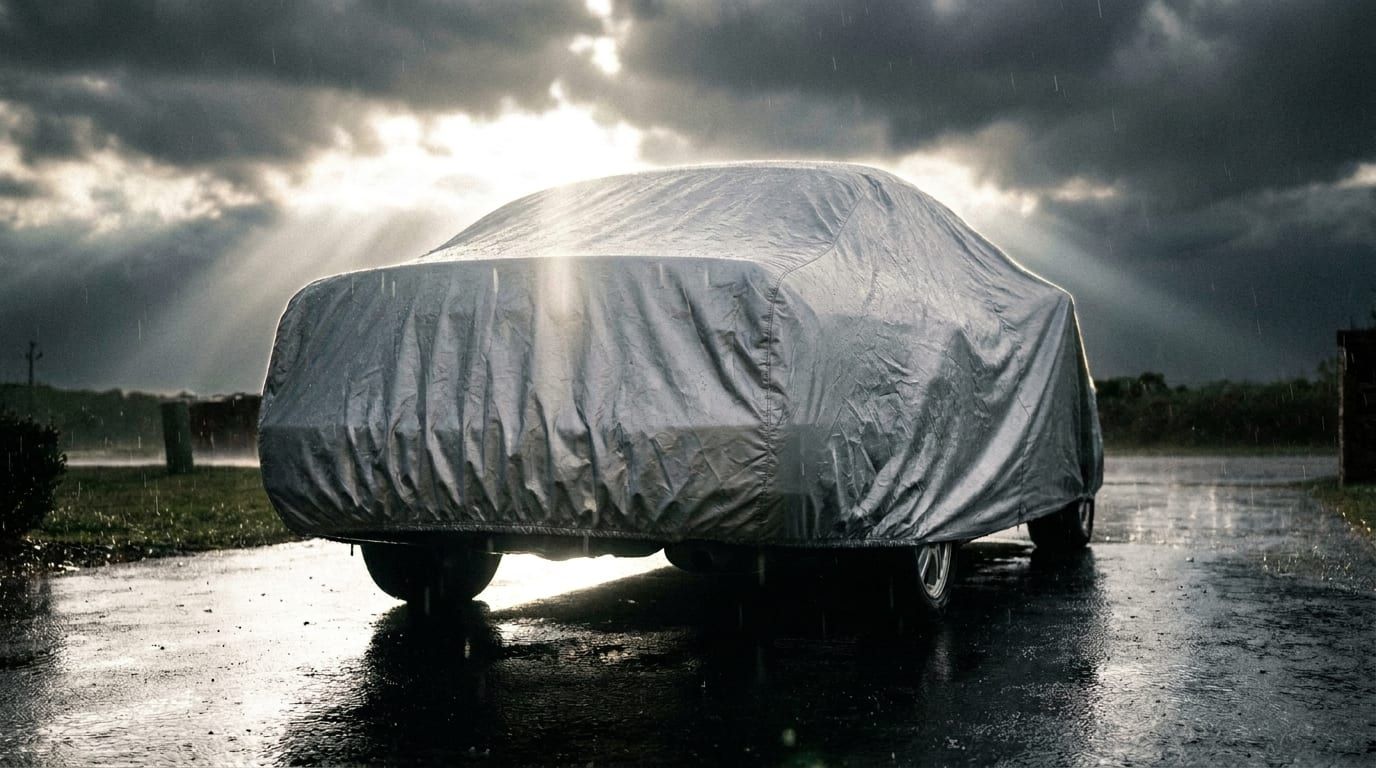
This is genuinely the best setup if you can swing it. The carport takes the brunt of direct sun and heavy overhead rain. The cover underneath catches everything the open sides let through: dust, pollen, wind-blown moisture, the fine grit that settles on a car parked outside for weeks at a time.
There's a less obvious benefit too. Open structures create temperature swings overnight, and that swing causes condensation to form on an uncovered vehicle just like it would on grass in the morning. A breathable cover underneath stops that moisture from sitting directly on the paint.
One caveat: don't use an indoor-only cover for this. Indoor covers are lightweight and non-breathable, built for garage use where humidity and weather aren't a factor. Under a carport, the vehicle's still technically outdoors, so you want a breathable, weather-rated cover instead. This guide to using a car cover outdoors walks through what to look for in wind, UV, and rain protection if you're pairing the two.
Bottom Line: Match the Solution to Your Situation
No permanent parking spot, or working with a tighter budget? Get a cover. Own your spot, need to shelter multiple vehicles, or live somewhere hail is a regular problem? A carport is the better long-term investment. Want the best protection money can buy? Put both to work together.
Whichever way you land, get the sizing right before you spend a dollar. A cover that's too loose or too tight won't protect the way it's supposed to, no matter how good the fabric is.
If you're leaning toward a cover, either as your main solution or a partner to a carport, it's worth spending five minutes browsing the fit and protection options that actually match your vehicle. And if you want more practical breakdowns like this one before you decide, it's a good excuse to keep reading around the site.
Updated