Does a Car Cover Fit a Car With a Trailer Hitch?
Yes, most car covers fit vehicles with a trailer hitch just fine. The hitch sits below the cover's hemline, tucked under the bumper, so it doesn't interfere with fabric draping over the body. Fit really comes down to two things: whether you're using a custom-fit or universal cover, and how big the hitch or towing package actually is. The rest of this guide walks through what to check before you buy.
A standard receiver hitch is a small piece of hardware. It bolts to the frame rail and sticks out just a few inches past the bumper, low to the ground. Covers aren't designed to wrap underneath the vehicle anyway, so that gap is already accounted for. Where things get more complicated is with bigger towing setups, or accessories left attached to the hitch. We'll get into both.
Will a Trailer Hitch Create Gaps or Snag the Cover?
Picture where a cover's hem actually falls. It drapes down past the bumper, usually ending a few inches above the ground. A standard receiver hitch sits tucked up under the rear bumper, well above that hemline in most cases. So the fabric just drapes right past it. No snag, no gap, no problem.
Where you run into trouble is with heavier-duty towing packages. Class III and IV hitches on trucks and SUVs sometimes extend further back or sit lower than a basic Class I or II setup on a sedan. That extra protrusion can occasionally catch the hem if the cover runs tight through the rear.
The bigger issue, honestly, isn't the hitch itself. It's whatever's attached to it. A bike rack left on the receiver, a cargo box, a hitch step, these all create hard edges and points that'll stretch or tear cover fabric if you try to pull material over or around them. Fabric wants to drape smoothly. A bike rack arm sticking out at an angle just doesn't let that happen.
So here's the practical rule: pull hitch-mounted accessories off before you cover the car. Takes two minutes, and it saves you from putting pressure on one small section of fabric every time the cover goes on.
Do Custom-Fit Covers Account for Hitches and Towing Packages?
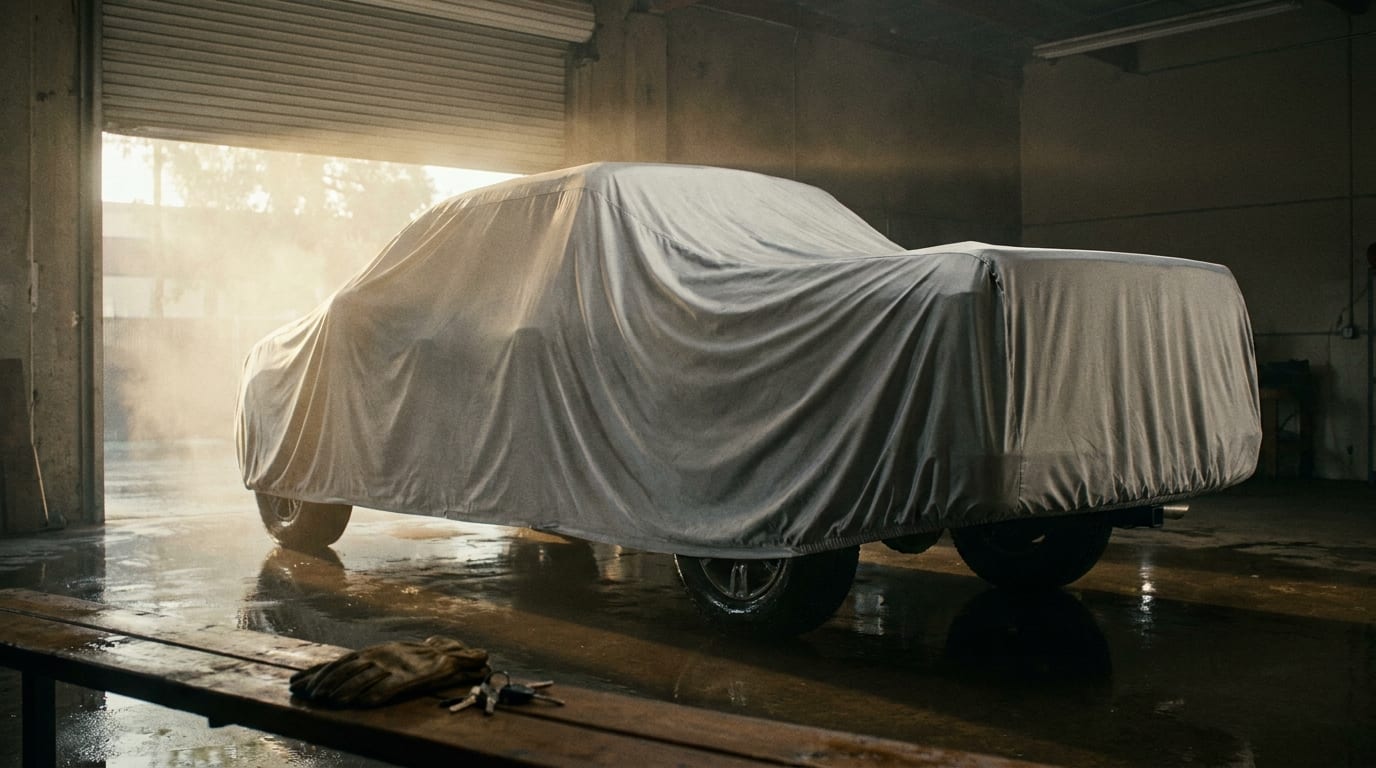
Custom-fit car covers are patterned to a specific year, make, and model, body panels, bumper contours, the works. That pattern already includes whatever clearance the factory bumper design allows, hitch or no hitch, because the hitch itself isn't part of the exterior body shape the cover is tracing.
A factory-installed hitch, or one added later through a dealer or aftermarket shop, mounts behind and below the bumper line. It's not pushing out the cover's silhouette. So a custom-fit cover built for your exact vehicle isn't going to fight with a hitch that's just doing its job back there.
Trucks and SUVs are the vehicles most likely to tow, which is exactly why truck covers and SUV covers are built around towing-vehicle proportions from the start. These body styles already assume a hitch might be present. That's different from, say, a compact sedan where a hitch is more of an outlier.
What About Universal or Semi-Custom Covers?
Universal covers work differently. Instead of tracing a specific body, they rely on elastic hems and broad size categories, "mid-size sedan," "full-size SUV," that kind of thing. That looseness is actually an advantage here. A universal cover has more give around a hitch or odd bumper hardware, simply because it was never trying to hug the body tightly in the first place.
The trade-off is fit quality. Universal covers tend to leave extra slack around the rear bumper, which can flap in wind or let water pool in low spots. You're trading a tighter, more tailored look for flexibility around hitches, roof racks, or other add-ons.
Semi-custom covers split the difference. They're sized more precisely than a true universal cover but don't require an exact factory pattern match, which makes them a reasonable pick if your vehicle has a hitch, a lift kit, or other minor body changes that might throw off a strict custom fit.
How to Measure and Choose the Right Cover If You Have a Hitch
Start with total vehicle length, bumper to bumper, and factor in whether the hitch extends noticeably past that measurement. Most don't. Receiver hitches are tucked in close. But if you've got a hitch-mounted step, winch mount, or something else riding further back, measure to the furthest point and keep that number in mind.
From there, the better move is looking up your cover by year, make, and model rather than guessing from a generic size bucket. "Large SUV" covers a lot of ground, a three-row Suburban and a compact crossover aren't the same shape, even if they're both technically large. Using the actual vehicle size guide or running your vehicle through a cover finder tool gets you something built for your specific dimensions instead of a rough approximation.
If you're still unsure, check the product description or ask customer service directly whether a given cover accounts for towing packages. Not every listing spells this out, but it's a fair question, and a company selling vehicle covers should be able to answer it.
If your vehicle has aftermarket modifications beyond the hitch, lift kits, oversized mirrors, roof racks, it's worth reading through general fit modification guidance too, since those changes stack with a hitch to affect overall fit.
Tips for Installing a Cover Around a Trailer Hitch

Work from front to back. Get the cover positioned over the hood and windshield first, then ease it down toward the rear last. Don't pull the hem tight over the bumper and hitch in one motion, you'll stretch the fabric right at the point of contact, which is exactly where wear shows up first.
If your cover came with grommets, a cable, or strap closures at the hem, use them. They're there to snug the fabric against the body without you having to yank on the material itself. A cable threaded through the hem and clipped underneath keeps wind from getting up under the cover and flapping it around the hitch area, which is usually how small tears start.
Give yourself a few extra minutes here. It's a small habit, but it's the difference between a cover that lasts years and one that frays at the rear hem after a single season. For a full walkthrough on getting this right from start to finish, there's a step-by-step installation guide worth running through once before you settle into a routine.
Find the Right Cover for Your Vehicle
A trailer hitch is rarely the thing that stands between you and a good-fitting cover. The real decision is custom-fit versus universal, and that comes down to how tight a fit you want and whether your vehicle has other modifications to account for. So yes, does a car cover fit a car with a trailer hitch? In almost every case, it does, as long as you've picked the right type for your vehicle and cleared off any hitch-mounted gear first.
If you're shopping for one, look up your exact vehicle rather than guessing by category. Trucks and SUVs, the vehicles most likely to be towing in the first place, have their own dedicated cover lineups built around those proportions. Worth browsing if you haven't already, and worth bookmarking our articles section if you want more guides like this one as you figure out what your vehicle actually needs.
FAQ
Does a trailer hitch stop a car cover from fitting properly? No. A standard hitch sits below the cover's hemline and doesn't interfere with how the fabric drapes over the body.
Should I remove a bike rack before covering my car? Yes. Hitch-mounted accessories like bike racks or cargo boxes create hard edges that can stretch or tear cover fabric.
Are custom-fit covers better than universal covers for vehicles with hitches? Custom-fit covers trace your exact vehicle's body shape, which already accounts for the stock bumper and hitch clearance. Universal covers offer more slack around hitch hardware but won't fit as tightly overall.
Do truck and SUV covers account for towing packages? Truck and SUV covers are built around towing-vehicle proportions, since these vehicle types most commonly come with hitches installed.