EZGO Golf Cart Covers: Why Fit Is Non-Negotiable
A universal tarp thrown over an EZGO looks fine in the listing photo and then fails the first windy afternoon. Generic covers are cut for an average shape that doesn't actually match any specific cart, so you get gaps around the roof pillars, loose fabric that flaps against plastic trim until it cracks, and water pooling on the flat vinyl top instead of running off. An EZGO golf cart cover that's actually sized for your model avoids all three problems, but only if you know what you're buying before you click add to cart.
Three things decide whether a cover works: your cart's model and generation, its roof and seat configuration, and where you actually store it. Get those three right and almost any decent cover will fit and function. Skip them, and even an expensive cover ends up loose at the corners or too short at the back. This guide walks through how those variables play out across the EZGO lineup, what features actually matter, and how to measure so you're not guessing. It's not a single "buy this one" recommendation. It's the information you need to pick correctly for your specific cart.
EZGO Model Lineup and How Cover Sizing Works
EZGO has sold several distinct families over the decades, and they don't share a single footprint. The TXT is probably the most common model on the road today, typically a 2-seater with a standard-height roof. The RXV shares a similar passenger layout but has its own body lines and suspension geometry. Freedom models and the Express S4 and L4 expand into 4-seat and 6-seat configurations with longer frames and, often, taller or extended rooflines to cover the rear bench. Older Marathon and Medalist carts, still common in storage lots and older communities, have body dimensions that don't match anything EZGO currently builds.
Roof height and windshield presence change the cut of the cover more than people expect. A 2-seat TXT with a stock top needs a shorter, lower profile than a 4-seat Express with an extended roof stretching over a rear seat kit. Add a folding windshield and the front slope of the cover needs room to clear it without stretching tight across the glass or frame.
Aftermarket parts complicate this further. Rear seat kits, lift kits, and light bars all push a cart past its stock dimensions, and a cover sized for the factory TXT won't account for any of it. The model name on the cart isn't enough information on its own. You need the actual measurements.
That matters even more because not every retailer cuts golf cart covers by sub-model. Some list a single "EZGO fits most" size, which works fine for a stock cart and badly for anything modified. Before you buy, check the EZGO golf cart cover listing against your cart's real roof height and overall length rather than trusting the model name alone. If you're unsure how dimensions translate across vehicle types in general, the vehicle cover sizing guide breaks down the same principle for cars and trucks, and it applies here too.
Must-Have Features for an EZGO Cover
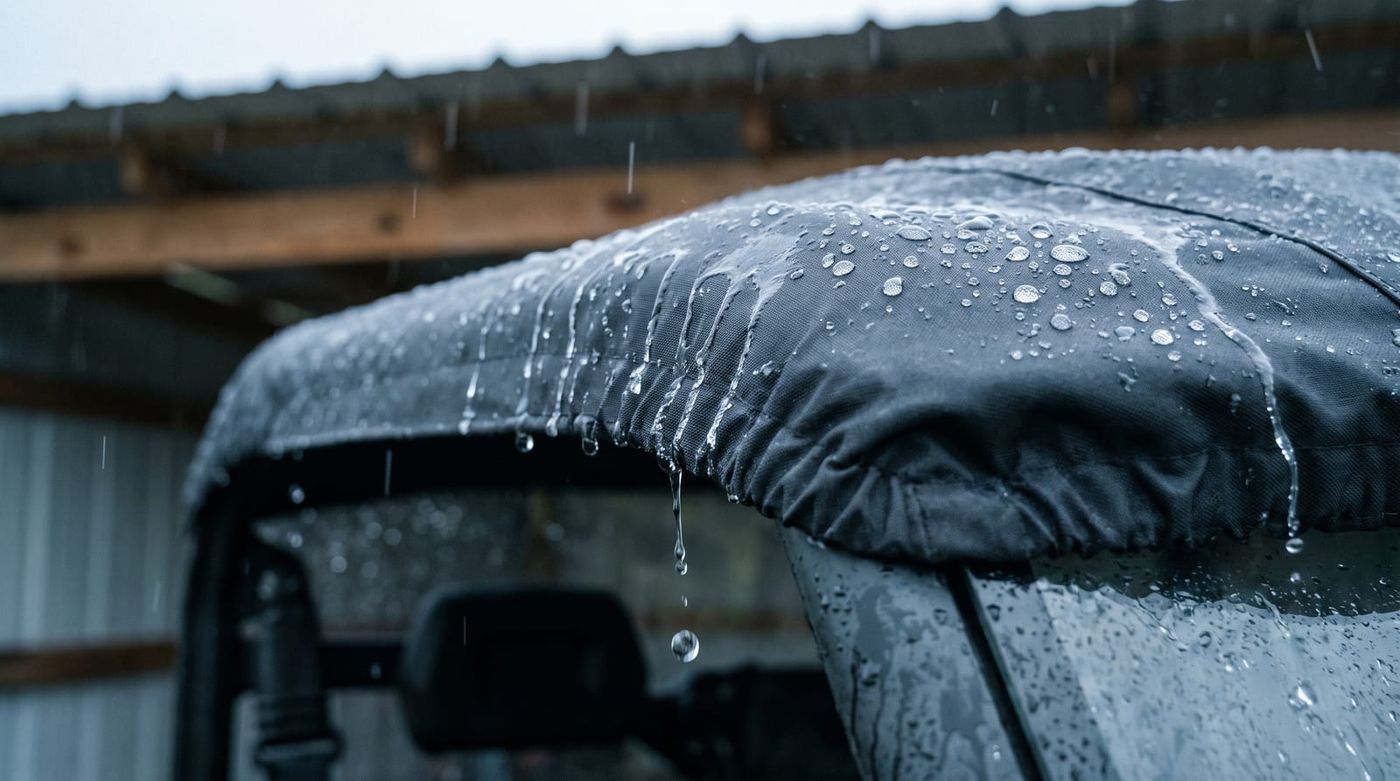
Not all cover fabric does the same job, and the label differences matter more than they sound. Waterproof and water-resistant are not interchangeable terms. Water-resistant fabric sheds light moisture but lets sustained rain soak through eventually, which is a problem if your cart lives outside year-round rather than ducking under a carport between storms. If your EZGO sits in the open, you want fabric rated as genuinely waterproof, not just treated to repel a morning dew.
UV resistance matters just as much, maybe more, depending on your climate. Vinyl seats and dash plastic fade and crack under direct sun faster than most owners expect, and a cover with real UV-blocking coating is the cheapest insurance against that damage.
Wind is the other enemy, especially since most golf carts have open sides with no doors to block gusts. An elastic hem or cinch straps at the base keep the cover anchored instead of ballooning and flapping, which over time wears through the fabric at the stress points anyway. Breathable or vented fabric solves a quieter problem: condensation. A cover that traps moisture underneath invites mildew on seats and upholstery, which is worse than just leaving the cart uncovered in some cases. Look for reinforced seams and some underside padding at the contact points, mirrors, roof corners, where fabric rubs against hardware every time the wind moves it.
Indoor vs Outdoor Storage: Choosing the Right Cover Type
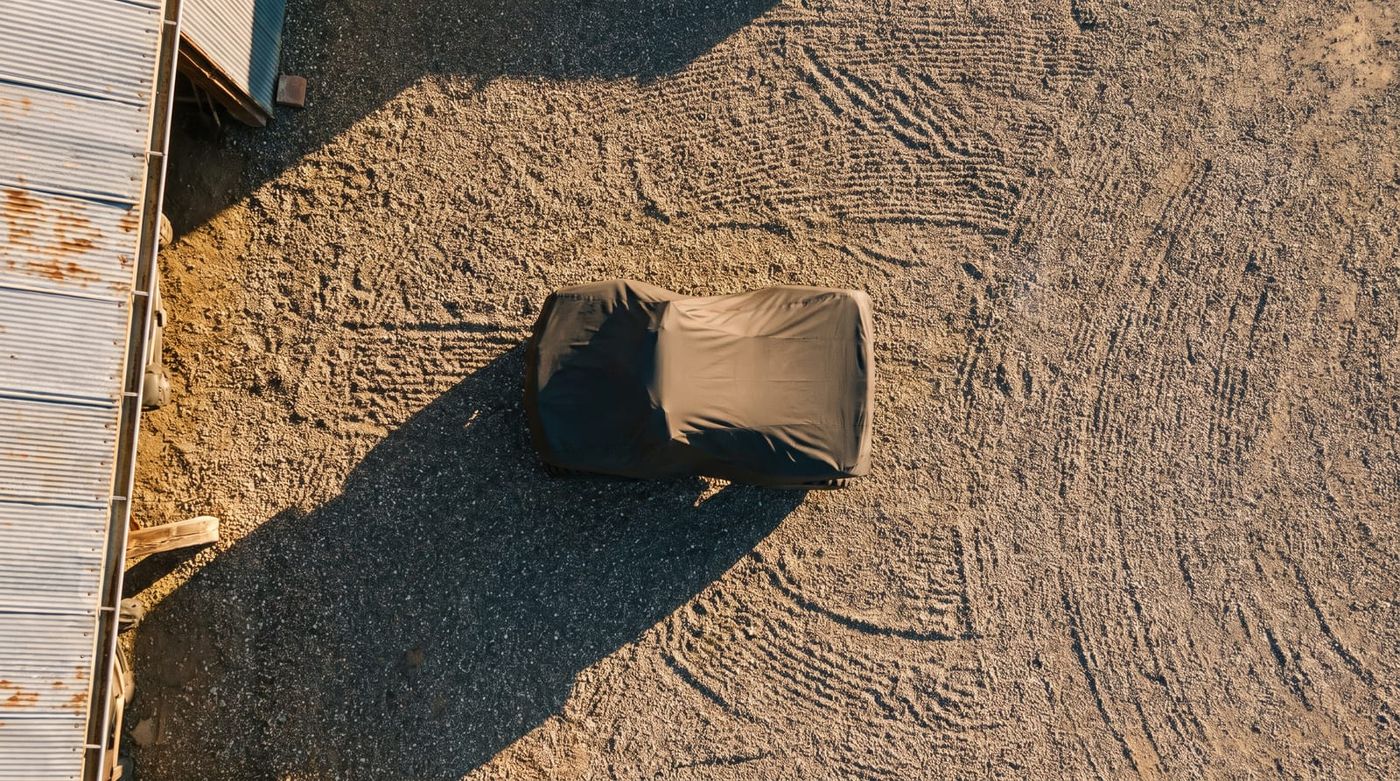
Where your cart sleeps changes which spec actually matters. A cart parked in a garage or under a carport isn't fighting rain or direct sun, so an indoor-rated cover can prioritize something lighter: soft fabric that stops dust and surface scratches without the bulk of waterproofing. These tend to cost less too, since they're not engineered for weather at all.
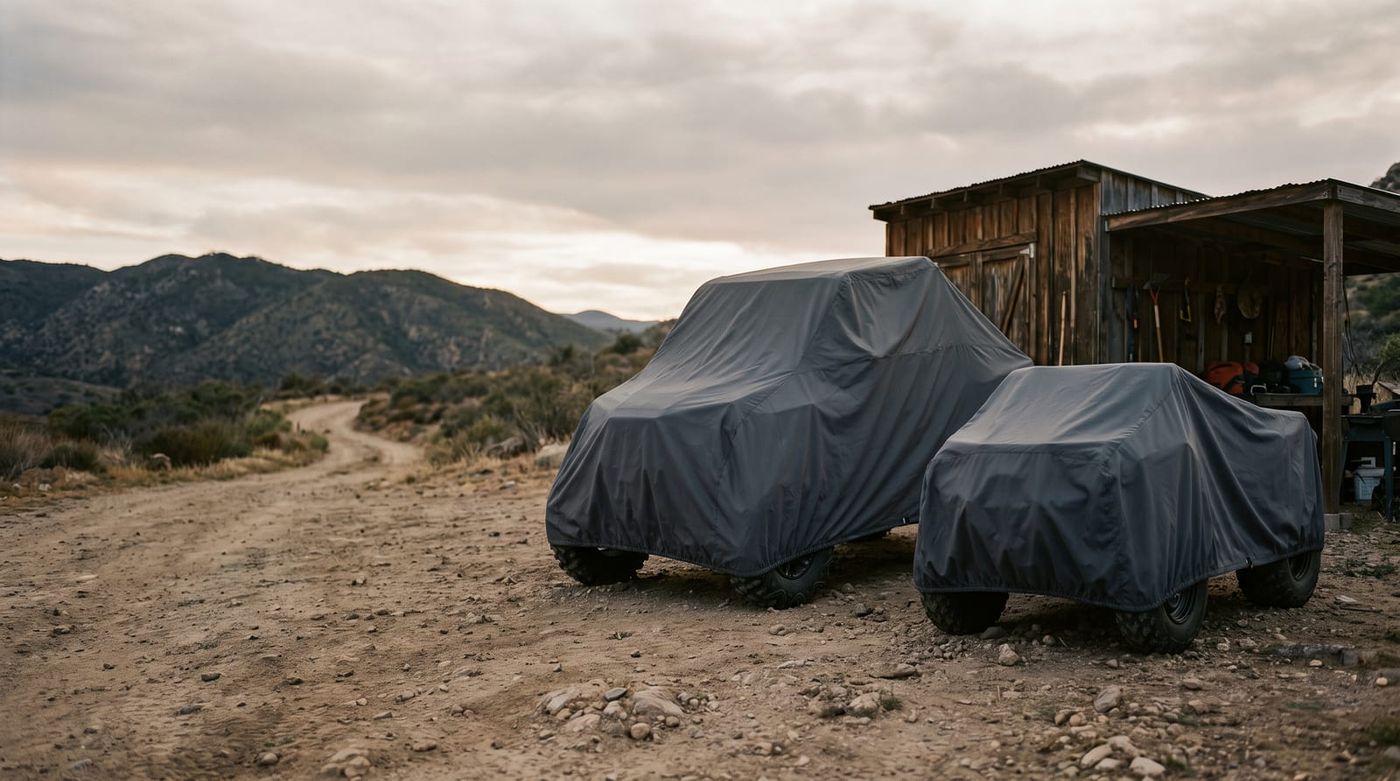
A cart left outside full-time is a different equation entirely. It needs heavier waterproof fabric, a real UV coating, and the wind-securing straps mentioned above, because it's facing sun, rain, and the occasional storm with nothing else between it and the weather. An outdoor-rated cover is built for that exposure; an indoor cover left outside will wear out fast and won't keep water out in the first place.
The decision rule is simple: garage or carport, go indoor-rated. Anything parked outside full-time, even just on a driveway pad, needs the outdoor spec. Don't split the difference to save a few dollars. The wrong category costs more in cart damage than the price gap between the two cover types.
How to Measure Your EZGO Before Buying
Skip the model-year guessing game and grab a tape measure instead. Three numbers matter here. First, overall length, bumper to bumper, with the cart parked on level ground. Second, roof height measured straight up from the ground to the highest point of the top. Third, width at the widest point, which usually means the mirrors, so fold them in before you measure if they fold.
Why bother measuring instead of just trusting the model name? Because EZGO has revised body dimensions across generations, sometimes without changing the model name at all. A TXT from one production run can sit slightly differently than a TXT a few years newer. The cover doesn't care what the badge says. It cares about actual inches.
Seat count is the other variable people overlook. A 2-passenger TXT and a 4-passenger Express aren't close in overall length, and a cover sized for one will leave the other exposed at the back end or bunched up with excess fabric at the front. Confirm your passenger count before you buy, not just your model family.
Installing and Caring for Your EZGO Cover
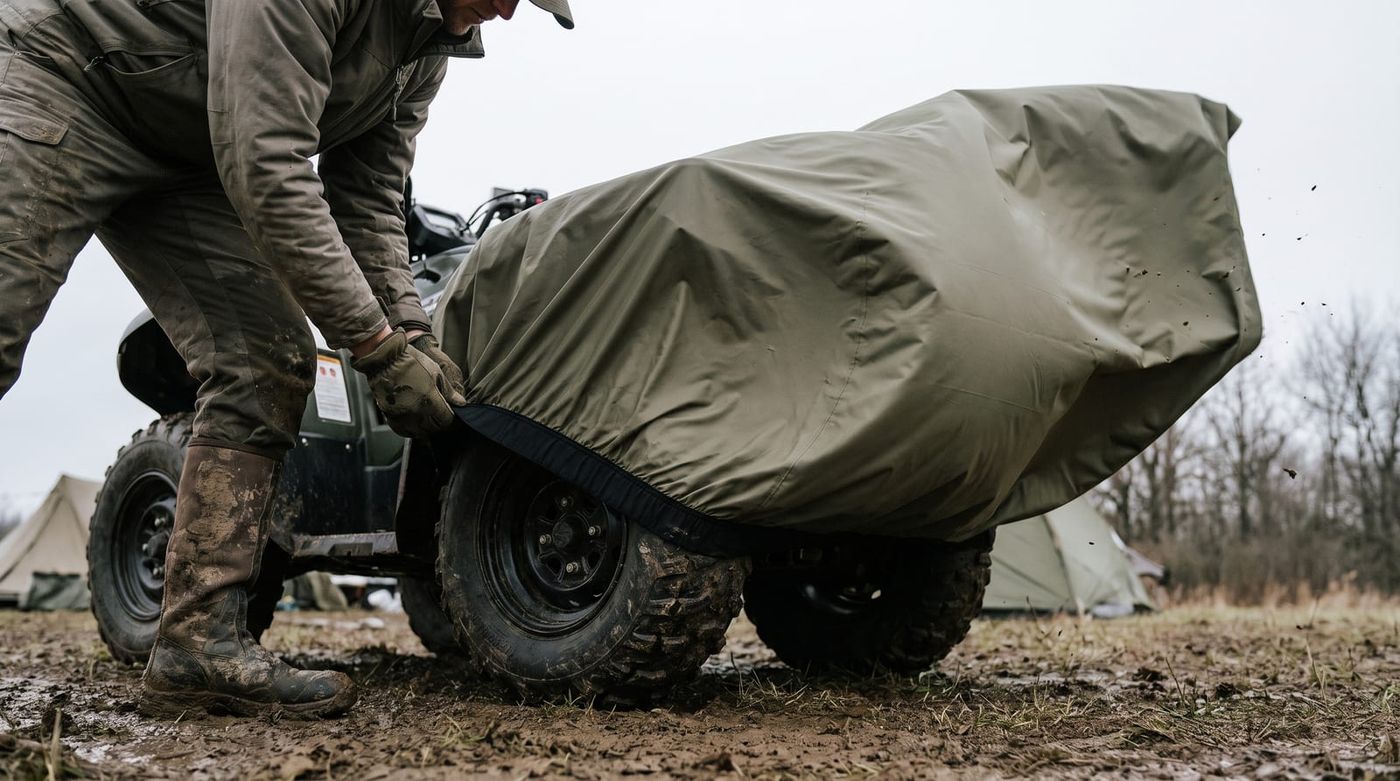
Putting the cover on is straightforward once you've got the right fit: drape it from front to back, letting it settle over the roofline naturally rather than yanking it taut, then secure any straps underneath the frame before cinching the hem snug at the base. Rushing this step is how people end up with a cover that looks fine for a week and then starts riding up in the wind, so take the extra minute to secure it properly. For a full walkthrough with more detail than a quick overview, the installation guide covers the process step by step, and installation guides more broadly has resources if your cart has extra hardware to work around.
Care is mostly common sense, but a couple of habits make a real difference. Shake off loose debris before folding the cover up, and let it dry completely before storing it, folding a damp cover away is one of the fastest ways to grow mildew inside the fabric. When it needs a clean, use mild soap rather than a harsh detergent that can strip the waterproof coating. The cover care guide has the specifics if you want a repeatable routine.
Here's the payoff for doing all this right: a properly fitted cover doesn't rub at the same spots over and over, which means less wear on both the cart's finish and the cover's own fabric. Loose, ill-fitting covers fail faster for exactly that reason, friction at the same few points, every time the wind blows.
Find the Right Cover for Your EZGO
Three steps, in order: figure out your exact model and configuration, measure the cart yourself instead of trusting the name, and match the cover's features to where it actually lives, indoors or out. Skip any one of those and you're rolling the dice on fit.
Once you know your numbers, look at EZGO-specific cover options rather than a generic "fits all golf carts" listing, since the generic ones are exactly the covers that leave gaps and flapping fabric in the first place. And if your measurements still feel uncertain or your cart has aftermarket modifications that make sizing tricky, a cover finder tool can help narrow things down faster than guessing. Worth a look before you commit to a purchase you might end up returning.