


The Best Car Cover for a Toyota Camry: Fit Guide, Size Chart & What to Buy
Why a Universal Cover Won't Cut It for a Camry
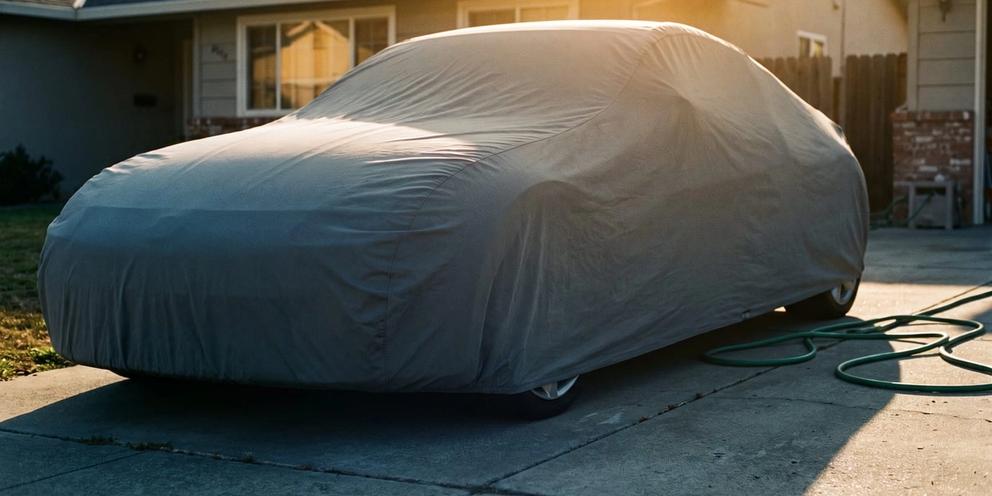
A Camry from 2010 doesn't share a silhouette with a Camry from 2023. The older XV40 and XV50 generations have a rounder, shorter trunk and a higher beltline, while the XV70 and XV80 stretched things out with a longer, lower roofline and sharper creases along the doors. A generic "full-size sedan" cover is built to the lowest common denominator of all of that, which means it usually ends up baggy somewhere: loose at the mirrors, short at the hood, bunched up around the rear bumper.
That slack matters more than people think. A cover that isn't fitted flaps every time the wind picks up, and that flapping is what causes swirl marks and, over months, actually wears through the clear coat. It's the opposite of what the cover is supposed to do.
This guide is meant to be read alongside the custom-fit Toyota Camry cover product page, not instead of it. Think of this as the part where you figure out what to buy before you're standing on the product page trying to guess. By the end, you'll know which cover size lines up with your model year and which material tier actually makes sense for how and where you park.
Toyota Camry Generations and What Changes for Cover Fit
There are four Camry generations still on the road that matter for cover shopping: the XV40 (2007-2011), XV50 (2012-2017), XV70 (2018-2024), and the newly arrived XV80 (2025-present). Each one shifted the body just enough to change how a cover needs to sit.
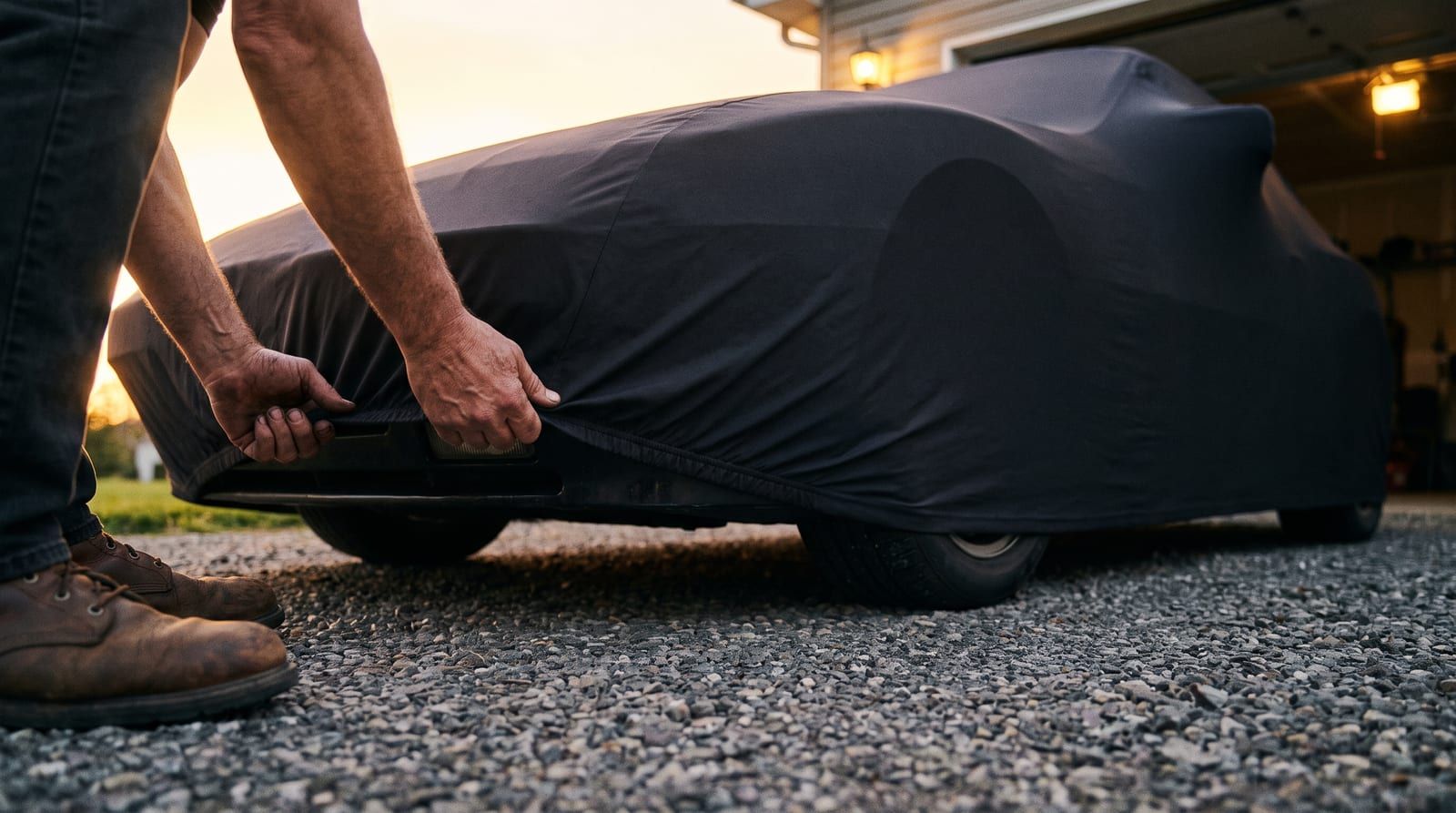
The biggest fit differences show up around the mirrors and the antenna. Older XV40 and XV50 Camrys sit their mirrors a little differently and typically run a mast-style antenna, while the XV70 and XV80 moved to a shark-fin antenna up on the roof. A semi-custom cover can usually work around these differences with some extra give in the fabric. A true custom-fit cover, on the other hand, is cut to the exact pocket placement for a given generation, so it sits tighter and looks a lot less like a tarp.
One thing that does simplify the decision: the Camry has stayed a four-door sedan through all of this. No coupe version, no wagon, no hatchback detour. The hybrid trims don't change the exterior body enough to matter for a cover either, so you're not choosing between different shapes the way you might with an SUV that also comes as a crossover.
Where people get tripped up is trim level. SE and XSE trims often add a rear lip spoiler or a slightly different bumper kit, which can add an inch or two of length that a base LE or XLE doesn't need to account for. Don't guess from the generation name alone. Confirm the exact year and trim using the vehicle selector on the product page so the custom-fit car cover you order actually matches what's in your driveway.
Toyota Camry Car Cover Size & Fit Table
Here's a quick-reference breakdown by generation. Overall length is approximate and measured bumper to bumper on base trims.
2007-2011 (XV40)
- Approx. length: ~189.2 in
- Fit notes: Standard mirror pockets, no rear spoiler accommodation needed on base trims
2012-2017 (XV50)
- Approx. length: ~190.9 in
- Fit notes: SE/XSE trims add a rear lip spoiler, so confirm trim before selecting a cover
2018-2024 (XV70)
- Approx. length: ~192.7 in
- Fit notes: Longer, lower profile than prior generations; hybrid models have no exterior differences affecting fit
2025-present (XV80)
- Approx. length: ~193.5 in
- Fit notes: Newest body style; verify whether a true custom-fit pattern or a semi-custom option is available at checkout
This table is a starting point, not a final answer. The real fit-finder is the year and trim selector on the custom-fit car cover product page, and if you're unsure how sizing works across vehicles generally, the car cover sizing guide walks through it in more depth. Use the table to narrow things down, then let the tool lock in the exact match.
Which Material Tier Makes Sense for Your Camry's Storage Conditions
Getting the size right is half the job. The other half is picking a material that matches where the car actually lives.
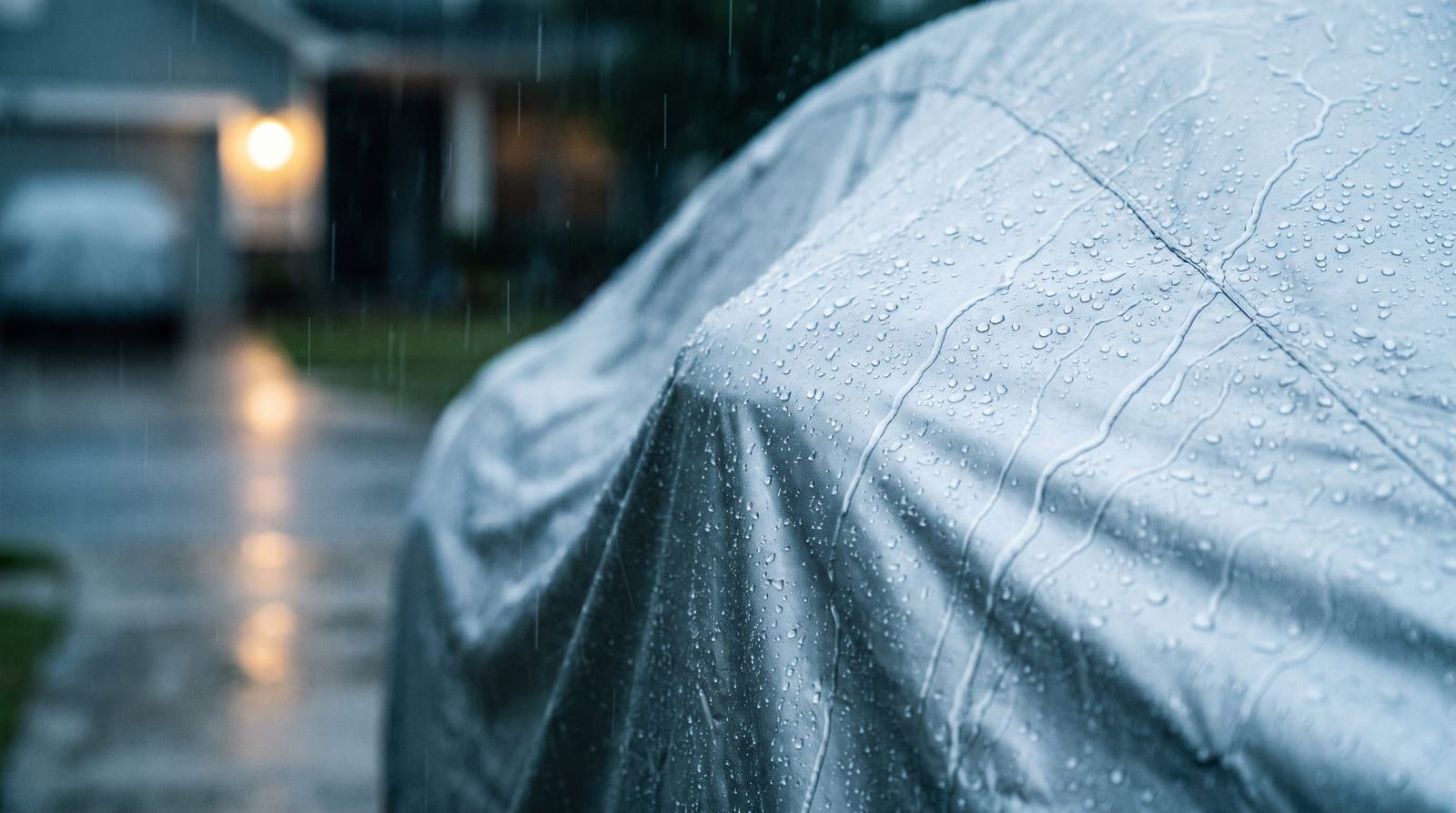
If your Camry parks on the street or in an open driveway every night, prioritize a waterproof car cover with UV resistance and a cinching hem. Daily sun and rain exposure is a different problem than the occasional storm, and it wears materials down faster than most people expect.
Garage or carport storage is a much easier ask. You don't need waterproofing at that point, you need something that keeps dust and light scuffs off the paint. An indoor car cover built for that environment is lighter, softer against the finish, and honestly overkill to upgrade past.
Seasonal storage is its own category. If you're a snowbird leaving the Camry behind for months, or it's a second car that sits most of the year, go heavier: a fleece-lined or heavy-duty cover paired with a cable-and-lock kit gives you both protection and a deterrent while you're not around to keep an eye on it.
Coastal and high-UV climates deserve a specific call-out. Salt air and constant sun degrade fabric in ways that have nothing to do with thickness. A thick cover with no UV treatment will still chalk and weaken faster than a thinner one built for sun exposure. If you're in Florida, Southern California, or anywhere along the Gulf, treat UV rating as the priority, not fabric weight.
Whatever your situation, that's the decision the tier selector on the product page is asking you to make: not "which cover looks toughest," but which one matches the conditions your car actually sits in.
Fit-Critical Features to Check Before You Buy
Size gets you in the ballpark. These details are what decide whether the cover actually looks and functions like it belongs on your Camry.
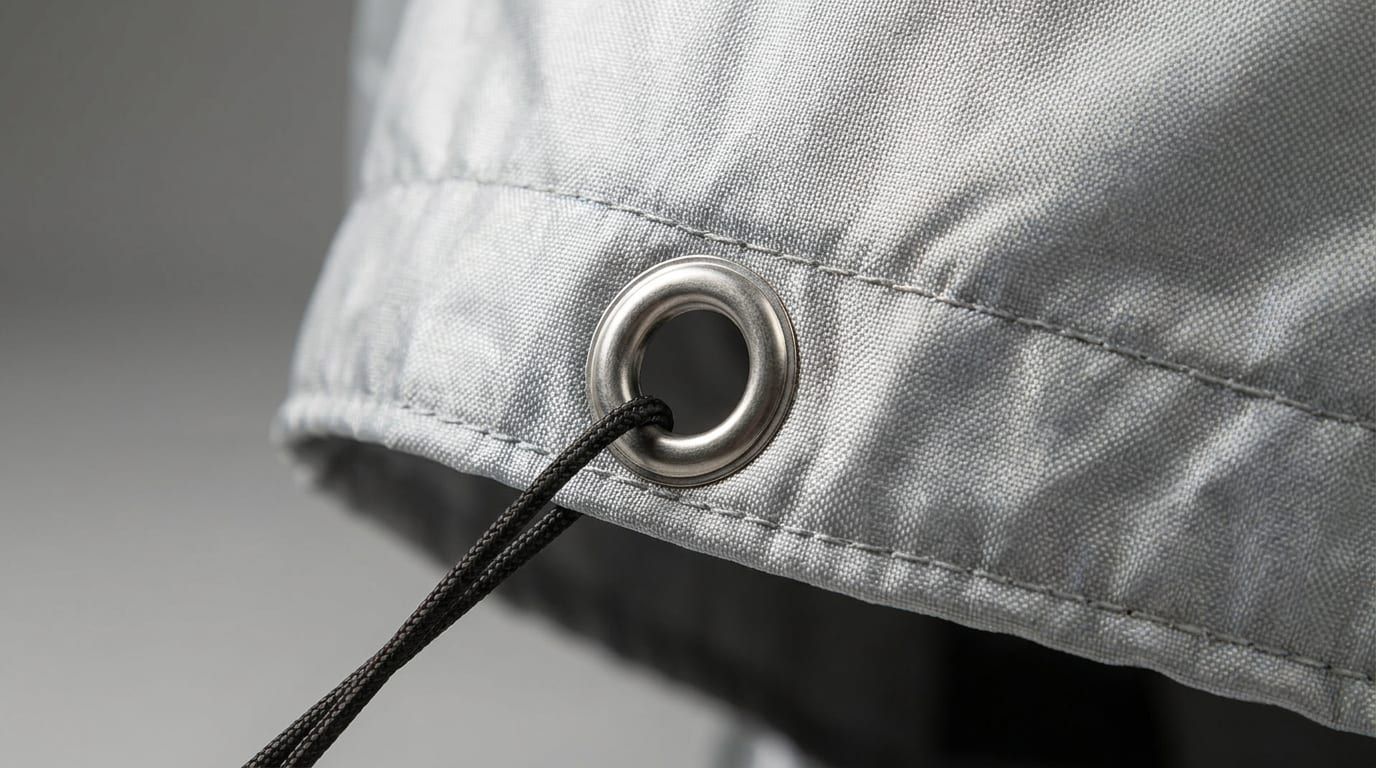
Elastic hem or hem cord. This is what keeps the cover from lifting at the bottom edge on a car with as long and low a profile as the Camry. Without it, wind gets underneath and the whole cover starts working itself loose.
Mirror pockets. Genuinely the most common complaint on sedan covers. Pockets cut for the wrong generation sit crooked or don't seat at all, so double-check this against your exact model year rather than assuming "Camry" is specific enough.
Antenna compatibility. XV40 and XV50 Camrys typically run a mast antenna that needs a grommet or patch. XV70 and XV80 models switched to a shark-fin antenna, which doesn't need that same accommodation. Mixing these up is an easy mistake if you're shopping by generation name alone.
Grommets, tie-downs, and gust straps. If the car sits outside in a windy region, these aren't optional extras. A gust strap does the real work of keeping a cover anchored through actual wind, not just light breeze.
Not every tier includes every one of these, so cross-reference the specific SKU on the product page rather than assuming a feature carries across the whole lineup.
Installing and Caring for Your Camry's Cover
Installation isn't complicated, but the order matters. Start at the front, drape it back, and tuck the elastic hem up under the rocker panels before you cinch any straps. Doing it out of order is how people end up fighting a cover that seems too tight when it's really just misaligned.
If your Camry sits in an open driveway, a gust strap earns its keep fast. Garage storage is more forgiving. There a simple hem-cord cinch is usually enough since wind isn't the main threat indoors. The full walkthrough is in our car cover installation guide if you want the step-by-step version.
Care is just as simple as install, and just as easy to skip. Rinse the cover and let it fully air-dry every few weeks of outdoor use. Skipping that is how moisture gets trapped against the paint, which defeats the entire purpose of covering the car in the first place. Our cover cleaning guide covers the specifics if you want a cadence to follow.
One more reason to actually follow the care instructions: it's part of what keeps a cover eligible under warranty coverage. Skip the maintenance and you're not just risking the cover's lifespan, you're risking the coverage behind it.
Camry Cover Buying Checklist: Final Decision
Three decisions, in order. First, confirm your generation and exact model year, since XV40 through XV80 all fit differently. Second, pick the material tier that matches where the car actually sits, outdoor daily driver, garage queen, or seasonal storage. Third, verify the fit-critical stuff: mirror pockets, antenna type, and hem construction, against the specific SKU you're about to buy.
If you get any of that wrong, you're not stuck with it. Coverage sits behind our lifetime warranty, and the no-hassle return policy means a bad fit isn't a bad purchase, it's just a quick exchange. If you'd rather read the full return terms directly, they're on the return policy page too.
The fastest way to put everything in this guide to use is the year and trim selector on the custom-fit Toyota Camry cover product page. Plug in your details, and it'll match you to the exact size and tier this article just walked through.
If you're curious about the model's history beyond fit and sizing, our Toyota history article is worth a read. And if you're still weighing options, browsing more car cover guides before you commit is never a bad idea.
Updated