


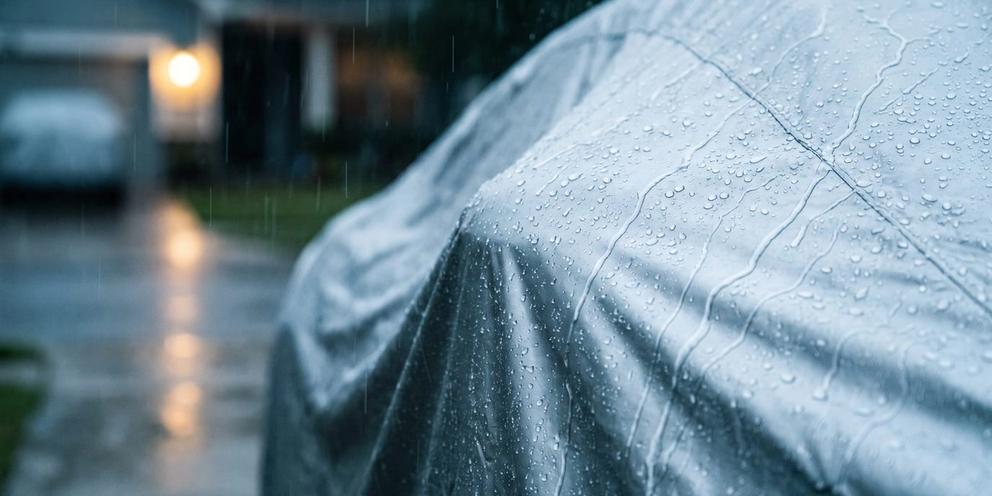
The Best Car Cover for Street Parking: What to Look for and Why It Matters
Why Street-Parked Cars Need a Different Kind of Cover
If your car lives on the street, it gets zero structural protection. No carport roof, no garage overhang, nothing between the paint and whatever the sky decides to do that day. Compare that to a car tucked in a driveway or garage, where a cover mostly guards against dust and the occasional stray sprinkler hit, and you start to see the gap. A car cover for street parking has to do more work, because it's the only layer of defense the vehicle gets.
This matters because not every cover on the shelf is built for that job. Plenty are designed for short-term outdoor use or light seasonal storage, and they'll disappoint fast under daily curbside conditions. Here's what actually matters when you're choosing one: material toughness, fit, security, and how easy the thing is to live with every single day. And while the specific risks shift with the seasons (ice in January, tree pollen in April, blistering sun in July) the core buying criteria stay the same no matter when you're shopping.
The Hidden Risks of Parking on the Street Every Day
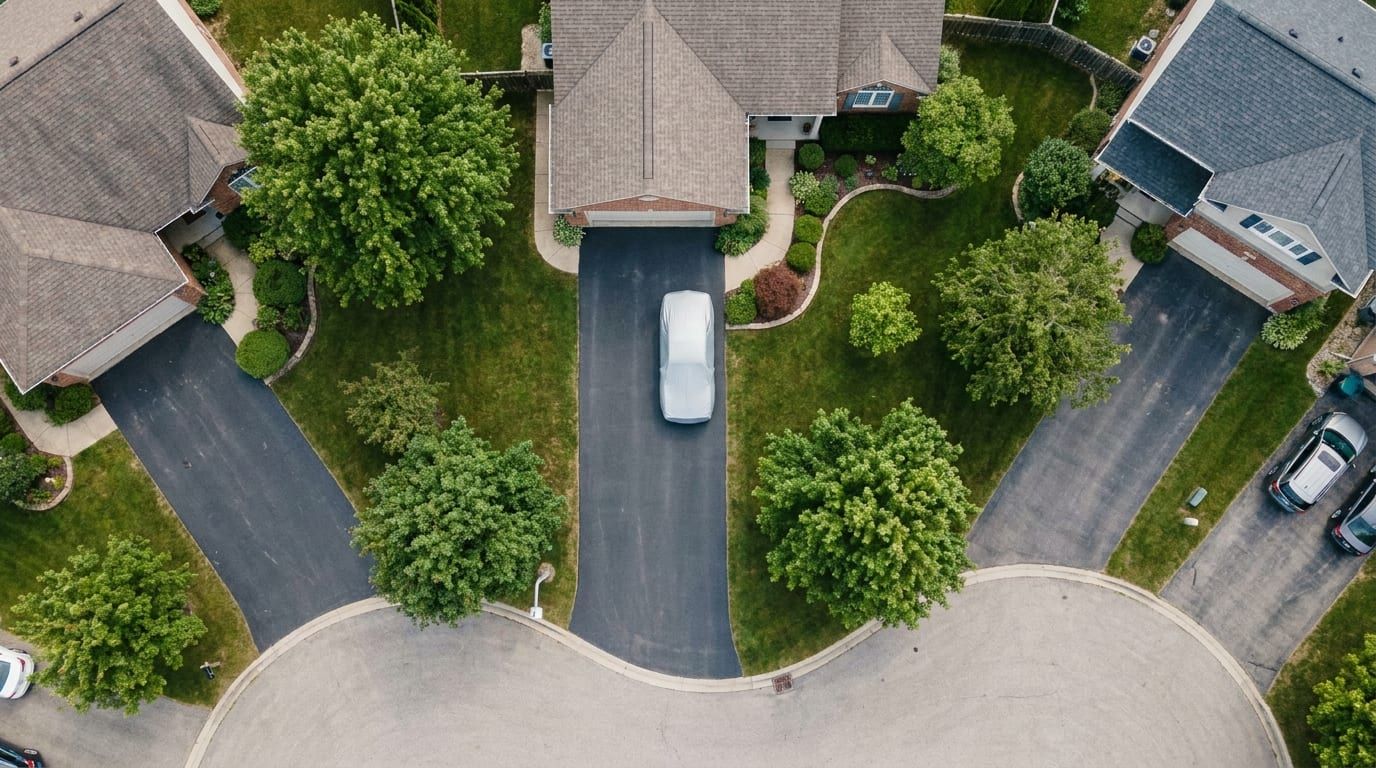
Daily exposure is a different beast than occasional exposure. A car that sits outside once in a while shrugs off a lot. A car parked on the street every day, rain or shine, accumulates damage in ways that sneak up on you.
Start with the sun. UV rays don't take days off, and daily exposure fades paint and dries out interior trim noticeably faster than intermittent outdoor parking. Then there's water: rain, sprinkler overspray, morning dew. None of it is dramatic on its own, but it adds up with nothing to buffer it.
Organic debris is its own problem. Tree sap, pollen, bird droppings, all of it sits on the clear coat and slowly eats into it if left there. And street parking brings a physical-contact risk you don't get in a driveway: pedestrians brushing past, cyclists squeezing by, shopping carts drifting loose, a neighboring car door swinging open a little too enthusiastically. Add in the fact that street-parked cars are simply more visible and more accessible than something locked behind a garage door, and you've got a higher exposure to theft attempts and casual vandalism too. None of these risks are hypothetical. They're just slow enough that people don't notice until the damage is done.
Key Features to Look for in a Car Cover for Street Parking

Not all covers are built for this. Here's what separates a cover that can actually handle daily curbside duty from one that's going to let you down by week three.
You need a waterproof or genuinely water-resistant outer shell, rated for sustained exposure, not just "keeps off a light drizzle." Street parking means rain sitting on the cover for hours, sometimes overnight, so the material needs to hold up to that without soaking through. Pair that with waterproof car covers built specifically for this kind of exposure rather than a general-purpose cover that happens to resist some moisture.
UV-treated fabric matters just as much. A cover facing the sun every day for a season needs a fabric that's built to resist that breakdown, not one that'll start flaking or thinning by midsummer.
Here's the part people miss: breathability. A cover that's waterproof on the outside but doesn't let moisture escape from underneath will trap condensation against your paint, and that's how you end up with mildew smell and water spots that look worse than if you'd never covered the car at all.
Wind matters more here than in a garage, too. Passing traffic kicks up wake, open streets funnel gusts, and a cover without grommets, elastic hems, or a strap system will flap, shift, and eventually blow half off. Look for a guide on using a car cover outdoors if you want the full rundown on wind, UV, and water together. Finally, check the lining near the paint. A rough interior surface combined with wind flutter is basically sandpaper against your clear coat over time. Soft lining isn't a luxury feature here, it's what keeps the cover from doing the exact damage it's supposed to prevent.
Custom-Fit vs. Universal: Getting the Right Fit for Daily Use
Fit isn't cosmetic. A loose cover flaps in the wind, and every flap is a chance for rain to work its way through a gap that a snugger cover wouldn't have.
Universal covers aren't useless, they're fine for occasional or short-term outdoor use. But out on an open street, with more wind and more exposure, a universal cover tends to shift, billow, and generally act like it's trying to escape. A custom-fit car cover sits close to the body, resists wind lift, and doesn't leave you refitting it every morning.
Sizing mistakes are common and avoidable. The biggest one: a cover that's too short and leaves the wheels or rocker panels exposed to splash and road grime. Doesn't sound like much until you realize that's exactly the part of the car eating brake dust and gutter runoff all day. Skip the guesswork. Check your exact vehicle dimensions using something like what size car cover for my vehicle rather than assuming your sedan fits "mid-size" the way you think it does.
Anti-Theft and Security Features Worth Considering
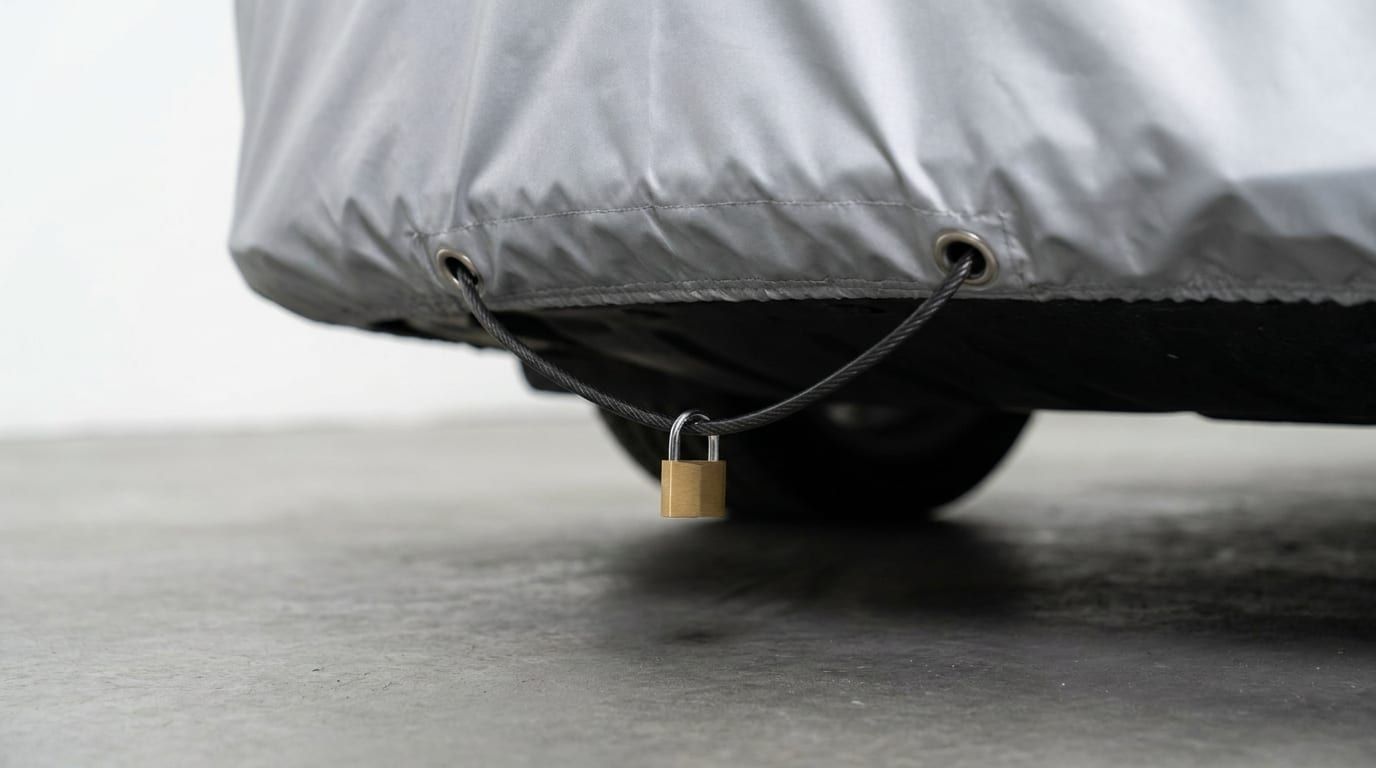
A car parked on the street for eight, ten, twelve hours a day is sitting in public view the whole time. A cover with the right security features won't stop a determined thief, but it makes casual tampering a lot less appealing.
Cable and lock systems are the obvious starting point. They secure the cover to the vehicle so it can't be lifted off in thirty seconds by someone walking past, and if you want the specifics, how to install a cable lock walks through it step by step. Lockable grommets at the front and rear do similar work, keeping the cover anchored so it can't be casually flipped up or pulled loose.
Some covers add reflective or high-visibility elements too. A covered car that's harder to identify or tamper with unnoticed is a less appealing target at 2 a.m. than one sitting there quiet and unsecured. Worth being clear about what this is, though: it's cover security and deterrence, not a replacement for an alarm system or a steering wheel lock. Think of it as one more layer, not the whole plan.
Putting It On and Taking It Off Daily Without It Becoming a Chore
A cover you dread using is a cover that stops getting used. That's the real failure point for a lot of street parkers, not the material, the habit.
Small design details make a big difference here. Color-coded or labeled seams mean you're not squinting in the dark trying to figure out which end is the windshield. Lighter but still durable material matters more for daily street parking than it does for long-term storage covers, because you're handling this thing constantly, not just draping it once a season.
A storage bag or a design that stuffs down small enough to live in your trunk means the cover actually travels with the car, instead of sitting at home while you're parked three blocks away with nothing on it. And for installation, there's a simple order that saves you from redoing the whole thing: secure the straps first, then cinch the hem. Do it backwards and you'll find yourself readjusting the whole cover after the wind catches a loose corner.
Keeping Your Cover Working All Season Long
A cover used daily wears differently than one pulled out twice a year. It sees more handling, more grit, more sun. Treat it that way.
Clean it periodically. Grit and sap buildup grind into the fibers over time if you never wash them out, and that's what shortens a cover's life more than one big storm ever will. Details on that process are in how to clean a car cover. Check straps and grommets more often too. These are the wear points, and daily use puts more stress on them than storage use ever will.
At the start of each season, give the whole cover a real inspection. Re-check the waterproofing and the elastic hems specifically, since those are the first things to degrade on a cover that's out there every day, not once a month. If you're still deciding on material in the first place, what's the best car cover material is worth a read, and if you're wondering whether a cheap tarp could just do the job instead, why a tarp isn't a substitute for a proper cover covers exactly where that idea falls apart.
Find the Right Cover for Your Street-Parked Car
The short version: you want a waterproof, UV-resistant shell, a snug fit, real wind security, and anti-theft features if your street parking situation calls for it. Skip any one of those and you're just buying a nicer-looking way to expose your car to the same problems.
Don't guess your way into a cover based on general vehicle class. Look up your exact make and model and get something actually built for it. If you want to keep browsing, the outdoor car cover and custom-fit categories are the right place to start, and if you're just after a general starting point, car covers has the full lineup. Worth a look before you park outside again tonight.
Updated