The Best Cover for a Snowmobile: Fit, Waterproofing, and Strap Requirements
Published
Why a Generic Tarp Won't Cut It for a Snowmobile
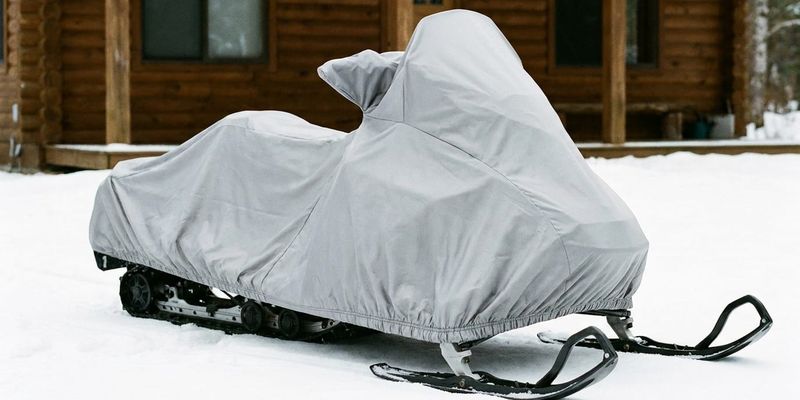
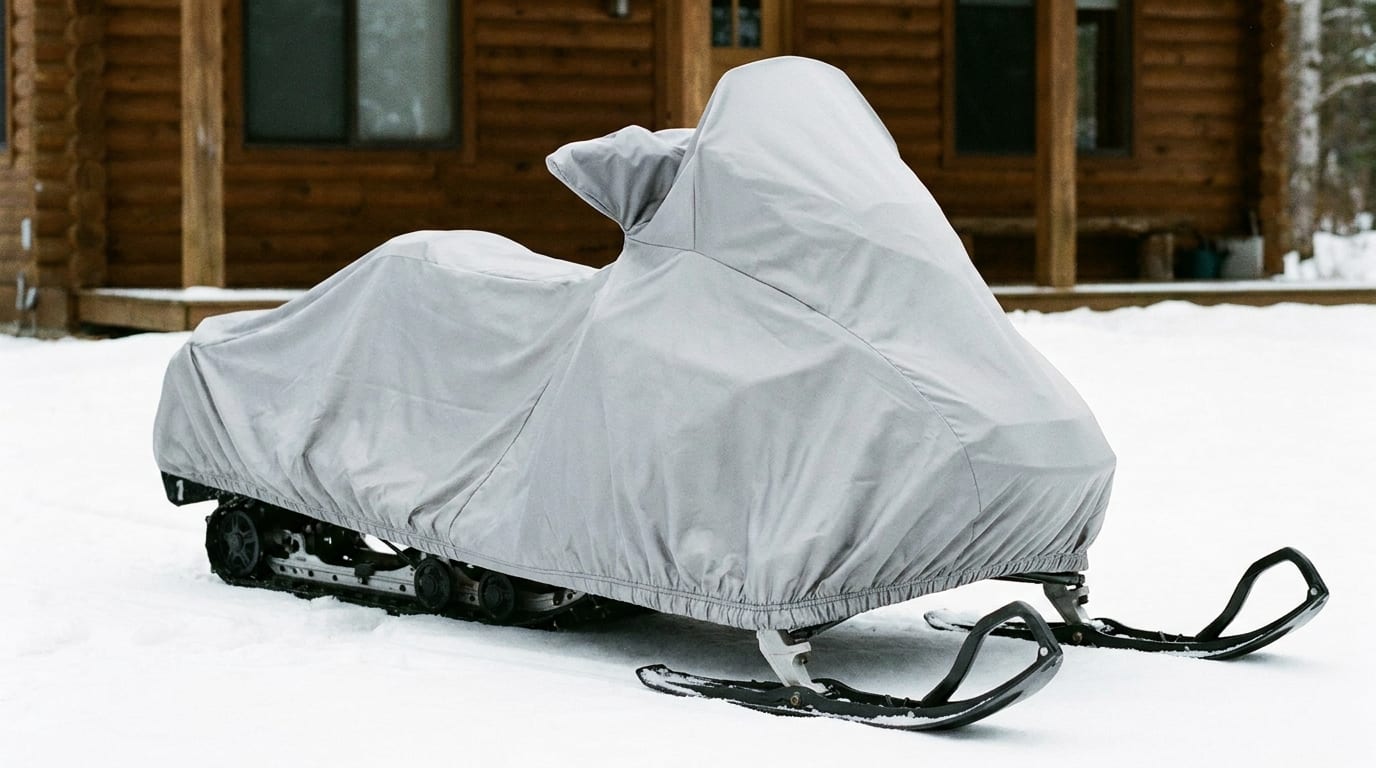
A flat tarp will keep rain off a woodpile. It won't do much for a snowmobile. Sleds have a hood that curves down over the engine, a windshield that juts up at an angle, and skis that stick out wider than the chassis. A tarp just sits on top and leaves gaps everywhere wind and snow can sneak in. The best cover for a snowmobile is shaped to follow those contours, so it actually seals around the machine instead of draping over it like a bedsheet.
Leave a sled uncovered through a winter and you'll see the damage add up fast. Snow and ice pack into the engine bay and around the carburetor. UV rays, yes, even in January, fade the hood and crack the seat vinyl over a few seasons. And if you trailer the sled anywhere, road salt and grime kick up from the highway and settle into every seam and vent.
Three things actually determine whether a cover does its job over the long haul: fit, waterproofing, and how it straps down. Get any one of those wrong and the other two don't matter much. A cover that's bone dry but flaps loose in highway wind will tear itself apart by March. A snug cover with no waterproofing just holds moisture against the paint. This article walks through each one, because sled shape varies enormously by type. Mountain sleds, crossovers, trail models, and vintage machines all have different profiles, and that's the first thing to sort out before you buy anything.
Getting the Fit Right for Your Sled Type
Mountain sleds run tall windshields and a narrower ski stance built for deep powder. Trail sleds are lower and wider. Crossovers split the difference. A cover cut for a trail sled will usually sag around a mountain sled's taller windshield, and that sag is exactly where snow pools and water finds its way in.
Before buying, measure three things: overall length from the tip of the skis to the back of the tunnel, windshield height, and width at the widest point, which is almost always the skis or running boards. Write these down. A lot of buyers eyeball it and end up with a cover that's close enough, which on a snowmobile usually means not close enough. If you're unsure how to take these measurements accurately, the sizing guide walks through it step by step, and the same logic applies whether you're covering a car or a sled.
Bottom-edge closures matter more than people expect. An elastic hem is fine for casual indoor storage where wind isn't a factor. A drawcord lets you cinch it down tighter, which helps on an irregular shape like a sled's tunnel and running boards. Buckle straps go a step further and actually lock the fit in place, which is what you want for anything stored outside or hauled on a trailer.
Here's the real tradeoff: too loose, and the cover flaps in wind, working snow and moisture underneath through the gap. Too tight, and the fabric stretches across the windshield and skis every time you put it on, stressing seams until they give out mid-season. The best cover for a snowmobile fits close without needing to be forced on.
Waterproofing: What Actually Matters for Snow and Ice
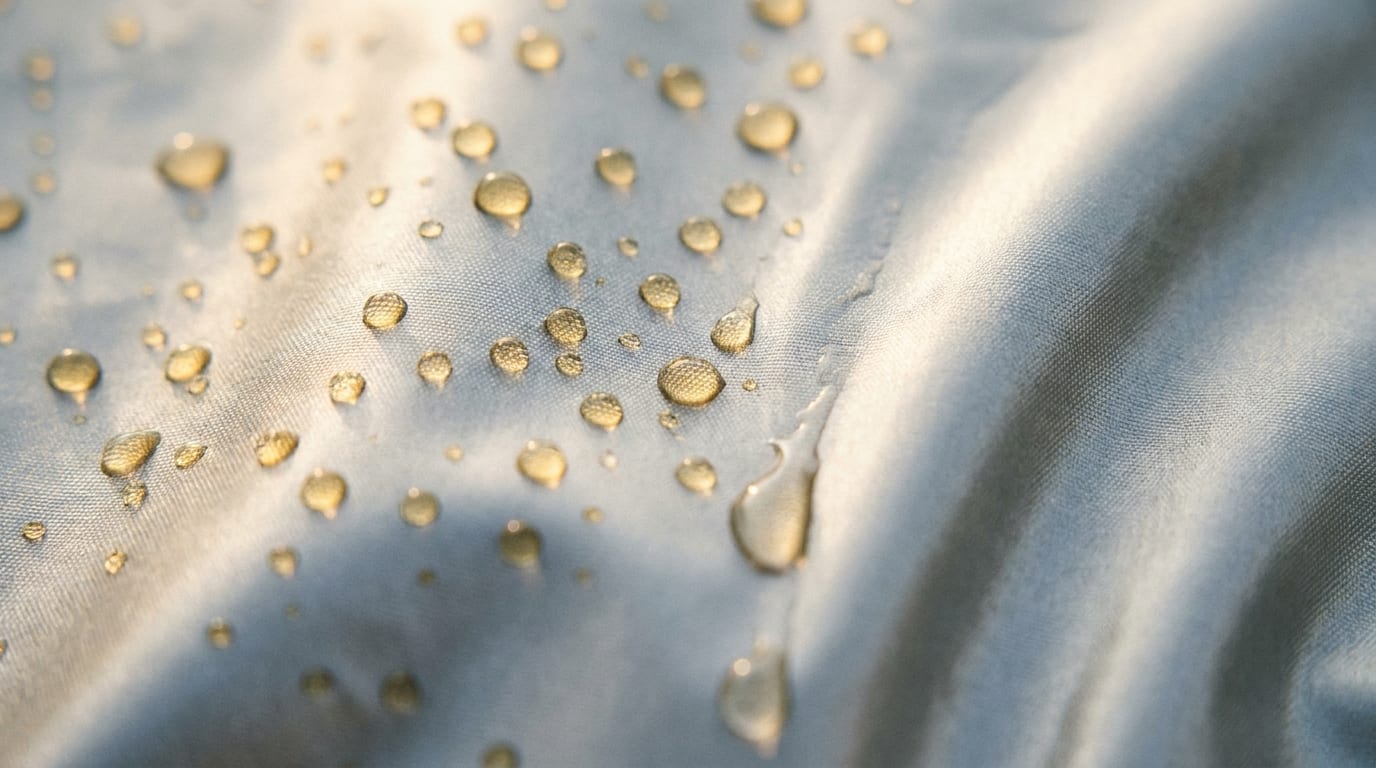
Water-resistant and waterproof get used interchangeably in marketing copy, but they're not the same thing. Water-resistant fabric sheds light moisture for a while. Waterproof fabric has a sealed membrane or coating that keeps water out even under sustained contact, which is exactly the situation a sled faces sitting under a snowbank for days. For snowmobiles, waterproof isn't optional. Snow sits directly on the cover, melts a little in afternoon sun, refreezes overnight, and repeats. A cover that's merely resistant will eventually soak through.
Breathability is the part people miss. A cover that's fully sealed with no venting traps the moisture that's already under there, condensation from temperature swings, melted snow that got in before you covered it, whatever. That trapped moisture sits against the seat foam and hood plastic and can lead to mildew or rust on metal fasteners underneath. A good winter cover balances waterproof outer protection with some way for vapor to escape.
Seams are the weak point on almost every cover, waterproof fabric or not. Where two panels get stitched together is where water finds a way in, especially as snow melts and refreezes around that stitching all winter. Taped or sealed seams close that gap. If a cover doesn't mention seam sealing at all, assume the seams are a liability.
UV coating still matters in winter, even though it sounds like a summer feature. Sleds parked on a snowbank or an open driveway get plenty of direct sun reflecting off snow, and that glare fades and dries out untreated fabric faster than people expect. For a deeper look at how these fabric layers actually work together, the outdoor waterproofing guide breaks down the tradeoffs between coatings, membranes, and breathable layers in more detail than fits here.
Strap and Tie-Down Needs: Storage vs. Trailering
Stationary outdoor storage and trailering put different demands on a cover's straps, and it's worth treating them as separate problems. A sled parked in the backyard mostly needs to survive wind gusts. A sled on a trailer at 65 mph is dealing with sustained airflow that will find any loose edge and start working it loose within a few miles.
Under-chassis or belly straps, the ones that run beneath the skis and cinch underneath the sled, are what stop a cover from lifting in wind regardless of which situation you're in. Without a belly strap, even a well-fitted cover can billow at the nose in a strong gust and start peeling back from there.
Grommets and buckle points at the nose and tail matter too, especially when you're securing the cover to a trailer deck or an anchor point in the garage. These are also the first spots to fail if they're not reinforced. A cover that lacks stitched-in reinforcement at the strap loops will wear through right at that attachment point, usually within a season or two of regular trailer trips, since that's where all the tension concentrates every time the sled bounces over a pothole.
The installation logic here is almost identical to gust strap setups used on car covers: anchor low, anchor at multiple points, and don't rely on a single strap to do all the work. If you're hauling your sled regularly, treat strap quality as non-negotiable, not an add-on feature.
Indoor Storage vs. Outdoor Exposure: Does It Change What You Need?
A sled living in a garage or shed has an easier life. It doesn't need the full waterproof package. What it needs is something that blocks dust, prevents scratches from anything stored nearby, and doesn't scratch the finish itself when you slide it on and off. A lighter, breathable indoor cover does that job fine without the bulk of a heavier outdoor-rated fabric.
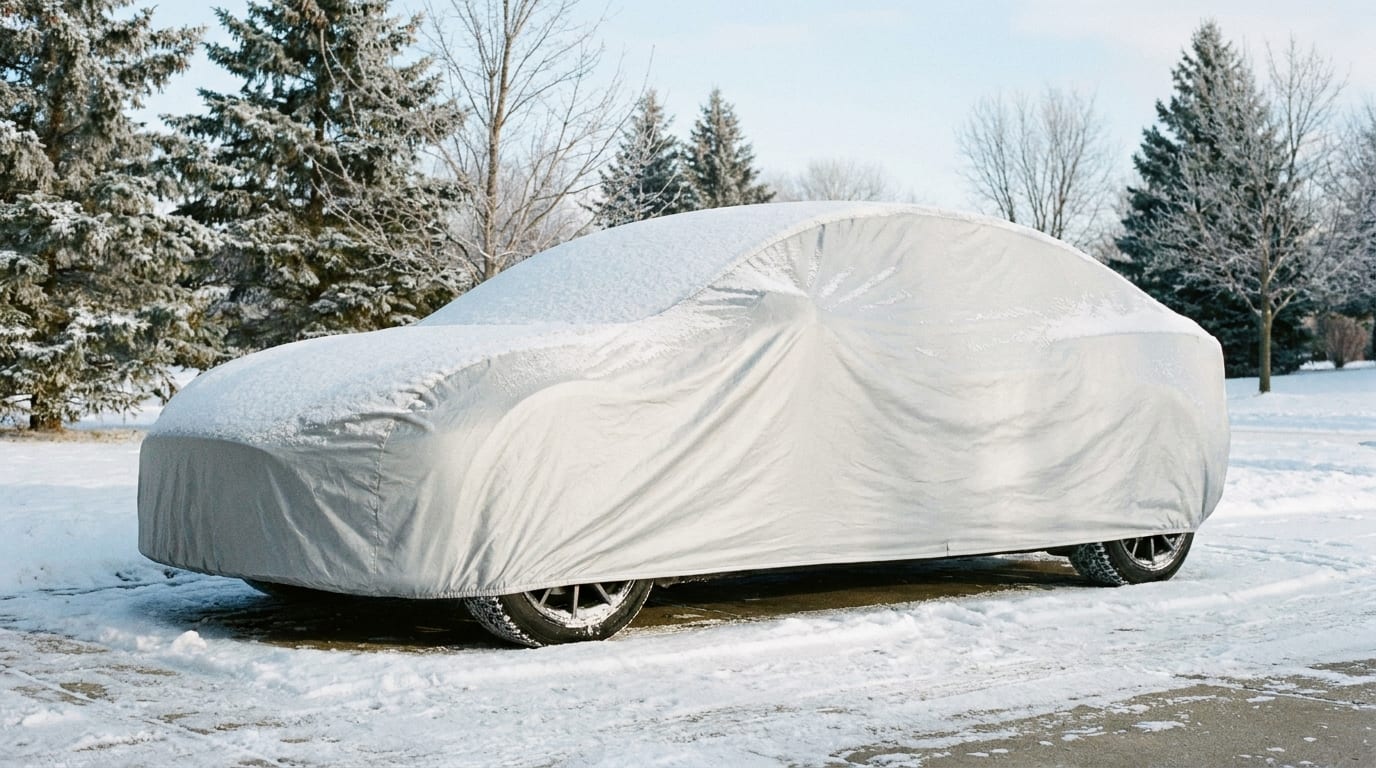
Outdoor storage is a different equation entirely. The cover is the only thing standing between your sled and snow load, wind, UV, and freeze-thaw cycles, so it needs the full waterproof and UV-resistant package plus a proper strap setup. There's no backup layer of protection out there, just the cover.
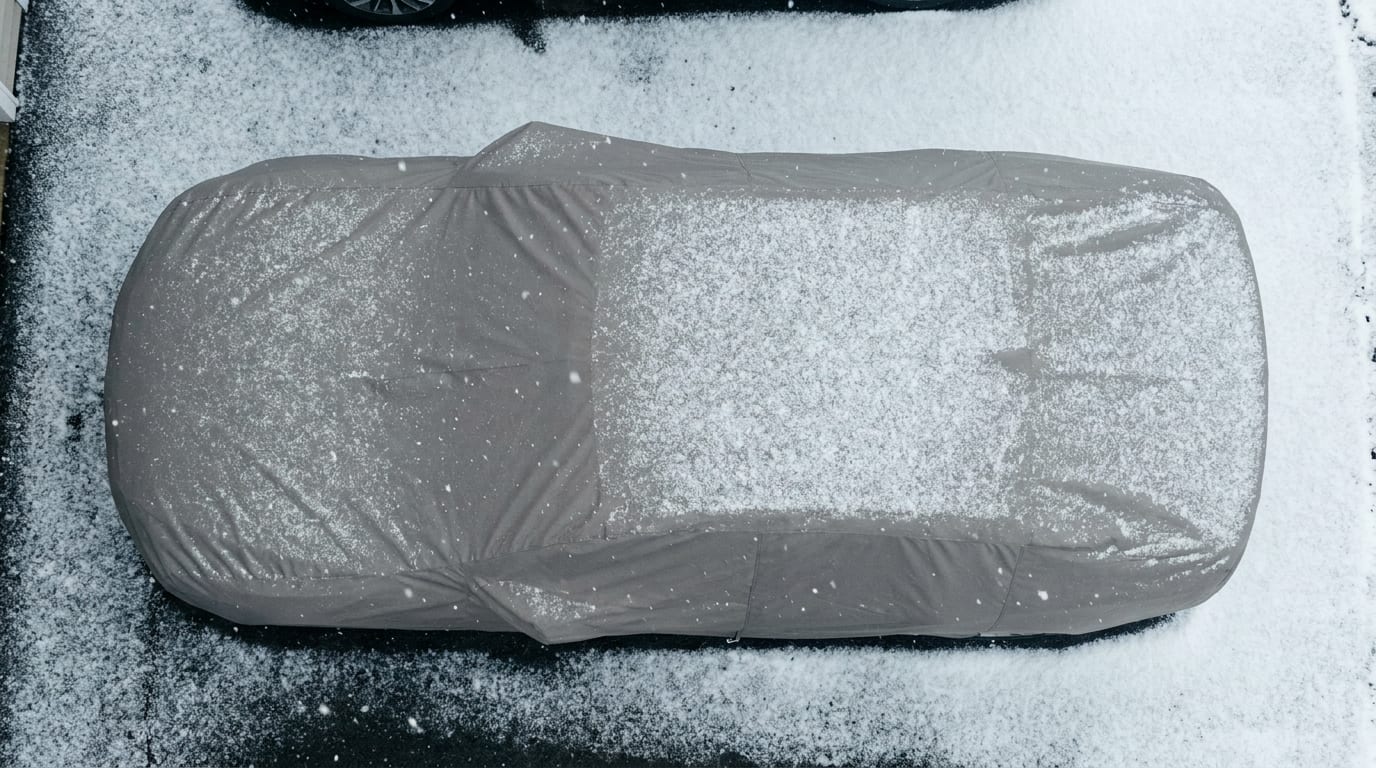
Snow load deserves a specific mention. Heavy, wet snow sitting on a cover for several days puts real weight on the fabric and the seams holding it together. A cover not rated for that kind of sustained load can sag, stretch, or tear at the stress points over a season of this. If you're choosing between an outdoor cover and something lighter, this is the deciding factor: how much snow is going to sit on it, and for how long.
Checking Fit by Brand and Model
Hood height and windshield shape aren't universal across manufacturers. Ski-Doo, Polaris, Arctic Cat, and Yamaha each shape their hoods and windshields differently enough that a cover built around one brand's profile can gap or sag noticeably on another, even when the overall length measurement looks close on paper.
The more reliable approach is matching a cover to your sled's actual manufacturer and model year, rather than buying by general size category alone. A cover sized "large" for one brand might still leave a gap at the windshield of a different brand's large model. If you know your sled's make, check the brand-specific option first: Ski-Doo, Polaris, Arctic Cat, and Yamaha each have their own cover pages built around that brand's actual shape, which gets you a lot closer to a true fit than a generic universal size.
Caring for a Snowmobile Cover Through the Season
A cover left to do its job without any attention will wear out faster than it should. Shake off heavy snow buildup regularly rather than letting it accumulate for days. That weight stresses both the fabric and the straps holding it down, and it adds up over a long winter.
Before putting a cover away for off-season storage, let it dry out completely. A cover packed away damp grows mildew in the bag, and that smell and staining doesn't come out easily once it sets in.
Check the strap and grommet attachment points at the start and end of each season. These are the spots doing the most work, and a little fraying now is a torn loop by next winter if you ignore it. For actual washing instructions suited to winter fabrics and coatings, the cover cleaning guide covers what to use and what to avoid so you don't strip the waterproof coating by accident.
Finding the Right Cover for Your Sled
Three things to confirm before you buy: the fit matches your actual sled's measurements, not just a general size category; the waterproofing is sealed at the seams and still breathable enough to avoid trapping moisture; and the strap points are reinforced for however you actually use the sled, whether that's parked in the yard all winter or riding behind your truck to the trailhead every weekend.
Warranty coverage is a decent gut check here too. A manufacturer willing to back its waterproofing and stitching with a real warranty is telling you something about how confident they are in the product holding up, not just in the showroom but after a few seasons of actual snow and salt.
If you're still weighing options, take your time comparing covers built for your specific brand and how you store or haul your sled. Browse what's out there, measure your machine first, and you'll end up with something that actually protects it instead of something that just technically covers it.