Articles Seasonal & Weather Car Care Tips
Best Car Cover for Houston, TX Heat and Heavy Rain: A Local Buying Guide
Published
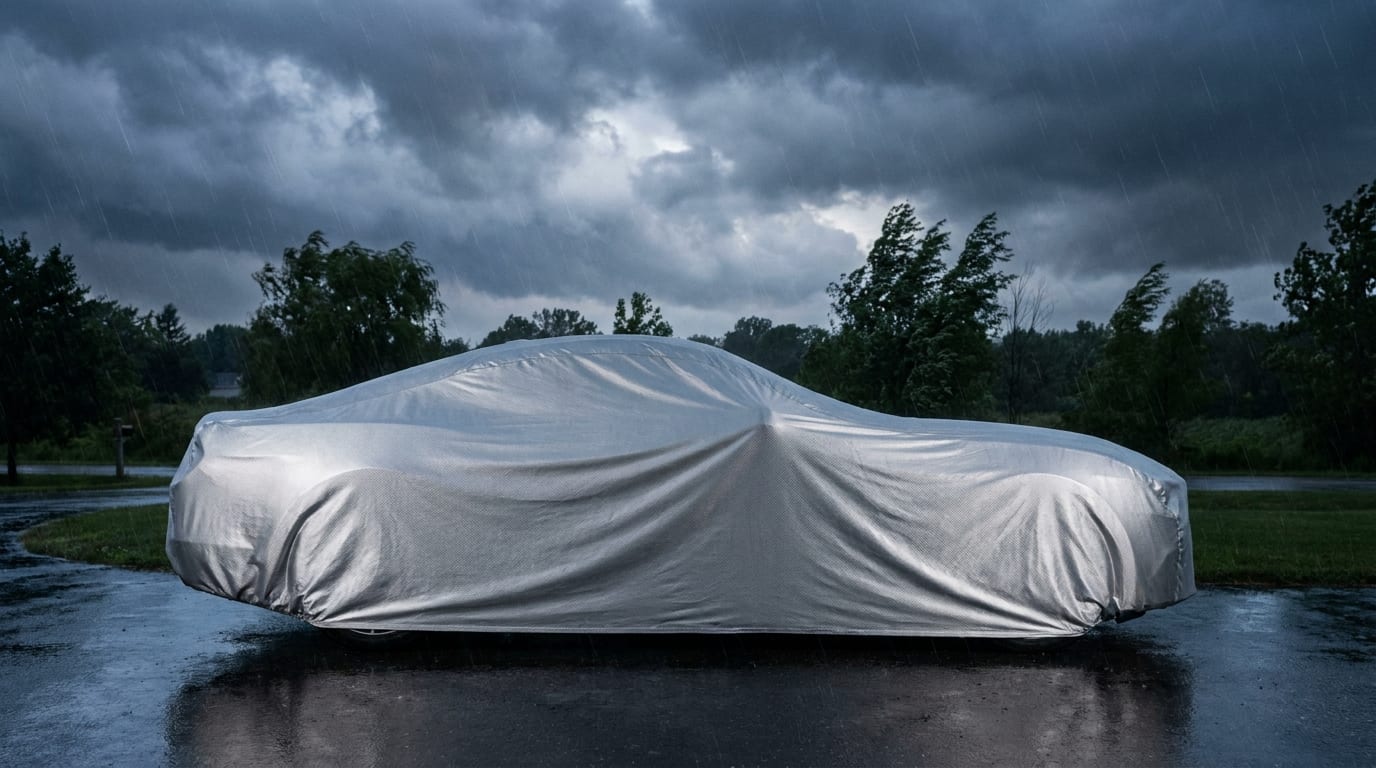
Houston doesn't do mild weather. One week you're parking on asphalt that's pushed past 110 degrees in direct sun, the next you're watching a thunderstorm dump two inches of rain in thirty minutes. Most car covers sold online are built for somewhere else, somewhere with gentler sun or steadier rain. If you're searching for the best car cover for Houston, TX heat and heavy rain, you're really looking for a specific combination of features, not a generic "top 10" list that was written for a driver in Phoenix or Seattle.
Houston logs over 200 sunny days a year, and the UV index sits in "very high" territory for a good chunk of them. That kind of sun exposure chews through cheap cover fabric and fades paint faster than you'd see in a milder climate. Then there's the rain: Houston averages more than 49 inches a year, and it rarely falls gently. It shows up as sudden, heavy downpours, the kind that overwhelm a cover that's only "water-resistant" instead of genuinely waterproof. Add in the Gulf Coast humidity, which hangs around even on dry days, and you've got a setup where a cover that technically blocks rain can still cause problems. Trap moisture underneath it and you're growing mold and mildew on your paint instead of protecting it.
So this isn't going to be another broad roundup. It's about matching Houston's actual conditions to the cover features that hold up against them.
Why Houston's Weather Is Especially Hard on a Car Cover
Think about what a cover in Houston has to survive in a single week. Monday it bakes under direct sun for eight hours. Wednesday a storm rolls in off the Gulf and drops heavy rain in under an hour. By Friday the humidity's back up near 90 percent even though it hasn't rained since Wednesday. That's three different kinds of stress, and most covers are engineered to handle maybe one of them well.
The UV exposure alone is a bigger deal here than in most of the country. Cheap fabric breaks down under that kind of sun, going brittle and losing whatever water resistance it started with. Meanwhile, the rain problem isn't about total volume so much as intensity. A cover rated for light rain can get overwhelmed in minutes during a Houston downpour.
And the humidity ties both of those together. A cover that blocks water but doesn't breathe just traps moisture against your paint. You end up with the exact damage you bought the cover to prevent. The right approach is to think about these three factors together: sun, sudden heavy rain, and ambient moisture, rather than picking a cover that only solves one of them.
Houston's Climate Snapshot: What Your Cover Is Actually Fighting
Summer in Houston means consistent 90-plus degree days paired with high humidity, which is a rough combination for outdoor gear. A cover needs a UV-resistant outer layer to handle the sun, but it also needs a breathable inner layer, otherwise heat and moisture build up underneath it on a parked car. You can end up with condensation forming inside the cover on a hot afternoon, which defeats the purpose.
Storm season adds another layer. Spring and summer bring fast-moving thunderstorms with real wind gusts, and hurricane season runs June through November, bringing the risk of sustained high winds. A cover that isn't secured well will end up half-blown off in the driveway, flapping around and scratching the paint it's supposed to protect. That's where a solid strap and tie-down system stops being optional.
Humidity doesn't take a season off here, either. It's close to constant, which is why breathability matters just as much as waterproofing. A cover that's waterproof but airtight is, in some ways, worse than no cover at all in this climate.
If you're near the coast, which plenty of Houston-area drivers are, salt air is another factor. It accelerates corrosion on metal hardware, so grommets and buckles that resist rust are worth paying attention to.
Heat & UV Protection: Features to Look For

Start with the outer layer. You want fabric that's specifically treated or rated for UV resistance, since that's what's actually standing between the sun and your paint, trim, and dash. A cover that blocks UV at the surface also protects what's underneath the windows and sunroof, where interior fading happens even when the exterior still looks fine.
Color matters more than people expect. Lighter or reflective outer shells absorb less heat, which keeps the surface temperature under the cover lower during the worst part of the afternoon. A dark-colored cover baking in a Houston parking lot can actually get hotter than the car's paint would on its own.
Then there's breathability, which comes down to construction. Multi-layer fabrics that let heat and moisture escape prevent the kind of buildup that leads to condensation on a 95-degree day. If you want the fuller technical rundown on how these fabric layers perform outdoors, the guide to using a car cover outdoors covers UV, wind, and rain exposure in more detail.
Heavy Rain & Storm Protection: Features to Look For
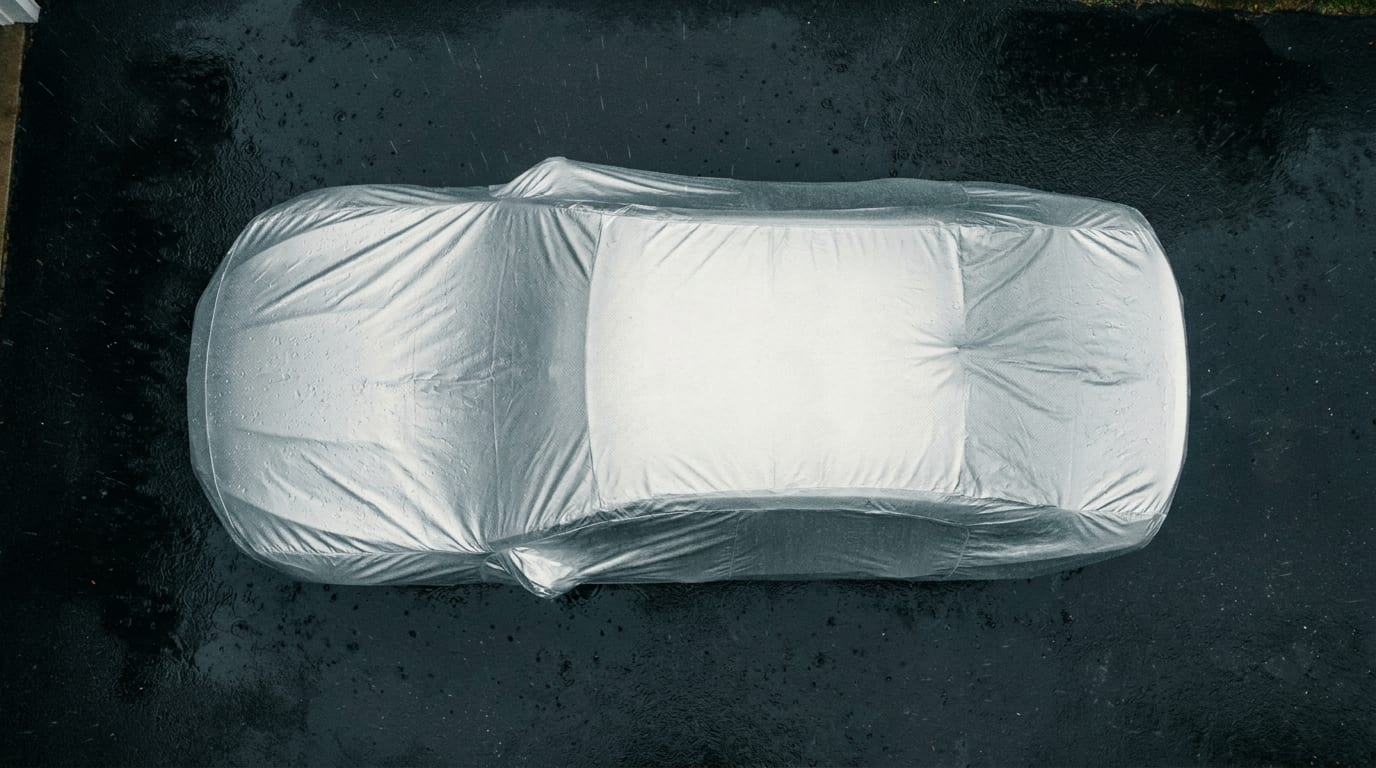
Here's where a lot of covers quietly fail. "Water-resistant" and "waterproof" get used almost interchangeably in product descriptions, but they're not the same thing, and the difference matters a lot when a Houston storm cell parks itself overhead for twenty minutes. Look for a cover that's explicitly rated waterproof, with sealed or taped seams. Seams are usually where water gets through first.
Wind is the other half of the storm equation. Elastic hems and built-in cable or strap systems keep the cover snug against the body instead of catching air and flapping loose, which is exactly what happens during the wind gusts that typically ride along with Gulf storms. Grommets for ground anchors or gust straps give you an extra layer of security if your vehicle sits outside during named storm season.
If you're parking outdoors through hurricane season, it's worth going a step further and pairing your waterproof car cover with a proper strap setup. A quick gust strap installation takes the cover from "should hold" to "will hold" when the wind actually picks up.
Best Materials & Construction for Houston Conditions
Multi-layer woven fabrics generally beat single-layer vinyl here, and it's not close. Vinyl can technically keep rain out, but it doesn't breathe, so you trade water intrusion for trapped humidity, which is just a different path to the same mildew problem. Multi-layer construction balances the two: waterproofing on the outside, airflow underneath.
Different fabric technologies handle UV and water runoff differently, and the specifics are worth understanding if you're comparing options side by side. The waterproof fabrics article breaks down how these materials actually perform, which is useful if you want to go past marketing language and compare real specs.
Body style matters too. A sedan, an SUV, and a truck all have different airflow needs under a cover in a humid climate, since surface area and ground clearance change how air moves (or doesn't) once the cover is on. It's also worth saying plainly: an indoor-only cover isn't built for Houston's outdoor exposure. Those covers are made for dust and light scratches in a garage, not sun and storms, so don't substitute one for an outdoor-rated product just because it's cheaper.
Getting the Right Fit for Driveways, Carports, and Street Parking
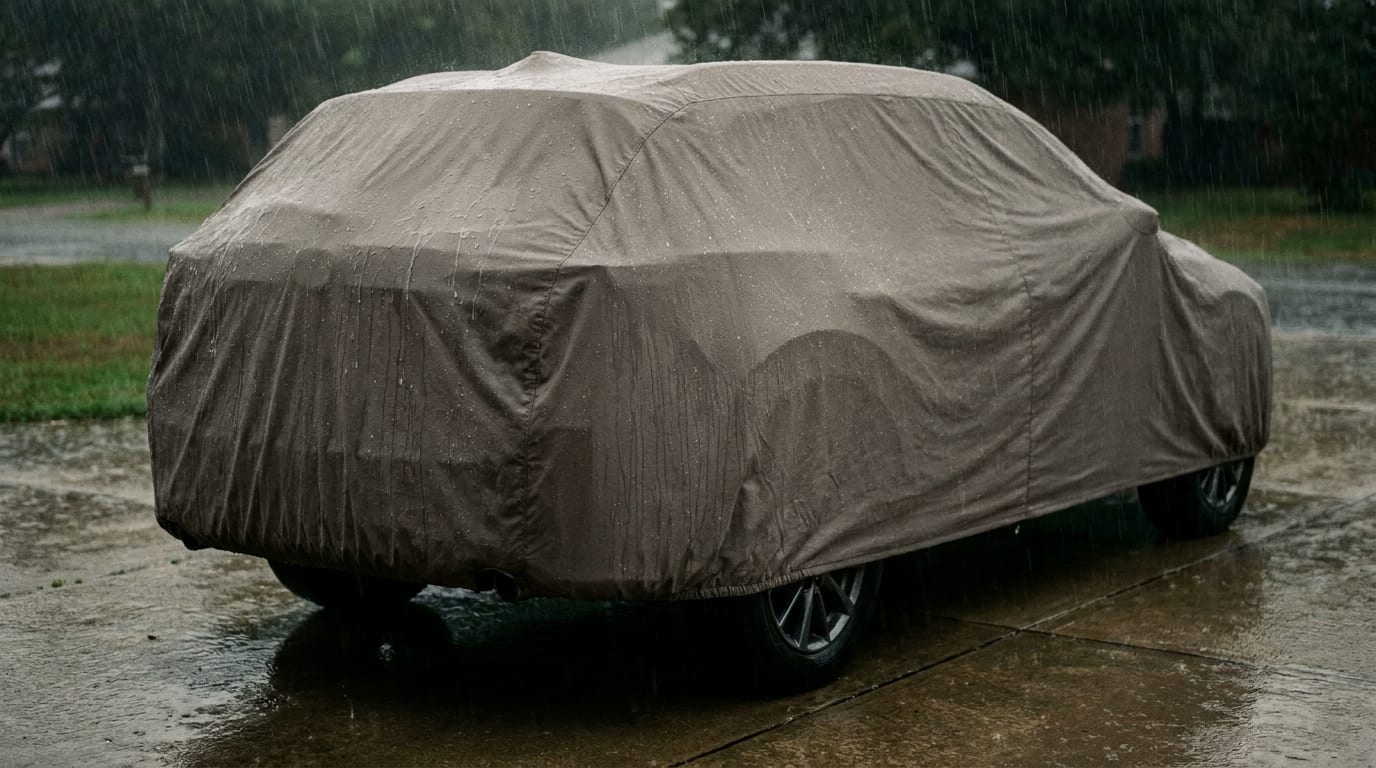
Fit matters more than most people assume. A custom-fit cover seals tighter around mirrors, antennas, and body lines, which keeps wind-driven rain from finding its way in through a gap. A universal-fit cover, by comparison, tends to have loose spots exactly where water and wind want to get through.
Before you buy, measure your vehicle and confirm sizing against the manufacturer's chart rather than guessing based on vehicle class. An ill-fitting cover, too loose or too tight, is the single most common cause of water intrusion and wind flapping, and it's an easy mistake to avoid with five minutes of measuring. The custom-fit car covers guide and the sizing guide both walk through exactly how to do that.
Houston parking situations vary a lot, and each one stresses a cover differently. An open driveway with no tree cover means full sun exposure all day. An apartment complex lot often means no assigned covered spot, so the car's outside regardless of weather. Street parking near flood-prone areas adds a different risk: splash-back and standing water around the tires, which is more about ground moisture than rain falling from above.
Truck owners have it a little harder here, too. Houston has one of the highest truck ownership rates in the country, and trucks have more exposed surface area, hoods and beds catching direct sun for hours at a stretch. That's more UV exposure per square foot than most sedans deal with, so the UV-resistant outer layer matters even more if you're covering a truck.
Maintenance Tips to Make Your Cover Last in Houston's Climate
A cover isn't a buy-it-and-forget-it product here, not with this climate. Pollen, tree sap, and humidity-driven mildew build up fast on the Gulf Coast, so periodic cleaning isn't optional maintenance, it's what keeps the fabric's waterproofing and breathability working the way they're supposed to.
Drying matters just as much as cleaning. Put a damp cover into storage in a humid climate and you're basically growing mold on purpose. Let it fully dry before folding it away, even if that means hanging it for a day first.
Before hurricane season rolls around each year, take ten minutes and check your straps, grommets, and seams. A small tear or a worn strap is a minor fix in May. In the middle of a June storm, it's the reason your cover ends up in the neighbor's yard. The cover cleaning guide has the full step-by-step if you want to do this right.
Choosing Your Houston-Ready Cover: Next Steps
If you're narrowing down options, the checklist is short but non-negotiable: UV-resistant outer layer, a true waterproof rating with sealed seams, breathable multi-layer construction, a secure strap or grommet system, and a custom fit for your exact make and model. Skip any one of those and you're compromising on something Houston's weather will eventually find.
The fastest way to find the right match is to use a vehicle cover finder or browse the coverfinder tool by make and model instead of guessing from a size chart. And since outdoor gear takes a real beating in this climate, it's worth checking what warranty coverage comes with whatever you buy. Gear that's rated for heat and storms should be backed accordingly.
If you're still comparing options, take a look through the full range of outdoor car covers built for exactly this kind of exposure, and consider subscribing to the blog for more region-specific care guides as the seasons change. Houston's weather isn't going to ease up, so your cover shouldn't either.