Articles Seasonal & Weather Car Care Tips
Best Car Cover for New Orleans, LA Humidity and Hurricanes: A Local Buying Guide
Published
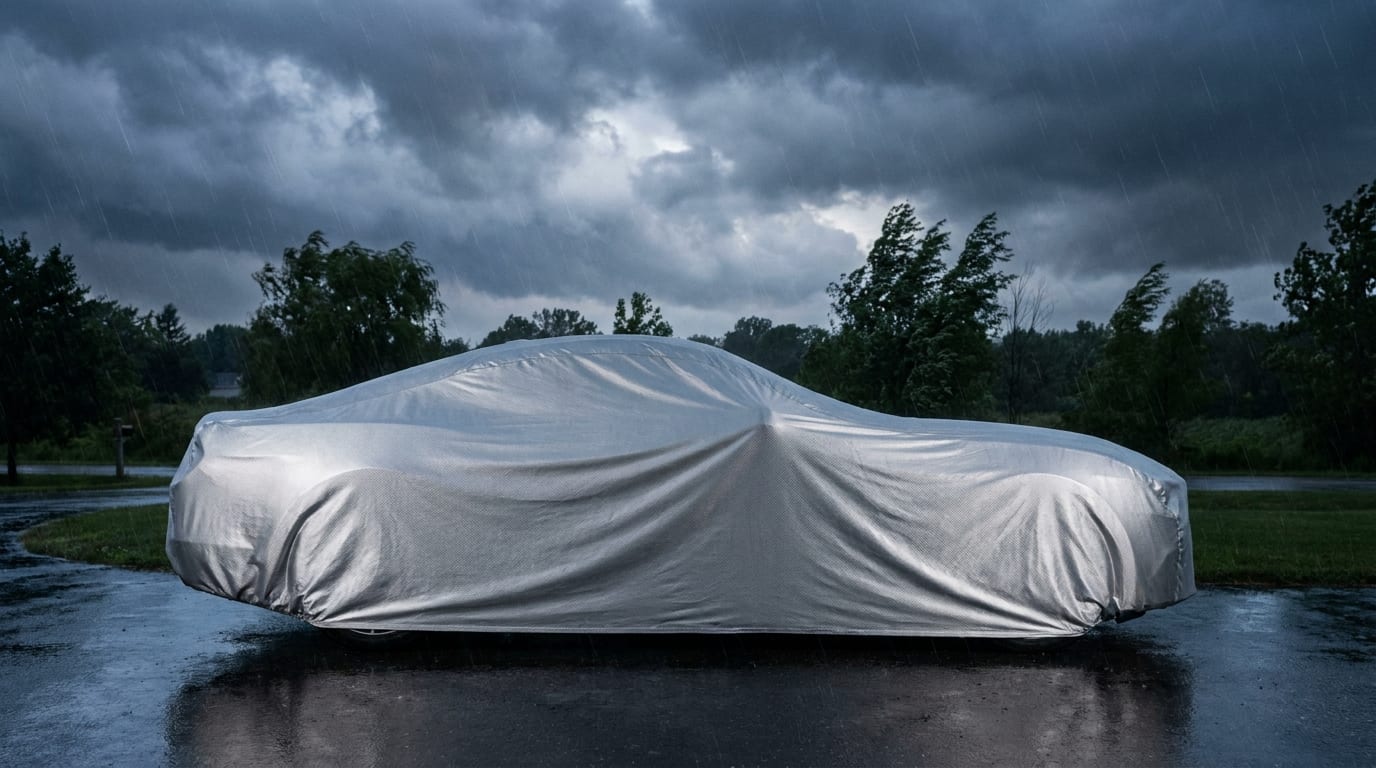
New Orleans doesn't do mild weather. You get near-90% humidity most summer mornings, a hurricane season that runs June through November, UV levels that bake vinyl dashboards into cracked leather by August, and salt air rolling in off Lake Pontchartrain and the Gulf that eats exposed metal for breakfast. If you're searching for the best car cover for New Orleans, LA humidity and hurricanes, you're already past the point of wondering whether you need one. The real question is which features actually hold up here, because most covers don't.
A cover built for Phoenix or Denver, something light, cotton-blend, maybe a thin vinyl shell, will do the opposite of its job in this city. It traps moisture against the paint instead of keeping it off. Within days you're looking at mildew spots, and within a season you're looking at corrosion starting under the grommets. This guide walks through what actually matters for this climate: fabric, breathability, wind-securing hardware, and the small details that separate a cover that survives August here from one that's garbage by September.
Why New Orleans Weather Wrecks the Wrong Car Cover
The core problem is that New Orleans throws multiple stressors at a car cover simultaneously, not one at a time. Humidity alone is manageable. Wind alone is manageable. Combine constant moisture, tropical-storm gusts, standing water, brutal UV, and salt corrosion, and you've got a testing ground that most covers on the market were never designed for.
A thin, non-breathable cover seals moisture against your paint like a sandwich bag. The vehicle sweats under there, especially overnight when temperatures drop and humidity condenses on the metal. That trapped moisture doesn't evaporate in this climate the way it would in Arizona. It sits. And it feeds mold and mildew, which is the single most common complaint from car cover owners in humid regions.
So this guide isn't about finding the cheapest cover or the one with the most five-star reviews from someone in a dry state. It's about matching fabric, breathability, and wind-securing design to the specific combination of weather New Orleans throws at a parked vehicle for roughly half the year.
The New Orleans Climate Factors That Actually Matter for a Cover
Break it down into what's actually hitting your car, and the shopping list gets a lot clearer.
Humidity is the baseline. New Orleans sits at near-constant moisture levels through most of the year, and a non-breathable cover can grow mildew underneath in days, with or without a drop of rain falling. The air itself is wet enough to do the damage.
Hurricane season winds are the acute threat. June through November brings the real risk of sustained tropical-storm-force gusts, plus flying debris. A cover without reinforced tie-down points and genuine tear resistance isn't a hurricane-season cover. It's a kite.
Heavy, fast rain and standing water matter more here than almost anywhere else in the country, thanks to the city's low elevation and drainage quirks. Water-resistant isn't the same as waterproof, and in New Orleans that distinction decides whether your interior stays dry.
UV and heat degrade cheap fabrics fast. A full summer of direct Louisiana sun can crack a low-grade cover's coating and kill its water repellency before hurricane season even peaks.
Salt air off the Gulf and the brackish lake accelerates corrosion on anything metal: grommets, zippers, mirror pockets. Untreated hardware rusts, and rusted hardware jams right when you need to secure the cover fast.
Must-Have Features for a Humidity-and-Hurricane-Ready Cover

Here's the actual checklist, not a wish list.
You want a breathable, waterproof multi-layer fabric. This is the one that trips people up, because waterproof and breathable sound contradictory. They're not. A good multi-layer shell blocks rain from getting in while letting trapped moisture vapor escape, which is exactly what stops mold and mildew from building up underneath. Read more on how these waterproof car covers are built if you want the technical breakdown.
Reinforced grommets matter because you'll need somewhere to clip wind straps or a cable lock before a named storm rolls in. A cover without built-in grommet points gives you nothing to anchor to when the wind actually picks up.
UV-stabilized outer layers resist the fading and cracking that Louisiana summer sun causes in a single season on cheaper fabrics. This is also what keeps the water repellency intact after months of exposure, not just the color.
Elastic hems and adjustable straps give you a snug fit that resists wind lift in sustained gusts. Light breezes aren't the test. Sustained tropical-storm-force wind is the test, and a loose-fitting cover fails it immediately.
Corrosion-resistant hardware, meaning zippers and buckles that won't seize up from salt-laden air, rounds it out. A zipper that rusts shut after one humid summer isn't a minor annoyance, it's a cover you can't get on or off.
For a deeper look at how all of this works together outdoors specifically, this guide to using a car cover outdoors covers the waterproofing, wind, and UV angles in more detail.
Outdoor vs. Indoor Covers: What Fits Your New Orleans Setup
If you're parking in a driveway, on the street, or under a carport, which describes a lot of New Orleans' older neighborhoods, you need a true outdoor car cover with real waterproofing and UV protection. This isn't a nice-to-have upgrade. It's the minimum spec for your setup.
Garage owners have more room to breathe, literally. A lighter indoor car cover still helps against the dust and surface moisture that humidity drags in, without the bulk of a storm-rated outdoor shell.
One thing people get wrong: carports count as outdoor exposure. Open sides mean wind and humidity get in just fine, so an indoor-rated cover won't hold up there once a storm system moves through. If your car lives under a carport, shop like you're parking it in the open, because for wind and moisture purposes, you basically are.
Securing Your Cover Before a Storm Hits
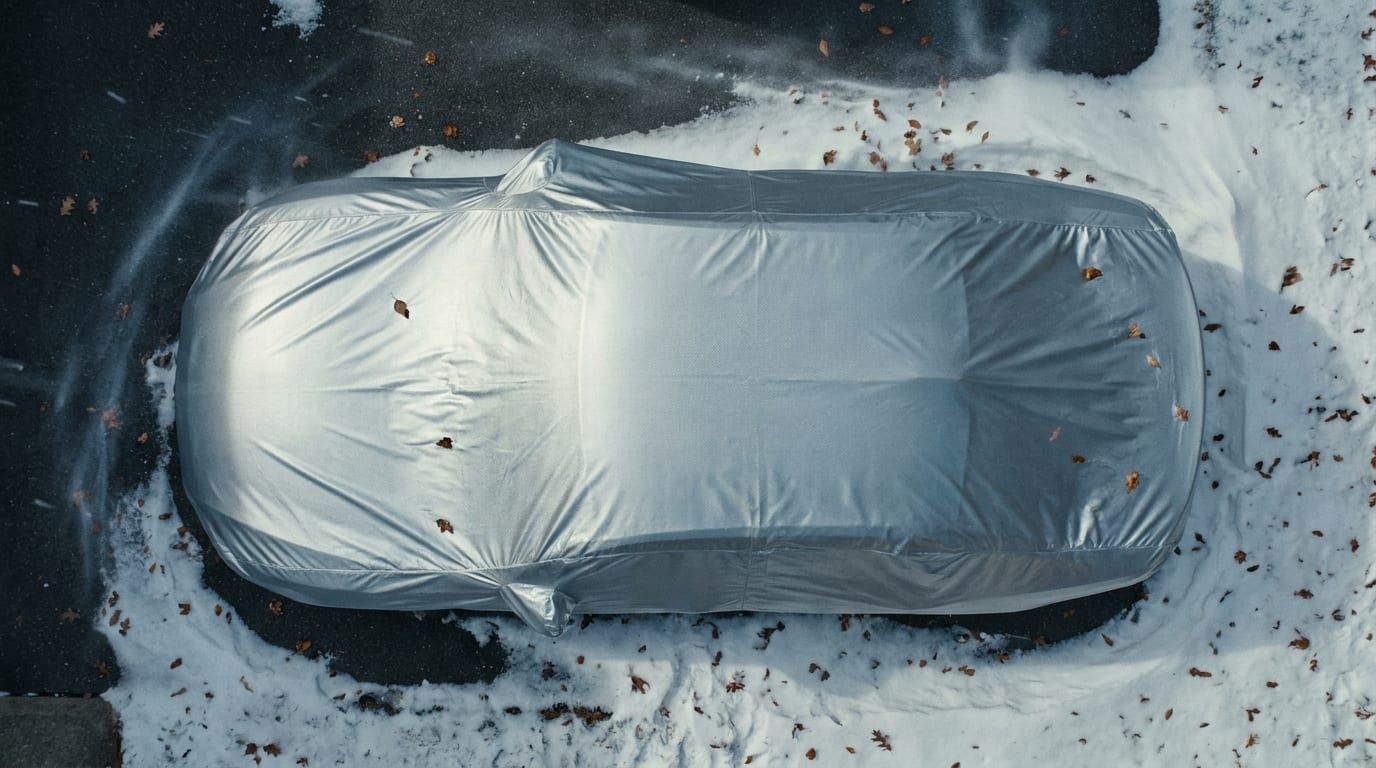
A cover with elastic hems alone is not a hurricane plan. You need actual anchoring, whether that's a gust strap system or a cable lock threaded through and secured to something fixed. Elastic keeps a cover snug in a light wind. It does nothing once gusts hit tropical-storm strength.
Practice the install before storm season starts. Securing a cover properly takes about 15 minutes when you're calm and know what you're doing. It takes a lot longer, and goes a lot worse, when you're doing it for the first time with a storm bearing down and landfall hours away.
Check your strap and grommet tension periodically through the season, too. Humidity affects elastic over time, it slackens, and buckle hardware can loosen or corrode slightly even between storms. A five-minute check in August saves you a scramble in October.
Preventing Mold and Mildew in a High-Humidity Climate

Let the vehicle fully dry before you cover it. This sounds obvious, but it's the single biggest cause of mildew complaints from owners in humid climates: covering a damp car seals that moisture in, and it has nowhere to go.
Clean the cover itself more often than you would in a drier region. New Orleans air carries pollen, salt residue, and general grime that clogs a breathable fabric's pores over time, which defeats the whole point of buying a breathable cover in the first place. Follow a regular cleaning routine rather than waiting until it looks dirty.
When you get a stretch of dry weather, which does happen even here, pull the cover off for a few hours and let it air out fully. Any moisture trapped in the fabric gets a chance to evaporate completely instead of sitting there until the next humid spell locks it back in.
Matching the Cover to Your Specific Vehicle
Fit matters more in a high-wind climate than people expect. Loose fabric is exactly what catches a gust, and that's what causes flapping, abrasion, and in the worst cases, a cover that lifts partway off mid-storm. Check what size car cover fits your vehicle before you buy anything, rather than guessing at a generic size.
Custom-fit covers reduce flapping and surface rubbing compared to universal, one-size-fits-several options. Over a full hurricane season of repeated exposure, that difference compounds. A universal cover that's "close enough" in June can be visibly worn by November.
Truck owners in the region are dealing with both intense sun exposure and real storm risk, often on a vehicle parked outdoors full time. It's worth looking at a heavier-duty option built for both ends of that, like the Platinum Shield truck cover, rather than a standard-weight cover asked to do double duty it wasn't built for.
Choosing Your Cover: Next Steps
The non-negotiables for this city don't really change: breathable waterproofing, UV resistance, corrosion-resistant hardware, and real wind-securing points, not just an elastic hem and good intentions. Skip any of those and you're buying a cover that'll disappoint you by the first big storm, if not sooner.
If you want to match these features to your exact make and model rather than guessing, run it through a cover finder tool or just find your car cover directly. It's a faster way to land on the best car cover for New Orleans, LA humidity and hurricanes than scrolling through generic listings hoping one fits.
And if you're on the fence about spending more upfront for a cover built to survive multiple hurricane seasons instead of one, it's worth checking the lifetime warranty coverage before you decide. Worth a browse through the rest of our car care content too, if you want to keep this kind of thing on your radar before the next named storm shows up on the forecast.