Can You Use a Car Cover Under a Carport? What It Does and Doesn't Stop
Published
Yes, You Can (and Often Should) Use a Car Cover Under a Carport
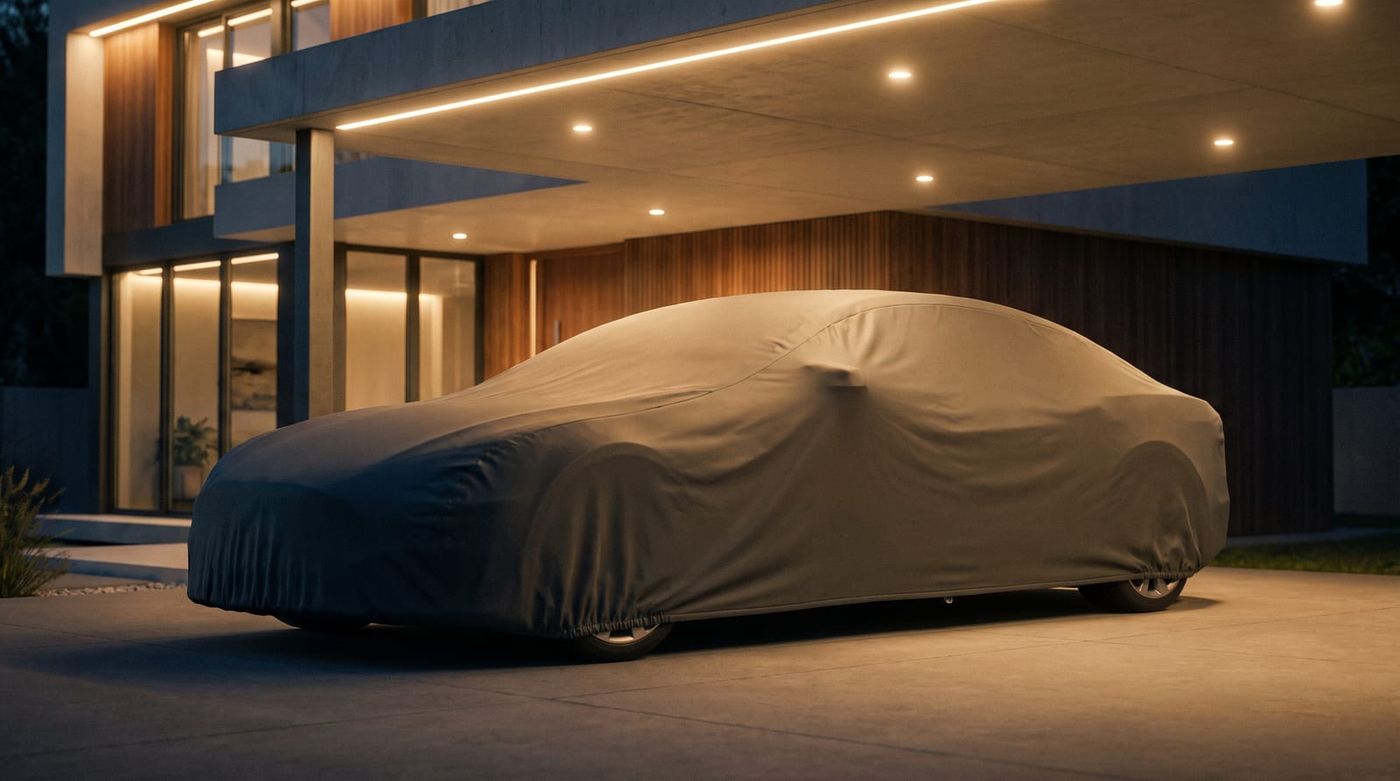
Short answer: yes, and for most carport owners, it's a good idea. The question "can you use a car cover under a carport" comes up a lot because people assume a carport and a cover do the same job. They don't. A carport is a roof held up on posts, open or partially open on the sides. It's not a garage. There's no door to shut, no walls to seal the space off from the weather moving sideways instead of straight down.
That gap is exactly where a cover earns its keep. A carport handles the stuff falling from directly overhead. A cover handles the stuff coming in from the sides, the stuff drifting in on wind, and the stuff that settles slowly over weeks of sitting in a partially open structure. Once you think of it that way, the rest of this is pretty simple: what does the roof take care of, and what's left for the cover to catch.
What a Carport Actually Protects Against
Give a carport credit for what it does well. A solid roof overhead stops rain and snow from landing straight down on the hood, roof, and trunk, which is the majority of precipitation in most storms. It also blocks direct midday sun, the hours when UV exposure and heat are at their worst and a parked car in open sun can bake for hours straight.
That shade matters for the cabin, too. A car under a carport runs noticeably cooler inside than one parked in full sun, even without any walls around it. And in snowy climates, the roof keeps snow load off the vehicle entirely, so you're not scraping six inches off the windshield or worrying about the weight piling up on the roof panel.
All of that is real, meaningful protection. It's just not the whole picture.
What a Carport Doesn't Stop
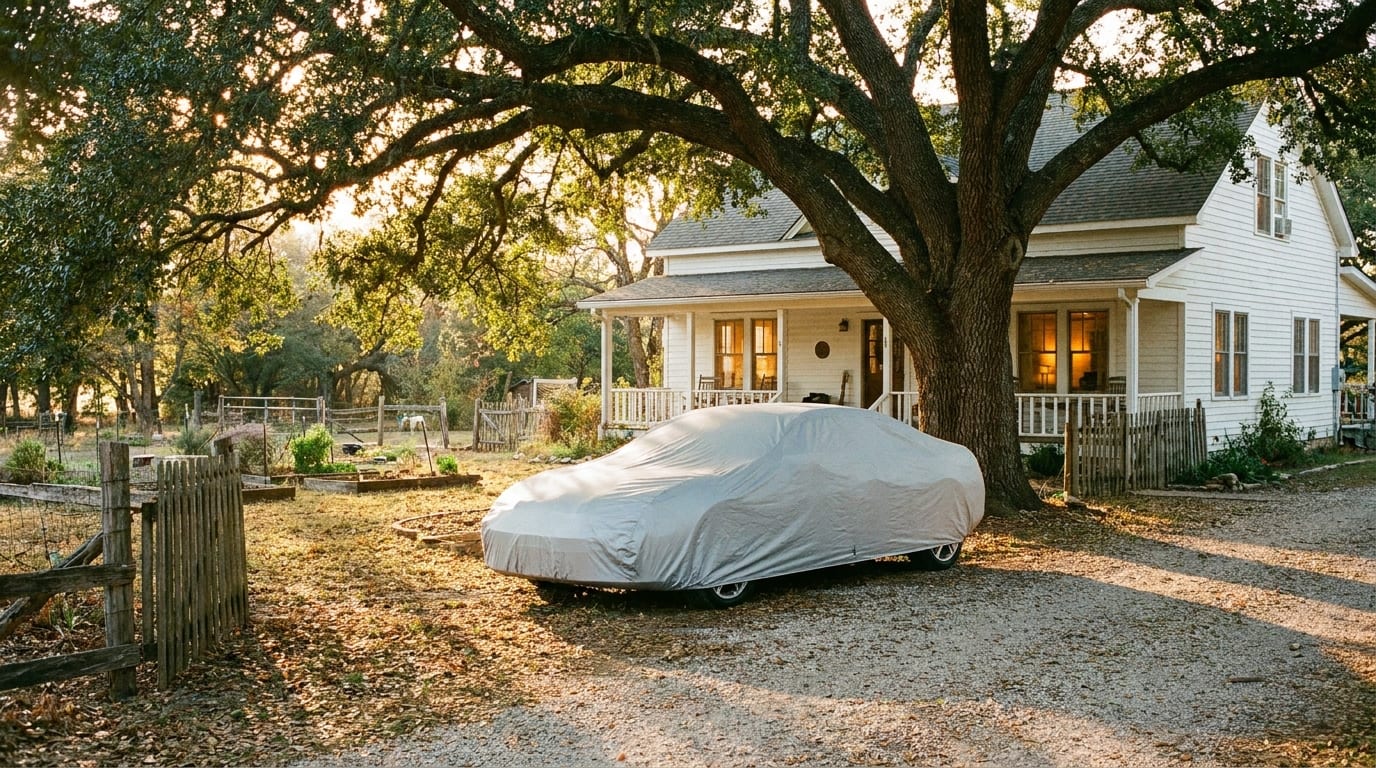
Here's where the open-sided design shows its limits. Rain rarely falls perfectly straight down, and wind-driven rain, or blowing snow at an angle, reaches right past the roofline and onto the car. The same goes for dust and pollen: they don't need a path from above, they just ride the breeze in from whichever side is open.
A few other things a carport won't touch:
- Tree sap and bird droppings from branches near the structure still fall, drip, or blow in laterally
- Low-angle UV rays in the early morning and late afternoon come in under the roofline, not from above it
- Overnight condensation and humidity swings still happen since there's no sealed, climate-controlled space to prevent them
- Animals like cats, birds, and rodents can still wander in and scratch the paint or leave marks on the hood
None of this is a knock on carports. They were never designed to do this part. It's just worth being honest about where the coverage ends.
Why Pairing a Cover With a Carport Makes Sense
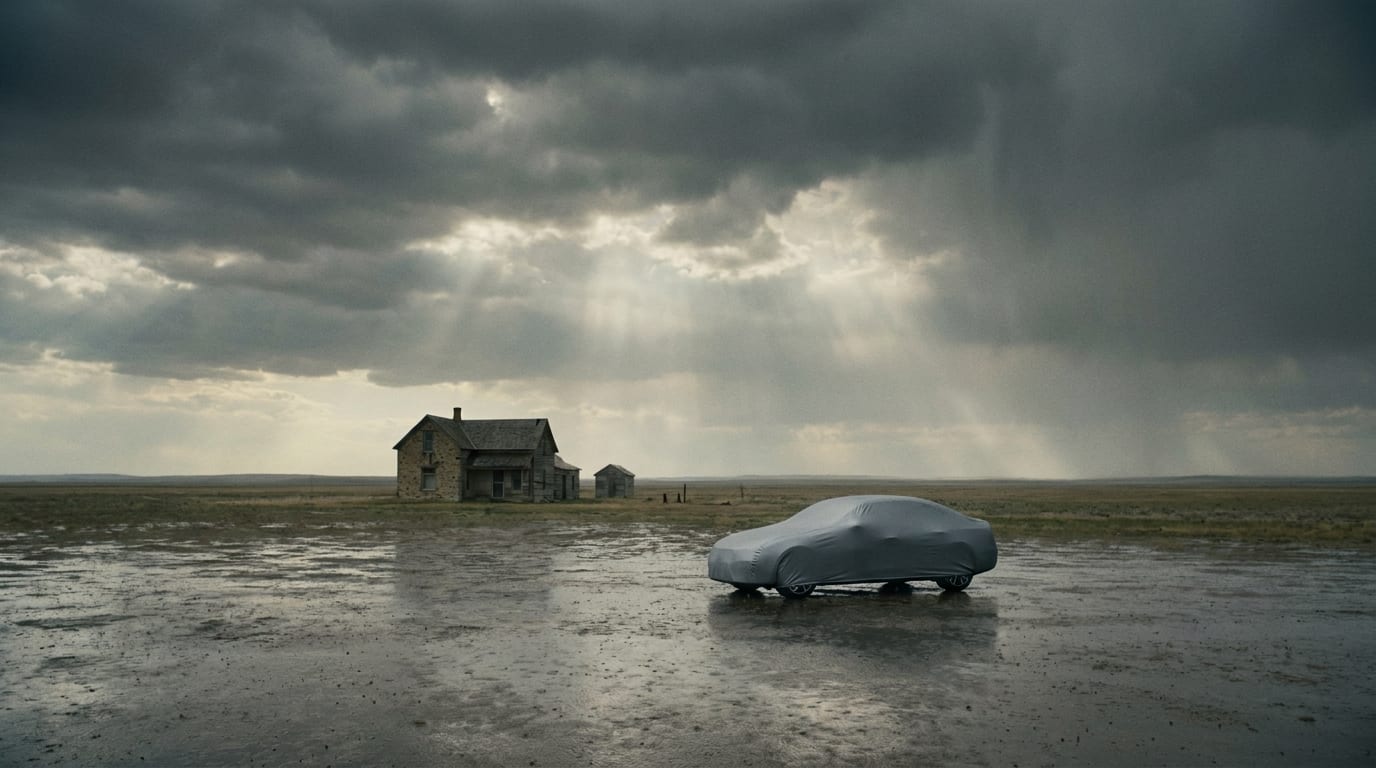
This is the part people miss. A breathable outdoor cover is built to deal with exactly the stuff a carport roof lets through: wind, blowing dust, sap, droppings, the whole list above. Put the two together and you've closed most of the gap.
There's a practical payoff, too. A car exposed on the sides under a carport collects grime faster than one in an enclosed garage, which means more frequent washing and detailing just to keep the paint looking decent. A cover cuts down on that cycle considerably, since the dust and sap land on fabric you can shake out or wipe down instead of on clear coat. It also adds a layer of scratch protection against a low branch swinging in the wind or a curious cat deciding the hood looks like a good nap spot. If you've already got a carport and you're weighing whether a full garage build is worth it, a cover is the cheaper middle step, and it's worth reading through why buying a car cover makes sense even for vehicles that already have some kind of overhead shelter.
Choosing the Right Cover Type for Carport Storage
Carport storage sits in a middle zone. It's not full outdoor exposure, since you've got a roof blocking the worst of it, but it's not an enclosed garage either. That middle ground means your cover choice matters more than you'd think.
Skip the lightweight indoor covers here. Those are built for dust and minor scratch protection in a sealed space, and they're not made to handle wind pushing against them from an open side. What you want is an outdoor car cover rated for water resistance and breathability, one that sheds moisture without trapping it against the paint. That last part matters more under a carport than you'd expect, since the shade and reduced airflow compared to full open-air parking can actually make it easier for trapped moisture to linger if the fabric isn't breathable enough. For a deeper look at balancing waterproofing, wind, and UV resistance in a cover meant for semi-outdoor use, the guide to using a car cover outdoors walks through the material tradeoffs in more detail. And if you're trying to decide between the two categories entirely, the indoor car cover page lays out what that lighter-duty option is actually built for, which is worth comparing against before you buy the wrong one.
Fit and Installation Tips for Carport Conditions
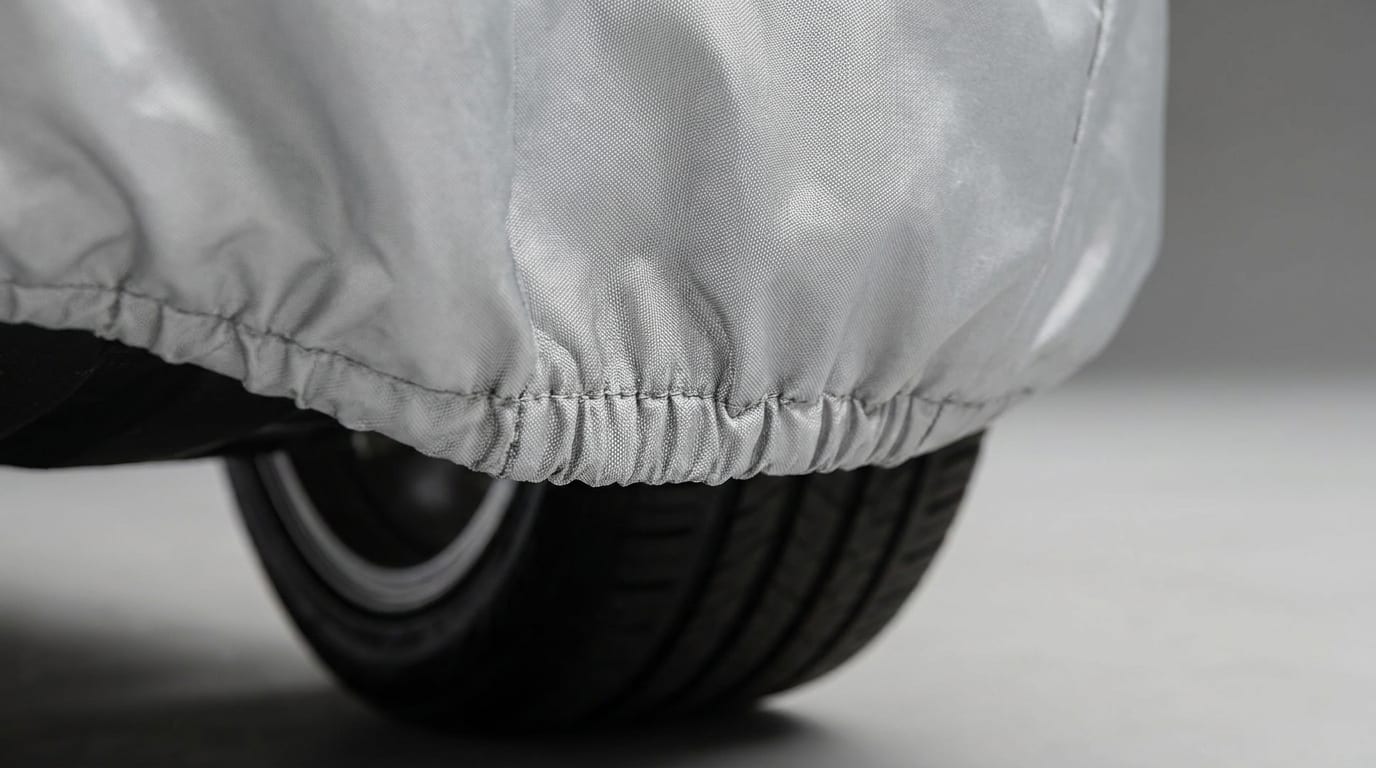
Open sides don't just let rain in at an angle, they funnel wind through the structure like a wind tunnel on a smaller scale. A cover that would sit still in a closed garage can flap and work itself loose under a carport, so strapping it down matters more here than it would almost anywhere else.
A couple of things worth doing:
- Use gust straps or a buckled wind strap system to keep the cover anchored instead of flapping against the paint in a crosswind
- Check that the hem has a snug, elastic fit around the bottom edge, so blown-in debris can't work its way underneath and grind against the finish
- Periodically lift the edge and check underneath for trapped moisture or debris buildup, since a carport's partial airflow isn't quite the same as true open-air ventilation
If you want the full rundown on keeping a cover from lifting in wind at all, 5 ways to keep a car cover from blowing away is worth a look before your first windy week. And for the basic how-to on getting the cover on and secured correctly the first time, the simple guide to easy installation covers the steps without overcomplicating it.
Keeping the Cover Itself in Good Shape
A cover stored under a carport is still collecting dust, pollen, and sap, same as the car it's protecting, just one layer removed. Leave that buildup on the fabric long enough and you're basically grinding grit into the paint every time wind shifts the cover around.
The fix is just routine cleaning, not anything complicated. A light rinse and wipe-down every few weeks keeps grit from accumulating, and a full wash on the schedule your cover's material calls for keeps the fabric from getting stiff or losing its water resistance over time. The guide to cleaning a car cover walks through the actual process step by step, including what to avoid so you're not shortening the cover's lifespan while trying to keep it clean.
Bottom Line: Carport Plus Cover Is the Stronger Combo
So, can you use a car cover under a carport? Yes, and the two aren't doing the same job twice. The carport handles what comes straight down: rain, snow, direct sun. The cover handles what comes in sideways: wind, dust, sap, droppings, low-angle UV. Pair them and you're getting most of what an enclosed garage offers, without the cost of building one.
If you've got a carport and you're still deciding whether a cover is worth adding, it's worth browsing car covers sized for your specific vehicle and seeing what fits your setup. Or if you want to dig into warranty details before buying, it's worth knowing most covers come backed by a lifetime warranty that holds up to the kind of daily wear a carport environment puts on a cover.