


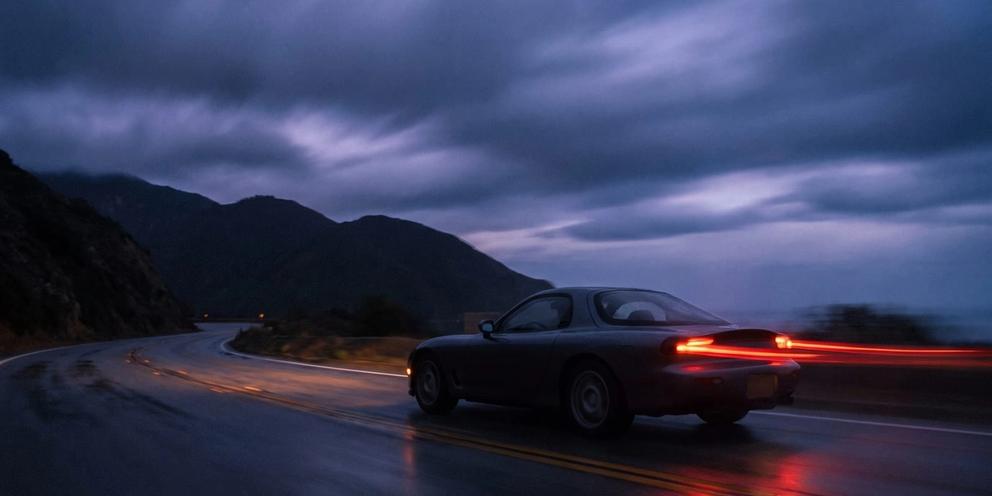
Car Cover for Road Trips: What to Pack Before You Hit the Road
Why a Car Cover Belongs on Your Road Trip Packing List
You plan the route, the playlist, and the snacks. Most people don't plan for what happens to their car while it's just sitting there, unattended, at a rest stop or hotel lot three states from home.
That's the gap a car cover for road trips fills. Every stop on a long drive puts your paint at risk in ways your driveway at home never does. Hotel curbs collect bird droppings from whatever's roosting in the trees above. Campground sites drop sap and pollen for days at a stretch. Rest areas along the interstate kick up dust and road grime from every truck that passes. And a midday scenic overlook, gorgeous as the view might be, means an hour or two of your car baking in direct sun with nothing between the paint and the UV.
None of that is exotic. It's just what happens when a car spends a trip parked in places you don't control and can't predict.
A cover isn't only for storage at home in the garage. Think of it as a layer of protection that travels with the vehicle, one you pull out at each overnight stop or long break. The rest of this guide covers what to look for in a road-trip cover, how to get it on and off fast enough to actually use it every time, and which stops on your route matter most for keeping it handy.
What Makes a Good Road-Trip Car Cover
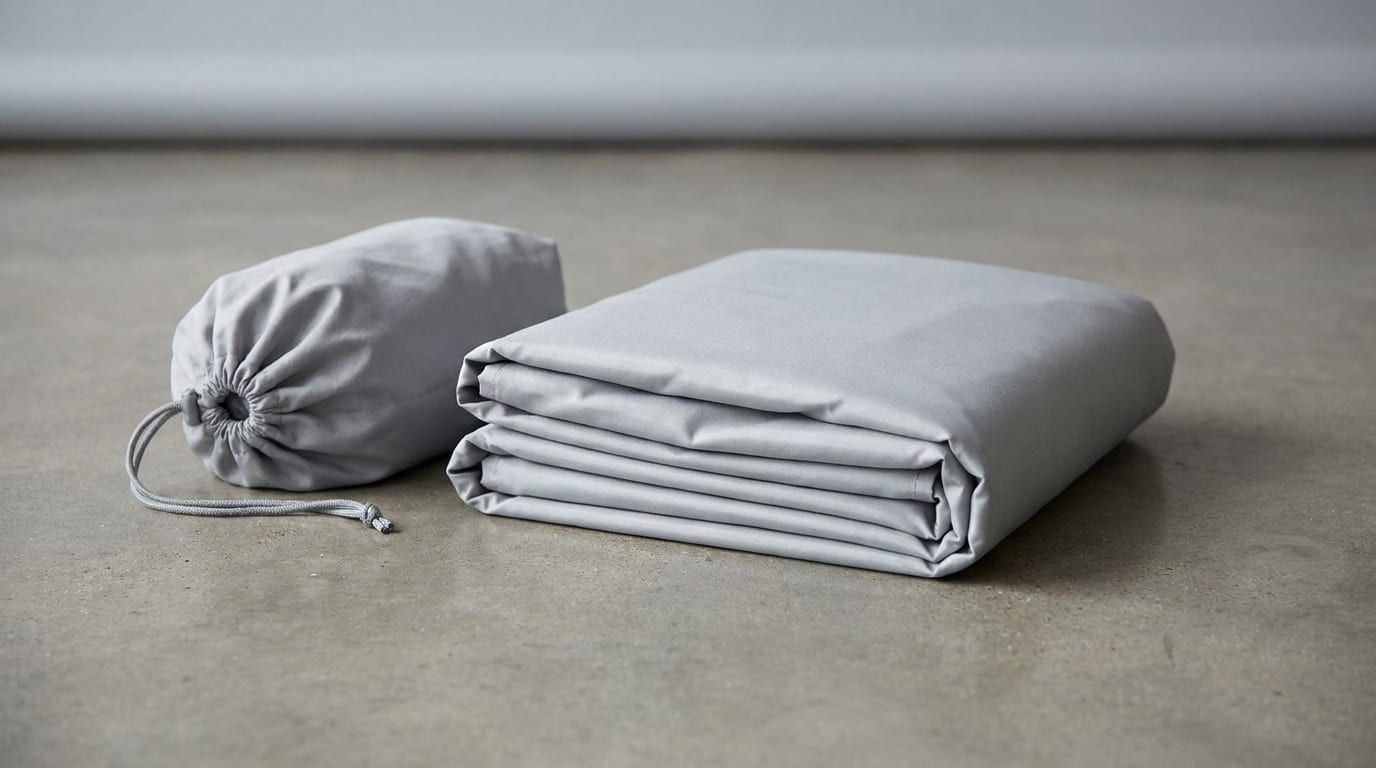
Not every cover earns a spot in your trunk. Space is tight on a road trip, so the first test is packability: a cover that folds down small and light, not one that eats half your cargo space before you've even packed a suitcase.
Second test is speed. If putting the cover on takes ten minutes and a diagram, it won't get used after day two. Look for elastic hems, simple buckles, or strap systems you can operate without thinking twice.
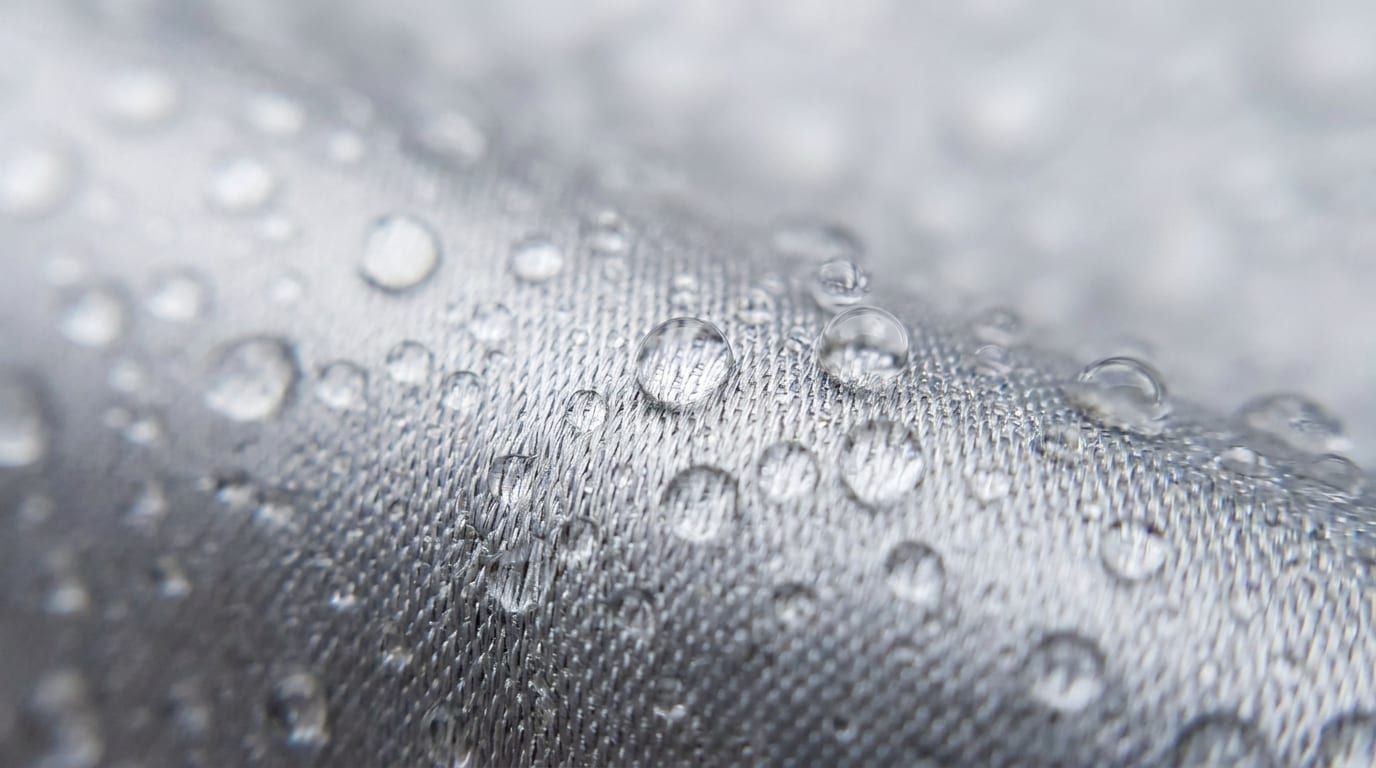
Weather resistance matters, but it depends on where you're driving. A cover for a desert route needs different performance than one for a trip through the Pacific Northwest. If rain is a real possibility anywhere on your itinerary, lean toward a waterproof car cover rather than something that's merely water-resistant. The difference in fabric performance is significant. We've broken down what separates the best car cover materials if you want the specifics before you buy.
Breathability is the one people skip and regret. A cover that traps moisture underneath during a multi-day trip comes home smelling like mildew, even if it kept the rain off. Good fabric lets air move.
UV protection earns its keep on long highway stretches through sunny states, or multi-day stays somewhere hot. It's not just about paint fading. Trim and rubber seals degrade under sun exposure too.
And skip the tarp. It's tempting because it's cheap and already in the garage, but tarps don't breathe, they scratch paint where they rub against the body, and they blow off the second you hit any wind near a highway on-ramp. A tarp is not a substitute for a car cover, and a road trip is exactly the wrong place to find that out.
Choosing the Right Fit for Your Vehicle
Fit changes everything about how a cover performs at highway speeds and in open parking lots. A custom-fit car cover hugs the body lines of your specific vehicle, which means less flapping in wind and less material for gusts to grab. Semi-custom covers get close. Universal covers are the loosest fit, and that looseness is exactly what turns into a problem after a few days.
A cover that's too loose flaps against the paint every time a truck rolls by on the interstate rest stop next to you. Over a week-long trip, that adds up to fine scratching you won't notice until you're washing the car back home. Too tight, on the other hand, and you'll dread putting it on at every single stop, which means eventually you just stop bothering.
Get the sizing right before you leave, not after the first bad experience with a flapping hem at 2 a.m. in a windy parking lot. Use a sizing guide for your vehicle to confirm before you buy, because sedans, SUVs, and trucks all fit differently, and truck bed length alone can change what "correct fit" even means for your model.
When to Actually Use It on the Road
You don't need the cover on every red light. But there are specific moments on a trip where it earns its space in the trunk.
Overnight stops top the list. Hotel and motel lots are unfamiliar territory, you don't know the local bird population, and you have no idea what the weather does at 4 a.m. in a city you've never been to. Cover it and forget about it.
Extended stops matter too: a two-hour hike, a long lunch at a scenic overlook, anywhere the car sits in direct sun for a while. This is where an outdoor car cover built for sun and weather exposure actually pays for itself, versus a light indoor cover that isn't built for the job.
Campground and RV park stays are their own category. Multiple days under trees means sap, pollen, and dust have time to really settle in. And if you're doing a multi-day layover somewhere before continuing on, the car that isn't moving is the car that's most exposed. A parked car with no cover is basically a landing pad.
Installing and Securing a Cover Quickly on the Road
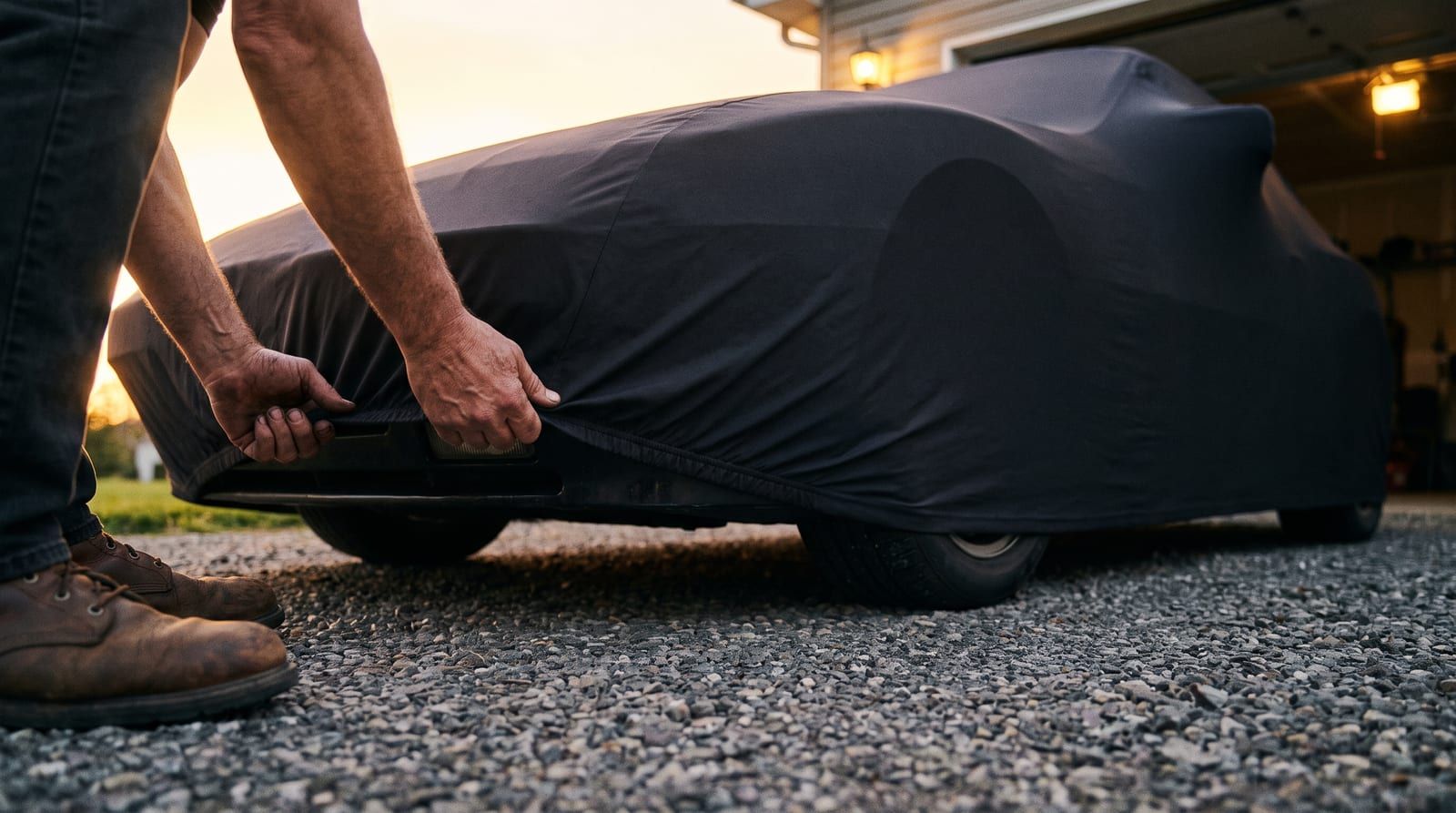
Speed is the whole game here. If it's not fast, you won't do it at the tenth stop of a fourteen-hour driving day.
The routine that works: front to back. Drape it from the windshield toward the rear, settle the mirror pockets into place, then work down the sides cinching the hem as you go. Takes under two minutes once you've done it a few times. If you've never installed one before, a quick installation walkthrough will get you comfortable with the steps before you're doing it in a hotel parking lot in the dark.
Windy stops need extra attention. Coastal towns, open plains, anywhere gusts are a regular thing, a gust strap or wind strap keeps the cover from working itself loose overnight. Skip this in the wrong location and you'll find your cover twenty feet away in the morning, or worse, still on the car but torn.
Public parking lots also carry more theft risk than your driveway does. A cable lock threaded through the cover and around a wheel or fixed point adds a real deterrent, not just for the cover itself but for anyone eyeing the car underneath it.
One practical tip: pack the cover somewhere you can actually reach it. Buried under three suitcases in the trunk, it's dead weight. Keep it near the top or in a side pocket, so pulling it out at each stop isn't its own chore.
Packing and Caring for the Cover Mid-Trip
Debris on the cover doesn't disappear when you fold it up. It just gets pressed against your paint the next time you use it. Shake it off or wipe it down before packing it away, every time.
Rain and morning dew are unavoidable on a long trip. If the cover goes back in the trunk wet, give it a few minutes to air dry first if you can, maybe while you load the rest of the car. Packing it away soaked, day after day, is how you end up with a cover that smells bad by the time you're home, and a trunk that smells bad along with it.
A dedicated storage bag keeps the cover's road grime separate from your actual luggage. It's a small thing, but nobody wants dust and pollen from the cover rubbing off on a duffel bag.
Once the trip's over, the cover needs more than a shake and a fold. Give it a proper wash using the correct cleaning process for car covers so it's ready for the next trip instead of quietly degrading in a closet somewhere.
Get Road-Trip Ready
Fit, material, packability, and how fast you can actually get it on and off: those four things decide whether a cover earns its spot in the trunk or gets left at home after the first trip.
Sort this out before you leave. The first bird strike on a hotel windshield in a city you've never been to is not the moment to start researching cover sizes.
If you're mapping out gear for an upcoming trip, it's worth spending a few minutes browsing what's out there and subscribing for more road-trip and car care guides before you head out. Your car will thank you at every stop.
Updated