


Car Cover vs Car Bra: Which Actually Protects Your Car Better?
The Quick Verdict: Car Cover vs Car Bra
Short answer: a car bra only protects your hood, front bumper, and maybe your fenders from rock chips and bugs while you're driving. A car cover protects the entire vehicle, top to bottom, from sun, rain, dust, and scratches while it's parked or stored. When you line up car cover vs car bra, you're really comparing two different jobs, not two versions of the same product.
They're not interchangeable. A bra is driving gear. A cover is parking gear. One doesn't do the other's job, and expecting it to is where a lot of owners get disappointed after the fact.
Plenty of people end up owning both, especially daily drivers who also park outside. We'll get into that combo later. First, let's break down what each one is actually built to do.
What Is a Car Bra, Exactly?
A car bra is a form-fitted piece of vinyl or heavy fabric that molds to your hood, front bumper, and sometimes the front edges of your fenders. It attaches with hooks, straps, or adhesive strips and stays on for weeks or months at a time.
Its job is narrow and specific: block rock chips, bug splatter, and road grime while you're moving at speed. That's it. A bra is built for the highway, not the driveway.
Here's the catch. Once you're parked, the bra is doing nothing. Roof, doors, rear glass, side panels, all of it sits exposed. Sun fade, hail, tree sap, bird droppings, none of that is on a bra's job description. It was never designed to fight any of it.
What Is a Car Cover, Exactly?
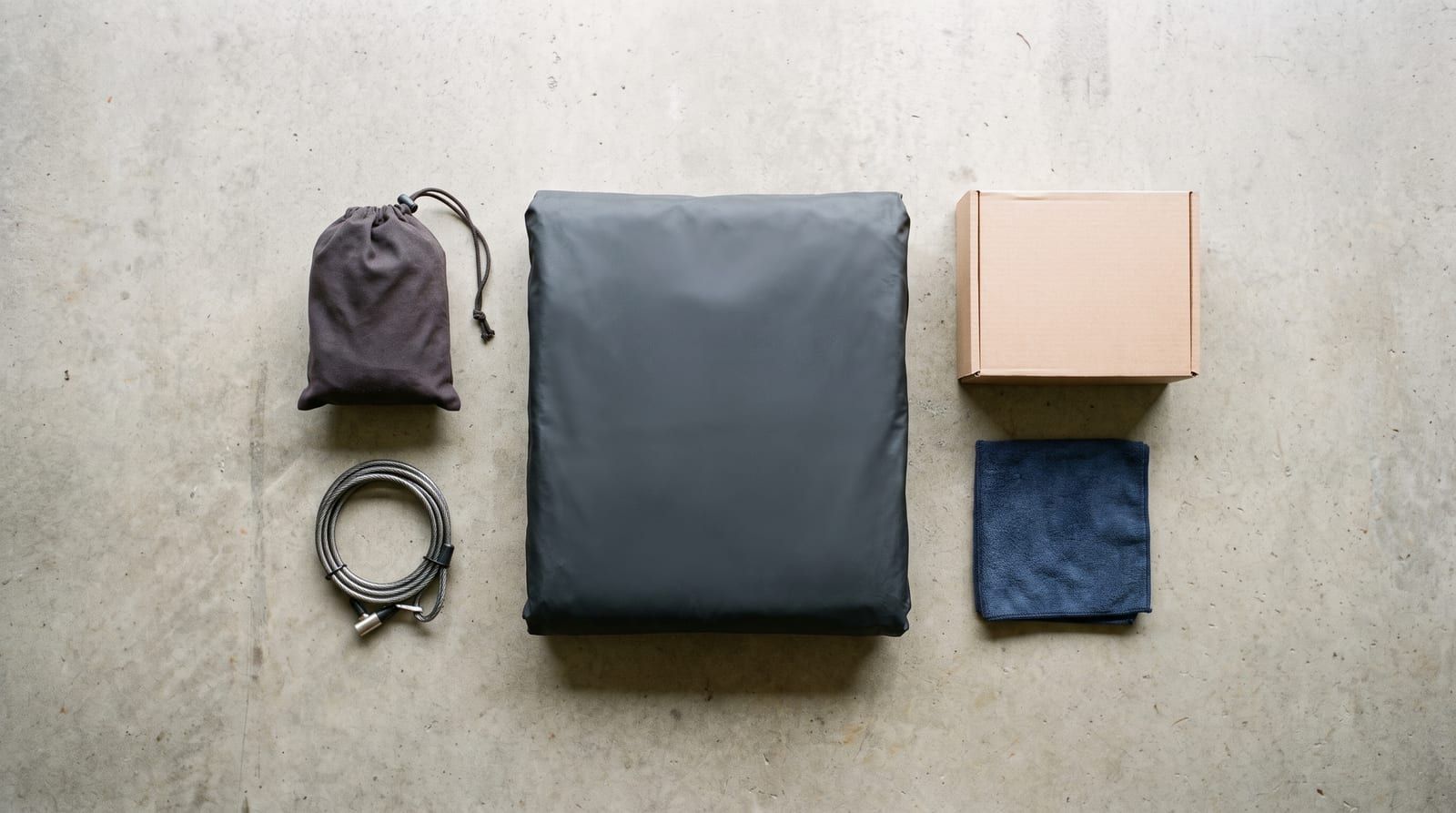
A car cover is a full-body fabric shell that goes over the entire vehicle when it's parked, not while you're driving it anywhere. You put it on, you take it off, and while it's on, the whole car sits underneath it.
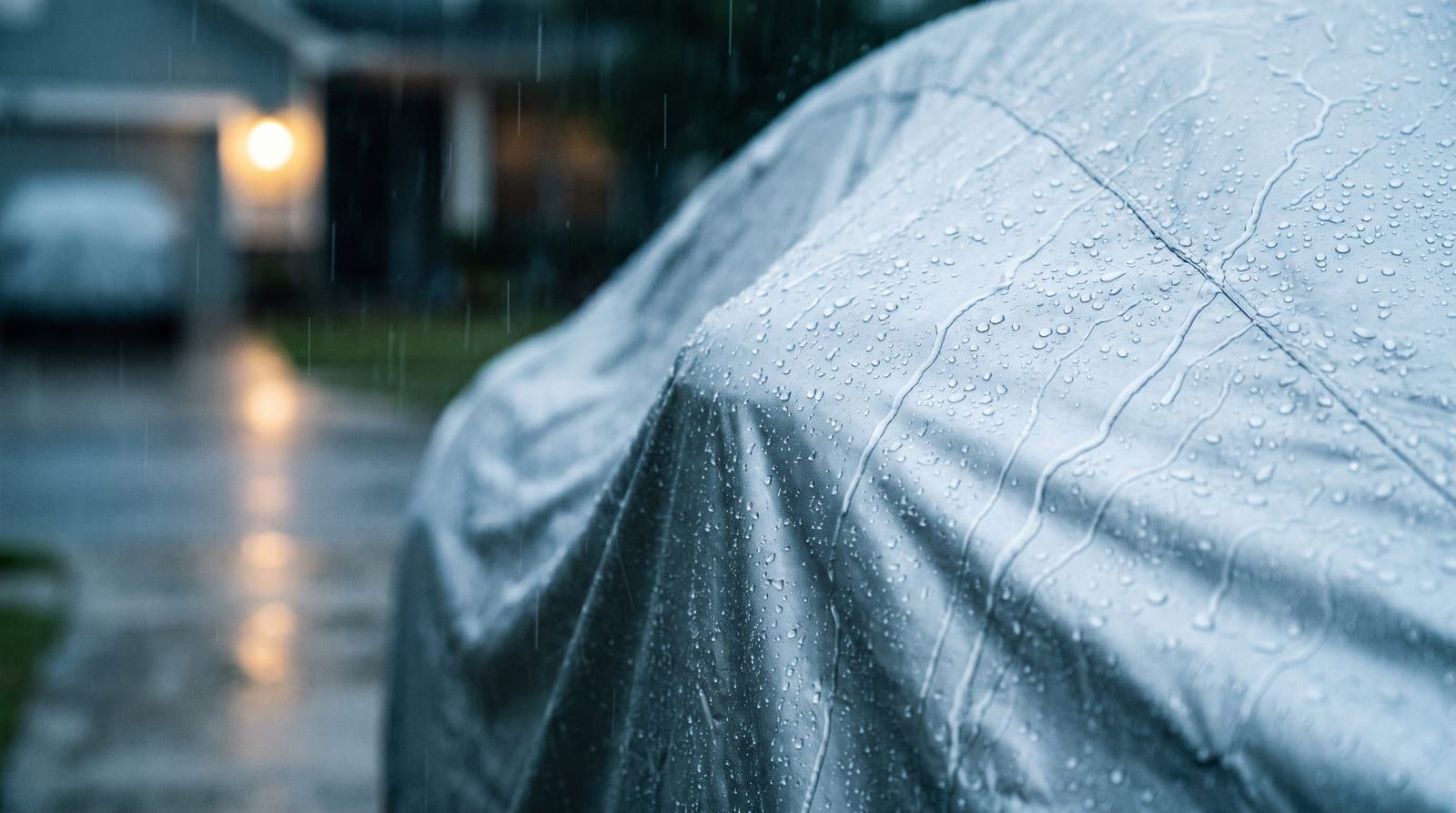
What it actually protects against depends on the material. Lighter covers handle UV fading, dust, and light rain. Heavier ones add real waterproofing, tree sap and bird dropping resistance, minor scratch protection, and in the toughest versions, enough padding to soften hail impacts. Not every cover does every job, so the material tier matters more than people expect.
Fit matters just as much as material. Universal covers are the cheapest and loosest, semi-custom splits the difference, and custom-fit covers are built to your exact year, make, and model. If you're not sure which category your car falls into, it's worth checking what size car cover fits your vehicle before you buy anything, because a loose-fitting cover flaps in the wind and can actually cause paint swirls over time.
Car Cover vs Car Bra: Side-by-Side Comparison
Here's the full breakdown, side by side.
Coverage Area
- Car bra: Hood, front bumper, sometimes fenders
- Car cover: Entire vehicle body, roof to rocker panels
When It's Used
- Car bra: Worn while driving
- Car cover: Used only while parked or in storage
Weather Protection
- Car bra: Minimal, blocks bugs and road debris only
- Car cover: Sun, rain, snow, dust, and hail with heavier-duty materials
UV and Paint Fade Protection
- Car bra: Only the panels it covers
- Car cover: Full exterior finish
Installation Effort
- Car bra: One-time strap or hook fitting, stays on for extended periods
- Car cover: Put on and taken off every parking cycle
Typical Cost
- Car bra: Generally lower, since it's a small molded piece
- Car cover: Varies widely by material tier and vehicle size
Best Use Case
- Car bra: Daily highway commuters worried about chip damage
- Car cover: Vehicles parked outdoors, stored seasonally, or sitting idle for weeks
Maintenance
- Car bra: Occasional cleaning underneath to avoid trapped moisture against the paint
- Car cover: Regular washing, following proper car cover cleaning guidance so dirt doesn't grind into the finish
That maintenance line on the bra is one people skip. Leaving a bra on wet, without pulling it back to let the paint dry, is a good way to trap moisture against your clearcoat for days. It's a small thing, but it's the most common way a bra causes the exact damage it was meant to prevent.
When a Car Bra Makes More Sense
If you're logging serious highway miles and your main worry is rock chips and bug guts on the hood, a bra earns its keep. It's built for exactly that scenario.
It also makes sense for garage-kept daily drivers that rarely sit outside for long. If your car spends its nights indoors, full-body protection isn't really the problem you're solving. The bra covers the part that actually takes a beating on the road.
The tradeoff is real, though. A bra does nothing for sun fade, hail, or the scratches you get from parking under a tree or near foot traffic in a lot. It's a one-job tool. Don't ask it to do two.
When a Car Cover Makes More Sense
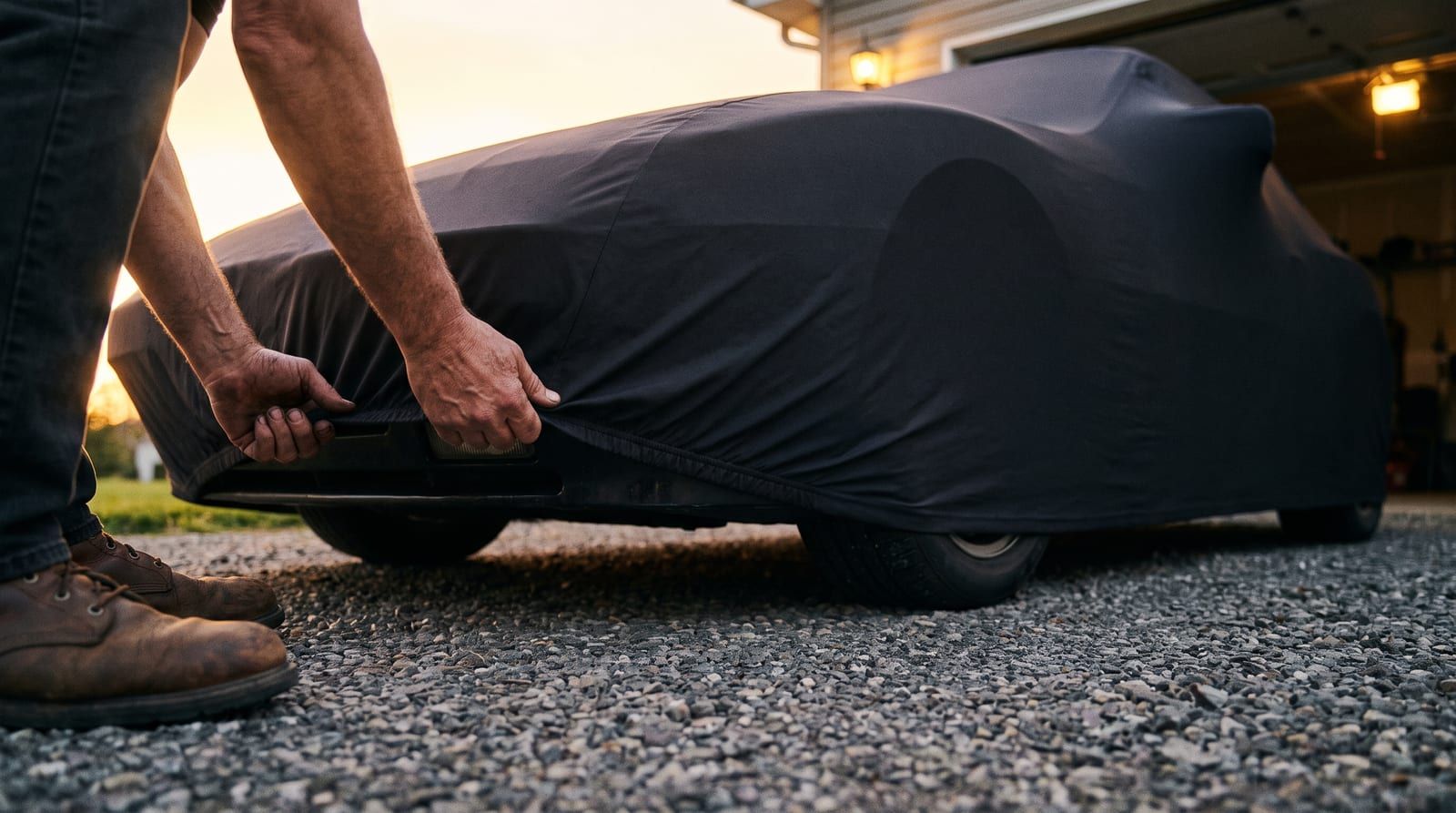
If your car parks outside regularly, sits in storage for a season, or just doesn't get driven daily, a cover is the one that actually matters here.
Which type depends on where the car actually lives. Driveway or street parking calls for an outdoor car cover built for sun and weather exposure. Garage-kept cars still pick up dust, so an indoor car cover handles that without the bulk of outdoor-grade material. If you're in a wet climate, look at a waterproof car cover specifically, not just a water-resistant one. And if you're in hail country, a purpose-built hail car cover has padding a standard cover doesn't.
This is the structural difference a bra can't touch: a cover protects the whole car's paint and, by blocking UV, helps keep interior trim from baking and fading too. A bra was never built to do that job, no matter how well it fits your hood. If you're still weighing whether a cover is worth the hassle at all, why a car cover is worth buying is worth a read, and the car covers category is a reasonable place to see the range of materials and price points.
Can You Use a Car Cover and Car Bra Together?
Yes, and it's not overkill. They protect the car at different times, so there's no overlap to worry about.
A practical version of this: the bra guards the hood and bumper during your commute, then the cover goes on once you're parked for the night, the weekend, or a longer storage stretch. Two products, two separate jobs, no conflict.
This combo makes the most sense for owners with a daily driver that's also higher-value, or who just don't have garage space to fall back on. If you're going this route, pick your cover material carefully. Check out what the best car cover material is for a breakdown of what holds up where you park. And if you've been eyeing a tarp as a cheaper stand-in, read whether a tarp beats a car cover first. Short version: a tarp traps moisture and scuffs paint in ways a real cover doesn't.
Bottom Line: Pick the Protection That Matches How You Use Your Car
Circle back to the core split: a bra protects the front end while you're driving, a cover protects the whole car while it's parked or stored. Car cover vs car bra isn't really a competition once you frame it that way, it's two answers to two different questions.
Figure out which question you're actually asking, then match the product to it. If you park outside, drive seasonally, or just want your paint to survive another few years untouched, a cover is doing work a bra structurally cannot.
If you're curious what else is worth knowing before you buy, our other car care guides cover most of the follow-up questions people ask after this one, so it's worth a browse if you want to go deeper before deciding.
Updated