Car Cover vs Ceramic Coating: Which One Actually Protects Your Paint?
Published
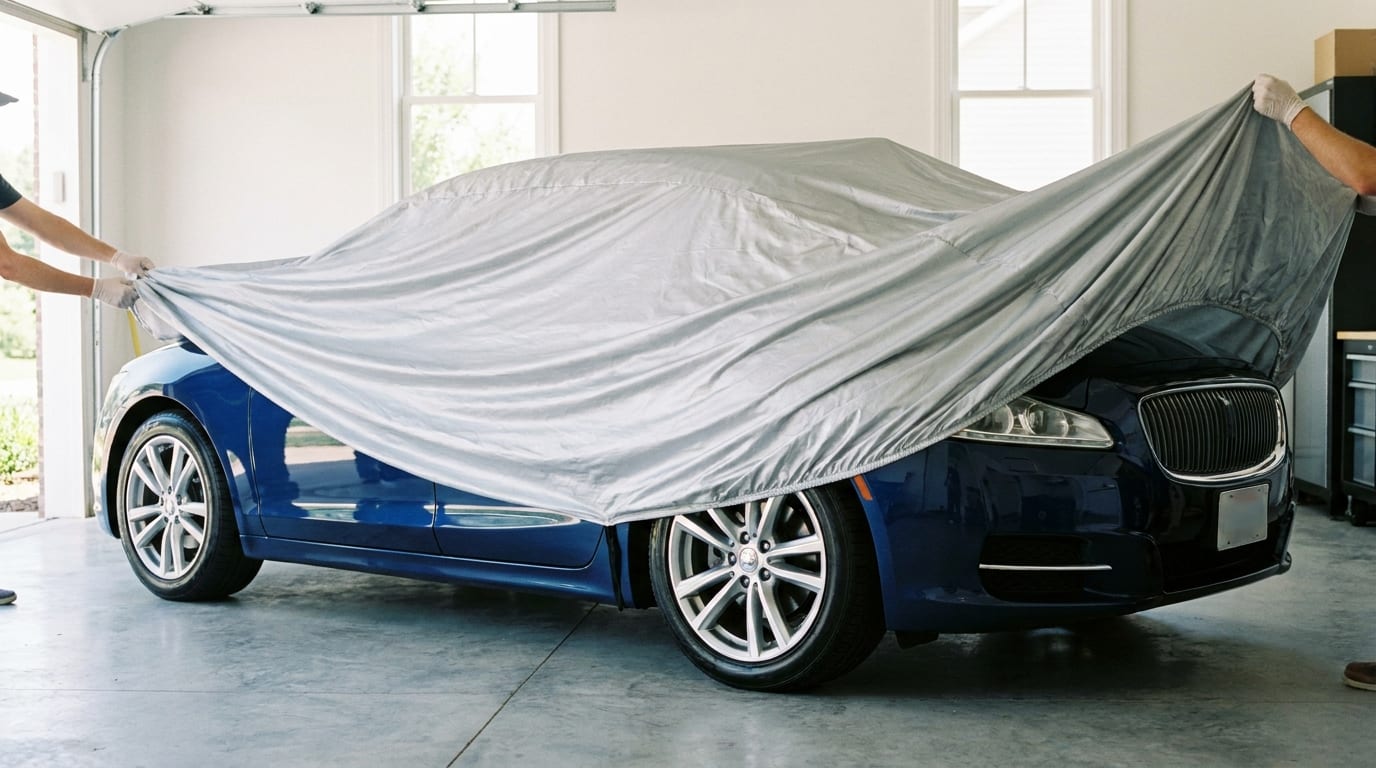
Car Cover vs Ceramic Coating: The Quick Verdict
Here's the short version: a ceramic coating protects your paint's finish. A car cover protects the whole vehicle from the elements. They're not competing for the same job, so picking "the better one" is kind of the wrong question.
The confusion makes sense, though. Both get marketed as "paint protection," so people assume they're interchangeable. They're not. Ceramic coating is a chemical and UV barrier that bonds to your clear coat at the molecular level. A car cover is a physical barrier draped over the entire exterior, and with a windshield that blocks UV rays, it shields the interior too.
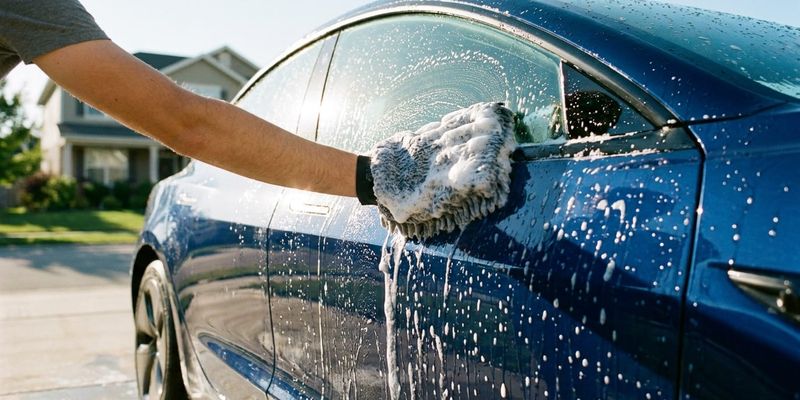
Who needs which? If you've got a daily driver that gets washed regularly and sleeps in a garage, a coating handles most of the real threats it faces. If your vehicle sits outside, gets parked under trees, or only comes out a few times a month, a cover is doing more actual protective work per dollar. Neither one lets you skip maintenance: a coated car still needs washing, and a covered car still needs to be installed correctly and cared for like any other piece of gear. Coating and covering both fail if you ignore the basics of car care underneath them.
What Ceramic Coating Actually Protects Against

Ceramic coating works by bonding a layer of liquid polymer, usually silicon dioxide (SiO2), to your clear coat. Once it cures, you've got a hard, hydrophobic, UV-resistant shell sitting on top of the factory paint. Water beads and rolls off. Dust doesn't cling the way it used to.
Where it earns its keep: slowing UV-caused oxidation and fading, resisting minor chemical etching from bird droppings or bug acid (assuming you wash it off within a reasonable window), and making routine washing and water-spot removal noticeably easier.
Where it falls short is just as important. Ceramic coating does nothing against rock chips. Nothing against hail dents. Tree sap left sitting for weeks can still etch right through it. It won't stop a deep scratch from a key or a shopping cart, and it offers zero protection against dust accumulating on a car that just sits. It also has no effect on your interior. A coated dashboard still bakes and fades in direct sun.
Cost varies a lot depending on tier and vehicle size, but professional application commonly runs anywhere from a few hundred dollars for an entry-level product to a few thousand for multi-year, multi-layer systems. Most coatings need maintenance washes and a top-up or reapplication every two to five years to keep performing. And remember, it only covers exterior paint. Tires, trim, wipers, and the cabin are on their own. If you're weighing coating against other paint protection options, it's worth seeing how it stacks up against the full range of paint protection methods before you commit money to it.
What a Car Cover Actually Protects Against
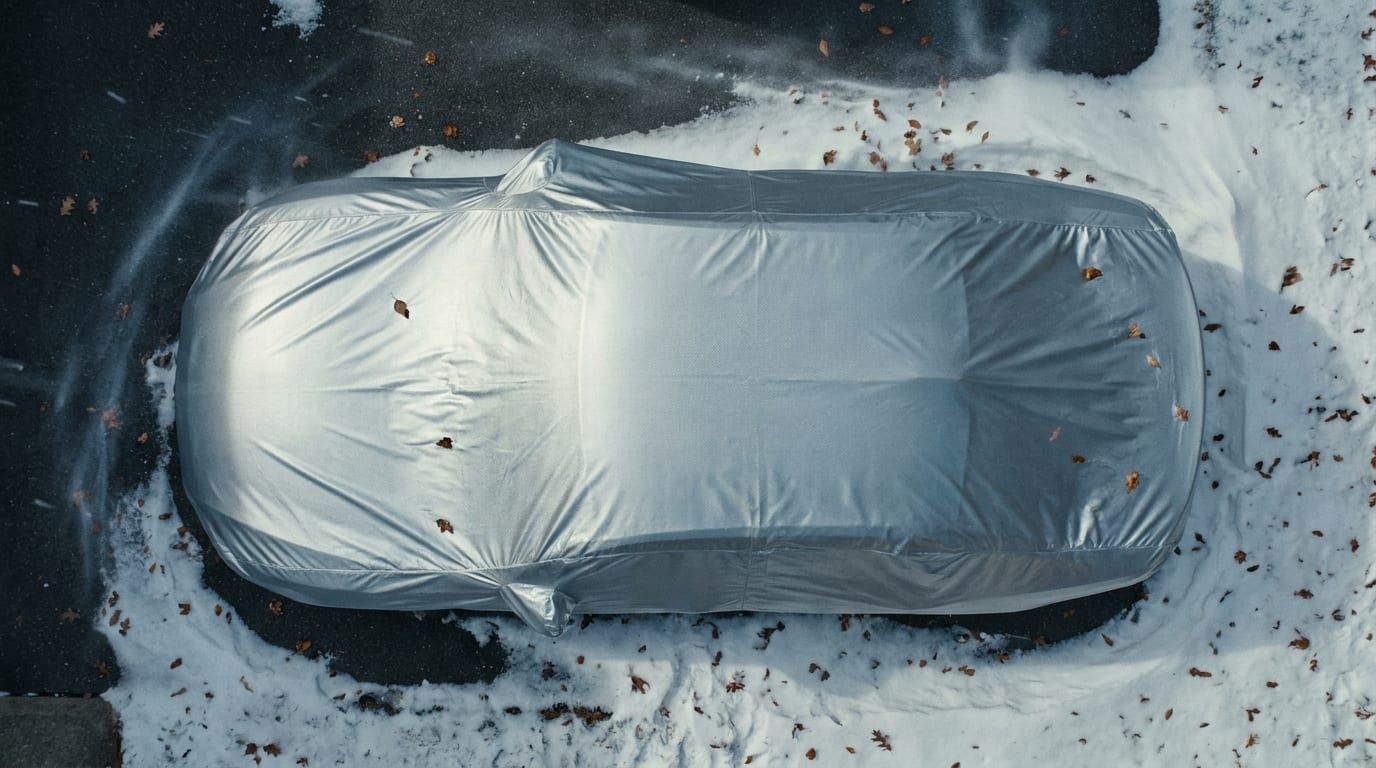
A car cover takes a simpler approach: it just sits over everything. Paint, trim, glass, tires, mirrors, antenna, all of it gets shielded from whatever's happening outside.
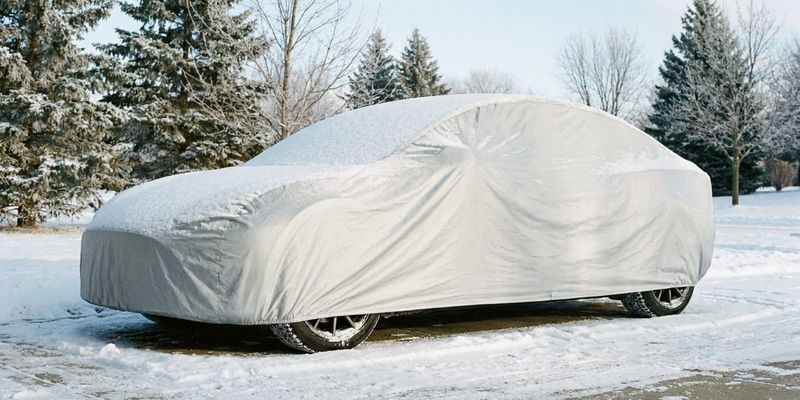
That "everything" is the real advantage. A good cover blocks UV fading on both paint and interior surfaces, keeps bird droppings and tree sap from ever touching the finish, stops pollen and dust from building up, and prevents scratches from low branches or wind-blown debris. In winter, it keeps snow and ice off the body. And a padded or heavy-duty cover adds real cushioning against hail, which is something a coating simply cannot do.
Fit matters more than people expect. A universal cover that's too loose will flap in the wind and rub micro-scratches into your paint over time, basically working against the thing it's supposed to prevent. A custom-fit car cover that's cut to your vehicle's exact dimensions eliminates that movement entirely.
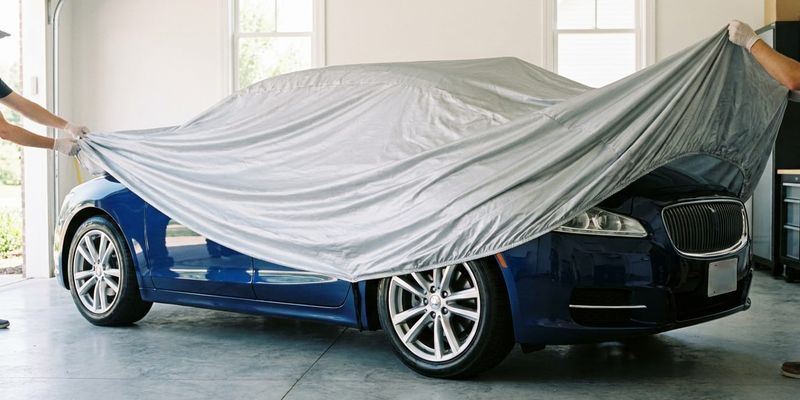
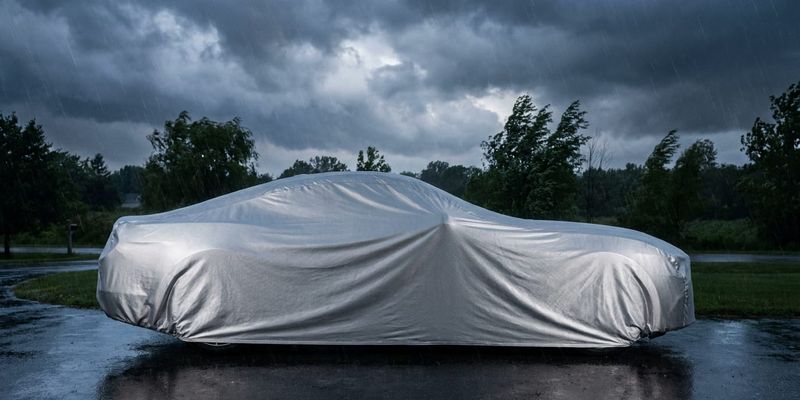
Material matters too. Storing in a garage calls for a breathable indoor cover in a soft satin-style material, since there's no rain or UV to worry about and you want airflow instead. Parking outside is a different problem, and that's where a weatherproof outdoor car cover earns its price.
One honest limitation: a cover is a physical shield only. It doesn't add gloss, it doesn't make water bead on the paint, and it doesn't do anything chemically. If you want that slick, hydrophobic look and feel, that's a coating's job, not a cover's.
Car Cover vs Ceramic Coating: Side-by-Side Comparison
| Factor | Ceramic Coating | Car Cover |
|---|---|---|
| Primary protection type | Chemical/UV barrier on painted surfaces only | Physical barrier over the entire vehicle |
| Upfront cost | Roughly $500 to $3,000+ depending on vehicle and tier | Roughly $100 to $300 depending on fit and material |
| Hail/dent protection | None | Meaningful cushioning with a padded or heavy-duty cover |
| UV fading protection | Yes, paint only | Yes, across paint, trim, and tires |
| Interior heat/sun protection | No effect on cabin | Reduces heat buildup, protects dash and seats |
| Ongoing maintenance | Maintenance wash and top-up every 2-5 years | Regular cleaning plus correct install/removal each use |
| Reversibility | Semi-permanent, needs correction to remove | Fully reversible, zero effect on paint |
| Best-fit use case | Daily drivers washed and driven regularly | Vehicles parked outdoors, stored seasonally, or driven rarely |
| Install effort per use | One-time professional job with multi-day cure | A couple of minutes once properly fitted |
Looking at that table, the honest read is that a cover addresses more real-world threats for less money up front. Coating wins on convenience and looks once it's applied. Cover wins on breadth of protection.
Can You Use a Car Cover and Ceramic Coating Together?
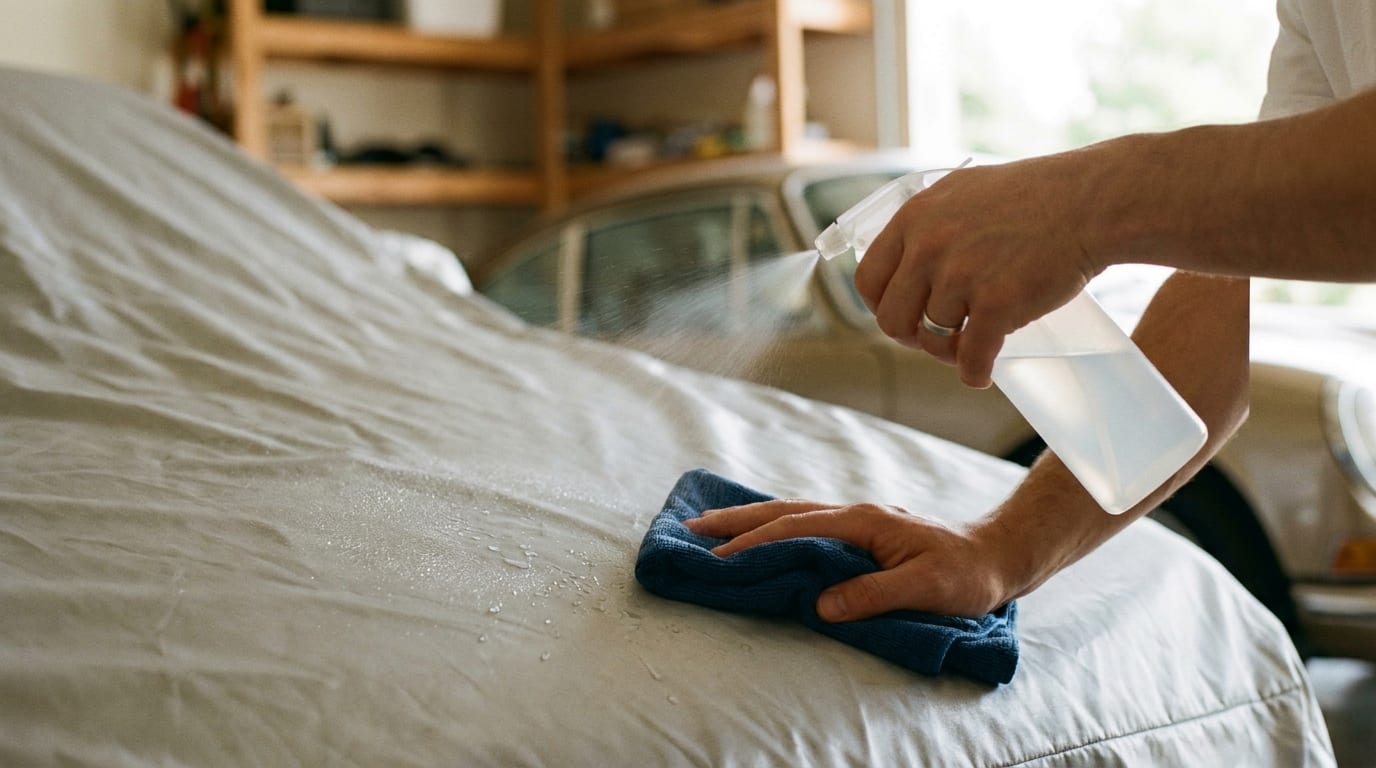
They're complementary, not competing. Coating handles the chemical and UV side on the paint itself. A cover handles the physical side, on the paint and everything else. Plenty of owners run both.
There's a practical bonus to pairing them. Coated paint sheds dust and light grime more easily, so when you pull the cover off, you're usually looking at a cleaner surface with less dirt to wipe away, which means less risk of swirl marks from dragging grit across the finish during removal.
One caveat worth knowing: in humid climates, skip a fully waterproof cover over coated paint and go breathable instead. Trapping moisture against the surface for days at a time isn't great for anything underneath it, coated or not. If you're deciding between options, this guide to waterproof car covers walks through when a fully sealed material makes sense and when it doesn't.
The cover itself needs upkeep too. A dirty cover dragged on and off a coated car, over and over, is still dragging grit across the paint each time. Regular cover cleaning matters just as much as washing the car underneath it.
Which One Does Your Vehicle Actually Need?
Depends on how and where the car lives.
Daily driver, garaged overnight, washed weekly: coating alone covers most of what it'll ever face. It's not getting rained on for days or baking under a tree, so the coating's main jobs (easier washing, UV resistance, light chemical protection) line up with its actual exposure.
Parked outside and hit daily with sun, sap, or bird droppings: a cover is the higher-leverage buy. It's addressing more threats per dollar than a coating would in that same environment, full stop.
Seasonal storage, a classic car, a convertible, a motorcycle, an RV sitting through winter: a cover isn't optional here, coated or not. Those vehicles need a physical barrier for the stretches they're not moving.
If budget only allows for one thing right now, a properly fitted cover protects against a broader range of physical and environmental damage than a coating does, for less money. Figuring out which fit and material actually suits your vehicle and your climate is easiest with a cover fit finder, and comparing cover types side by side through a car cover comparison guide before buying tends to save a return down the line.
Bottom Line and Next Steps
Ceramic coating protects the finish. A car cover protects the whole vehicle. Most vehicles parked outside benefit from both, but if you're choosing one, the cover is doing more work.
If you're still weighing options, it's worth browsing custom-fit covers built for your specific vehicle type rather than settling for a generic one. Most reputable covers come backed by a lifetime warranty, so trying one out carries almost no downside even if you're already leaning toward coating instead. And if you're unsure what size or fit your vehicle actually needs, run it through a cover finder before you buy rather than guessing.