


Custom-Fit vs. Universal Car Covers: Which One Actually Protects Your Vehicle?
The Quick Verdict: Custom-Fit vs. Universal Car Cover
Custom-fit covers are cut to your exact make, model, and year, so they hug the body panels, mirrors, and spoiler without extra fabric flapping around. Universal covers use elastic hems and adjustable straps to stretch across a size range, which costs less but leaves gaps and slack where wind and water can get in. That's the core of the custom fit vs universal car cover decision: precision and weather protection versus price and flexibility.
If your car sits outside every day, gets covered for months at a time, or is worth protecting down to the paint (think classic, collector, or newer high-value vehicles), custom-fit earns its price tag. If you're covering something occasionally, splitting a cover between two vehicles, or just trying to keep pollen and dust off a garage-kept car, universal does the job for less.
There's no single "best" cover here. It depends on how often the vehicle actually gets covered, whether it lives indoors or outdoors, and what you're willing to spend. And fit is only half the equation: both custom-fit and universal covers come in different protection tiers, from basic indoor dust covers to fully waterproof, multi-layer outdoor builds. Picking the fit style and picking the protection level are two separate decisions, and you need to get both right.
Custom-Fit vs. Universal Car Covers: Side-by-Side Comparison
Here's how the two stack up across the factors that actually matter once the cover is on your car.
Fit Precision
- Custom-fit: Pattern-cut to the exact vehicle, following the lines around mirrors, spoilers, and antenna mounts
- Universal: Built to a generic silhouette, using elastic hems to take up whatever slack is left over
Price Range
- Custom-fit: Priced per vehicle, since tighter tolerances mean a dedicated pattern for each make, model, and year
- Universal: Lower upfront cost, because one SKU covers a whole size class of vehicles
Weather Protection Quality
- Custom-fit: Tighter seal against the body cuts down on water pooling, wind intrusion, and rubbing at the edges
- Universal: Looser fit leaves gaps where moisture and debris can work their way underneath
Wind and Flapping Risk
- Custom-fit: Less excess material means less for the wind to grab, so it stays anchored in place
- Universal: Extra slack in the fabric catches wind and can flap against the paint over time
Installation Time
- Custom-fit: A few minutes, with minimal adjusting since the shape already matches the car
- Universal: Also a few minutes, but expect more tucking and repositioning to get it sitting right
Durability Over Time
- Custom-fit: Snug fit means fewer friction points, so the cover and the paint underneath both last longer
- Universal: Loose fit creates rubbing spots, especially anywhere fabric bunches or catches wind
Resale and Reuse Flexibility
- Custom-fit: Locked to one specific make, model, and year. Sell the car, and the cover usually doesn't transfer
- Universal: Can move with you to a new vehicle, as long as it falls in the same size class
Best-Fit Use Case
- Custom-fit: Daily outdoor storage, higher-value vehicles, or anyone who wants the tightest possible seal
- Universal: Infrequent use, multi-vehicle households, or budget-first buyers who don't want to overspend
If you want the full breakdown of how these stack up on real products rather than just the mechanics, the best car cover comparison page walks through it by category.
What Makes a Car Cover 'Custom-Fit'?
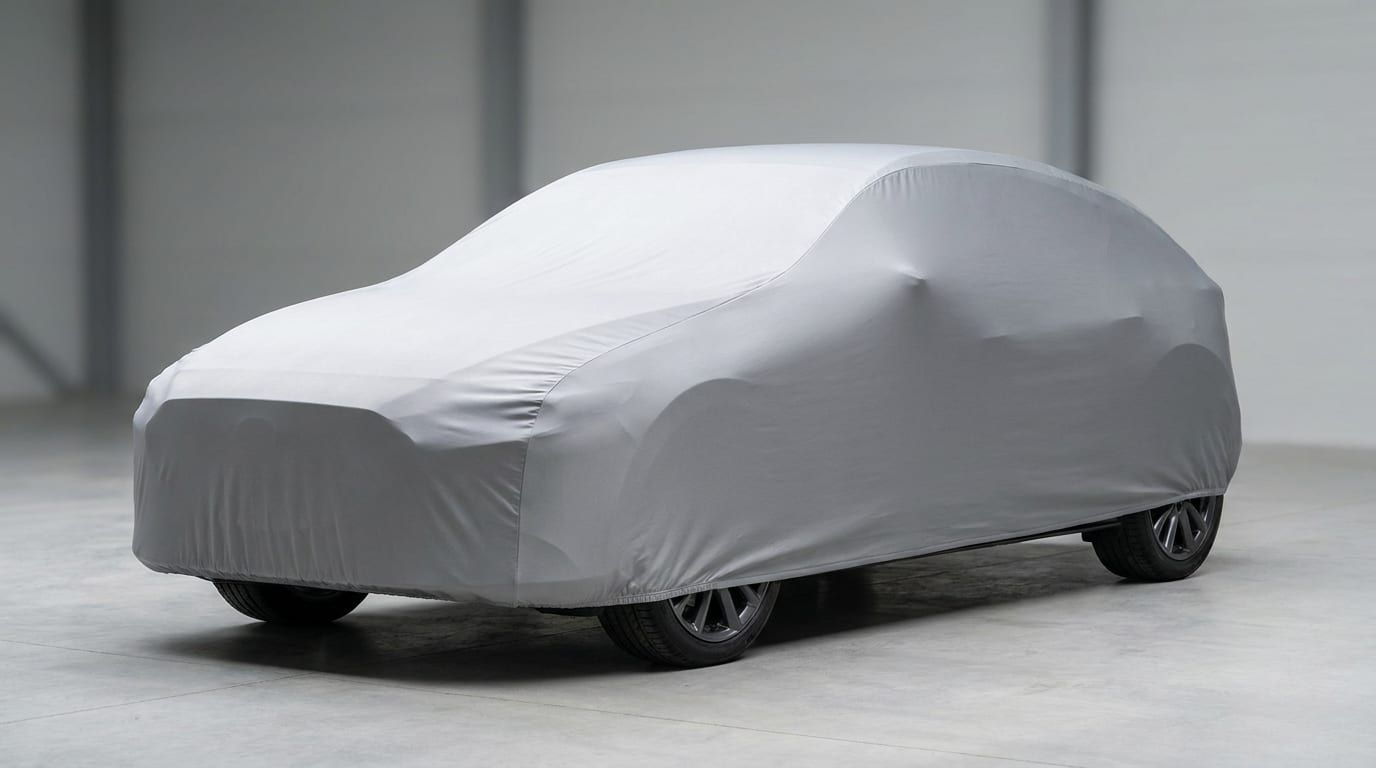
A custom-fit cover starts with a pattern built for one specific year, make, and model. That pattern follows the actual body lines of the car, not an approximation. Mirror pockets sit where the mirrors actually are. The cutout for a spoiler matches the spoiler on your trim level, not a generic hump sewn in to cover "most" cars.
That precision is the whole point. Fewer gaps means less chance for wind to sneak under an edge, less chance for rain to pool in a low spot and seep through a seam, and less dust working its way in around a loose hem. If your car lives outdoors, this is where the money actually goes to work.
It also matters if you're layering on accessories. A cable lock or a gust strap needs something snug to grip. Wrap either one around a universal cover with three extra inches of slack, and you're locking down loose fabric instead of the car. On a custom-fit cover, those same accessories actually hold the cover to the vehicle the way they're designed to.
Worth a full read if you're leaning this direction: the custom-fit buying guide covers sizing, material choices, and how to confirm you're ordering the right pattern for your exact trim.
What Makes a Car Cover 'Universal' (or Semi-Custom)?
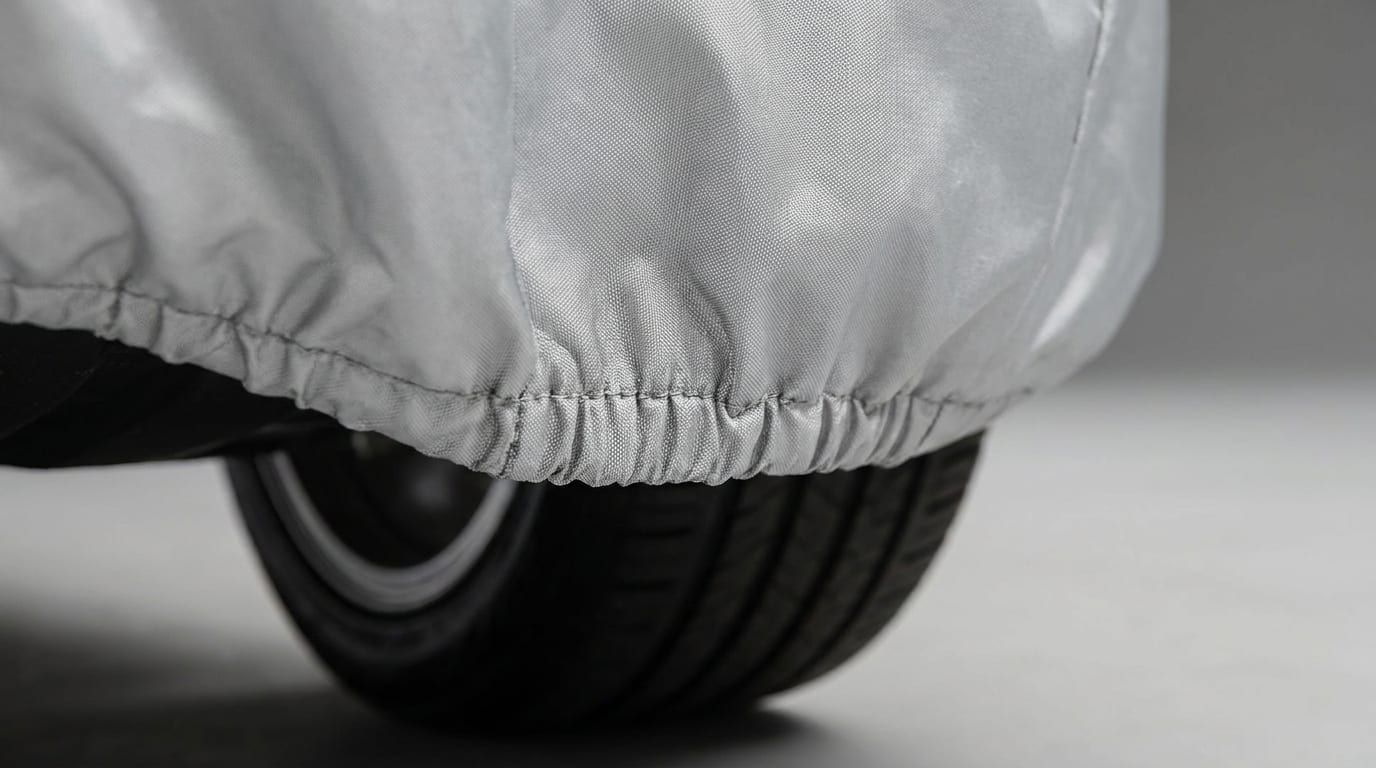
Universal covers work off broad size classes. Think "sedan up to 190 inches" or "SUV up to 200 inches." Instead of a pattern cut to your car, you get a generic shape with elastic hems, straps, or adjustable panels doing the work of taking up whatever extra fabric doesn't belong.
The trade-off is straightforward. You don't need to look up your exact trim or confirm a model year, and the price is lower. What you give up is the seal. In wind or heavy rain, that extra slack becomes a liability instead of a convenience.
There's a middle tier worth knowing about too: semi-custom. These are shaped closer to a specific body type (say, a two-door coupe versus a four-door sedan) without being pattern-cut to one exact vehicle. It's a reasonable compromise if you want better shaping than a fully universal cover but don't need (or want to pay for) a true custom pattern.
Where universal actually makes sense: a car that's garage-kept and just needs protection from dust and UV rays, or a short-term situation like a rental or a vehicle you're about to sell. In those cases, paying for pattern-cut precision doesn't buy you much.
Which Should You Buy? Match the Cover to How You Actually Use Your Vehicle
Run through this before you buy:
Outdoor storage, day in and day out, in real weather? Go custom-fit. Garage-kept with occasional dust and pollen to worry about? Universal is usually enough, and you'll save money doing it.
Vehicle value changes the math too. A classic, a modified build, or anything you'd hate to see with a fresh scuff from cover rub benefits from the reduced paint contact a custom-fit cover provides. On the other end, if you're budget-conscious or you've got two or three cars sharing cover duty, a universal cover's lower cost and reusability across vehicles wins out.
Whatever direction you lean, don't guess your size from body style alone. Use a proper fit finder tool or check the sizing guide to confirm you're getting the coverage your specific vehicle needs, not just something that's probably close.
Common Mistakes When Choosing Between the Two
The biggest one: buying universal for a car that lives outside full-time, then being surprised when wind flap starts scuffing the clear coat or water finds its way in at a loose seam. Universal covers aren't built for that job, and no amount of strapping fixes a fit problem.
The flip side happens too. Custom-fit isn't automatically "worth it" for a car you cover four times a year before a road trip. That's a case where the extra cost buys you precision you'll barely use.
Another one worth flagging: "waterproof" and "water-resistant" get used almost interchangeably in cover listings, and they're not the same thing. One sheds standing water, the other just slows it down. If that distinction matters for where your car sits, the waterproof car cover guide breaks down what to actually look for.
Last one: fit style isn't the only variable. A single-layer cover and a multi-layer, breathable cover perform completely differently in the same weather, regardless of whether it's custom or universal. If you're weighing materials, what makes the best car cover material is worth a read before you check out, and if you're wondering whether a tarp could just substitute for either option, it can't, and here's why a tarp doesn't hold up like a real car cover.
Bottom Line: Get the Fit and Protection Level Right
Custom-fit wins on protection and how long the cover (and your paint) hold up. Universal wins on price and the ability to reuse it on a different vehicle down the line. Neither one is wrong, they're just built for different situations.
Don't guess your way into either one. A quick pass through a cover finder tool will match the fit type and protection level to your actual vehicle instead of leaving it to a body-style guess. And whichever you land on, look for one backed by a solid warranty, since that's your safety net if the fit or material doesn't hold up the way it should.
If you're still sorting through options, stick around and explore the rest of our car cover guides. It's worth getting this decision right before you swipe a card on the wrong one.
Updated