


Do You Need a Car Cover for Your Daily Driver? A Complete Guide
Does a Daily Driver Really Need a Car Cover?
Most people picture car covers on a garaged Mustang under a dust sheet, or a convertible tucked away for winter. Not the car you drive to work every day. That assumption costs you.
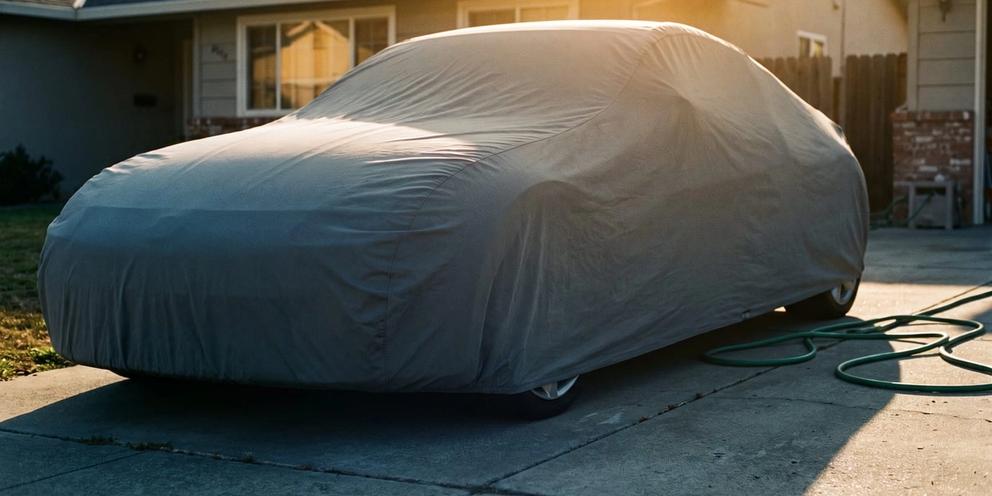
Here's the thing: a daily driver actually takes more cumulative abuse than a weekend classic sitting in a climate-controlled garage. That collector car gets touched twice a month. Your daily gets parked outside, rained on, baked in the sun, and hit with tree sap and bird droppings, day after day, for years. A car cover for a daily driver isn't about babying a vehicle you don't drive. It's about managing exposure that never really lets up.
This isn't a blanket "yes, buy one" pitch. There are real tradeoffs, time spent covering and uncovering, somewhere to store the thing when it's not on the car. What follows is a straight look at what a cover realistically protects against on a car that's parked and moving constantly, and what you give up to get that protection.
What a Cover Actually Protects a Daily Driver From
Sun is the big one. Park outside eight, nine hours a day, five days a week, and UV exposure adds up fast. Clear coat oxidizes, paint fades, dashboards crack. None of that happens overnight. It happens over the two or three years you own the car, one parking lot at a time.
Then there's the stuff that lands on your car between washes. Tree sap, bird droppings, pollen, they're not just cosmetic annoyances. Left sitting in the sun, sap and droppings turn acidic and etch into clear coat, and by the time you notice the spot it's often already there for good. A daily driver sitting under the same tree every workday is basically asking for it.
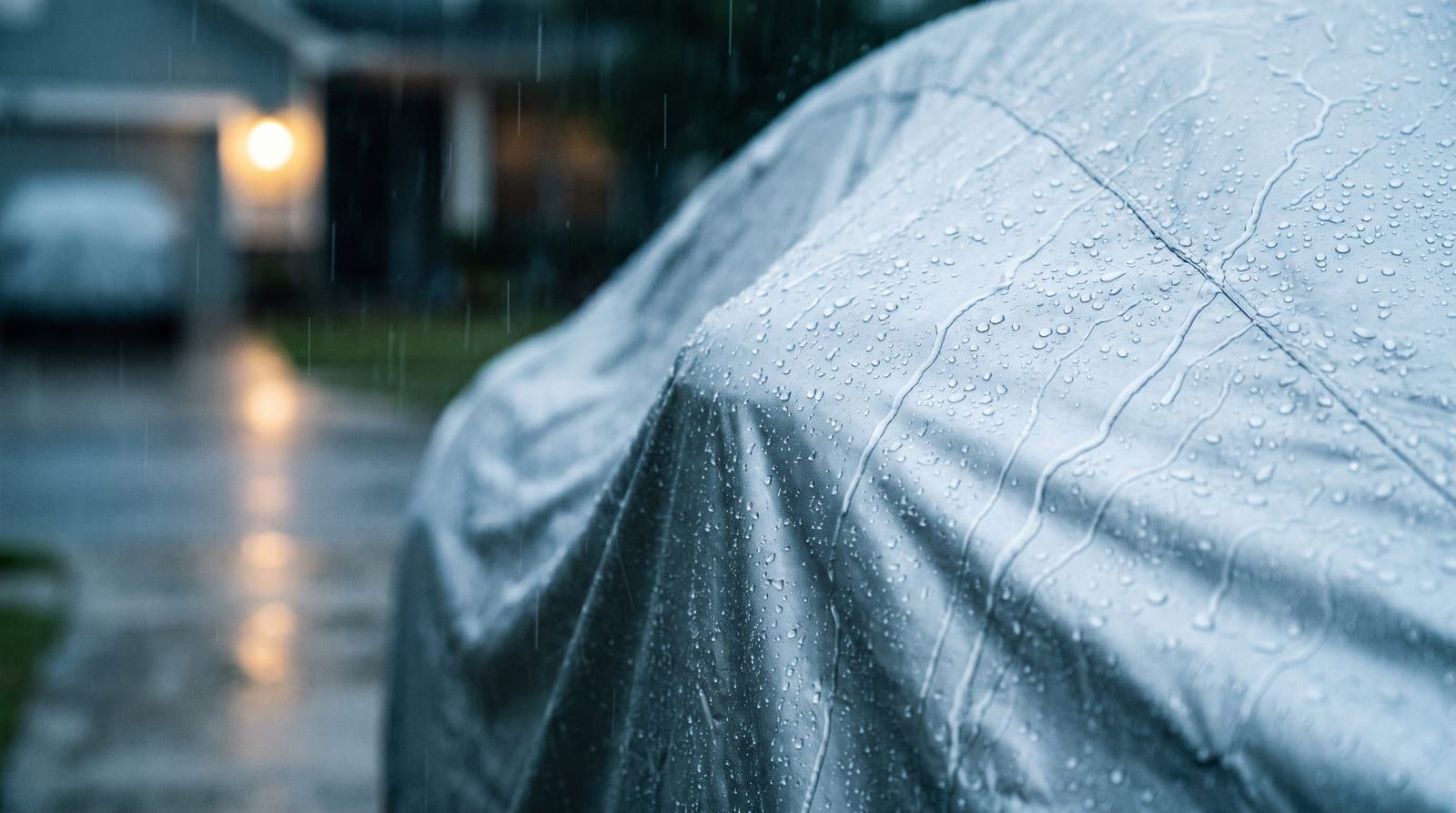
Rain, dew, and frost are lower-stakes but higher-frequency. None of them will ruin your car in one sitting, but scraping frost off a windshield at 7am or wiping dew off a hood before a meeting gets old fast, and skipping it just means water spots and mineral deposits building up over time. For more on how all this plays out on paint specifically, this guide to car paint care goes deeper than we will here.
Outdoor Parking vs. Garage Parking: Does It Change the Answer?
Yes, quite a bit. If your daily is parked on the street, in a driveway, or in an open lot, you're getting the full dose: sun, weather, sap, dust, every single day, no exceptions. That's the scenario where a cover earns its keep fastest, and it's worth reading up on outdoor car covers built specifically for that exposure.
Garage-kept daily drivers have it easier, but "easier" isn't "none." Dust settles constantly, and a stray bike handlebar or a curious cat can leave a scratch you didn't see coming. If that's your situation, a lighter-duty option makes more sense, and indoor car covers are built for exactly that lower-stakes job rather than weatherproofing you don't need.
What to Look for in a Cover Built for Daily Use (Not Storage)
Storage covers and daily covers aren't the same product, even if they look similar on a shelf. A cover meant for a car in long-term storage can afford to be slow to install. You're only doing it once. A cover you're putting on and pulling off every day needs to be fast, or you'll stop using it within a week. Look for simple strap systems and buckles you can manage in under a minute, not something that needs both hands and a YouTube tutorial.
Material matters too, and this is where people get it wrong. A fully waterproof, tarp-like shell sounds like the safer bet, but it traps moisture underneath. On a storage vehicle that's covered for months in a dry space, maybe that's fine. On a daily driver, where the car goes on wet and comes off warm from driving, trapped moisture under a non-breathable shell is worse than no cover at all. You want breathable, water-resistant material that lets the car breathe between drives.
And skip the tarp shortcut entirely. It's tempting, tarps are cheap and sitting in the garage already, but a tarp is not a substitute for a proper car cover, especially for something you're wrapping and unwrapping daily. Tarps abrade paint, don't fit the body, and trap moisture worse than almost anything designed for the job. If you want the full rundown on which fabrics actually hold up, this breakdown of car cover materials is worth a read before you buy.
Fit Matters More When You're Covering the Car Every Day
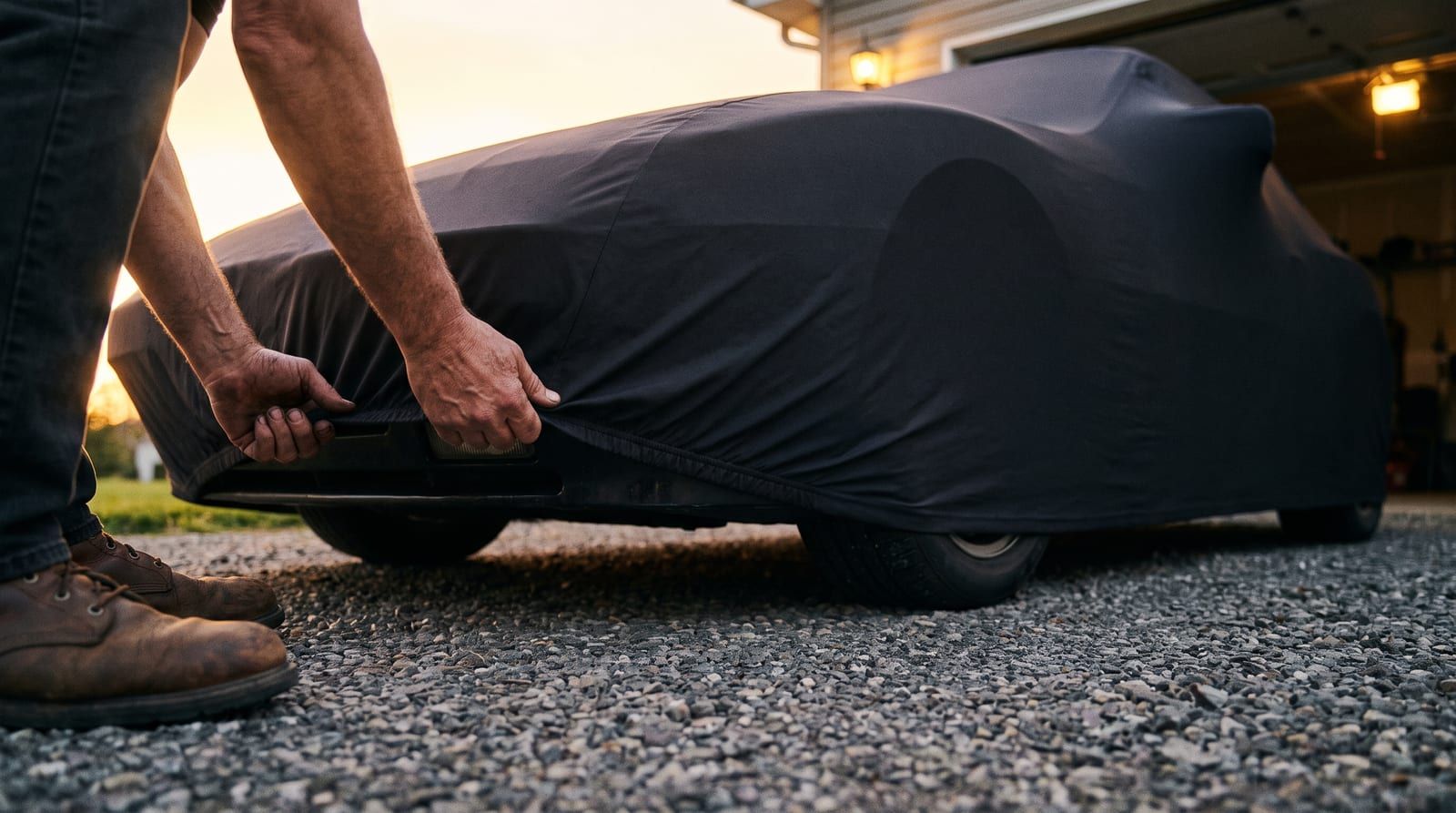
A loose, generic "fits most sedans" cover might be fine for a car that sits under one for six months straight. Put that same loose cover through daily on-and-off handling, though, and the excess fabric starts snagging on mirrors, flapping in wind, occasionally blowing halfway off in a parking lot. That's not protection, that's a hassle with extra steps.
Custom and semi-custom fits solve this. They go on faster because there's no guessing which end goes where or wrestling with extra material, and they stay put better because there's nothing loose to catch wind. If you're using a cover daily, custom-fit car covers are worth the upgrade over a universal one.
Not sure what size you actually need? This sizing guide walks through the basics before you buy, and once you know your fit, the car covers category page is the place to start comparing actual options.
Making a Daily Cover Routine Actually Sustainable
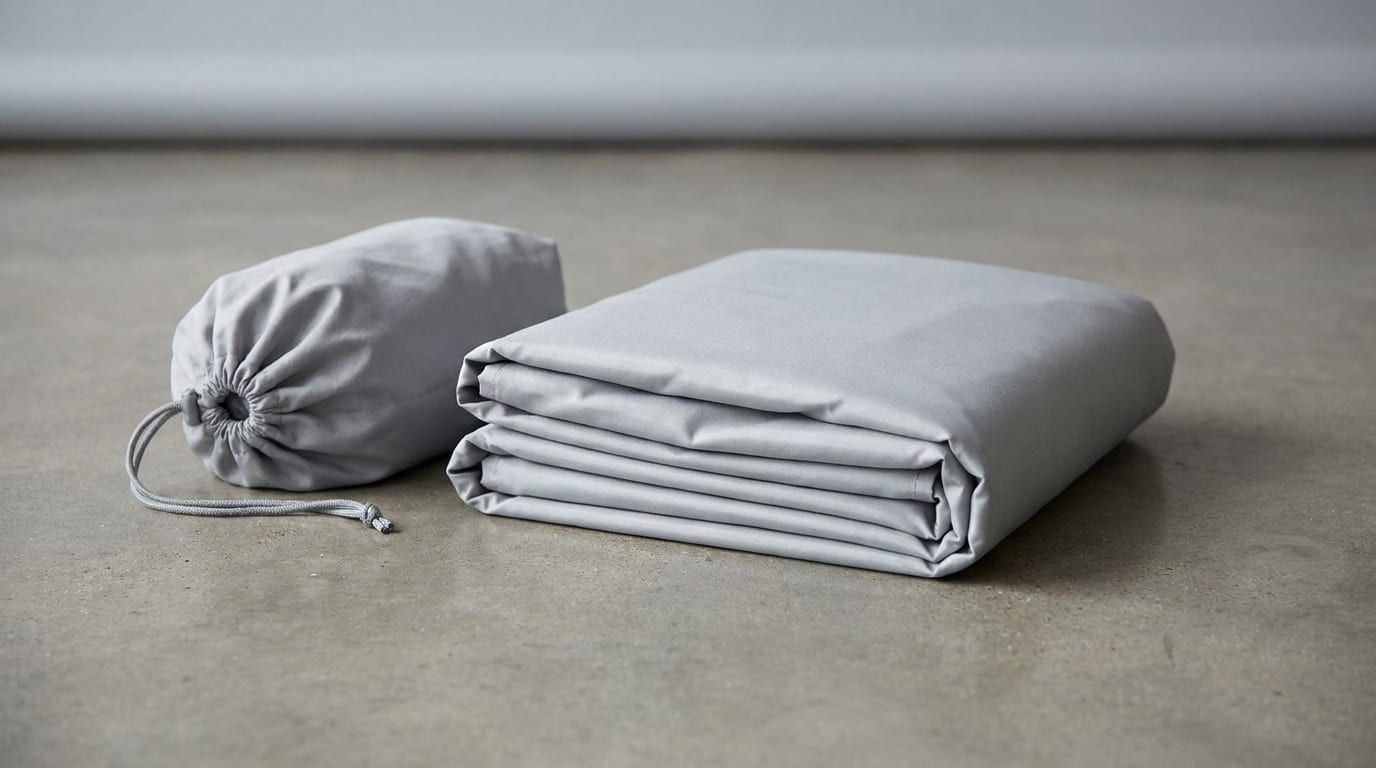
The biggest reason people quit using a cover isn't the cover itself. It's friction. If the cover lives folded in a closet three rooms away, you'll skip it on the days you're running late, and then you'll skip it most days. Keep it and its storage bag in the trunk or right by the door you use to leave. Grab it, use it, done.
Installation speed matters here too. If you're fumbling with straps every morning, you'll resent the routine within a week. A quick pass through this simple guide to installing a car cover will shave real time off your daily routine once you've got the motion down.
One thing daily users overlook: the cover itself gets dirty, and a dirty cover pressed against your paint every night defeats half the point. You don't need to wash it weekly, but building in a basic cleaning cadence keeps grit from grinding into the clear coat. This guide to cleaning a car cover covers how often and how to do it without wrecking the material.
Seasonal Adjustments for Year-Round Daily Drivers
A cover that's perfect in July might be the wrong tool in January, and a lot of people buy one cover and expect it to handle every condition all year. It won't, not well anyway.
Summer priority is UV and heat. Long daylight hours mean more sun exposure per parking session, and that's when fading and interior heat damage do the most work. Winter flips the problem: now you're fighting frost and light snow, and the goal is starting your morning without ten minutes of scraping. For that season, look at waterproof car covers that can actually shed snow and ice instead of just resisting a light drizzle.
If you live somewhere with real seasonal swings, it's worth revisiting your cover choice twice a year rather than assuming one purchase covers every condition your car will face.
Is It Worth It? Final Take and Next Steps
For most people parking outside, or even in a garage that still sees dust and stray scratches, a car cover for a daily driver pays for itself. Less fading, fewer sap stains, fewer trips to get the paint corrected. It's cheaper than a detail job, and it takes less time than you'd think once the routine sets in.
The mistake is grabbing the cheapest universal cover off a shelf and hoping it fits your situation. It won't fit as well, won't go on as fast, and won't match the specific exposure your car actually deals with. Match the cover to how and where you actually park, not to whatever's on sale.
If you want to see what actually fits your car, browse options by vehicle or check out the current top-rated covers to get a sense of what holds up best for daily use. And if you're still weighing options, stick around, there's more here on picking the right protection for however you actually use your car.
Updated