Does a car cover hold up in high wind areas?
Yes, but only if three things line up: a snug, custom fit, heavy-duty fabric, and real securement like wind straps and a cable lock. Does a car cover hold up in high wind areas without those? Not reliably. A loose universal cover will flap, chafe the paint, or just blow off.
That's really the whole answer, but it's worth unpacking why fit, material, and securement matter more than which brand name is stitched on the hem. A cover is a piece of fabric fighting against moving air. Air doesn't care about marketing. It cares about what's flapping and what isn't.
What are the downsides of using a car cover in windy conditions?
A cover that doesn't fit snug is basically a sail with a logo on it. Every gust pushes the fabric back and forth against the clear coat, and over weeks that friction turns into fine scratches or swirl marks you'll only notice in direct sunlight. It's slow damage, which makes it easy to ignore until it isn't.
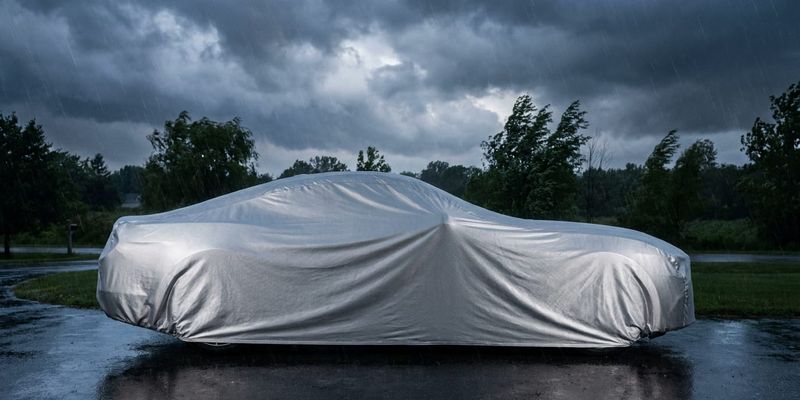
Wind-driven rain makes it worse. A cover that's billowing instead of lying flat traps moisture underneath it, and that moisture can sit against the paint longer than if you'd left the car uncovered entirely. Not a great trade. If you're dealing with both wind and rain regularly, it's worth reading through the full breakdown on using a car cover outdoors, since waterproofing and wind resistance tend to fail together, not separately. A waterproof car cover built for outdoor exposure handles both problems at once better than a basic indoor-style fabric does.
And cheap hardware gives out first. Grommets and stitching take the brunt of wind stress, especially at strap loops and seams. That's usually where a cheap cover fails, not in the middle of the fabric.
Can a 70 mph wind flip a car cover (or the car itself)?
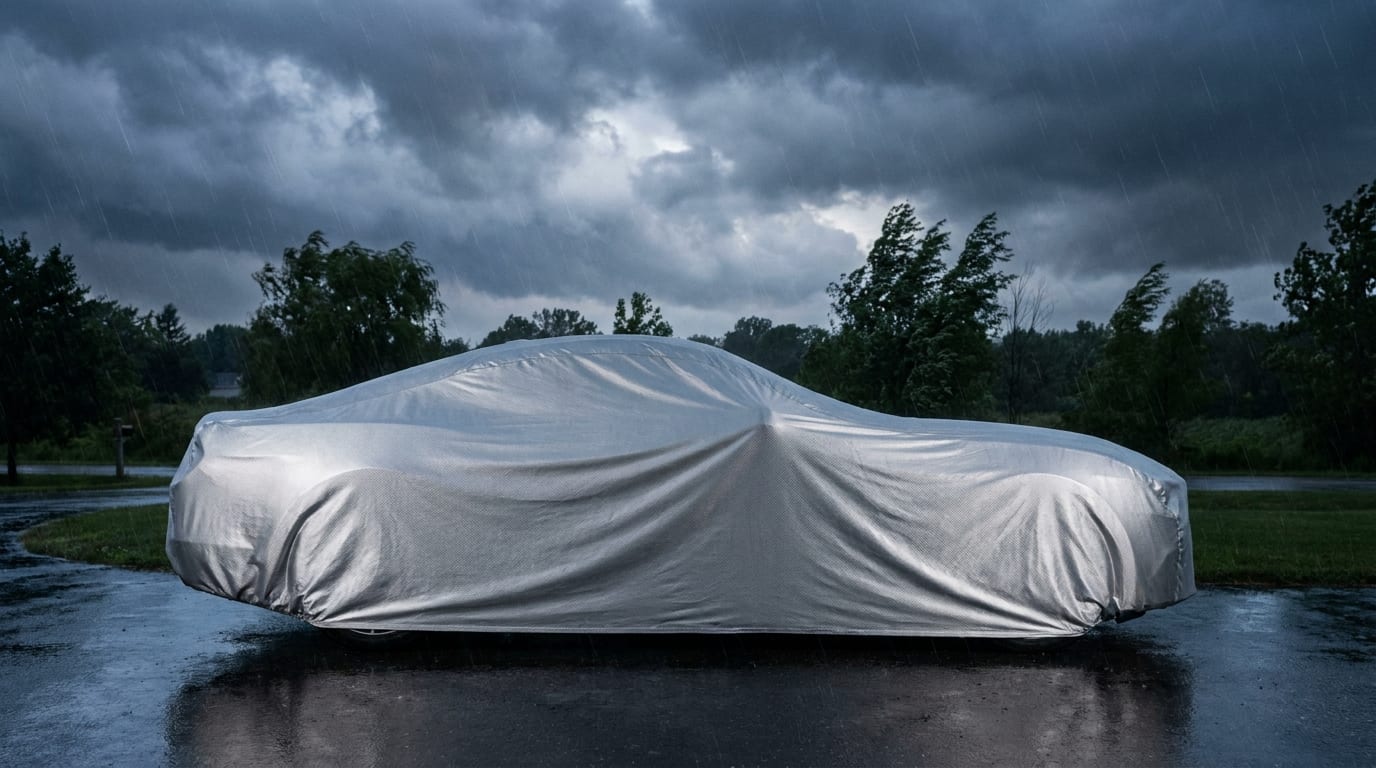
Easily, if the cover is loose. Gusts in that range show up often in named storms and high-wind advisory zones, and that's well within the range that can pull a poorly secured cover clean off a vehicle. It's not subtle. One strong gust catches the front edge, and the whole thing peels back like a tarp off a trailer.
Flipping an actual car is a different question entirely, and a much higher bar. Don't confuse the two. A cover lifting off is about surface area and loose fabric; tipping a vehicle is about mass and sustained wind force most passenger cars will never see outside a hurricane.
What actually resists lift is anchoring at multiple points, front, rear, mirror pockets, and underbody straps, rather than relying on a single drawstring at the hem. Grommets and a cord through them do almost nothing against a direct gust. Four-point anchoring does.
How many mph of wind can a car cover actually withstand?
There's no honest single number here, and anyone who gives you one is guessing. It comes down to fabric weight, how tight the fit is, and whether you're actually using straps or a cable lock, not some rating printed on the box.
Lighter indoor-weight fabrics are fine in a garage with the door shut. Take them outside into anything more than a light breeze and they underperform fast. Heavier multi-layer outdoor fabrics with reinforced grommets hold up noticeably better in sustained gusts, mostly because there's more weight resisting lift and less give at the stress points.
Fit matters just as much as fabric. A custom-fit car cover hugs the body lines, so there's no slack fabric for wind to grab. A universal cover, even a thick one, has extra material bunched at the mirrors and bumpers, and that excess is exactly what catches air first. If you're shopping based on where the car actually lives, the outdoor car covers guide walks through fabric options built for exactly this, and it's worth checking the lifetime warranty terms too if you're in a region where wind exposure is a year-round thing rather than a once-a-season event.
Is it better to cover a car or leave it uncovered in high-wind areas?
Cover it. An uncovered car sitting in wind has zero barrier against airborne debris, dust, grit, and UV. A cover's worst-case downside, some chafing if it's loose, is still smaller than what direct exposure does over time.
But the real decision isn't cover versus no cover. It's secured versus unsecured. An unsecured cover that drags on the ground or flaps constantly can genuinely do more damage than leaving the car bare, which is the part a lot of people miss when they're shopping for car covers and just grab whatever's cheapest.
Pair any cover with wind straps, and if a named storm is coming through, get the vehicle into a carport or garage if that's an option at all. The cover is your daily defense. Indoor storage is your backup plan for the two or three days a year wind actually gets dangerous.
What actually keeps a cover in place when the wind picks up
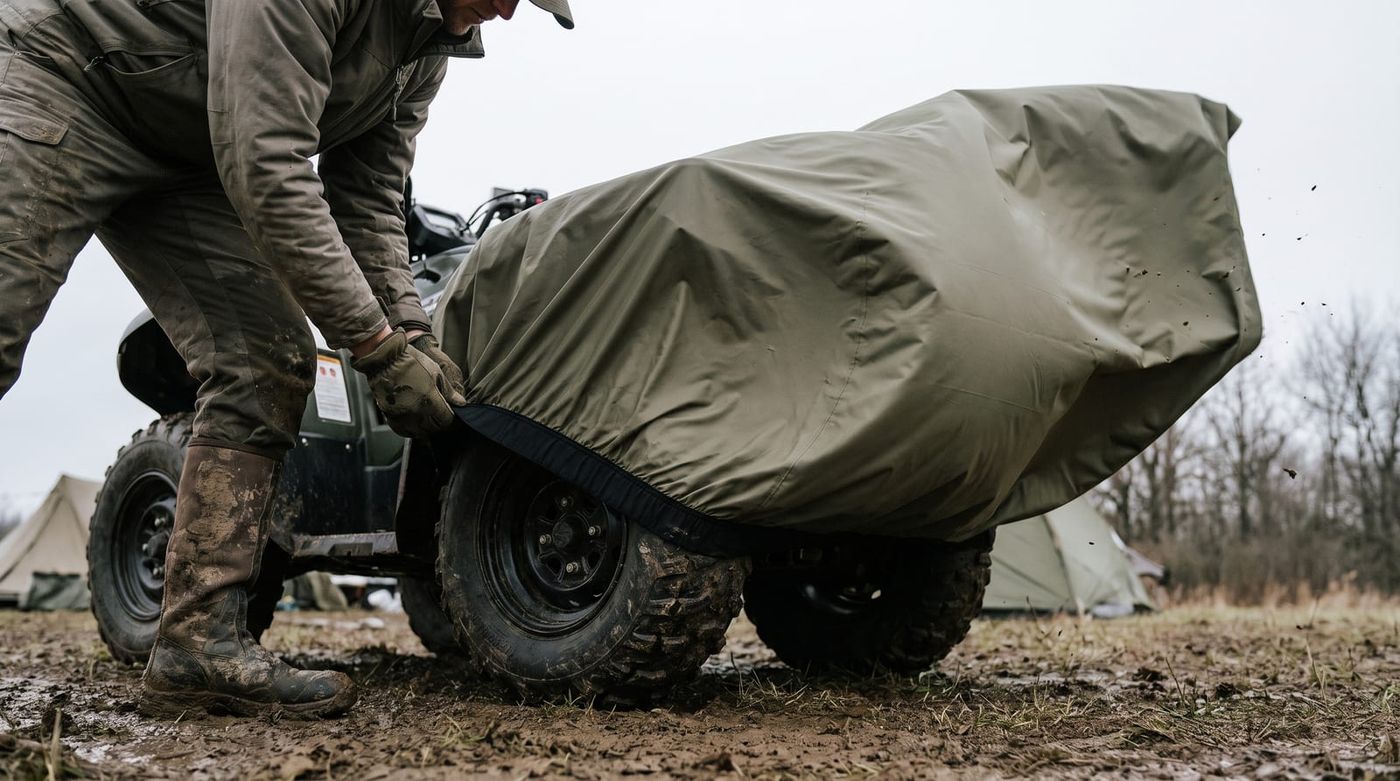
Wind straps that cinch underneath the vehicle at the rocker panels are doing most of the real work here. They stop the cover from ballooning upward when a gust hits, which is the motion that eventually tears fabric or snaps a grommet. If you haven't installed a set, the wind strap installation guide covers where they actually need to sit to do their job.
A cable lock through the hem grommets does double duty. Most people think of it as a theft deterrent, and it is, but it also physically stops the cover from being pulled loose by wind in a way that elastic hems and bungee cords can't. The cable lock installation guide is a quick read if you've only ever used the stock elastic.
Custom-fit panels around mirrors and antennas close off the gaps wind catches first. That's the fabric equivalent of trimming the slack out of a sail.
One thing people skip: checking strap tension after storms. A strap that's loosened gradually over a few weeks of regular use won't hold the same way it did on install day, and you won't know until the next gust finds the weak spot.
Getting the install right for a high-wind spot
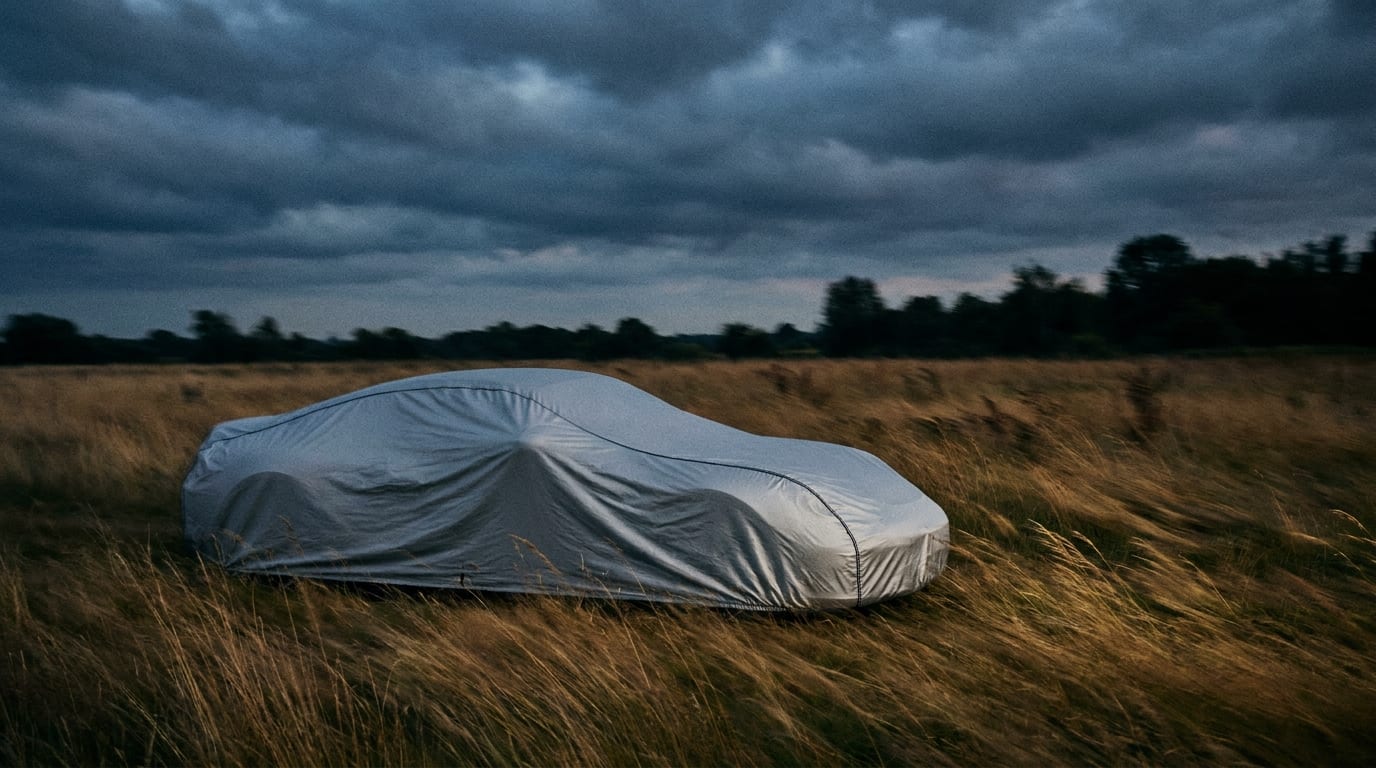
Secure front to back before you start cinching straps. If you tighten one strap first, the whole cover can shift and bunch while you're working on the next one, and you end up fighting the fabric instead of fitting it.
Work the front over the hood and windshield first, settle it against the body, then move to the rear. Only once the whole cover is sitting flat should you start pulling straps tight. Doing it out of order is the most common reason people end up with a lopsided fit that flaps anyway.
Check strap tension seasonally, and definitely after any storm with real wind in it. The step-by-step installation guide covers the full process if you're setting one up for the first time or just want to confirm you're doing it right.
Wind doesn't just stress the hardware, it also drives grit and dust into the fabric, and that grit sitting against the cover accelerates wear long before the fabric itself fails. A quick read through how to clean a car cover is worth it if your car lives somewhere dusty and windy at the same time, which, if you're reading this, it probably does.
Bottom line: pick the fit and fabric for your wind exposure
Fit tightness first, fabric weight second, strap and cable securement third. That order matters more than the price tag on the box. A cover that's snug, heavy enough to resist lift, and actually anchored down will hold up in wind that would strip a loose universal cover off in minutes.
If you've been wondering does a car cover hold up in high wind areas because you just moved somewhere gustier, or you've had one blow loose before, it's less about buying a "stronger" cover and more about matching fit and fabric to the climate you're actually dealing with.
Worth poking around the blog for more on cover care and storage if you're new to all this, there's a lot that doesn't show up until you've had a cover for a season or two.
Frequently asked questions
Can a 70 mph wind flip a car cover?
Yes, a loose or poorly secured cover can be lifted off entirely in 70 mph gusts. Flipping the actual vehicle requires far higher sustained wind speeds and is a separate risk.
How many mph of wind can a car cover withstand?
There's no single industry-wide rating. It depends on fabric weight, how tight the fit is, and whether wind straps or a cable lock are used. Custom-fit, heavier outdoor fabrics with reinforced grommets perform noticeably better than light universal covers.