Does a Car Cover Keep Snow Off the Windshield?
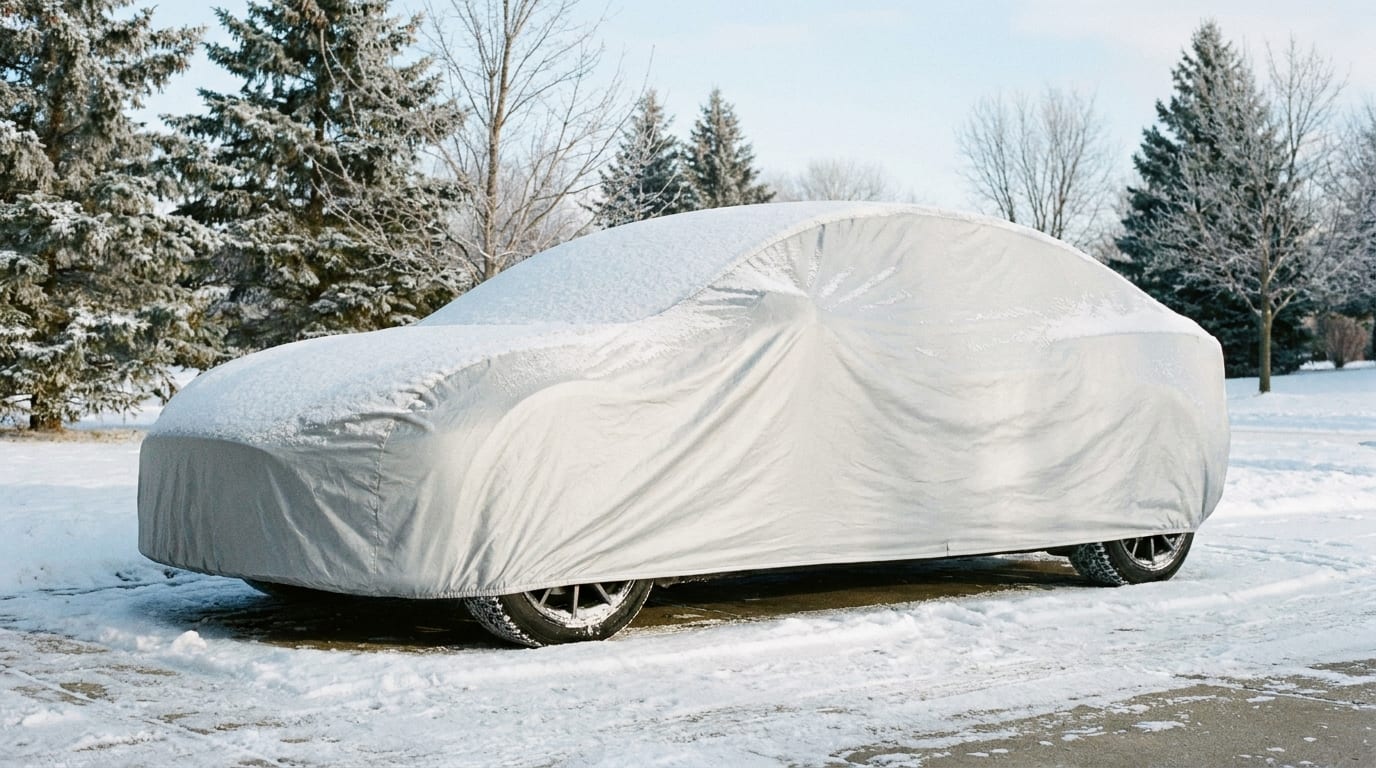
Yes. A full car cover that fits snugly over the hood and windshield blocks snow from landing directly on the glass, so you skip the morning scrape-and-defrost routine entirely. The catch: it only works if the cover is actually secured. Wind can work a loose cover free overnight, and once the windshield panel shifts even a few inches, snow sneaks right under it.
That's really the whole answer. Straps, an elastic hem, or a cable lock around the mirrors and bumper are what keep the fabric where it needs to be through a windy, snowy night. Skip those, and you've basically got an expensive tarp that moves around in the storm.
Why Does Snow Build Up on the Windshield in the First Place?
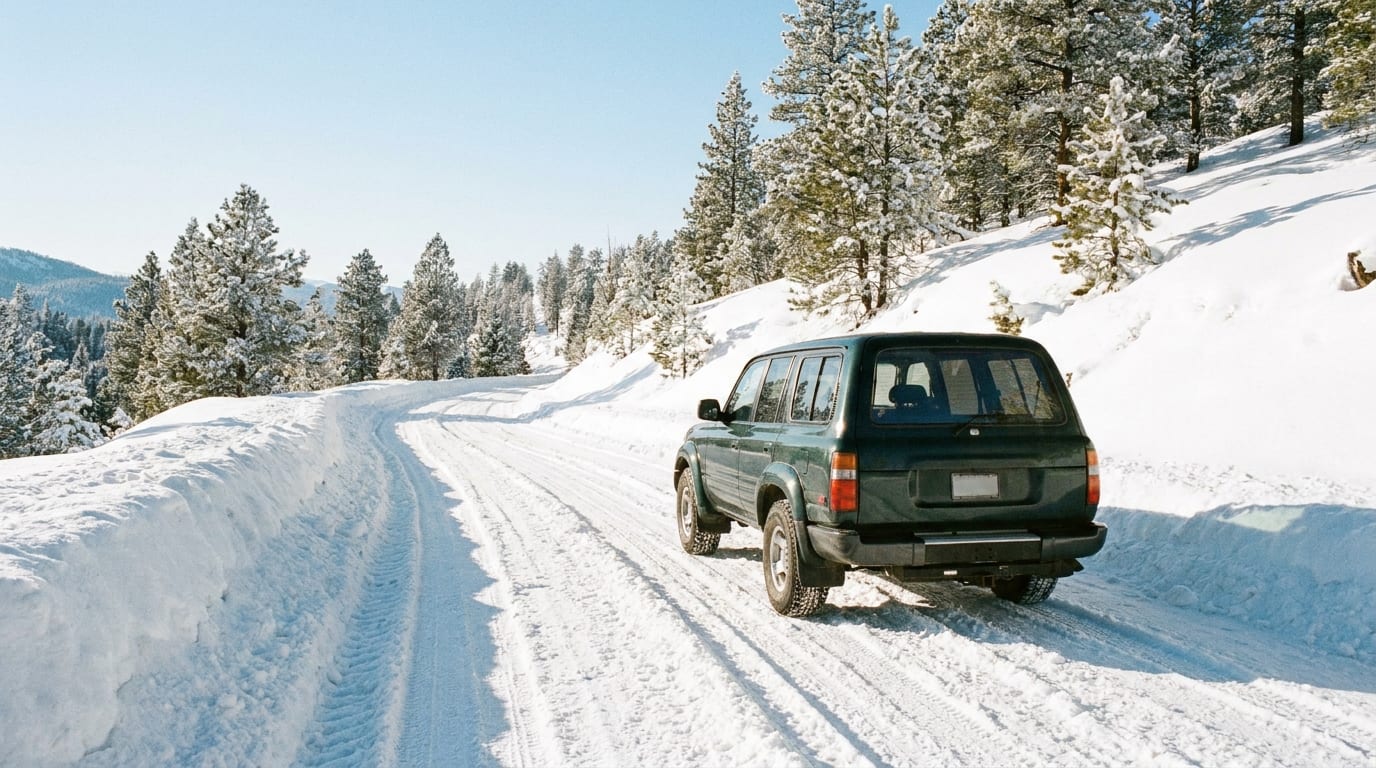
Windshields are angled, glass, and completely exposed. There's nothing up there to deflect snow, sleet, or frost, so it all just lands and sits. Overnight, that thin layer compacts and bonds to the glass, especially once temperatures dip below freezing and the moisture starts to crystallize.
Anyone who's left a car uncovered through a snowy night knows the drill: 10 to 20 minutes of scraping, a cold steering wheel, and a defroster running full blast before you can actually see out the windshield. It's not just the visible snow either. Wiper blades freeze directly to the glass in a lot of these conditions, and prying them loose without cracking the rubber is its own small chore.
A cover sidesteps all of it by keeping moisture off the glass in the first place. No contact, no bond, no scraping.
What Cover Features Actually Stop Snow From Reaching the Glass?
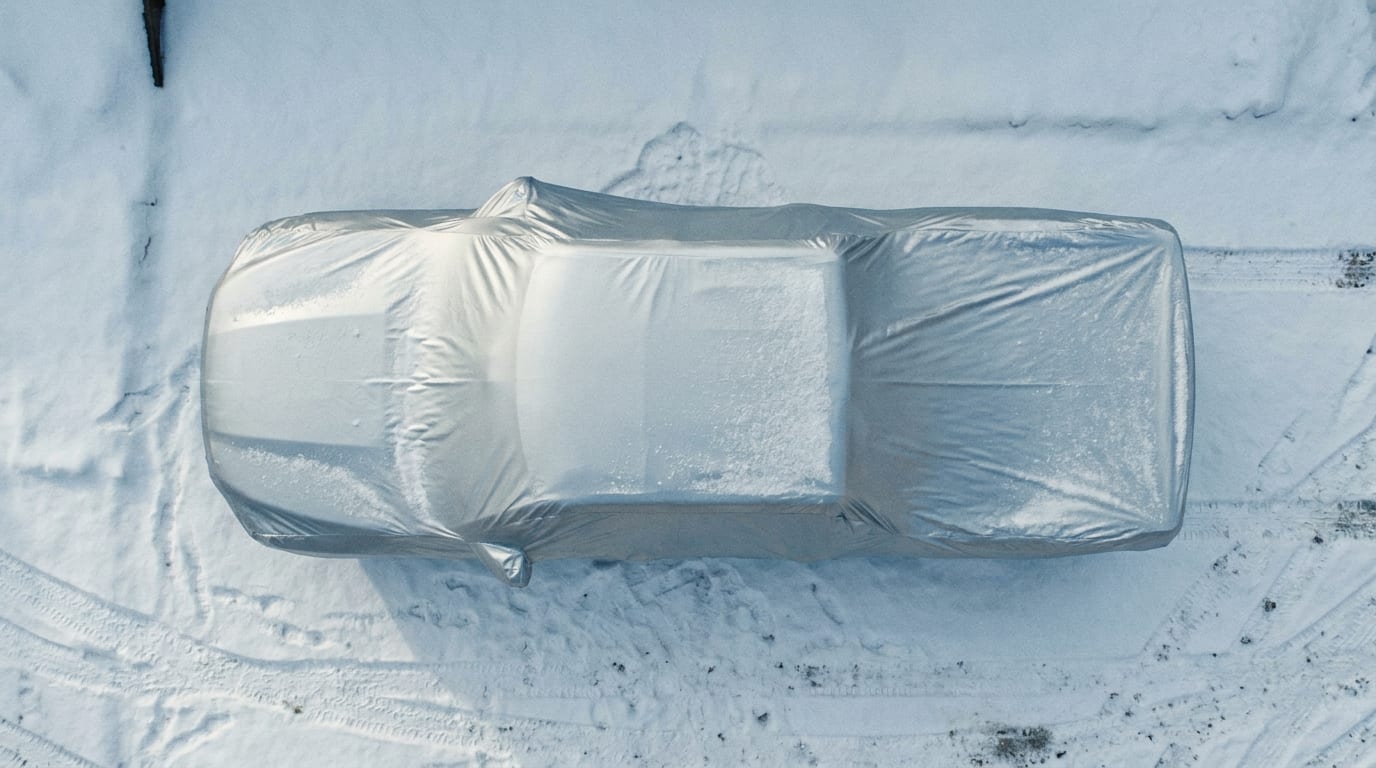
Not every car cover is built for this job. A few specific features actually matter here.
Full coverage is the baseline requirement. The cover needs to extend over the hood, down across the windshield, and down to the side mirrors, not just drape over the roof like a tarp. Anything short of full coverage leaves the windshield exposed at the edges, which defeats the purpose.
Material matters just as much. A waterproof or weatherproof outer shell sheds snow and moisture instead of soaking it in, which changes what happens overnight. A cover that absorbs moisture gets heavier, colder, and more likely to let that moisture work through to the glass underneath. If you're comparing options, it's worth looking at waterproof car covers built specifically to shed precipitation rather than just block dust and sun.
Then there's the fit hardware: elastic hems, grommets, and included straps or a cable lock. These are what keep wind from catching the edge near the windshield and peeling it back. A cover with a perfect fit on paper but no way to cinch it down is still going to fail in a 20 mph gust.
Can a Car Cover Also Prevent Ice and Frost on the Windshield?
Mostly, yes. Frost forms when moisture in the air contacts cold glass directly and bonds to it. A cover removes that direct contact, so the ice formation that would normally build up on the windshield just doesn't happen, or it's dramatically lighter if it does.
Here's the nuance, though: condensation can still form underneath the cover in certain conditions, especially temperature swings between day and night. That's why breathable fabric matters. A cover that traps moisture against the car instead of letting it evaporate can actually create its own small condensation problem, even though the windshield stays snow-free. The waterproof fabrics guide gets into why some materials shed precipitation while still letting trapped moisture escape, and why that balance is harder to engineer than it sounds.
Heavy frost or freezing rain will still coat the outside of the cover itself. That part's unavoidable. But the windshield glass underneath stays clear, which is the part that actually matters at 7am when you're trying to leave for work.
What Are the Limits of a Car Cover in Heavy Snow or Wind?
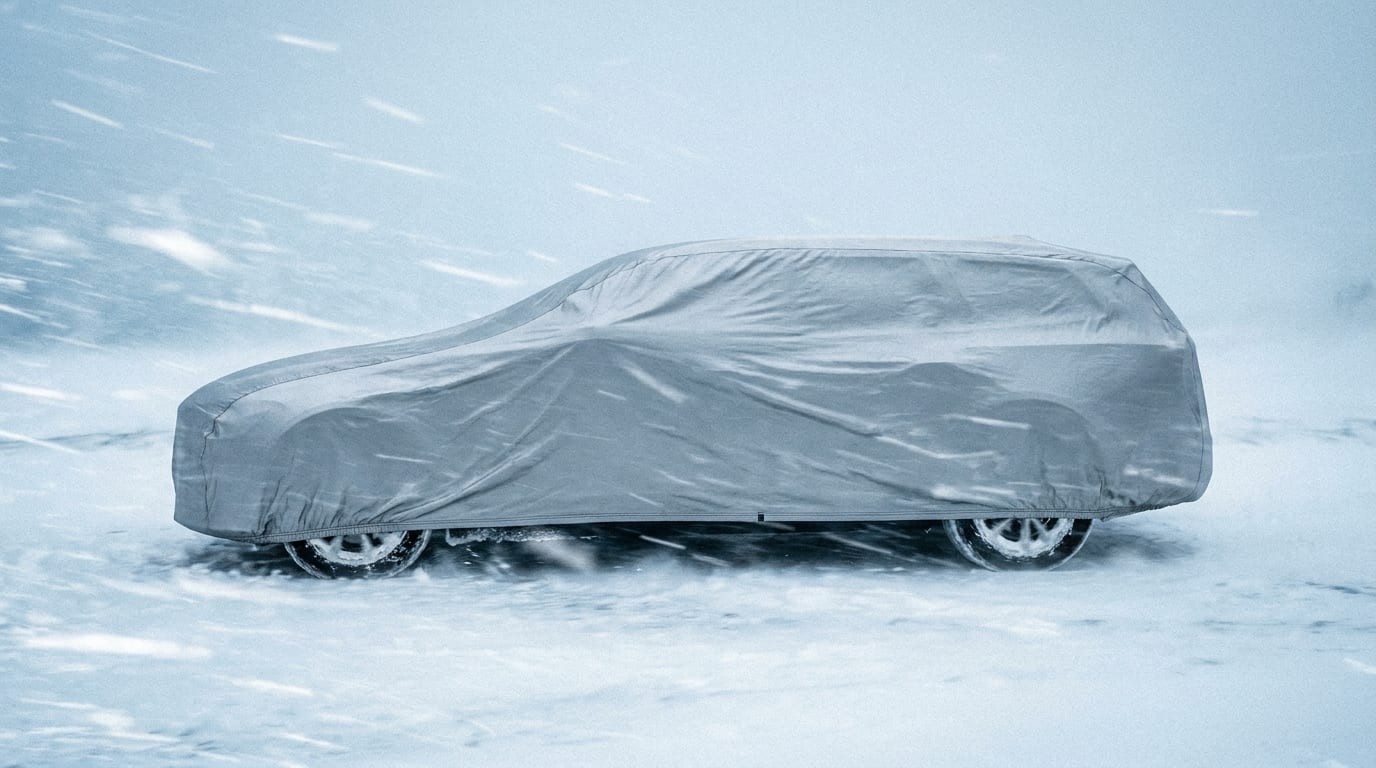
A cover isn't magic, and it's worth being honest about where it falls short.
Several inches of wet, heavy snow adds real weight. Enough weight, and the fabric starts to sag between the roof and the windshield seam, creating a low point where more snow collects and eventually works its way into the gap. It's not that the cover fails outright, it's that the seam area becomes the weak point under enough load.
Wind is the other limiter. A cover without straps, or with straps that aren't actually cinched down, can get picked at by gusts until it shifts off the glass entirely. At that point you're back to scraping, just with extra steps.
And in blizzard-level conditions, a cover was never meant to replace a garage or carport. It's a strong layer of protection for ordinary winter weather, not a substitute for actual shelter. If you're parking outside through harsh winters regularly, it's worth looking at outdoor car covers rated specifically for that kind of exposure rather than a lighter all-season cover.
How Do You Install a Winter Cover So It Stays Secure Over the Windshield?
Installation technique matters almost as much as the cover itself. Most of the "my cover didn't keep snow off" complaints trace back to a sloppy install, not a bad product.
Start at the front and drape back, not the other way around. That lets the windshield panel settle into place snugly before you move on to securing the mirror pockets, which anchor the fit along the sides. Skipping this step and just throwing the cover on from the middle tends to leave slack right over the glass, exactly where you don't want it.
Once it's draped, use the included straps or a cable lock around the bumpers. This is the step people skip most often, and it's the one that actually stops wind lift overnight.
Last, check the fit at the A-pillars and the base of the windshield. These are the two spots where gaps show up most, since the cover has to bend around the curve of the glass there. A little slack in that area is exactly how snow finds its way through. For the full walkthrough, the car cover installation guide covers the draping and anchoring process step by step, and the gust strap installation guide is worth a look specifically for wind-prone areas.
Choosing the Right Cover to Keep Snow Off Your Windshield This Winter
A snug, waterproof cover secured with straps is still the simplest, lowest-cost way to skip windshield scraping all winter. No scraper, no warming the car up for ten minutes, no frozen wiper blades to pry loose.
Fit is the piece people underestimate most. A cover that's slightly too big rides loose, leaves gaps at the windshield seam, and lets snow in exactly where you don't want it. Before buying, it's worth confirming your size using the car cover sizing guide rather than guessing based on your vehicle's general class.
If you're shopping for a cover built for the season, browse car covers by vehicle type to find something rated for winter exposure. And once you're a few storms in, a quick read through how to clean a car cover will help you shake off snow buildup without stressing the fabric or the seams over repeated use.
If you found this useful, stick around and explore more seasonal car care tips. Winter's long, and your windshield will thank you.
FAQ
Does a car cover keep snow off the windshield? Yes, a full car cover that fits snugly over the hood and windshield blocks snow from landing directly on the glass, eliminating the need to scrape ice in the morning. It only works if the cover is secured properly with straps, an elastic hem, or a cable lock so wind doesn't shift it off the glass overnight.