The Quick Verdict
Polyester wins most head-to-head matchups for car covers, and it's not close. It holds up better under UV exposure, resists tearing when you're wrestling it on and off the car, and takes waterproof coatings more reliably over time. Polypropylene isn't a bad material, it's just a different tool: lighter, cheaper, and fine for short stretches of dust protection in a garage. In the polyester vs polypropylene car cover debate, the honest answer depends on where your car actually sleeps at night.
If your vehicle sits outside year-round and sees real sun, rain, or pollen, polyester is the one to buy. If you need something to throw over a car in a garage for a few weeks, or you're working with a tight budget and short-term coverage, polypropylene gets the job done without overpaying. Worth noting: most premium cover lines, including the higher tiers on CarCovers, default to polyester or polyester blends. That's not marketing fluff, it's just what the material does better.
Polyester vs Polypropylene: At-a-Glance Comparison
Here's the side-by-side, stripped down to what actually matters when you're choosing between the two.
| Metric | Polyester | Polypropylene |
|---|---|---|
| Tensile strength/tear resistance | Higher, handles repeated stress well | Lower, more prone to tearing under strain |
| UV resistance | Strong inherent resistance to sun degradation | Degrades faster, gets brittle with UV exposure |
| Water resistance (face fabric only) | Moderate on its own, accepts coatings well | Naturally water-repellent but stiffer |
| Breathability | Moderate with proper weave | Lower in dense weaves, traps moisture |
| Typical weight | Heavier | Lightest option |
| Expected lifespan | 3 to 5+ years | 1 to 3 years |
| Typical price range | Mid-to-premium | Budget |
| Best use case | Daily outdoor/all-weather use | Short-term or indoor dust protection |
A footnote worth remembering: these are generalizations, not laws of physics. A tightly woven, well-coated polypropylene cover can outperform a cheap, thin polyester one. Weave density and coating quality do a lot of the real work here, the material name on the tag is just a starting point.
Durability and Tear Resistance
Polyester fibers simply have higher tensile strength than polypropylene, fiber for fiber. That matters more than it sounds like it should. Every time you pull a cover over a side mirror, snag it on a tree branch, or let the dog jump up to sniff it, you're testing that tensile strength. Polyester shrugs most of that off. Polypropylene doesn't always.
Here's the bigger issue with polypropylene outdoors: it gets brittle. UV exposure and temperature swings attack the polymer structure faster than they do polyester, and brittle fabric cracks. Leave a polypropylene cover on a car through one hot summer and a cold winter, and you'll likely see cracking or small tears by the second season. That's not a knock on the material in general, it's just not built for sustained sun exposure.
This is also where layering comes in. Multi-layer polyester covers, the kind used in hail-rated or platinum-tier products, stack scratch and impact resistance on top of the base fabric's strength. A single-layer polypropylene tarp has nowhere to hide if something heavy lands on it. If impact protection is your main worry rather than everyday wear, the hail car cover guide breaks down what multi-layer construction actually buys you.
Weather and Water Resistance
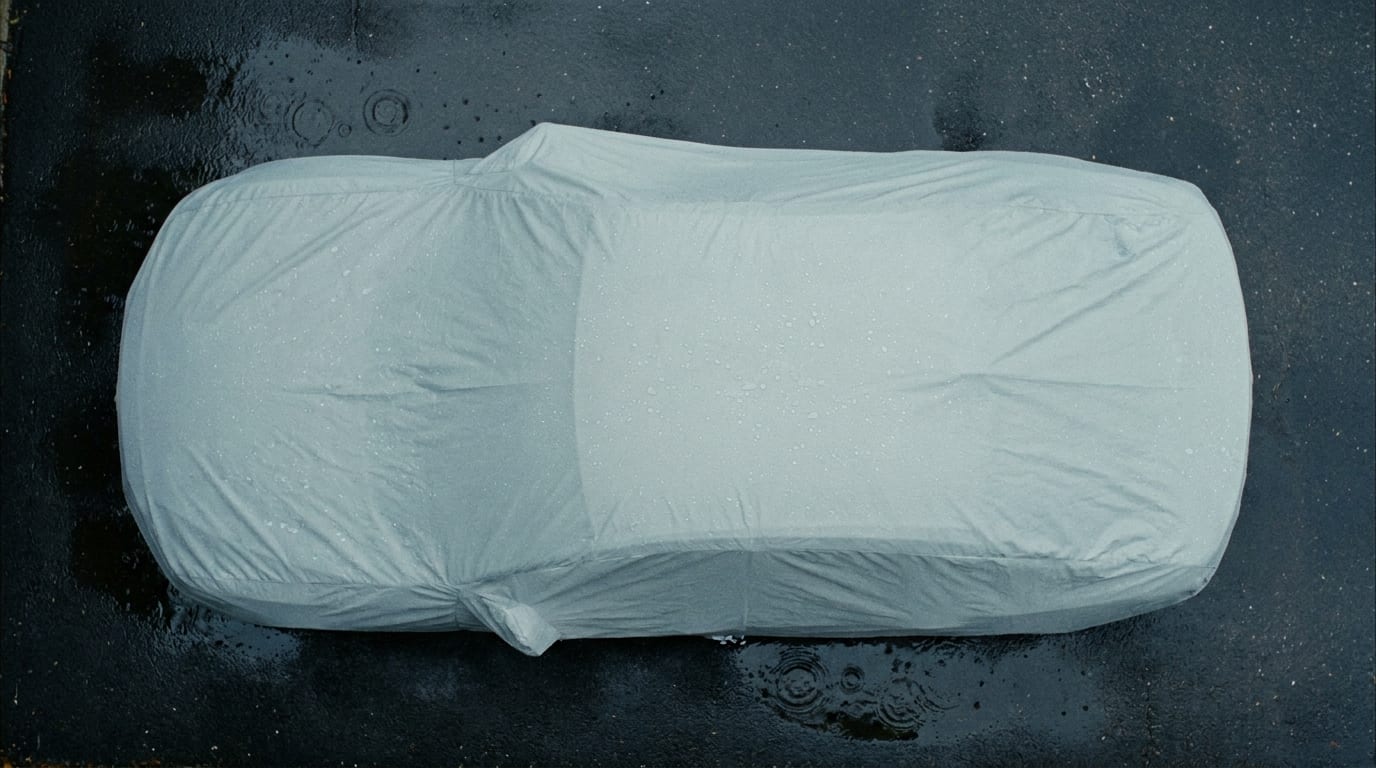
Neither material comes out of the factory waterproof. People assume "polyester" or "polypropylene" on a label means water just beads off, but the raw fiber isn't doing that work, a coating or laminate applied on top is.
Polypropylene does have a natural edge here at the fiber level, it's hydrophobic by nature and resists water better than untreated polyester. But that advantage doesn't carry through to long-term performance, because polypropylene doesn't hold up structurally under the weight of a heavier waterproof coating. The coating can crack or peel off faster than the base fabric wears out.
Polyester takes coatings like polyurethane backing more reliably, and holds onto them longer. That's the real reason most serious outdoor-rated covers are built on coated polyester rather than coated polypropylene: it's not that polyester feels more waterproof out of the box, it's that it keeps the coating that makes it waterproof intact for years instead of months. For the mechanics of how these coatings actually work, the waterproof fabrics breakdown and the waterproof car cover guide go deeper than this section has room for.
Breathability and Interior Protection
Breathability sounds like a minor spec until you've peeled back a cover and found condensation beaded on your paint. Trapped moisture under a non-breathable cover doesn't evaporate, it just sits there, and that's how you end up with water spots, mold on the fabric, or worse, finish damage underneath.
Cheap polypropylene tarps are usually the culprit. Dense, non-breathable weaves block rain, sure, but they also block the car from venting its own moisture, especially overnight when temperatures drop and humidity condenses. Polyester blends used in better multi-layer covers are engineered specifically to let that moisture escape while still keeping rain out. It's a harder balance to hit, which is part of why those covers cost more.
Match the cover to where the car lives. Indoors, breathability matters less because you're mostly fighting dust, not rain and temperature swings, so a non-breathable layer is less of a liability. Outdoors, it's non-negotiable. The indoor car covers guide and outdoor car covers guide walk through what each environment actually demands from a cover.
Cost and Long-Term Value

Polypropylene wins on sticker price, full stop. You'll find these covers at the bottom of the price range almost everywhere they're sold. Polyester sits mid-to-premium, and multi-layer polyester covers sit higher still.
But run the math past year one. A $40 polypropylene cover that needs replacing annually costs $120 over three years. A $90 to $120 polyester cover that actually lasts three years costs the same or less, and you've only had to buy it once. That's the whole argument for spending more upfront: in the polyester vs polypropylene car cover comparison, cost-per-year tells a different story than sticker price does.
Warranty length is a decent proxy for this, too. Covers backed by a lifetime warranty are generally built from higher-grade polyester construction, because no manufacturer backs a product that long if it's going to fall apart in a season. If a cover's warranty is short or vague, that tells you something about what's inside it.
Which One Should You Actually Buy?
Simple framework: if the car parks outside year-round and takes real sun and rain, go polyester, ideally multi-layer. If you need occasional indoor dust protection or short-term coverage while you sort out something more permanent, polypropylene is a reasonable, budget-friendly choice.
Fit matters separately from material, and people conflate the two more than they should. A well-fitted polypropylene cover that doesn't flap around in the wind can actually outperform a loose, ill-fitting polyester one that's constantly rubbing against the paint. Don't assume material alone solves a fit problem. The custom-fit car covers guide and sizing guide are worth a look before you check out, regardless of which material you land on.
Climate tips the scale too. Desert Southwest, high-UV regions: prioritize polyester no matter your budget, because that's exactly the condition polypropylene struggles with most. Milder climates, shaded driveways, or anything garage-adjacent give you more room to flex toward the cheaper option.
Bottom Line
Polyester is the better buy for durability, weather resistance, and long-term value. Polypropylene is fine for short-term, budget-driven, or indoor-only coverage, but it's not built for years of sun and rain. That's the whole polyester vs polypropylene car cover question in one sentence.
If you're ready to look at options by vehicle, the car covers category is the place to start browsing by material and fit. And if you're still not sure which combination of size, fit, and fabric makes sense for your car, the cover finder tool will narrow it down in a couple of clicks.