Why Your Car Cover Keeps Sliding: A Quick Diagnosis
If you're asking why does my car cover keep sliding to one side, the answer almost always comes down to one of three things: the cover doesn't actually fit your vehicle, wind is getting underneath it, or you're not using the tie-down hardware that came in the box. That's it. No mystery force is tugging your cover sideways overnight.
This article works backward from the problem. First we'll walk through the specific causes, so you can figure out which one applies to you. Then we'll get into the fixes, one by one, matched to the cause.
Here's why it's worth sorting out now instead of just yanking the cover back into place every morning. A cover that's constantly shifting exposes a strip of paint to sun, sap, and bird droppings right along the slide line. Grommets stretch and eventually tear from the repeated tugging. Straps and buckles that get repositioned daily wear out faster than ones installed once and left alone. A sliding cover isn't just annoying, it's slowly damaging the thing it's supposed to protect.
Top Causes of a Car Cover Shifting or Sliding Off
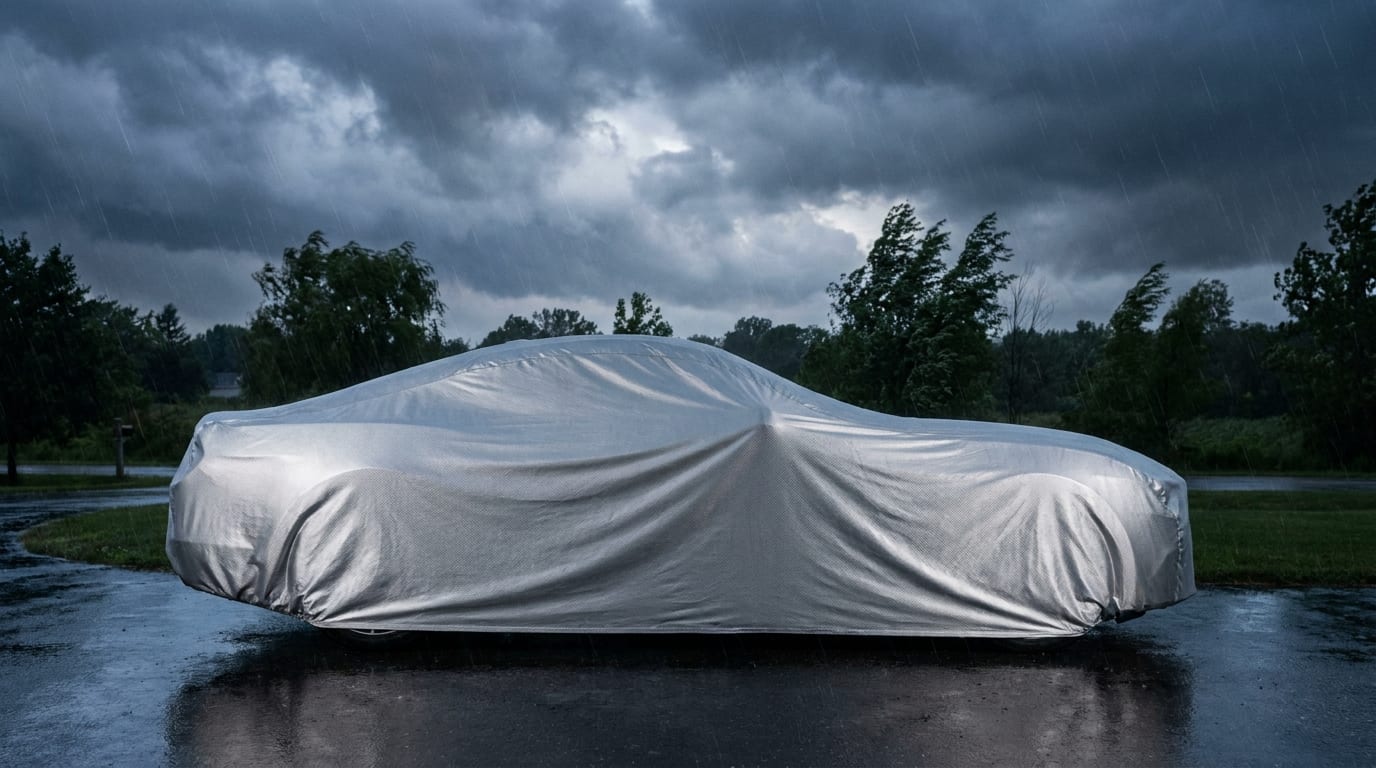
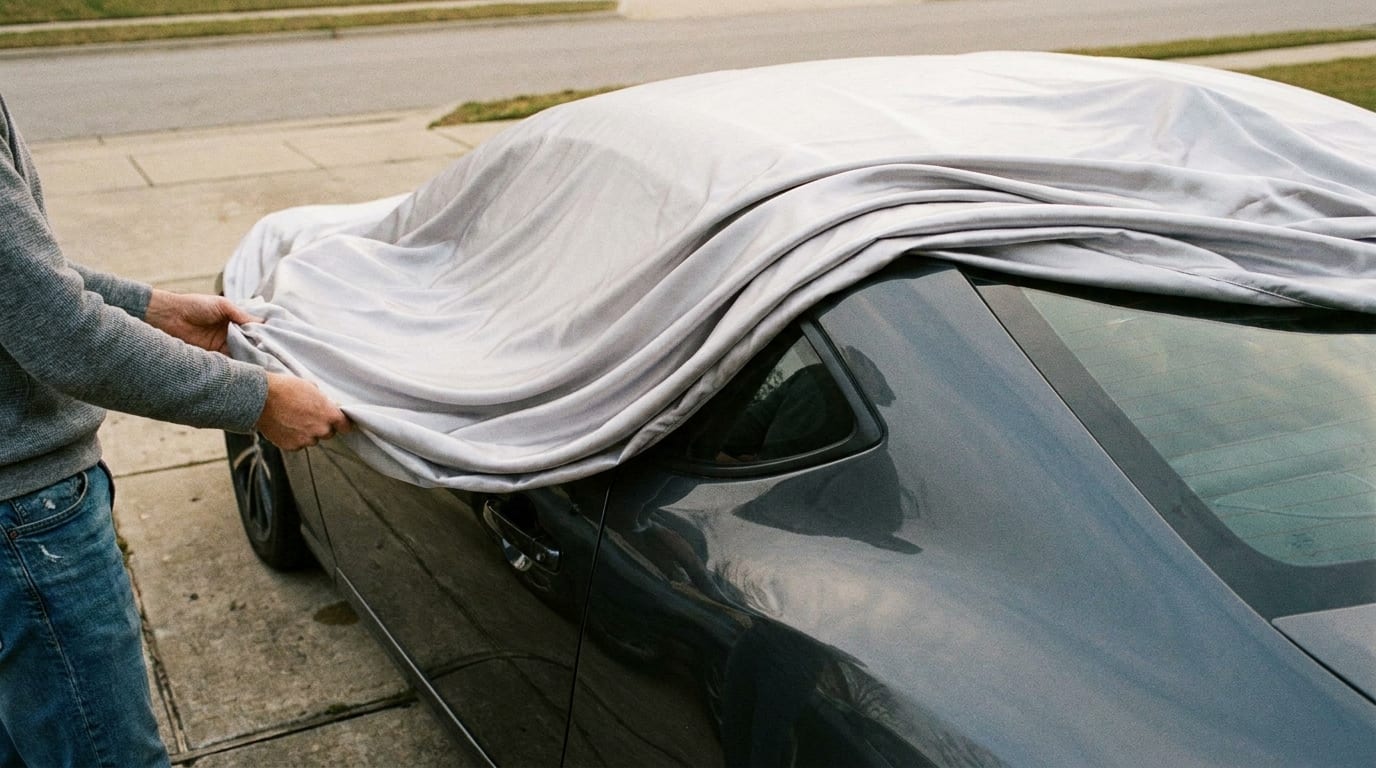
It's too big for your car. Universal and semi-custom covers are cut generously so they'll stretch over a range of body styles. That extra fabric has to go somewhere, and in wind it billows out like a sail instead of sitting flat against your panels. A custom-fit car cover follows your car's actual lines, so there's far less loose material for wind to grab in the first place.
The bottom cable never got threaded. Most covers ship with a cable channel sewn into the hem, plus grommets at the front and rear. A lot of owners never run the cable through it. Skip that step and there's nothing anchoring the lower edge, so the first strong gust just lifts and walks the whole cover sideways.
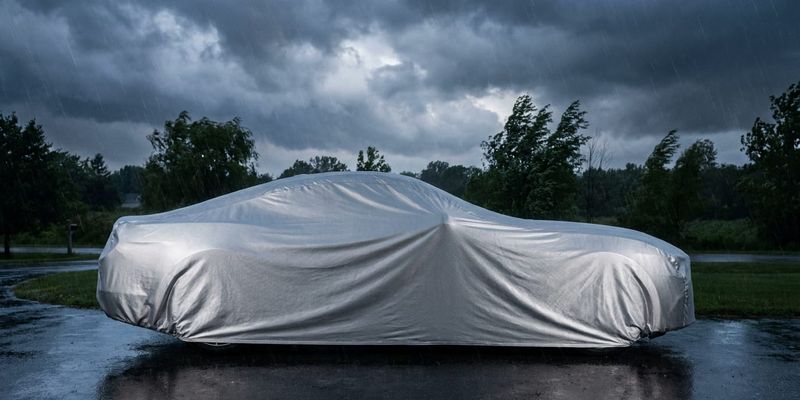
No gust straps underneath the car. This is the big one for outdoor parking. Without straps crossing under the chassis, a cover is only held on by friction and gravity, neither of which does much against a 25 mph crosswind.
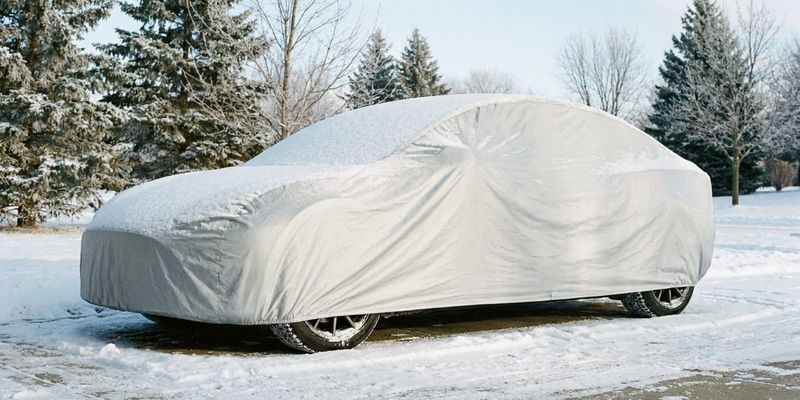
Where you park matters more than people think. A car cover in an open driveway or a carport that catches crosswind is going to shift faster than one in a garage-adjacent spot shielded from gusts. Same cover, same car, totally different outcome based on exposure. If you're storing outdoors regularly, it's worth reading up on what an outdoor car cover actually needs to hold up.
The elastic or buckles are shot. Elastic hems lose tension over time, and buckles stretch or crack with repeated use. A cover that fit snugly two years ago might be loose enough now to shift with a light breeze.
Bad washing habits are speeding up that wear. Harsh detergents and skipping proper care breaks down elastic fibers and strap webbing faster than normal use would. If you've never looked at proper car care practices for your cover specifically, that's probably part of the problem.
How to Fix a Sliding Car Cover for Good
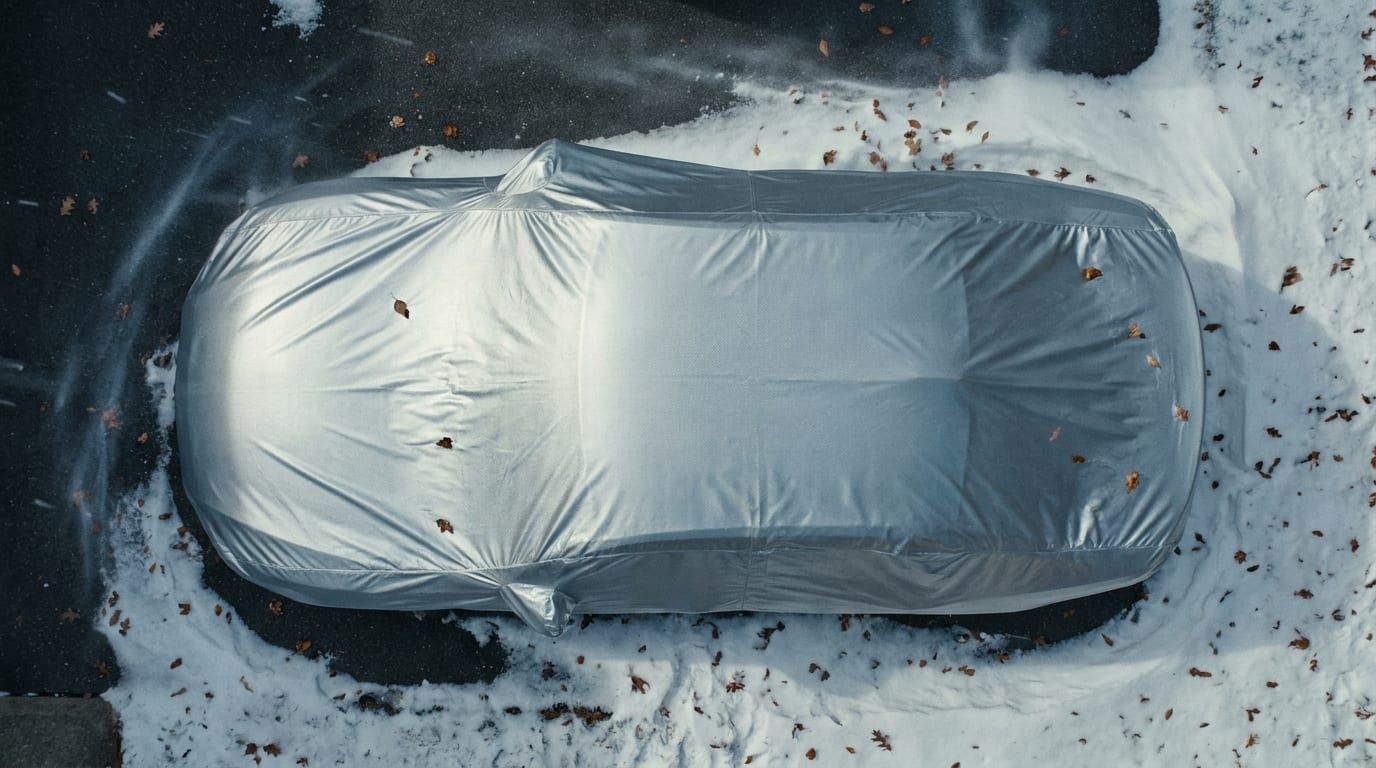
Start with the cable. Thread it through every grommet along the bottom hem, then cinch it snug near both the front and rear wheel wells. A loose cable is barely better than no cable. For a step-by-step walkthrough, the cable lock installation guide covers the exact routing and locking process.
Next, add gust straps if you don't have them. These cross underneath the vehicle and hook back up to the cover, resisting the lateral lift that causes one-sided sliding in the first place. This single addition solves more sliding complaints than anything else on this list. The gust strap installation guide walks through where to anchor them for the best hold.
If your cover sags in the middle, that slack gives wind somewhere to grab and start working the fabric loose. A support pole or tripod underneath the cover keeps it taut and reduces that slack dramatically. The tripod support pole installation guide is worth five minutes if you've never set one up.
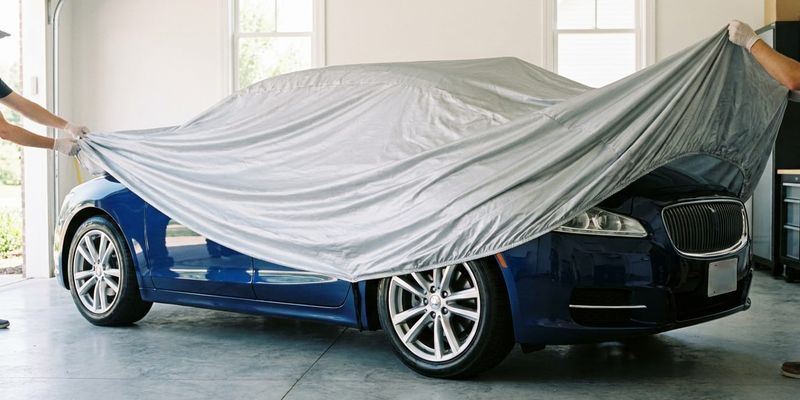
Every single time you put the cover on, re-tension the elastic hem evenly around all four wheels. This sounds basic, but it's one of the most common things people skip, and uneven tension is a top reason a cover ends up riding higher on one side than the other. If you're unsure you're even installing it correctly, the full installation guide is a quick refresher.
Trucks have their own quirk: the open bed creates a pocket that wind can balloon upward, pulling the rear of the cover backward and off. A truck bed support pole keeps that section lifted and shaped properly instead of flapping loose.
Preventing It Long-Term: Fit, Straps, and Storage Habits

Go back and actually verify the fit. Not "I bought the SUV-sized one," but checked against a real sizing guide for your specific vehicle. A cover that's even a size too big will fight you no matter how many straps you add.
Weigh custom-fit against universal. A generic cover is cheaper up front, sure, but it's also the thing most likely to flap, slide, and wear out its own grommets early. A custom-fit cover costs more initially and earns that cost back in fewer repairs and less repositioning.
If you store outdoors, park nose-into the prevailing wind direction where you can. Less surface area facing the gust means less lift, plain and simple.
Keep the cover clean. Dirt and grit work into the elastic and strap stitching and wear them out faster than UV exposure alone. The step-by-step cleaning guide covers which detergents are safe and which ones quietly destroy elastic over a season.
And if you're not sure your current cover was ever the right match, run your plate or vehicle info through the cover finder tool before buying anything else. Sometimes the fix isn't more hardware, it's just the correct cover. For edge cases like roof racks, spoilers, or aftermarket mirrors throwing off the fit, check fit modifications too.
Is a loose car cover a sign it's the wrong size?
Yes. Persistent flapping, slack pooling around the bumpers, or one side consistently riding up higher than the other are the classic tells of an oversized or universal-fit cover. Straps and cables will help manage it, but they're treating a symptom. The real fix is usually a properly sized or custom-fit cover, not another layer of hardware stacked on top of the wrong product.
Can wind alone cause a car cover to slide even with straps installed?
Yes, if the straps aren't cross-tied tightly underneath the vehicle, or if they're positioned too loosely to hold. Strong gusts will still find the gap and walk the cover sideways even with straps technically "installed." Go back after your first install and re-tension everything. Then check it again after any major storm. Most cases of "I have straps and it's still sliding" trace back to straps that were never tightened enough in the first place.
Do I need both a cable lock and gust straps?
They're solving two different problems. The cable lock anchors the bottom hem snugly against the car and makes it harder for someone to simply pull the cover off, which also happens to deter theft. Gust straps resist wind lift from above, keeping the whole cover pinned down during gusts. If your car lives outdoors regularly, running both together is the most reliable setup, full stop.
Keep Your Cover Where It Belongs
Diagnose first, then fix: figure out whether it's fit, wind, or missing hardware causing the slide, and apply the matching solution instead of guessing. A cable alone won't fix a cover that's two sizes too big. A custom-fit cover won't need straps as badly, but it still benefits from them outdoors.
If you've worked through the causes above and you're still asking why does my car cover keep sliding to one side, it's worth taking a hard look at whether the cover itself was ever the right match for your car. Browse through our fit and sizing guides, or poke around the care and installation articles, before you buy a replacement and end up right back here.