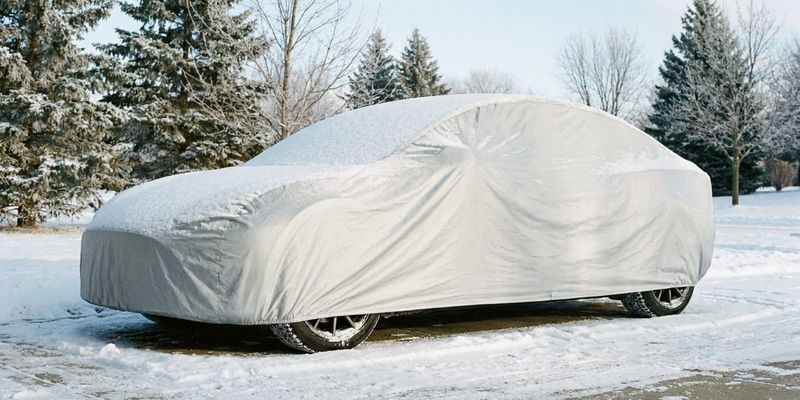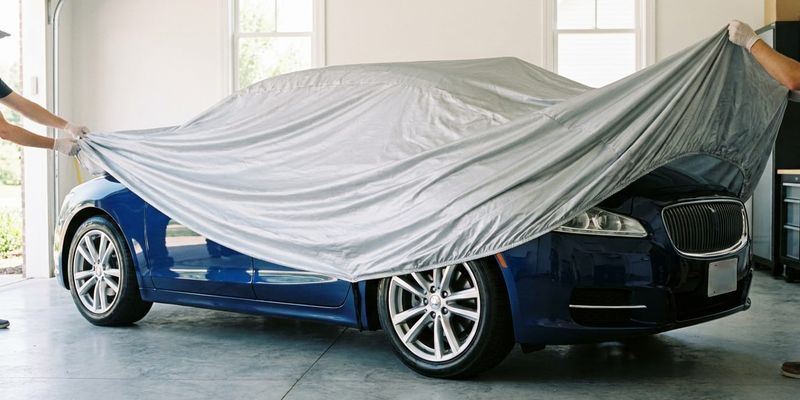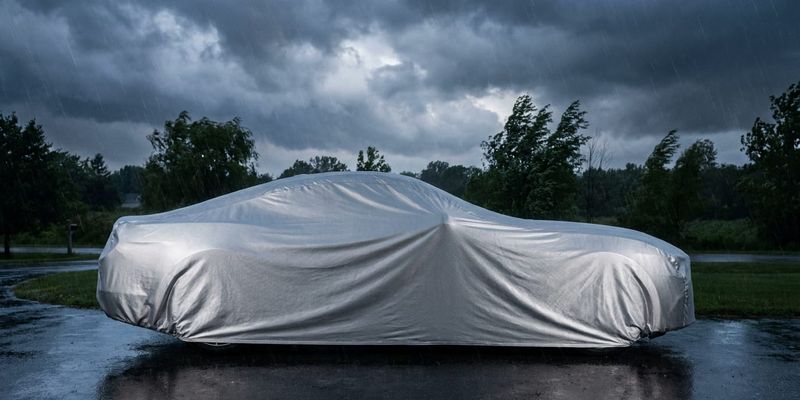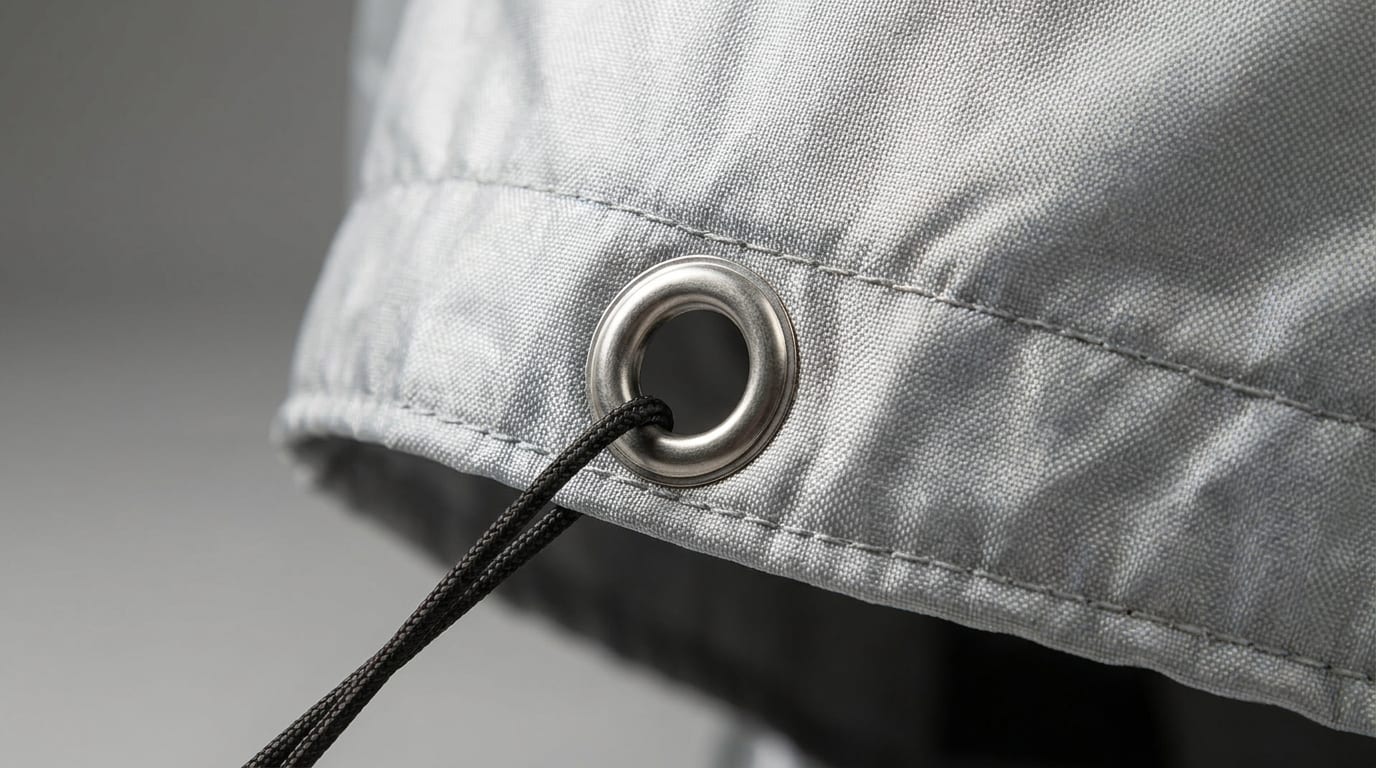
Shopping listings throw both terms at you like they're the same feature. They're not. A grommet and a cable lock car cover solve two completely different problems, and confusing the two can leave you thinking you've got theft protection when all you really have is a snug fit in a windstorm.
The Quick Verdict: Grommets Hold the Cover, Cable Locks Hold It Hostage-Proof
Here's the short version: grommets are the reinforced eyelets sewn into a cover's hem that let you cinch it down with a cord so wind doesn't rip it off your car. A cable lock threads through those same grommets and padlocks around something fixed, like a wheel or a bumper bracket, so the cover (and whatever's under it) can't be casually walked off with. One keeps the fabric in place. The other keeps people from taking it.
This comparison is strictly about the anchoring hardware, not the cover material, not waterproofing, not UV resistance. If you're trying to decide between grommets and a cable lock because you keep seeing both terms on product pages and aren't sure which one actually matters for your parking situation, that's exactly what this guide sorts out.
What a Grommet Does on a Car Cover
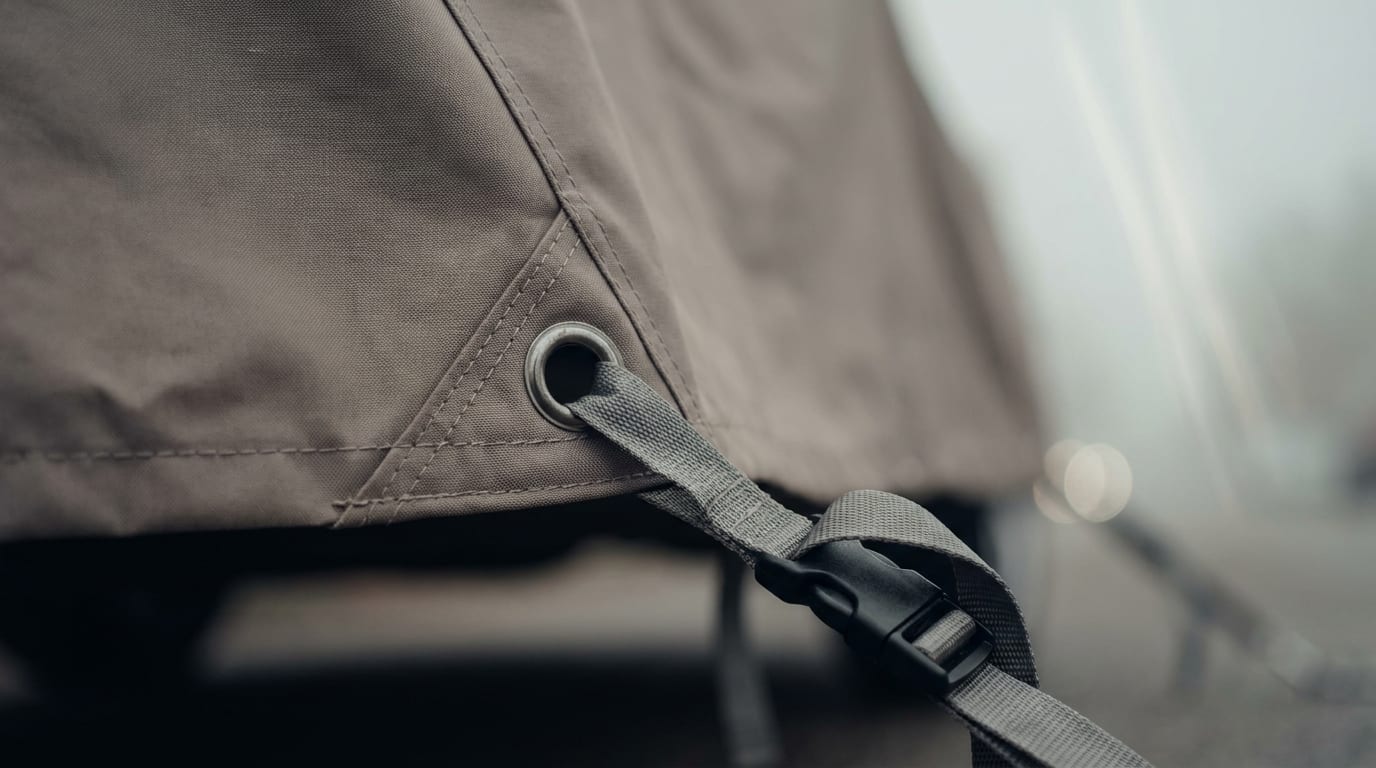
A grommet is a small reinforced eyelet, usually metal or heavy-duty plastic, stitched into the lower hem of the cover. Most covers have them at the front and rear; fitted covers built for specific vehicles often add one at each wheel well too.
Their job is simple: give you something sturdy to loop a cord, bungee, or strap through so the cover pulls snug against the body instead of ballooning up or lifting in a gust. Without that anchor point, fabric flaps, edges slide, and on a bad windy night the whole cover can end up a block away.
Here's the catch, and it's worth saying plainly: a grommet with a cord through it has zero locking mechanism. Anyone who wants to can unclip it or untie it by hand in about ten seconds. Grommets were never designed to stop a person, only the wind. The good news is they're standard on nearly every quality cover at no added cost. You're not paying extra for this part. You're paying extra for the thing that actually locks.
What a Cable Lock System Adds
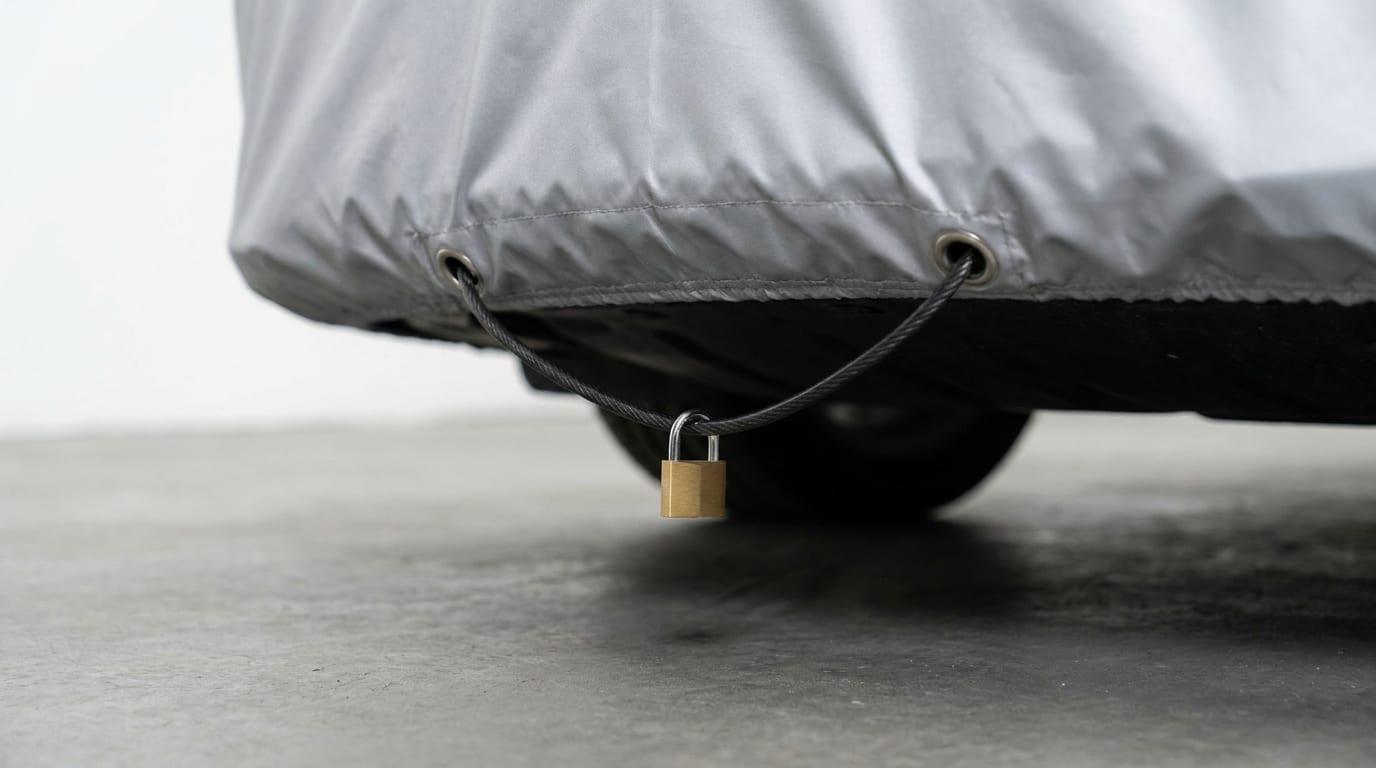
A cable lock is a length of steel cable you route through the cover's existing grommets or loop points, then close with a padlock around a fixed anchor, something that doesn't move, like a wheel, an axle, or a bumper bracket.
The purpose here is a completely different job than wind control. A cable lock doesn't make the cover sit tighter or perform better in a storm. It makes it harder for someone to lift a corner, slide the cover off, or tamper with whatever's underneath while the car sits parked and unattended. It's a physical, visible deterrent more than anything.
Most brands sell cable locks as an add-on accessory, or bundle them into higher-tier cover packages, rather than treating them as a fabric or weatherproofing feature. If you're adding one for the first time, it's worth getting the routing right rather than guessing. There's a full walkthrough on technique in the cable lock installation guide, and it's a five-minute read that saves you from locking the cover in a way that still leaves a gap.
Grommet vs Cable Lock: Side-by-Side Comparison
Laid out next to each other, the differences are pretty clean cut. Neither one replaces the other, they stack.
| Factor | Grommet + Cord | Cable Lock |
|---|---|---|
| Theft deterrence | None, unlocks by hand | Visible physical barrier |
| Wind/weather performance | Keeps cover snug | Same, no change |
| Install time | Under a minute | A few extra minutes to route and lock |
| Cost | Standard, included | Usually an added accessory |
| Best for | Garage, carport, low-theft areas | Street parking, shared lots, long-term outdoor storage |
A couple of things worth calling out that the table can't fully capture. First, wind performance is identical either way, since the cable lock still relies on the same grommets as its anchor points. It doesn't make the cover sit any tighter or looser. Second, neither option replaces the need for proper tie-down in high wind. If you're in a gusty region, pair whichever anchor system you choose with gust straps built for wind control specifically. A cable lock keeps people out. It won't stop the cover from flapping if it's not cinched right to begin with.
Which One Should You Choose?
If your car lives in a garage, a carport, or behind a gated driveway, a grommet-only cover is genuinely enough. Theft exposure is low, and the cord-and-grommet setup does exactly what it needs to: keep the fabric where it belongs.
Street parking changes the math. So does an apartment lot, a shared complex, or an RV storage yard where your vehicle sits for weeks at a time unattended. A cover left anchored with just a grommet and a cord in a public space is an easy target, not because grommets are bad, but because they were never built to resist a person pulling on them. A cable lock is the visible "don't bother" signal in those situations.
Worth factoring in too: cars with pricier wheels, removable emblems, or aftermarket trim benefit from that second layer of friction. It's not about the cover fabric at that point, it's about making the whole package slower and more annoying to mess with.
Whichever anchor option you land on, it only performs as well as the cover fits. A cover that's too loose or too tight will fight you regardless of what's holding it down, so check that you're working with a custom fit car cover built for your actual make and model before worrying about the hardware.
Can You Get a Cover With Both?
Yes, and honestly this is how most people end up using them. Most outdoor-rated and premium cover lines already include sewn-in grommets standard, with a cable lock offered as a compatible add-on. It's not really an either/or choice for most shoppers, it's grommets by default, cable lock by need.
Before you assume a cover has solid anchor points at all, confirm it's actually built and rated for outdoor use. Some indoor-focused covers skimp on grommet placement since they're not expecting wind exposure, and that matters more once you're adding a cable lock into the mix too.
It's also worth checking waterproofing separately when you're comparing listings, since anchoring and weatherproofing are two different specs that don't automatically come bundled together just because a cover looks premium. And if you're adding a cable lock as an accessory, confirm what the warranty actually covers before you buy, since terms can vary by accessory bundle rather than applying uniformly across the whole product line.
Installation Tips for Each Anchor Type
For a grommet-and-cord setup: pull the cord snug, not stretched tight (an overstretched cord puts strain on the stitching around the grommet itself). Cross the cord underneath the vehicle rather than running it in a straight line, it holds better in crosswinds and doesn't pull unevenly from one side.
For a cable lock: route the cable through at least two grommets on opposite sides of the car before closing the padlock. One grommet alone means someone can still lift the cover from the other corner. Two anchor points, on opposite sides, is what actually keeps it in place.
Either way, confirm the cover's size and grommet placement actually match your vehicle before you anchor anything. A mismatched fit means grommets sitting in the wrong spot entirely, and no amount of cable will fix that. The cover finder tool is the fastest way to check before you buy. And if you haven't gotten the cover positioned correctly on the car yet, that step comes before anchoring, not after, covered in full in the step-by-step installation guide.
Bottom Line: Match the Anchor to Where You Park
Grommets are the baseline. Every decent cover needs them for wind control, full stop. Cable locks are the upgrade, and they only matter once theft risk enters the picture, street parking, shared lots, long-term outdoor storage. The grommet vs cable lock car cover question isn't really a competition, it's a question of what your parking situation actually demands.
If you're still weighing cover models beyond just the hardware, the full comparison guide covers fit, material, and pricing side by side. And once your cover's on and anchored, keeping it in good shape is its own small habit, worth a look at our car care resources if you want to get the most life out of it.