Why Does My Car Cover Attract More Dust Than Expected? Causes & Fixes
Published
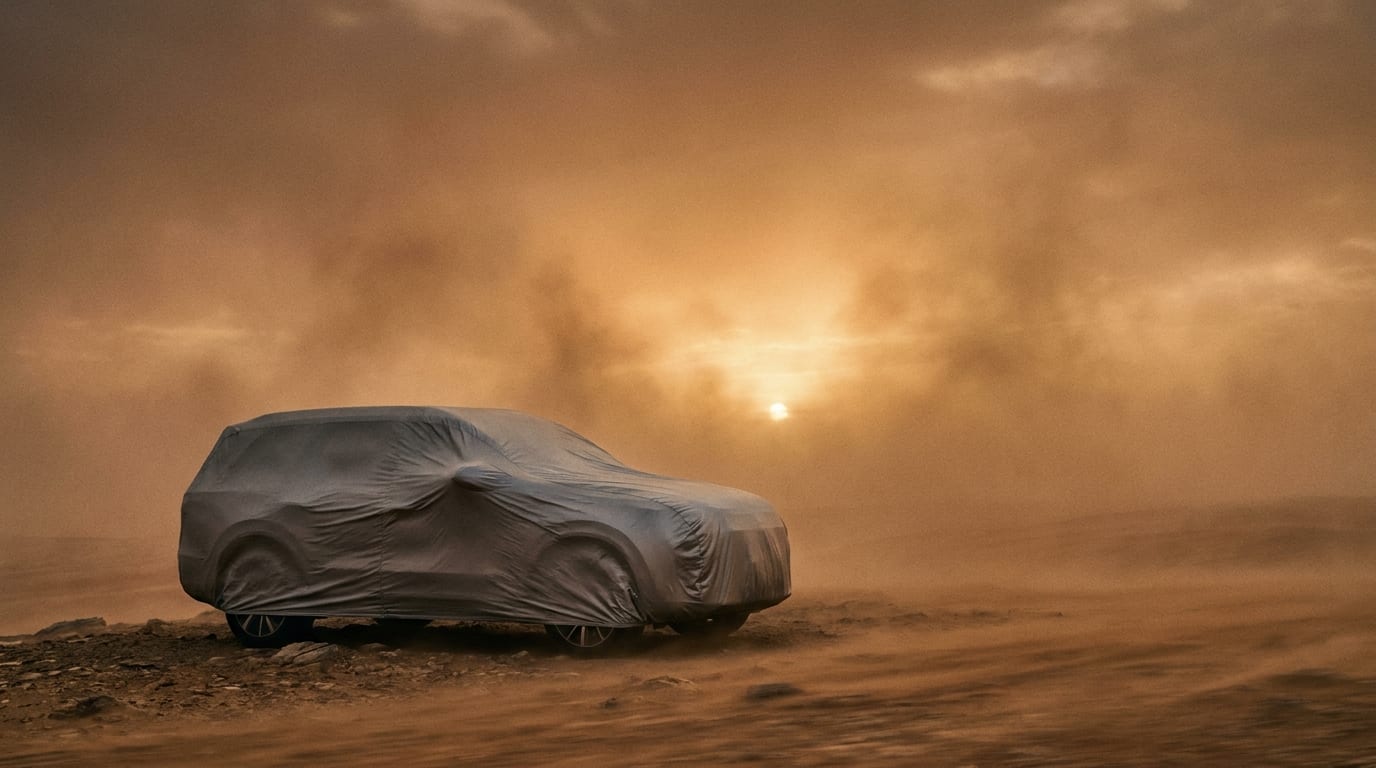
Dust on a car cover feels like a special kind of betrayal. You buy the thing to keep your paint clean, park it for a week, pull it off, and there's a fine gray film sitting right on top. If you've found yourself wondering why does my car cover attract more dust than expected, you're not imagining it, and you didn't buy a lemon. Most of the time it comes down to three overlapping factors: the fabric itself, how snugly the cover fits, and where the vehicle actually sits day to day. None of that means the cover is broken. It usually means the cover is doing exactly what it's supposed to do.
This piece walks through the four most common causes, then gets into the actual fixes, material choice, fit, securing it properly, and a cleaning routine that keeps dust from building up in the first place.
Why Your Car Cover Seems to Attract So Much Dust
Here's the thing nobody tells you at checkout: a cover is a sacrificial layer. It's designed to take the hit so your paint doesn't have to. So when you ask why does my car cover attract more dust than expected, the honest answer is that it's absorbing exactly what used to land on your hood and windshield.
That said, "expected" and "excessive" are different problems. A light haze after a week outdoors is normal. A cover that looks filthy after two days, or one that seems to pull dust out of the air even in a closed garage, usually points to something fixable. Fabric type, loose fit, parking environment, and cleaning habits all play a role, and they tend to stack on top of each other. Fix one and the problem often gets better even if you haven't touched the other two.
We'll diagnose each cause first, then hand you the fix for it. By the end you'll know whether your cover needs a different fabric, a tighter fit, a change in where it's parked, or just a faster cleaning rhythm.
Cause #1: Fabric Weave, Coating, and Static Cling
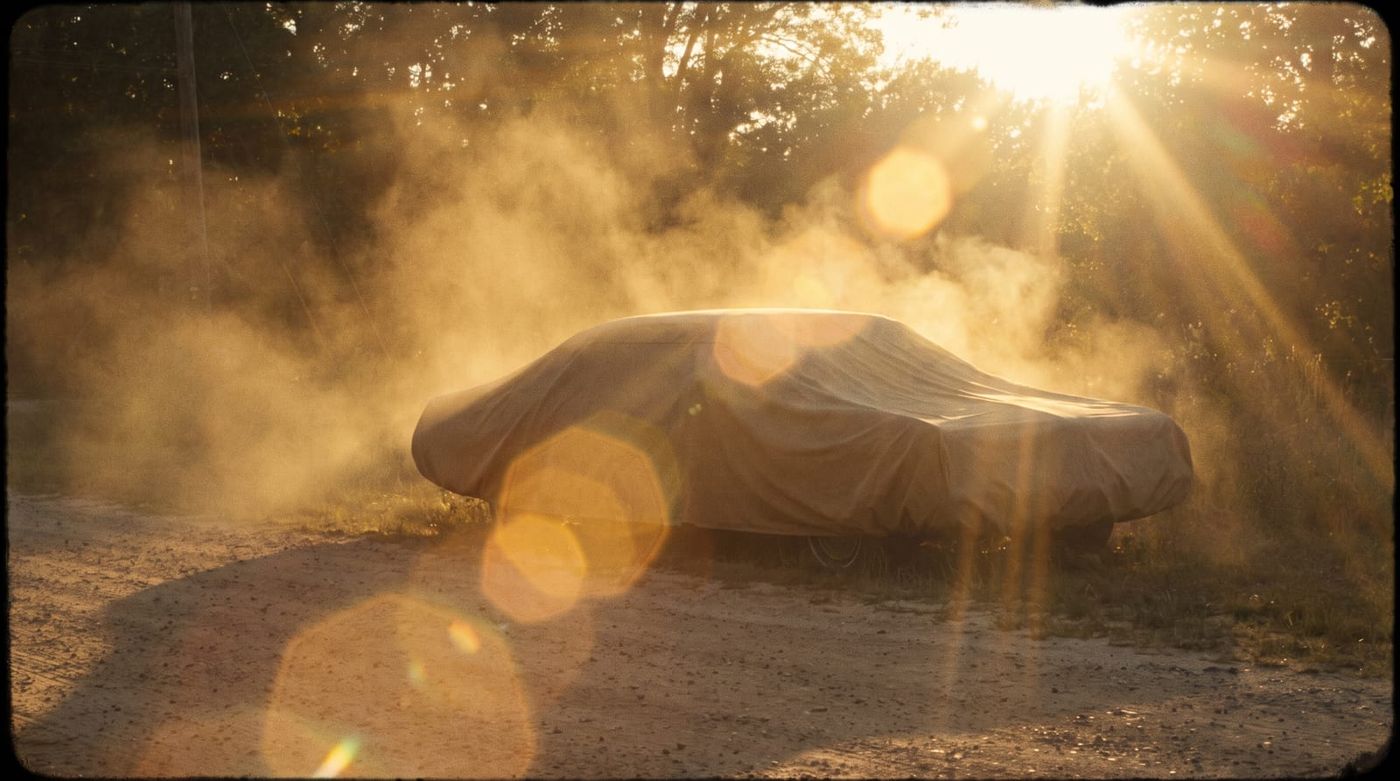
Tightly woven synthetic fabrics, think polyester and polypropylene blends, can pick up a mild static charge just from wind moving across the surface. That static pulls in fine dust and pollen the same way a dry sweater grabs lint. It's a basic physics problem, not a manufacturing defect.
Texture matters too. Fleece-lined or napped fabrics, the kind typically used on indoor and scratch-protection covers, have way more surface area for dust to settle into than a smooth, coated outdoor fabric. Those little fibers are great at protecting your clear coat from accidental bumps, but they're also excellent at trapping airborne particles.
Worth remembering: the cover collecting dust instead of your paint is the system working correctly. That's its whole job. If you want a deeper look at why a cover earns its keep even when it looks a little dusty, why buy a car cover covers the tradeoff in more detail.
Cause #2: A Loose Fit That Shifts and Flaps in the Wind
A universal cover that's too big for your vehicle doesn't just look sloppy. It billows in the wind, rubs against the body panels, and stirs up dust from the ground and the surrounding area with every gust. That dust doesn't just blow away again. A lot of it gets trapped underneath the folds and creases a loose cover naturally forms.
There's a friction problem too. Loose fabric rubbing against itself or against the car grinds grit into the weave over time, which makes the material look dirtier faster than a snug cover would. And if the corners aren't secured or straps are missing, the edges lift slightly with every breeze, pulling in airborne dust like a tiny bellows.
If flapping is your main issue, 5 ways to keep a car cover from blowing away is worth a read before you blame the fabric for something the fit is actually causing.
Cause #3: Parking Location and Local Dust or Pollen Levels

Sometimes the cover isn't the problem. The parking spot is. Gravel driveways, dirt lots, nearby construction, and dry, windy climates all put a lot more particulate in direct contact with your cover than a paved, sheltered spot would.
Seasonal spikes make this worse. Spring pollen can coat a cover in a yellow-green film within a day or two. Dry heat and dust storms in desert regions do something similar, just with grittier results. And if you park under trees or near landscaping, you're not just getting dust, you're getting pollen, leaf debris, and tree sap mixed in, which is a lot harder to shake off than plain dirt.
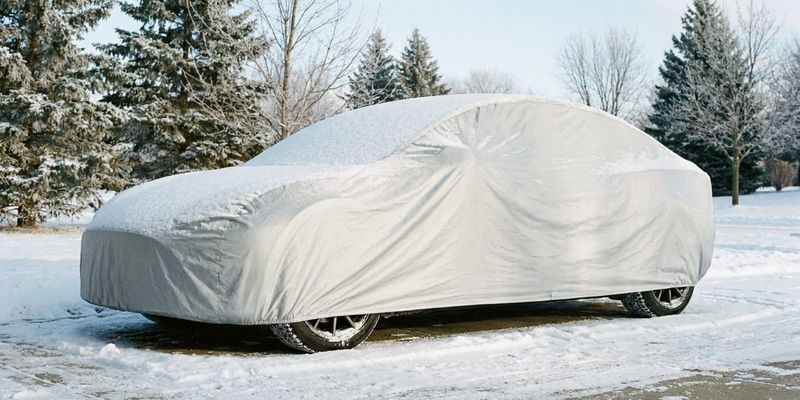
None of this is really fixable by swapping fabrics alone. For anyone parking outdoors in these conditions regularly, it's worth reading through the guide to using a car cover outdoors for a fuller picture of what outdoor exposure actually does to a cover over a season.
Cause #4: Skipping Regular Cleaning Lets Dust Bond to the Fabric
This one's sneaky. Dust that sits on a cover for a few weeks picks up moisture from morning dew or a light drizzle, and once it's damp, it doesn't blow off anymore. It binds to the fibers.
Then it compounds. Each layer of bonded dust makes the surface a little stickier, which means the next layer of dust and pollen sticks faster and in greater quantity. A cover that gets cleaned every couple of weeks stays noticeably cleaner than one left alone for a season, even in the exact same parking spot.
Good news: this is the easiest of the four causes to fix, and it's the one most people are already halfway solving without realizing it. For a full walkthrough, see cover care and cleaning.
The Fix: Match the Material and Fit to Where You Park
If you're parking outdoors in a dusty, windy, or dirt-lot environment, a smoother, tightly woven outdoor fabric is going to outperform a fleece or napped indoor-style fabric every time. Less surface texture means less for dust to grab onto, and the outdoor-specific weaves are built to shed grit rather than trap it.
Fit matters just as much as fabric. A true custom or semi-custom fit hugs the body of the vehicle instead of ballooning around it, which cuts down dramatically on the flapping that stirs up and traps dust in the first place. Browse custom-fit car covers if you're currently running a generic universal cover, since that mismatch is often the real culprit behind "my cover is always filthy" complaints.
For garage-kept vehicles, the calculus flips. Indoor air carries far less dust and pollen than the outdoors, so a lighter indoor car cover makes more sense than hauling out a heavy-duty outdoor fabric built for conditions you're not actually exposed to. And if you're not sure your current cover is even the right size, it's worth double-checking against outdoor car covers built specifically for the elements you're dealing with.
The Fix: Secure It Properly So It Stops Moving
A cover that can't move can't flap, and a cover that can't flap won't pull dust underneath its own edges. Straps, grommets, or a cable lock system anchored at the hem keep the fabric pinned against the vehicle instead of lifting with every gust.
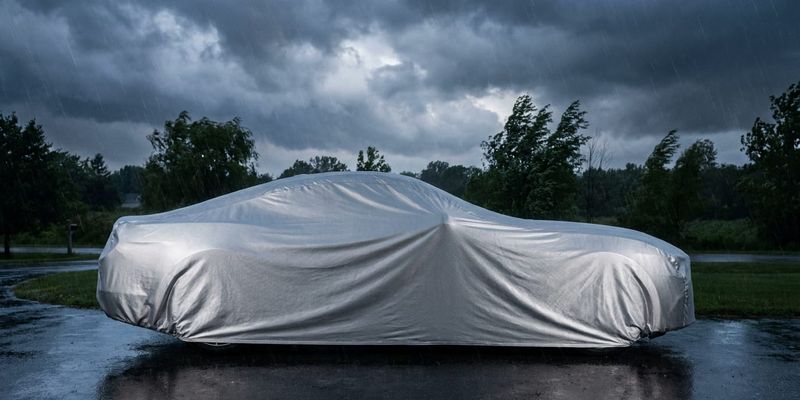
If you're parked somewhere exposed, open lots, coastal areas, anywhere with consistent wind, gust straps are worth the extra few minutes of setup. They loop under the vehicle and cinch the cover down at specific points, which stops the billowing that causes most of the dust-trapping in the first place. Check out installing gust straps for the specifics.
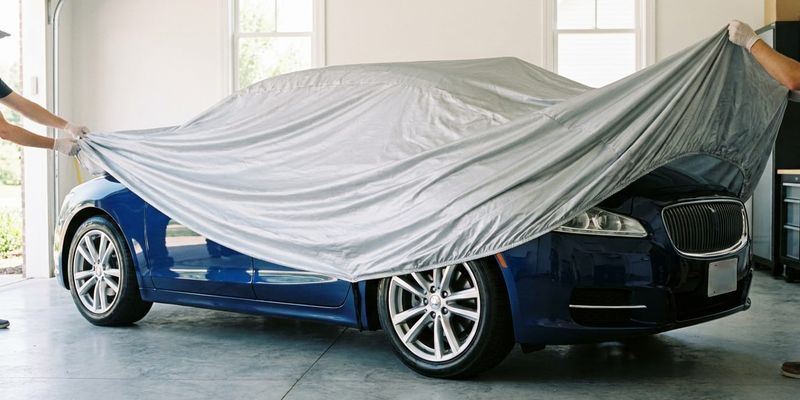
Technique matters here too. Covering front-to-back and tucking or securing the fabric underneath the vehicle, rather than just draping it over the top, reduces movement significantly over weeks and months. If you're not confident your current setup is tight, installing your car cover runs through the proper sequence step by step.
The Fix: Build a Simple Dust-Busting Cleaning Routine
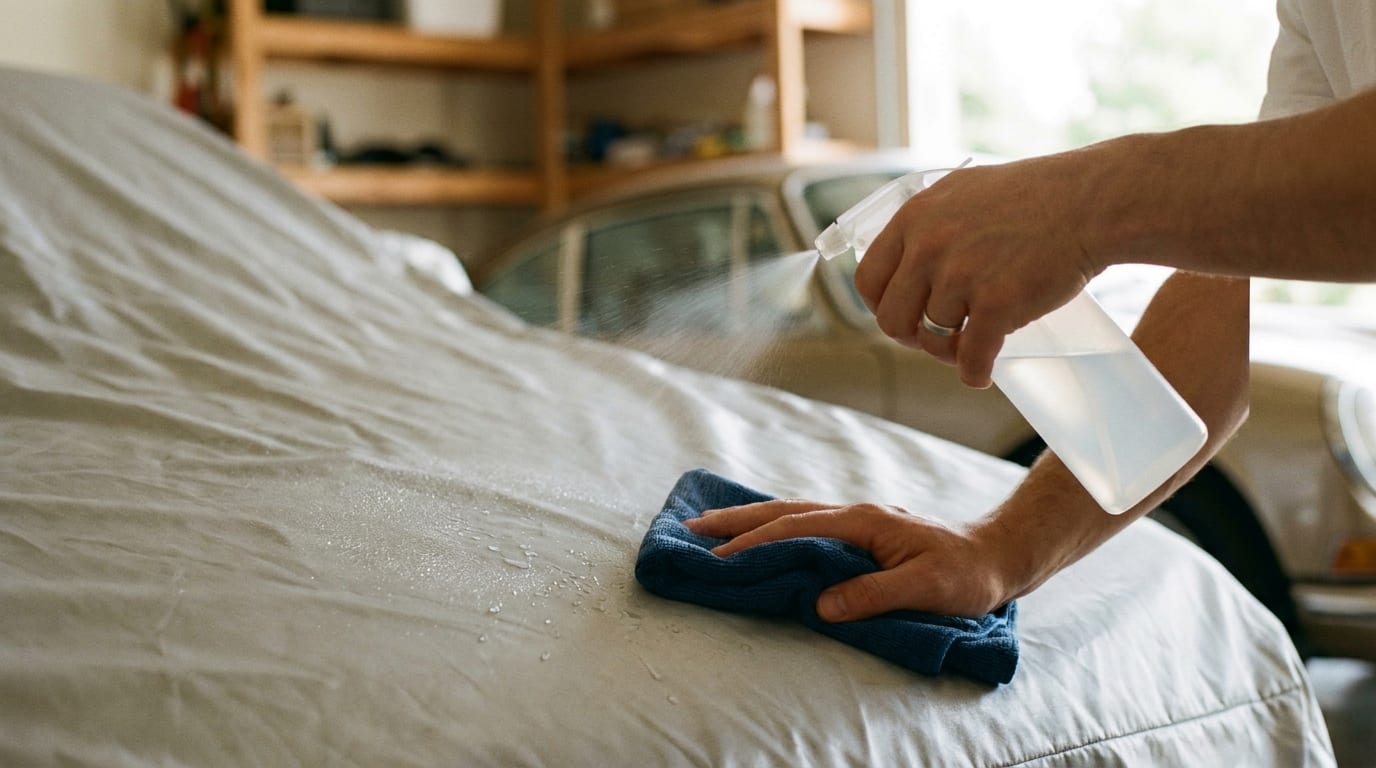
The cheapest fix here costs nothing: shake or brush the cover off before the dust has a chance to get damp and bond to the fibers. In dusty conditions, every few days is a reasonable rhythm. It takes thirty seconds and it's the single biggest thing you can do to stop buildup before it starts.
For a deeper clean, plan on a full wash every few weeks, more often in rough climates, using mild soap, a soft brush, and a full air dry before you put it back on the car. Skipping the air-dry step matters more than people think. A cover folded away while still slightly damp traps that moisture against the fabric, and the next layer of dust that lands on it sticks faster because of it.
For the full wash routine, how to clean a car cover lays out the process in more detail than we have room for here.
Quick Answers: Car Covers and Dust
Does a dusty car cover mean it's low quality? No. Dust collection is driven mostly by fabric texture, fit, and parking environment, not a defect in the product.
How often should I clean a car cover to stop dust buildup? Brush off loose dust every few days if you're in a high-dust area, and do a full wash every few weeks depending on your climate.
Will a tighter-fitting cover really reduce dust? Yes. A snug, properly secured fit limits the flapping and ground-level movement that stirs up dust and traps it underneath the fabric.
Is an indoor cover a better option if dust is the main problem? For garage-kept vehicles, yes. Indoor fleece-style covers deal with far less airborne particulate than anything parked outside has to handle.
If your cover still feels dustier than it should after sorting out fit and fabric, it might just be time to rethink the whole setup for your specific parking situation. Poke around our other car care guides, or subscribe for more straightforward, no-nonsense advice on keeping your vehicle protected without the guesswork.
Frequently asked questions
Does a dusty car cover mean it's low quality?
No. Dust collection is driven mostly by fabric texture, fit, and parking environment, not a defect in the product.
How often should I clean a car cover to stop dust buildup?
Brush off loose dust every few days if you're in a high-dust area, and do a full wash every few weeks depending on your climate.
Will a tighter-fitting cover really reduce dust?
Yes. A snug, properly secured fit limits the flapping and ground-level movement that stirs up dust and traps it underneath the fabric.
Is an indoor cover a better option if dust is the main problem?
For garage-kept vehicles, yes. Indoor fleece-style covers deal with far less airborne particulate than anything parked outside has to handle.