Why Does My Car Cover Keep Blowing Off?
Short answer: it's not bad luck, and it's not that car covers "just don't work" in wind. Nine times out of ten, a cover that keeps blowing off is dealing with one of three things: it doesn't actually fit your vehicle, it's missing straps or tie-downs that never got used, or it's parked somewhere that funnels wind straight at it. Usually it's some combination of all three.
It's worth taking seriously beyond the annoyance factor. A cover that flaps and whips in the wind isn't just noisy, it's actively working against your paint. Repeated whipping grinds dust and grit against the clear coat, stretches the fabric past where it should sit, and puts stress on grommets and seams until something tears. A cover that's constantly fighting the wind is a cover that's slowly destroying itself and scuffing your car at the same time.
So instead of just cinching things down harder and hoping, it helps to actually diagnose why does my car cover keep blowing off before you fix it. Below are the three real causes, in order of how often they're the actual problem, followed by the fixes that address each one.
Cause #1: The Cover Is the Wrong Size or Fit
This is the big one. A universal or semi-custom cover has extra fabric built in to accommodate a range of vehicles, and that slack is exactly what wind needs to get a grip. Think of it like a loose sail versus a tight one: the looser the material, the more surface area is free to catch a gust and lift.
A custom-fit car cover, by contrast, follows your vehicle's actual body lines. Less loose fabric means less for the wind to grab onto in the first place.
How do you know if fit is the culprit? Look for the tells. The cover rides up over your mirrors. It bunches awkwardly at the bumper instead of lying flat. There are visible gaps at the wheel wells where wind sneaks underneath and lifts an entire panel like a parachute. Any of these point to a sizing issue, not a wind problem.
Part of this comes down to how covers get sized in the first place. A lot of "universal fit" and even some "semi-custom" options are sized by make and model year range rather than your exact trim. That sounds close enough, but a few extra inches of slack is genuinely all it takes. If you're not sure whether your current cover is even the right size, it's worth running your vehicle through a size guide or the cover finder tool before assuming the problem is anything else.
Cause #2: Missing Tie-Downs, Straps, or Cable Locks

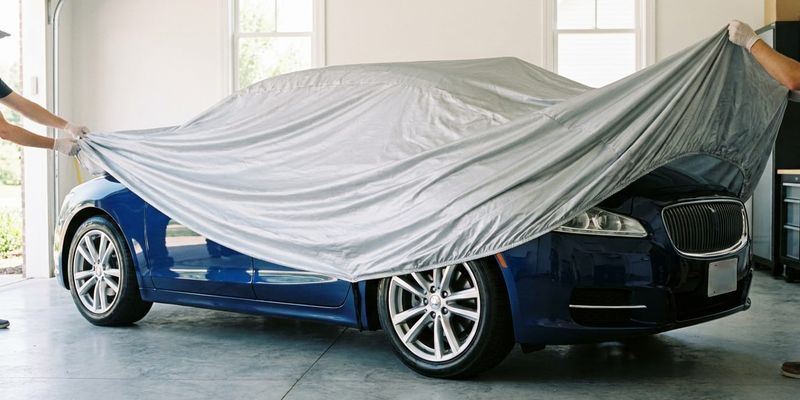
Even a well-fitted cover needs to be anchored. Most covers come with more securement points than people actually use: straps that loop under the side mirrors, elastic cinches at the hem, grommets meant for a cable lock, and sometimes a cross-body gust strap that runs under the chassis.
Here's the thing people miss: a cover with built-in straps that never get buckled is functionally no different from a cover with no straps at all. The hardware doesn't do anything sitting unused in a seam pocket.
And tension matters just as much as whether the strap is fastened. A strap that's technically buckled but loose still lets fabric billow and flap, because there's enough give for wind to work the fabric loose from underneath. If you've got straps and you're still asking why does my car cover keep blowing off, check how snug they actually are, not just whether they're clipped. For a step-by-step on getting this right, the gust strap installation guide walks through proper tensioning, and if your cover has grommets sitting unused, a cable lock adds real holding power on top of the straps. If you're setting up a new cover from scratch, the general installation guide covers where every strap and grommet is supposed to go.
Cause #3: Your Parking Spot Is a Wind Tunnel
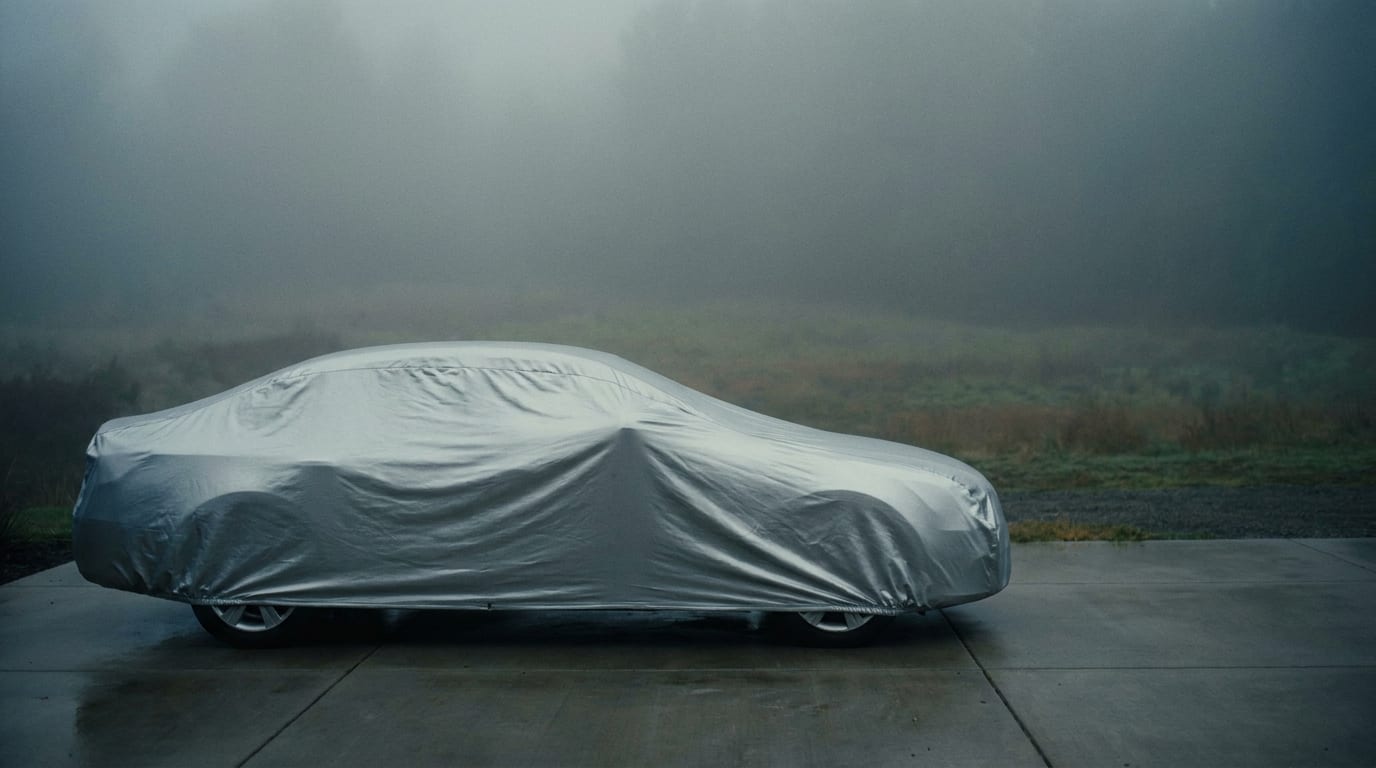
Sometimes the cover and the straps are both doing their job, and the location is just working against you. Open driveways, carports with no walls, hilltop parking, and gaps between buildings all accelerate wind instead of blocking it. A garage blocks wind entirely. A wind-sheltered side yard does a decent job. An exposed driveway on a corner lot does the opposite: it funnels gusts and speeds them up.
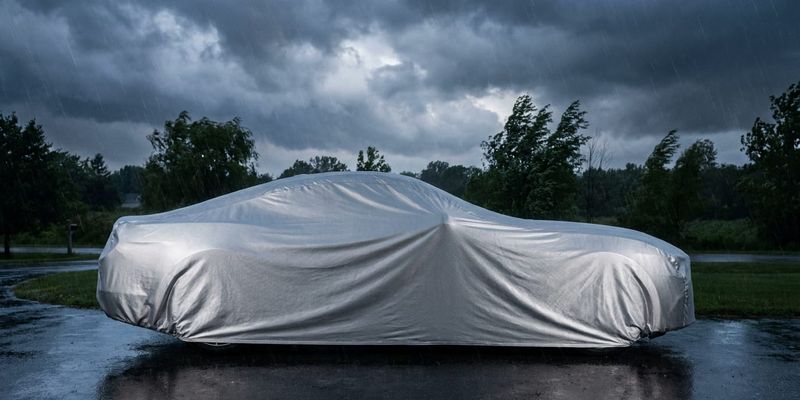
Even a properly fitted cover with every strap cinched can lose that fight in sustained winds above 20 mph, especially if the wind keeps shifting direction instead of blowing steady from one side. Turbulent, direction-changing wind is harder on a cover than a strong steady breeze, because the fabric never settles.
A quick way to check if your spot is the problem: notice which side of the car the cover keeps lifting from. That's usually a direct pointer to where the wind is hitting your parking spot from. If it's always the same side, you're dealing with a location issue, not a cover issue, and no amount of extra strapping fully fixes that. The outdoor car cover guide gets into how exposure affects cover performance beyond just wind, including sun and moisture.
The Fix: Practical Steps to Stop the Blow-Off
Once you know which cause (or causes) apply to you, the fix is pretty mechanical:
- Confirm true fit first. Don't eyeball it. Measure your vehicle, or compare it against a custom-fit cover rather than a generic size range that covers five years of a model.
- Use every strap and grommet that came with the cover. If it has an under-mirror strap, use it. If it has a hem cinch, cinch it. There shouldn't be visible slack hanging at the mirrors or bumpers once you're done.
- Add a cable lock through the grommets if you're parking somewhere open or exposed. It adds a layer of holding power straps alone don't provide, and it deters theft as a bonus.
- For consistently windy spots, add a cross-body gust strap or a support pole setup. A support pole keeps the center of the cover from ballooning up in gusts, which is often where the real damage happens since there's nothing underneath holding it down.
- Reposition parking when you can. Garage beats carport, carport beats open driveway. If you've got options, use the most sheltered one, especially on forecasted high-wind days.
Work through these in order. Most people find the fit was never right to begin with, and jump straight to buying extra straps when a properly sized cover would've solved it on its own.
FAQ: Can a Flapping Cover Scratch My Paint?
Yes. When a cover whips around in the wind, it grinds whatever dust, sand, or grit is trapped underneath against your paint. Over enough cycles, that's fine scratching across the clear coat, not a one-time scuff. It's a slow problem that adds up.
This risk is a lot higher with a loose, unsecured cover than with one that's properly fitted and strapped down tight. A snug cover doesn't have the room to move, so there's nothing for grit to grind with.
FAQ: Will Straps Alone Fix a Cover That Keeps Blowing Off?
Not on their own, no. If the cover itself is oversized with a lot of loose fabric, straps just redistribute where the flapping happens instead of eliminating it. You might stop it from flying off completely, but you won't stop the whipping and the wear that comes with it.
The combination that actually works is a properly sized cover, straps used and tensioned correctly, and, if you're in a consistently windy area, a cable lock or gust strap layered on top for extra hold.
Get a Cover Built to Stay Put
A cover blows off because it's the wrong fit, the straps aren't doing their job, or the parking spot is fighting you, and the fix matches each cause: get the sizing right, use the hardware you've already got, and shelter the car when you can.
If you've been dealing with this for a while, it's worth stepping back and checking whether your current cover was ever the right fit to begin with. Browse a few custom-fit options and see what's built for your actual vehicle instead of a size range.
And if you're going to invest in a cover that's built to handle real wind exposure, look for one backed by a lifetime warranty. It's a better deal long-term than replacing a cheap cover every season once wind stress tears the seams.